Home
About
Advertise with Us
Contact
Newsletter
Login
SignUp
Arts & Events
Capital Comedy Review
Sports
Health
Food & Wine
Travel
Politics
Building a Smoke-Free Canada
Misogyny Matters
Correct Me If I’m Wrong
Kazakhstan / Canada
Election Outlook 2019
Canada’s Energy Economy
Reviews
Music
Film
Auto
Restaurant
Theatre
Ottawa Business Portal
Holiday Best Picks
Best of Ottawa
Homes/Real Estate
My Ottawa
Blog page
Putting the “Science” into “Science Fiction” – Fusion Power
The modern world runs on electricity and the demand for power continues to grow every year. As demand grows the non-renewable resources we rely on, mainly fossil fuels, are used at an accelerated rate while the production of renewable energy has not increased as quickly as people hoped. Scientists are
Putting the “Science” in “Science Fiction” – Ultra Boy
Ultra Boy is a character from the DC Universe's Legion of Superheroes, a group from the 30th to 31st centuries who solve crises in their own time and sometimes travel to the present when modern superheroes are outmatched. One of Ultra Boy's primary powers is his ability to see through
Putting the “Science” in “Science Fiction” – Thor
Humanity has been fascinated with the awe-inspiring power of lightning since its earliest days, a fact that is clearly illustrated by the Norse peoples having a deity specifically dedicated to lightning and thunder. The modernized version of this character, Marvel's Thor, is an important and powerful member of the Avengers
Putting the “Science” in “Science Fiction” – Hover Vehicles
Hover vehicles have shown up in many works of science fiction and taken many forms, including the hover tanks of the Battlezone series, Halo's motorcycle like Ghost, and the well known Snowspeeders from Star Wars. Although they are portrayed as being used in different roles and being built with different
Putting the “Science” in “Science Fiction” – Professor X
Professor Charles Xavier, better known as Professor X, is the founder of the Marvel X-Men team and is one of the most powerful telepaths in the Marvel universe. Telepathy is the ability to perceive another person's thoughts, often by hearing or seeing them, and is a fairly common ability in
Putting the “Science” in “Science Fiction” – Railguns
The railgun is a weapon commonly shown or described in science fiction, and works by using an electromagnetic force to launch a projectile down a pair of conductive rails, rather than relying on gunpowder. Although films, like the Arnold Schwarzenegger film Eraser, and novels often refer to all projectile weapons
Putting the “Science” in “Science Fiction” – Wolverine
Wolverine is one of Marvel's most iconic superheroes, and is one of the few widely known superhero characters who hails from Canada. Although Wolverine is famous for his claws and adamantium skeleton, his most impressive power is his ability to rapidly heal from almost any injury. Wolverine's "healing factor" goes
Putting the “Science” in “Science Fiction”: Plasma
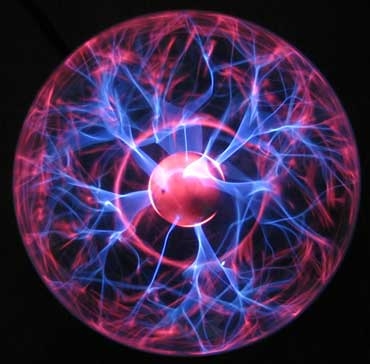
Much like lasers, plasma weapons are a staple of modern science fiction that rarely have a description of how they work. The plasma mentioned throughout science fiction is nothing like that described in medical television shows, and is commonly considered to be the fourth state of matter, alongside gasses, liquids,
Previous
1
2
3
Non-GamStop casino
Terms & Conditions
Privacy Policy