Recommended Articles
Adventure, Canadian Style Part One
Travel is back, and it is not as scary as you might think
Discovering the Sea Less Travelled in Greece


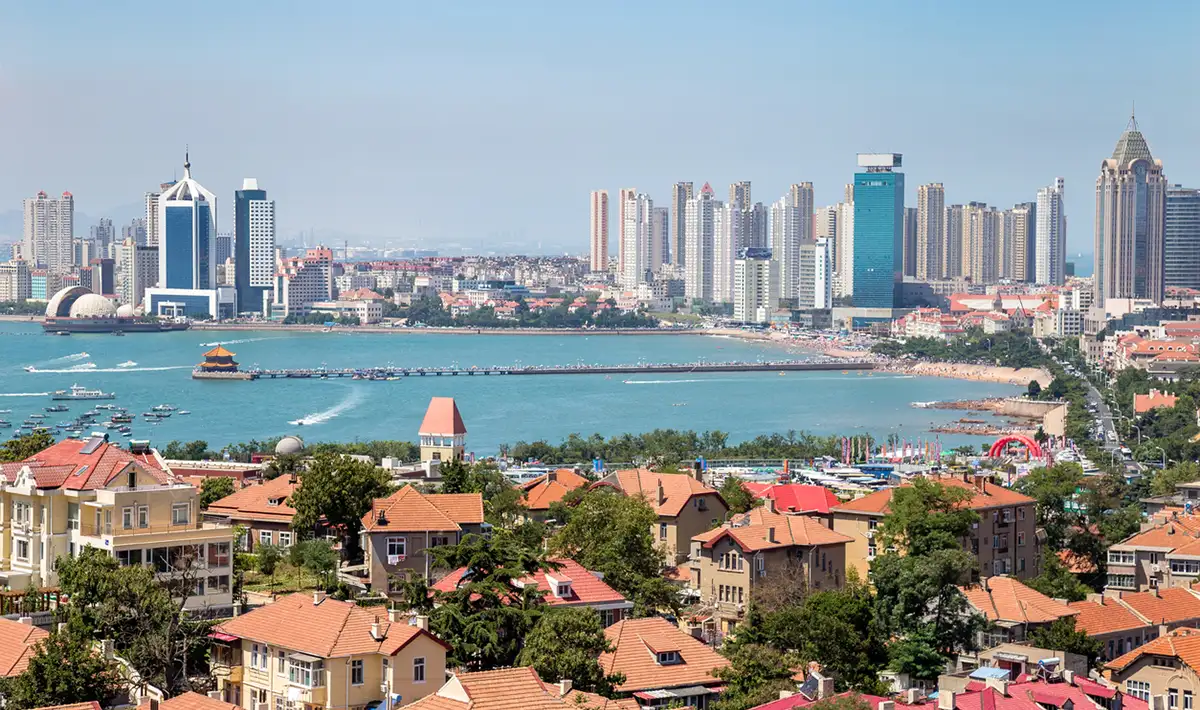
What a walk through Qingdao’s past and a visit to the world’s most advanced port revealed about China’s future.
There’s one word that comes to mind when describing Qingdao: overlooked. Not by the Chinese—they know exactly what they have. But for many foreigners, including seasoned travellers, this stunning coastal city often flies under the radar. That’s surprising, considering Qingdao’s dynamic mix of breathtaking seaside scenery, powerhouse innovation, entrepreneurial energy, German-influenced architecture, world-class cuisine, and cutting-edge infrastructure.
Qingdao’s German Legacy
Before it became a hub of German colonial ambition in the late 19th century, Qingdao was a quiet fishing village on China’s Shandong Peninsula, prized for its deep-water harbour and strategic location on the Yellow Sea. For centuries, it remained a modest coastal settlement, dotted with traditional Chinese homes, temples, and local markets. Yet its position—halfway between Beijing and Shanghai and within reach of Korea and Japan—made it a coveted gateway to northern China, ideal as a naval outpost and trading port.
Qingdao’s German chapter began in 1897, after the Juye Incident, when two German missionaries were killed in Shandong Province. Germany seized the opportunity to pressure the Qing Dynasty into granting a 99-year lease on Jiaozhou Bay, making Qingdao the administrative centre of the Kiautschou Bay concession.
Click here to read the remainder of the article on our sister site, traveltrektour.com