Reset with Resolve: Tom d’Aquino Charts Canada–China Path Forward Amid Carney-Era Reengagement
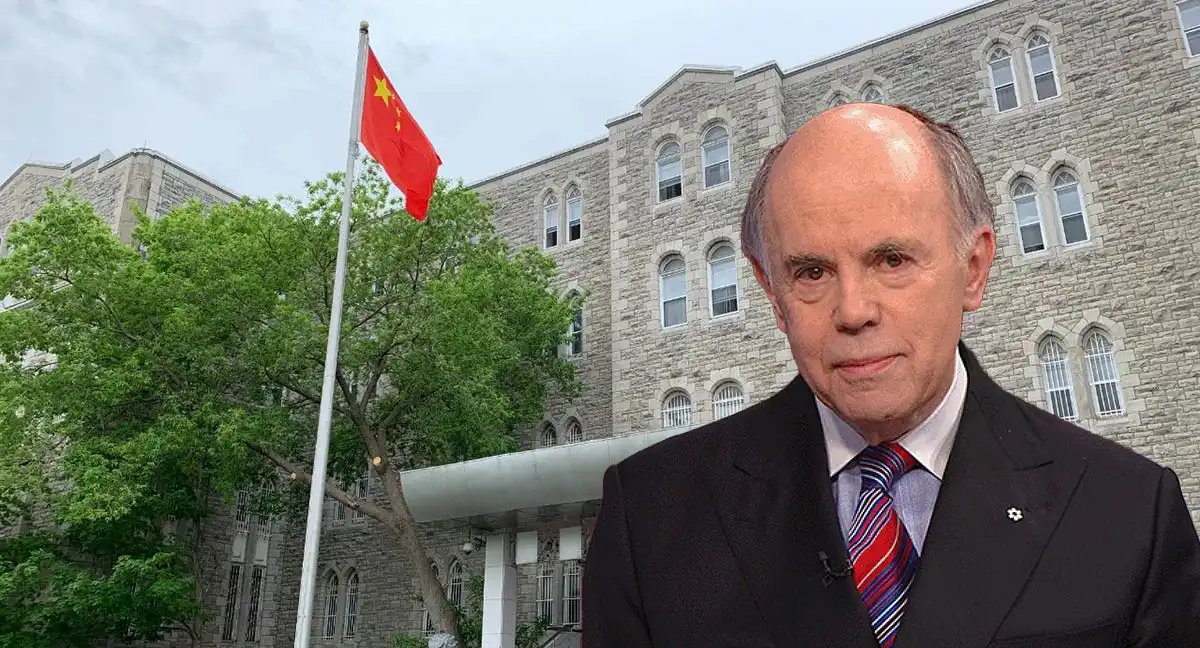
OTTAWA — A distinguished gathering of diplomats, scholars, and policy leaders convened Friday at the Embassy of the People’s Republic of China for a high-level symposium marking two milestones in Canada–China relations: the 55th anniversary of diplomatic ties and the 20th anniversary of the bilateral strategic partnership. The event featured three expert panels exploring the trajectory of the relationship—from its historical foundations to future possibilities in trade, diplomacy, and global governance.
The symposium was formally opened by Ambassador Wang Di, who reflected on the enduring nature of Canada–China ties and acknowledged the recent challenges that have strained the relationship. His message was forward-looking, emphasizing the need to move beyond past tensions. “It is time to look ahead,” he said, urging both countries to focus on constructive engagement and mutual benefit.
Moderating the first panel was Colin Robertson, one of Canada’s most respected former diplomats and a leading voice on international affairs. A career foreign service officer and former head of the Washington Embassy’s political section, Robertson has long been a trusted adviser on Canada–U.S. and Canada–Asia relations. His steady hand and deep institutional knowledge brought clarity and cohesion to a complex and timely conversation.
But it was the opening keynote by Thomas d’Aquino that set the tone for the day.
Widely regarded as the dean of Canadian business diplomacy, d’Aquino has spent more than five decades shaping Canada’s global economic posture. As founding CEO and now Distinguished Life Member of the Business Council of Canada, his fingerprints are on many of the country’s most consequential trade initiatives. His relationship with China spans back to 1970, when he served as a young speechwriter for Prime Minister Pierre Trudeau during the establishment of diplomatic relations with Beijing. Since then, d’Aquino has led CEO missions, advised prime ministers, and built enduring ties with Chinese leaders and institutions.
In his remarks, d’Aquino welcomed the recent thaw in Canada–China relations under Prime Minister Carney, but warned that any reset must be grounded in realism, reciprocity, and respect for red lines. He laid out seven guiding principles for a renewed partnership:
1. Rebuild on shared history: Canada and China are not strangers, but partners estranged by missteps and miscalculations. The time to repair is overdue.
2. See each other plainly: Acknowledge the differences in governance, values, and foreign policy—especially regarding Ukraine—while seeking common ground.
3. Pursue reciprocal economic benefits: Focus on sectors like agriculture, energy, clean tech, and financial services. But recognize the need for managed trade and strategic protections in light of China’s scale and industrial policy.
4. Respect red lines: Zero tolerance for interference in domestic affairs must be mutual. For Canada, this includes ending cyber-espionage, intimidation of Chinese Canadians, and IP theft.
5. Establish a comprehensive framework: Revive the spirit of the 2005 Strategic Partnership with clear goals, dispute resolution protocols, and structured cooperation.
6. Assert Canadian sovereignty: Canada’s close ties with the U.S. do not preclude an independent foreign policy. The Carney government’s export diversification strategy opens new doors for China–Canada collaboration.
7. Build trust at the top: Recent meetings between Prime Minister Carney and Premier Li Qiang, and Foreign Minister Anand’s visit to China, are promising. A prime ministerial visit to Beijing could lay the foundation for a durable reset.
D’Aquino’s address was both a personal reflection and a strategic roadmap. He recounted his own “China journey,” from early travels and CEO missions to historic moments like the Hong Kong handover and the Beijing Olympics. His deep engagement with China’s political and business elite has given him a unique vantage point—and a clear-eyed view of what’s needed to move forward.
The symposium’s agenda featured voices from across academia, business, and policy. Ambassador Wang Di and Senator Yuen Pau Woo delivered opening remarks. Panellists included Graham Shantz of the Canada–China Business Council, Larissa Bezo of the Canadian Bureau for International Education, Paul Samson of the Centre for International Governance Innovation, Professor David Wright from the Department of History at the University of Calgary and experts from institutions such as McGill University, the Chinese Academy of Social Sciences, and Carleton University.
As the day’s discussions unfolded, d’Aquino’s message remained central: the Canada–China relationship is too important to leave adrift. With renewed political will and pragmatic diplomacy, a reset is not only possible—it’s essential.