The Death of Dialogue: How Extremism Is Redefining Harm in Canada

Opinion: By Quinn St. Pierre

The hardest thing to stomach in the current political landscape, which has become increasingly extremist and increasingly accepting of violence, has been seeing the celebration of that violence and extremism coming from people I know and some corners of the political left. Everyone seems quick to justify and rationalise the violence of the day, but I’ve noticed that the way people seem to do that now has fallen in line with some of the oldest and most disturbing forms of Soviet-era rhetoric.

Growing up in Canada (a very liberal country to be sure), I’ve become accustomed to conservative ideas being ridiculed. In high school, expressing even moderate right-of-centre views often invited confusion or contempt. Conservative positions were frequently equated with the worst imaginable evils—fascism, monarchy, or even personal trauma. But recently, this rhetoric has spilt into real-world violence far too often.

The shooting of U.S. conservative commentator Charlie Kirk, which some have compared to the political violence of the 1960s, has sparked both condemnation and celebration. While many were horrified, others seemed emboldened—doubling down on rhetoric that paints conservatives as inherently evil. In Canada, this trend is increasingly visible, with conservative voices routinely equated to Trumpism or worse, regardless of their actual positions.

Much of this has come from flippant comments from acquaintances, which speaks to how far down the road of normalisation this kind of fear-mongering has gone. A friend mocked the shooting of Kirk. When I pushed back, he followed up with a comment about how it was the result of “class consciousness” and that Kirk was “fascist.”

Online, I’ve seen explicit calls for violent attacks on law-enforcement officers and conservatives, with the argument that certain opinions—ranging from support for private property and free speech to simply being part of “the system”—amount to “violence” and therefore merit censorship, repression, or even death. Some of the targeted views are as milquetoast as believing in private property or free speech. That raises a troubling question: how did we get to a place where words are treated as violence, and that framing is used to justify real, physical harm?

Historically, revolutionary ideologies—particularly early forms of socialism and communism—were often skeptical of democratic processes. Some even viewed democracy as a tool of oppression that needed to be dismantled through force. These movements were driven by the belief that their vision of society was morally superior and that any resistance to it was not just wrong but dangerous.

When moral certainty becomes absolute, violence can be rationalized. If you believe your ideology will liberate humanity, then silencing—or even eliminating—those who oppose it can feel justified.

This is not unique to the left; authoritarian regimes across the spectrum have used similar logic. But today, we’re seeing a troubling trend where mainstream conservative beliefs—supporting traditional marriage, opposing child transitions, or advocating for free speech—are labelled as violent, oppressive, or even genocidal.

Once nonviolent positions are redefined as violent, the door opens to dangerous outcomes. If speech is violence, then retaliation becomes self-defense. If disagreement is oppression, then silencing becomes justice.

People have insisted that conservative ideas are inherently violent, and therefore, death is a form of karmic balance. When I point out that those targeted are politicians participating in the democratic process—or, in Kirk’s case, debating on a college campus with no weapons, threats, or violent actions—the responses I received were striking. One person said, They put out negative energy and receive it back.” Another added, Violence in all forms is violence. Their words harmed people.”

This logic is deeply flawed. It’s the same reasoning used by regimes to suppress dissent. When definitions of harm, violence, and oppression become arbitrary, they can be weaponized against anyone. In some authoritarian states, the label “terrorist” is applied to peaceful critics simply to justify imprisonment. The term has a real definition—but it’s ignored when power is the goal.

As a French Canadian Arab, I asked my friend: “If someone’s comments ‘harm’ Arabs or French Canadians, does that mean I can kill them?” The question was met with silence. Because once you accept that subjective harm justifies violence, there’s no limiting principle. Anyone can claim to be aggrieved. Anyone can be a target.

This is not just theoretical. In Stalin’s Soviet Union, even loyal revolutionaries were purged as “counterrevolutionaries” when they became inconvenient to the regime.

When thought crime becomes real crime, no one is safe.

As someone from a Middle Eastern background, I find this especially disturbing. Many in my community hold conservative views—pro-life, pro-marriage, religious, agrarian. These are not violent beliefs. Yet I’ve heard people say that opposing socialized healthcare is violence, and that those who do should be shot. Others claim that traditional cultures are inherently oppressive and must be dismantled—even by force.

If we allow subjective definitions of violence to justify real violence, then anyone who holds unpopular views becomes a potential target. I’ve been told I’m a bad person for believing in marriage. Should that belief carry a death sentence?

We need to ask hard questions: Will those on the left hold themselves accountable for the rhetoric that dehumanizes conservatives? Will they recognize that disagreement is not evil? Will they defend the rights of religious and cultural minorities who don’t align with progressive orthodoxy?

When people are publicly vilified or compared to history’s worst actors without having committed any comparable wrongdoing, we cross a dangerous line—where reputations, careers, and even lives can be destroyed not for actions, but for beliefs.

That’s not justice. It’s ideological extremism. And it’s time we called it what it is.

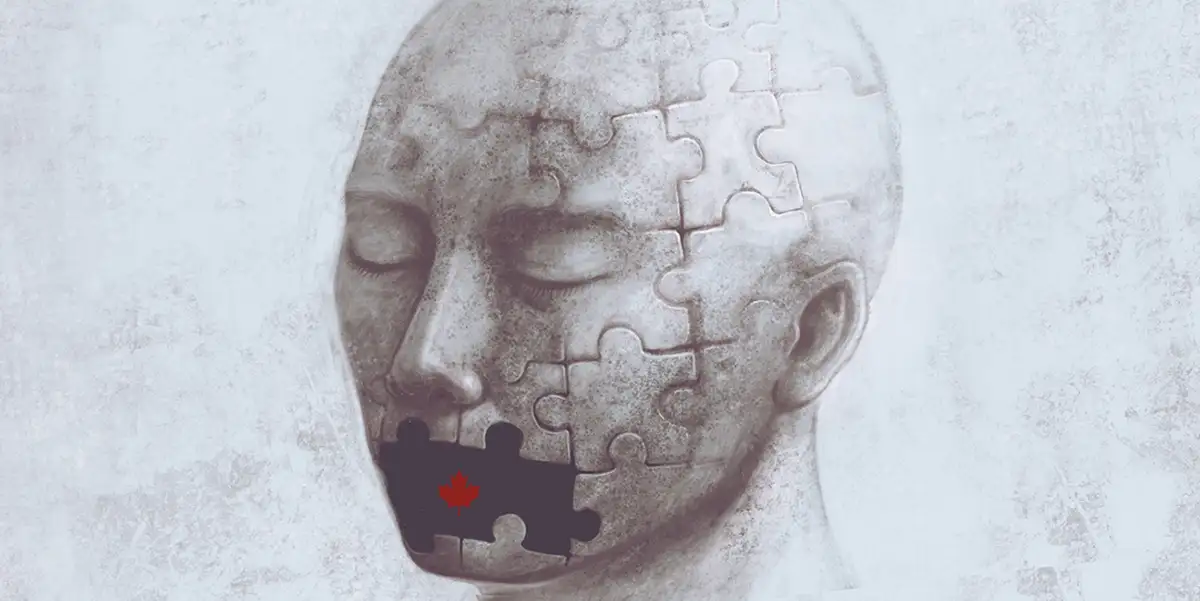
Image: Jorm Sangsorn, iStock