Ottawa Marks Lithuanian Freedom Defenders Day: Honouring the 1991 Fight for Independence
Between January 11 and 13, 1991, one of the most brutal acts during the fall of the Soviet Union took place. In what would become known as The January Events the people of Lithuania rose up to protest the continued occupation of their country by the Soviet Union, along with the two other Baltic states, Latvia and Estonia that were illegally annexed by the Soviet Red Army in 1940 after the signing, the Molotov-Ribbentrop Pact in which for nearly 18 months, the Nazis and communist Soviet Union coordinated control of Eastern Europe together.
As Perestroika and Glasnost saw liberalization of the Union of Soviet Socialist Republics (USSR), the Baltic countries began declaring their independence from the Soviet Union, rightfully claiming that they were never part of the Soviet Union and had been illegally occupied for over 45 years.
In March of 1990, Lithuania, then under Soviet rule, held a meeting of the independent Supreme Council of the Republic of Lithuania, which unanimously adopted an act that would restore Lithuania to the interwar independence it had gained after the First World War and subsequently lost to the Soviets in 1940. The act emphasized the restoration and legal continuity of the pre-Soviet occupied state.
However, 10 months later, despite playing the role of a reformer, Mikhail Gorbachev was in no way willing to let the Soviet Union fall apart and allow constituent republics to leave. Lithuania was the first of the 13 republics that constituted the former Soviet Union to make the brave decision declare independence from Soviet authority in Moscow.
Soon after, Moscow began moving in Soviet military special units, including airborne troops and KGB units, including the infamous Alpha group and subjected Lithuania to an economic blockade while still propping up the illegitimate Lithuanian SSR government.
By January 1991, a boiling point had been reached, and the Lithuanian government asked for a guarantee that Moscow would not send armed troops to quell the legitimate government of Lithuania. Gorbachev insisted that a constitutional order had to be maintained, meaning that the laws of the Soviet Union were to be upheld.
On January 11, Soviet forces began occupying strategic points around the country, resulting in the people of Lithuania taking to the streets to build barricades and defend their democratic institutions from the continued repression of the occupying communist forces.
By Sunday, January 13, 1991, more than 50,000 people had taken to the streets in the small country to protect the supreme council building, in which the legitimate government rested.
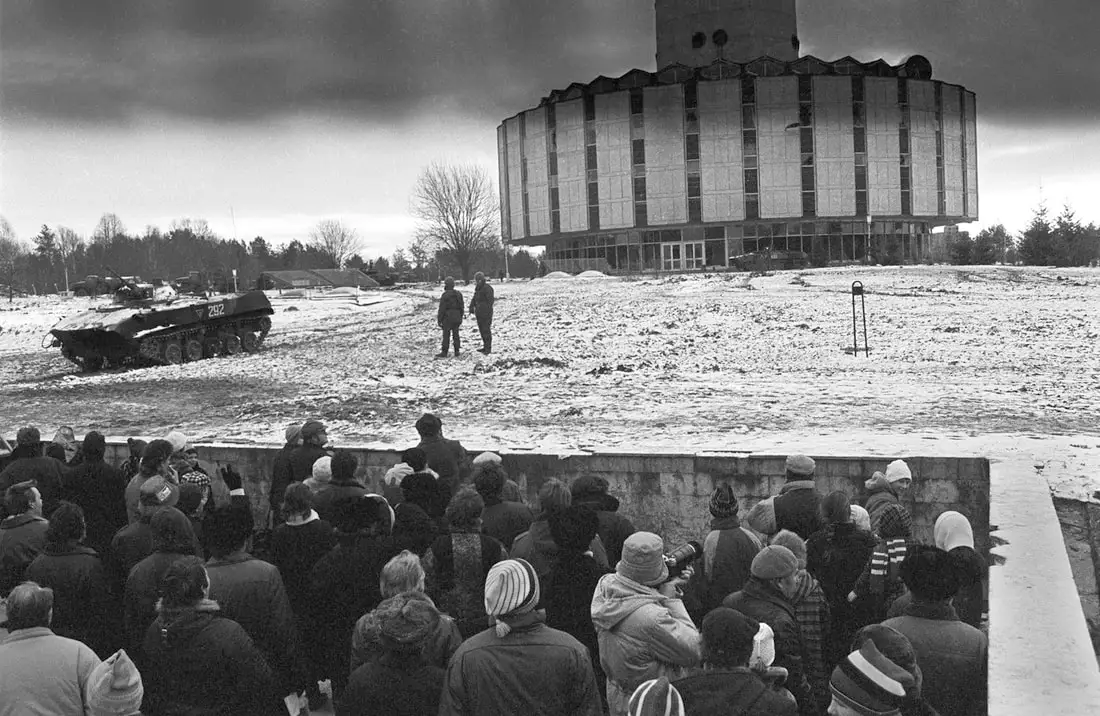
Soviet forces responded with utmost brutality at several spots, most notably the TV tower in the capital: opening fire on the protesters, killing 14 and injuring over 700. Less than a month later, on February 11, the people of Lithuania overwhelmingly voted in favour of their independence in a referendum to separate from the Soviet Union.
Even though the Soviet armed forces largely refrained from mass violence against their own people during the coup to overthrow Mikhail Gorbachev as the head of the USSR and depose Boris Yeltsin as the president of Russia, the USSR’s collapse was far from peaceful, despite popular belief. The sacrifice of the Lithuanian people showed great courage, inspiring other constituent republics to seek their own independence from Moscow.
January 2026 marks 35 years since the events in Lithuania, and to celebrate the bravery of the Lithuanian people, the city of Ottawa recognised January 13 as Lithuanian Freedom Defenders Day, while March 11, 2026, will mark 35 years since the restoration of the Lithuanian state.
Despite the triumph of the Lithuanian people and the restoration of their autonomy, Canada still has a role to play in defending this freedom. Latvia, Lithuania and Estonia all border Russia and face real worries that they too might face Russian military aggression as Ukraine has since 2014. As a result, Canada deploys soldiers to neighbouring Latvia to defend Europe and the Baltic countries, while Lithuania maintains a sizable military and has a NATO presence to protect itself.
During a recent meeting with the Lithuanian Ambassador to Canada, Egidijus Meilūnas, remarked upon his own participation in the protests of 1991 and how, despite the West’s expectation that Russia would return to being a ‘normal’ country, the pattern of aggression against Europe persists.
Like Ukrainians today, standing up to tyranny 35 years ago, Lithuania took the bold step of being the first to dismantle the Soviet Union and reclaim its rightful place as an independent country in the free world.
In 1991, a nation of just 2.6 million people proved that size is no measure of strength, showing the world that unwavering resolve, unity, and a refusal to surrender freedom can alter the course of history.
Header image: To silence the Lithuanians, Russian tanks rolled into Vilnius, where 14 people were killed, and hundreds were injured while trying to defend the television broadcasting tower. Photo: Romualdas Požerskis, via https//:lithuania.lt.news