

The Wild History of Snowboarding: How Canada Helped Shape an Olympic Icon
Over the next two weeks, millions of Canadians will tune into snowboarding events at the 25th Winter Olympics. After all, the sport, which covers both time‑trial and artistic disciplines, is one of the most famous winter events. However, for decades before it was legitimized by the biggest international competition on Earth, snowboarders could barely get into ski resorts!
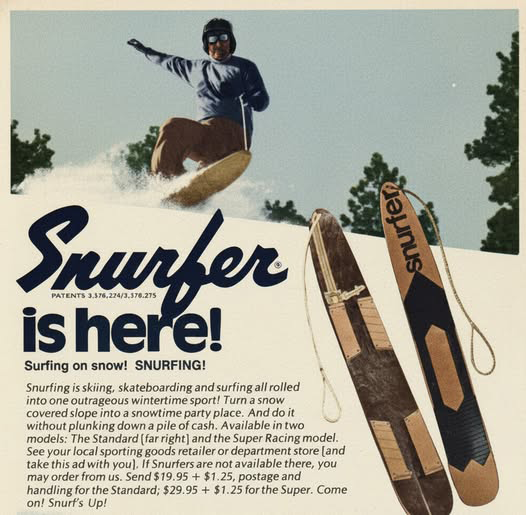
The Winter Olympic sport has origins as a Christmas present of convenience. On December 25th, 1965, Michigan engineer Sherman Poppen fastened two children’s skis together so that his daughters would be encouraged to play outside and allow his pregnant wife to rest.

Seeing the device’s effectiveness at keeping his young daughters on the snowmounds, Poppen filed a patent in the new year and licensed what would later be dubbed the “Snurfer” to Brunswick Corp. By the end of the year, the toy was being distributed nationally.
The Snurfer entered the market at a time when Beach Boys hits dominated the radio and gnarly new slang was being coined. Consequently, it rode the wave of the ’60s surfing craze by appealing to young North Americans who had slopes in lieu of California coasts, selling over a million units by 1970.
In addition to its functional similarities to a surfboard, the Snurfer also attracted a countercultural community of users. By the late 1970s, the term “snowboard” had taken over as the activity transitioned from a gimmick to an actual pastime.
“It evolved in a very rules‑free environment,” says Rich Hegarty, a Snowboard Canada official. “Because the sport didn’t exist, there was no criteria or competition formats.”
Throughout the 1980s, snowboarders were banned from the majority of ski resorts. Tensions rose on the slopes, with skiers accusing snowboarders of invading their territory. Nevertheless, the community persisted, with competitions beginning to pop up in Canada, the U.S., and Europe.
During this time, there was still disagreement on what specific events should look like. Hegarty says, “The disciplines took a lot of time to come together, and there were a lot of experiments.”
By the end of the decade, ski resorts had finally started to construct courses designed for snowboarders. The world now viewed snowboarding as a true sport rather than a mere fad.
Just as all trendy musicians eventually get signed to labels, sports become institutionalized once they reach a certain level of popularity. In 1991, the Canadian Snowboarding Federation (CSF) was founded to govern all national snowboarding competitions.
Then, in 1994, the International Olympic Committee (IOC) recognized the International Ski Federation as the sanctioning body of snowboarding should it appear at an Olympics. “There was a lot of controversy around it. The counterculture did not enjoy that this big ski organization had become the sport’s governing body,” says Hegarty. “Some were even opposed to snowboarding becoming an Olympic event in the first place.”
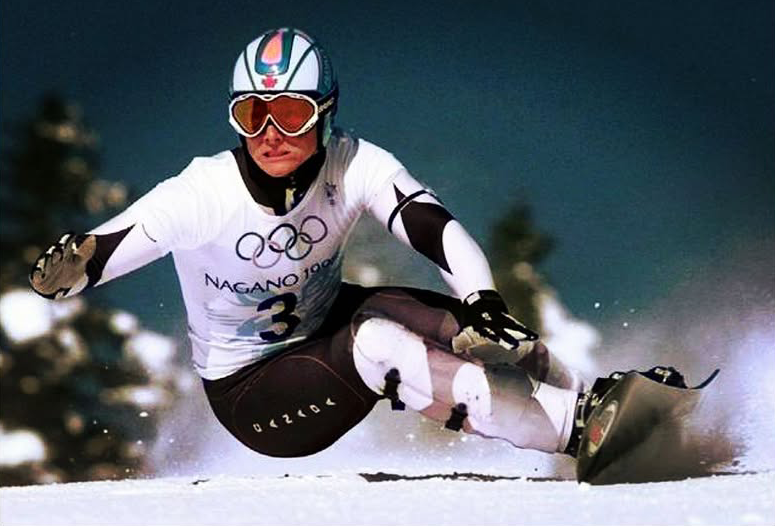
Despite protests that divided athletes and fans, the IOC confirmed that snowboarding would make its debut at the 1998 Winter Games in Nagano, Japan.
The sport appeared at the Olympics with two disciplines: giant slalom and halfpipe, each with a men’s and women’s division. In giant slalom, athletes weave through a series of poles under a time trial, while halfpipe involves freestyle tricks.

ABOVE: Canadian snowboarder Ross Rebagliati in 1998.
Canada began its Olympic snowboarding record on a high note, with Ross Rebagliati winning the inaugural gold medal in the men’s giant slalom on February 8, 1998.
However, this triumphant occasion was interrupted just three days later when trace amounts of THC were found in Rebagliati’s urine, causing his gold medal to be revoked. Fortunately, he successfully protested the decision by asserting that cannabis had no performance‑enhancing effects.
Since that dramatic debut, Canada has won a total of 17 medals in Olympic snowboarding, including five golds. Meanwhile, three new disciplines have been introduced: big air, slopestyle, and parallel cross.
At the 2010 Games in Vancouver, slopestyle competitor Maëlle Ricker became the first Canadian woman to win a gold medal on home snow. Notably, the course where her victory occurred was located just minutes from her childhood home.

Above: Canadian snowboarder Maëlle Ricker.
Perhaps the greatest Canadian snowboarder of all time is Mark McMorris, a slopestyle competitor who is the most decorated Winter X Games athlete in history. He has won 12 gold medals there, most recently last week in Aspen. Additionally, McMorris earned bronze medals at the 2014, 2018, and 2022 Olympics. In 2022, the gold in men’s slopestyle went to another Canadian, Max Parrot.
Yesterday, men’s qualifiers in the big air division kicked off snowboarding events at the 2026 Olympics in Milan. Sadly, McMorris crashed and was taken off the course on a stretcher, but was released quickly from the hospital. McMorris shared on Instagram that he won’t be competing in big air and has shifted focus to slopestyle, scheduled to begin February 16.
Even after a frightening crash, Canada’s Olympic snowboarding legacy endures, as Canadian athletes have won 17 Olympic medals since Ross Rebagliati debuted at Nagano in 1998. There’s no doubt that Team Canada will look to add a few more medals to its already impressive collection.
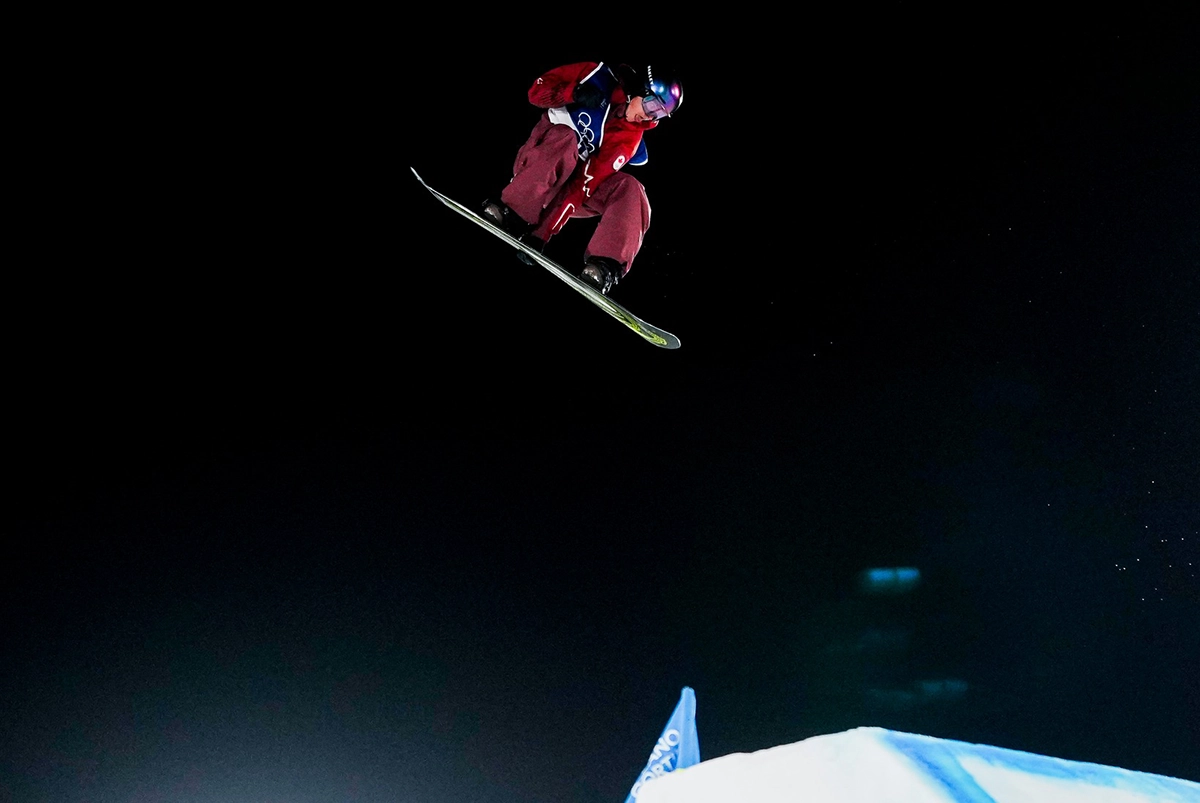
Header image: Canada’s Francis Jobin, who qualified for the snowboard big air finals at the 2026 Milano Cortina Olympics. Photo: facebook.com/teamcanada