Why L-Shaped Corner Standing Desks Are Ideal for Spacious Workstations
People who spend any real time trying to optimize a home office already know the challenge. Space is one thing, but making that space actually work for how you live and work is another. The layout of your workspace shapes everything from your productivity to how you feel at the end of a long day.
Just for you to know! If you’re looking to upgrade your setup and make better use of the spare room you have, the shape of your desk matters more than most people expect. Rectangular desks are fine. However, they leave a lot of potential untapped. Corner desks are worth a closer look. Especially the kind that let you stand and sit throughout the day.
The Case for Going Corner
A standard desk pushes you into a linear workspace. Everything sits in front of you in one direction. Corner desks change that idea entirely. They fill the angle of a room and give you two distinct surface zones. You can use them in completely different ways.
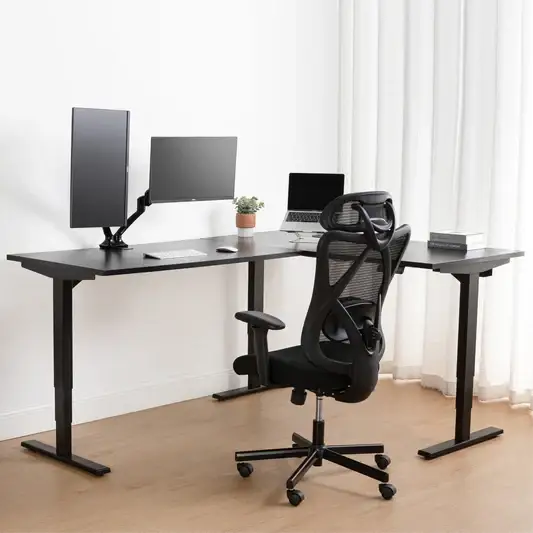
In practice, this usually means a primary work surface for your monitor, keyboard, and whatever you’re actively doing. And you also have a secondary surface for reference materials, a second screen, a notebook, a coffee mug or anything else your workflow demands. The two zones sit at a slight angle to each other. This keeps everything within reach. It doesn’t require you to shuffle things around constantly.That kind of zoning makes a real difference for people who do a mix of tasks throughout the day. Writers, designers, remote professionals managing multiple projects, anyone who regularly switches between focused screen work and paper or peripheral tasks will feel the benefit quickly.
Why the Standing Function Matters for This Shape
A corner desk alone is useful. It becomes considerably more versatile when you pair that layout with height-adjustable legs.
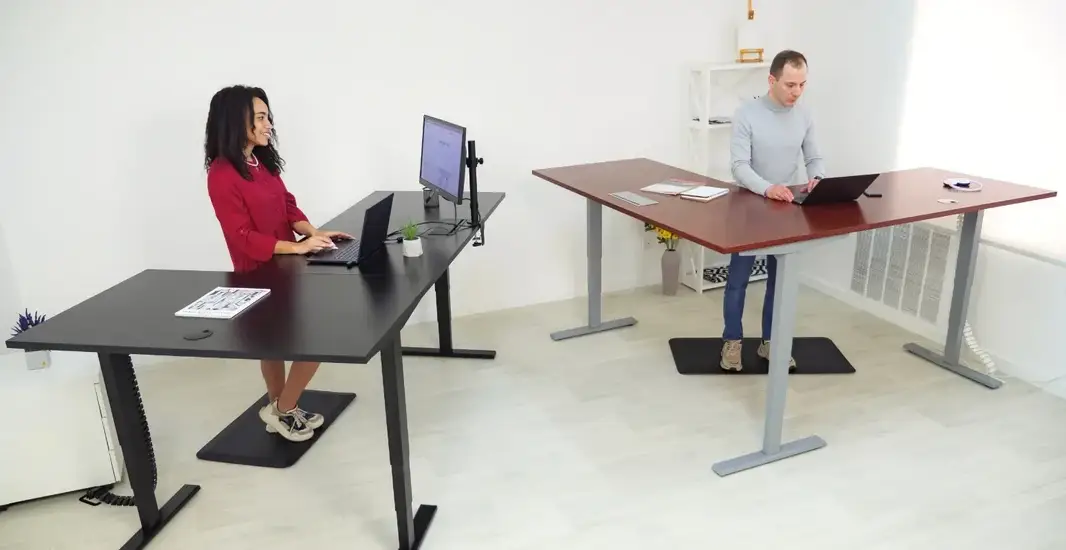
An L-Shaped Standing Desk lets you raise and lower the entire surface throughout the day. This means you’re not just benefiting from the extra space but also from the ability to stand during calls, lower it for focused work, and generally keep your body out of the same static position for hours at a stretch. Lower back tension, afternoon fatigue, neck stiffness from a monitor that isn’t quite at the right height after slouching into your chair. These are all things that get better when you can actually adjust your setup rather than adjust yourself to accommodate a fixed desk.
The combination of a corner layout and sit-stand functionality is genuinely greater than the sum of its parts. You get more surface area, better workflow organization, and better physical comfort. That’s a fairly rare combination in any piece of furniture.

Practical Setup Tips for an L-Shaped Standing Desk
It takes a little thought at the initial stage to get the most out of this kind of desk. A few things that matter:
Monitor placement. With two zones available, you have real options. A single monitor works well centered on the primary wing. Two monitors give you the chance to place one on each surface at a slight inward angle. This placement reduces the amount of head turning required and keeps both screens in a natural sightline.
Cable management. More surface means more potential for cable chaos. Built-in grommets or a cable tray make a big difference in keeping things clean. It’s one of those things you don’t think about until everything is plugged in and the desk looks like the back of a server rack.
Anti-fatigue mat positioning. When you raise the desk to standing height, you want a mat positioned in your primary standing zone. With a corner desk, figure out which wing you’ll stand at most, and place the mat there rather than trying to cover both sides.
Corner zone use. The inner corner of the L tends to be awkward to work in directly. However, it’s ideal for keeping things you need nearby but not in your active workspace. You can place a wireless charger, a small lamp, a plant, or even a second monitor arm in that zone comfortably.
Who Actually Benefits Most From This Setup
Not every workspace needs an L-shaped setup. If you work in a small apartment and you try fitting a desk into a tight nook, a compact standing desk makes more sense. But L-shaped is hard to argue against if you have a proper room dedicated to work or a large enough space to work with.
Remote workers who spend the full business day at their desk are the obvious candidates. As well as, people with dual-screen setups who work across multiple tasks simultaneously, creative professionals who need physical reference space alongside digital workspace, and anyone who just wants a setup that doesn’t feel cramped.
The Long-Term Value of Getting It Right
Talking about furniture, it’s better buying quality once than replacing budget options every few years. A well-built height-adjustable corner desk, properly sized for the room and suited to how you actually work, is something you can keep for a decade without regret.
The ergonomic benefits compound over time in the same way. Avoiding the postural issues that come from years of poorly set up sedentary work is worth a lot more than it costs. The upfront investment looks different when you factor in the alternative.
People tend to think about what actually works, what lasts, and what makes day-to-day life genuinely better. A spacious, height-adjustable corner desk fits that mindset pretty well.