Stitching Connection: Yarn Bombing Returns to Ottawa for National Deafblind Awareness Month 2026
June marks the 11th anniversary of the Senate of Canada’s declaration of National Deafblind Awareness Month, a milestone that continues to expand visibility and understanding for people who are deafblind across the country. This year, communities in Canada and abroad are once again wrapping public spaces in colour as part of a global yarn bombing initiative led by Deafblind International, a movement that has steadily grown since 2020.
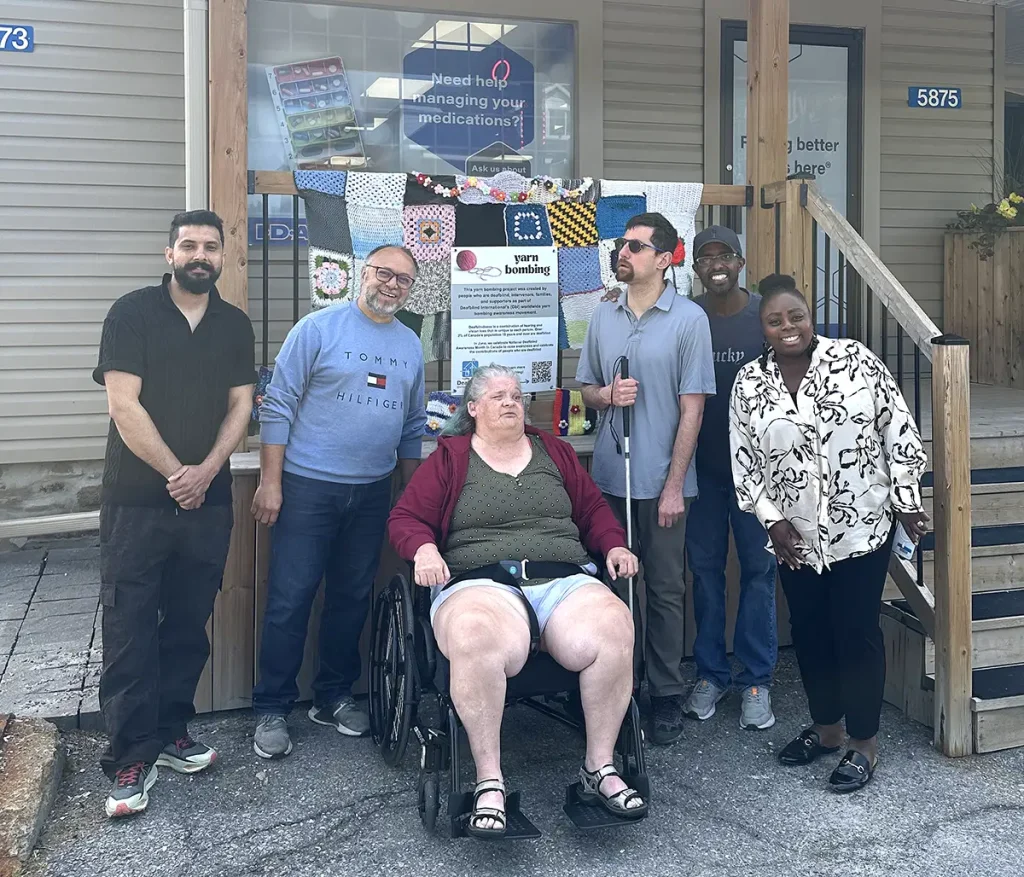
Ottawa joins the effort on June 2 when DeafBlind Ontario Services unveils its 2026 installation at the I.D.A. Vars Medical Pharmacy, the official launch site for this year’s awareness month.

ABOVE: The I.D.A. Vars Medical Pharmacy kicked off #NationalDeafBlindAwarenessMonth with a yarn bombing spotlight!
A Global Movement With Local Roots
Yarn bombing, the practice of covering trees, poles, benches, and buildings in knitted or crocheted work, has become one of the most recognizable symbols of deafblind advocacy. What began as a form of street art has evolved into a tactile, community-driven expression of connection. For individuals who are deafblind, the textured nature of the installations offers a way to engage with public art beyond sight and sound.
In 2026, DeafBlind Ontario Services is again participating in the Create and Connect campaign, a worldwide initiative encouraging communities to use creativity as a bridge to understanding. Installations will appear across Ontario, including London, St. Thomas, Kitchener, Innisfil, Newmarket, Peterborough, Cobourg, Oshawa, Ottawa, and Greater Sudbury. Each one serves as a visible reminder that accessibility is a shared responsibility.
Understanding Deafblindness in Canada
More than 602,000 Canadians aged 15 and over are deafblind, according to the 2022 Canadian Survey on Disability, a number that rises sharply with age. Deafblindness exists on a spectrum. Some individuals are born deafblind due to genetic conditions such as Usher Syndrome, while others acquire it later in life through illness, injury, or aging.
Communication methods vary widely and may include Tactile American Sign Language, Braille, haptic communication, and adaptive technologies. Despite the challenges, people who are deafblind lead full and independent lives, often supported by organizations like DeafBlind Ontario Services, which provides specialized programs, supported living homes, and round the clock intervenor services tailored to each person’s communication style and goals.
Ottawa’s 2026 Installation: A Community Effort
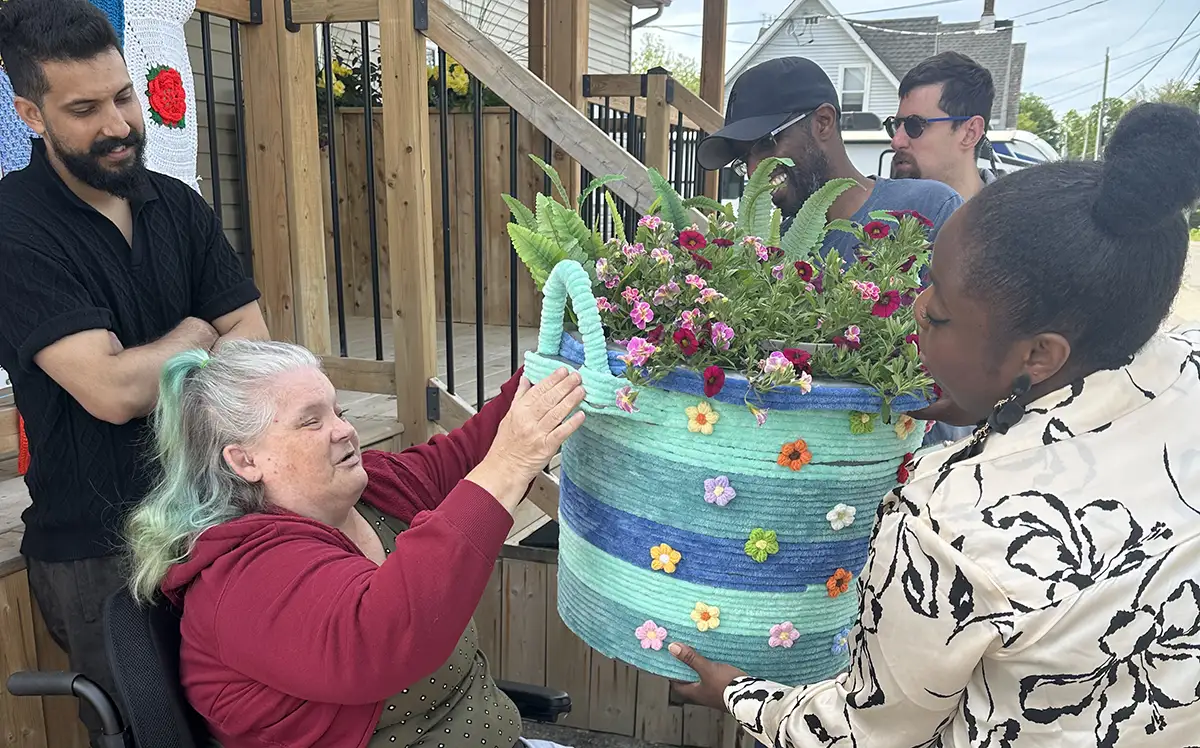
This year’s Ottawa installation at the Vars pharmacy reflects the spirit of the global movement. It is community made, tactile, colourful, and grounded in connection.
Madison Smith, Communications Specialist at DeafBlind Ontario Services, says the June 2 launch offers strong visual storytelling opportunities and the chance to connect with community members and organizers involved in this global initiative. The event brings together supporters, local residents, and individuals who are deafblind to unveil the installation and mark the start of a month dedicated to awareness and inclusion.
The yarn pieces themselves are created by people supported by DeafBlind Ontario Services, as well as by intervenors, volunteers, knitting groups, and community members. It is a collaborative process that mirrors the month’s broader message: Inclusion is built, not declared.
Art, Advocacy, and the Work Ahead
While yarn bombing brings colour and conversation to public spaces, National Deafblind Awareness Month also highlights the ongoing need for stronger accessibility policies, better employment opportunities, and improved public transit accommodations for individuals who are deafblind.
Technology continues to reshape what independence looks like. Haptic feedback devices, speech-to-Braille software, and AI-powered accessibility tools are helping people who are deafblind navigate the world with greater ease. But awareness, human awareness, remains the foundation for lasting change.
As one advocate supported by DeafBlind Ontario Services put it, “It is important for people to know about people who are deafblind so they can understand their challenges, communicate respectfully, and help create a more inclusive and supportive community.”
A Month to Learn and Connect
Ottawa’s 2026 yarn bombing installation is more than a burst of colour. It is a tactile reminder that inclusion is something built stitch by stitch through awareness, conversation, and community effort. In a world that often prioritizes sight and sound, these installations invite us to rethink how we communicate and how we design public spaces so that everyone can participate fully.
For more information, visit DeafBlindOntario.com and follow DeafBlind Ontario Services on Facebook, Instagram, and Threads.
Photos: Courtesy deafblindontario.com