

• By: Dan Donovan

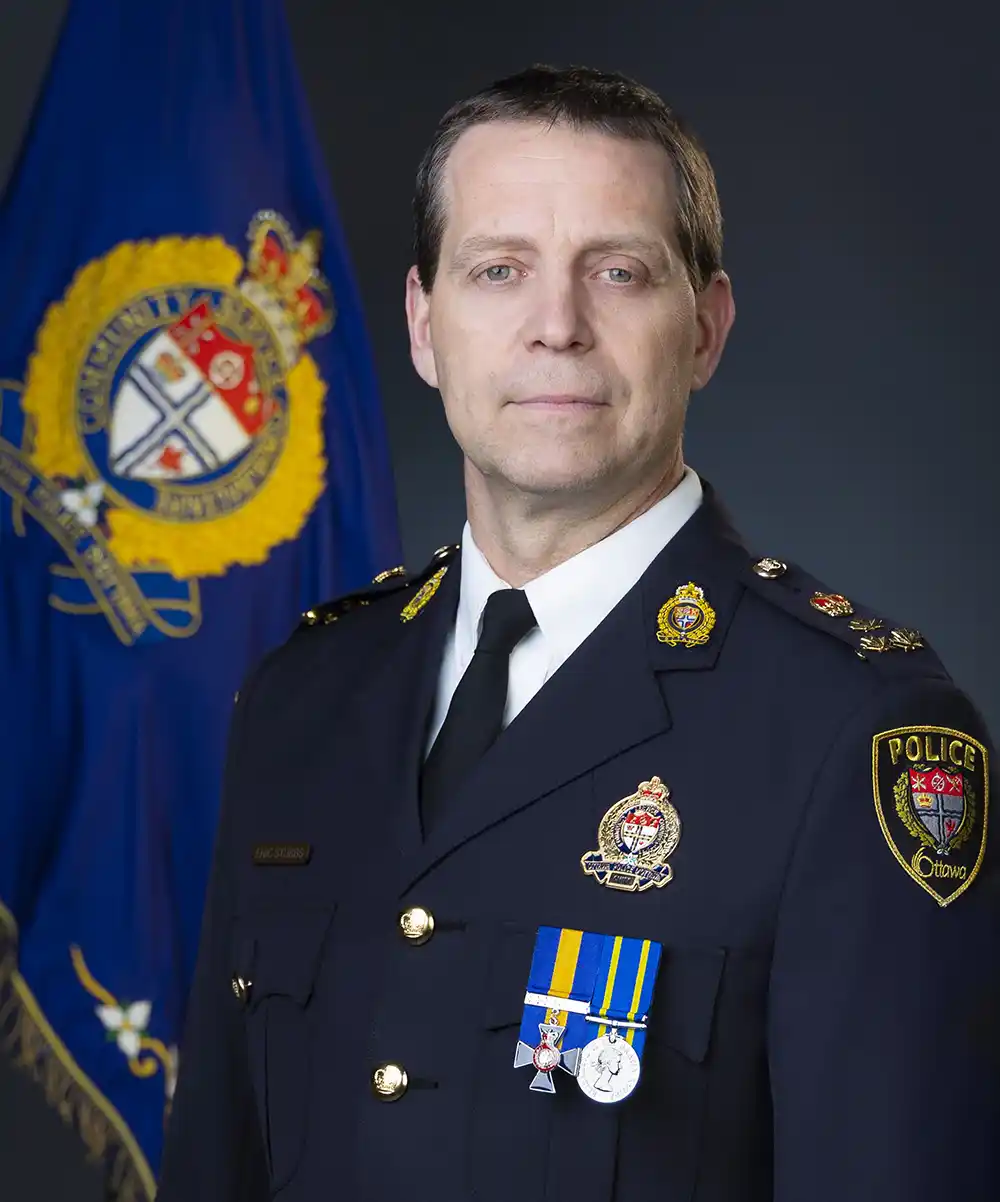
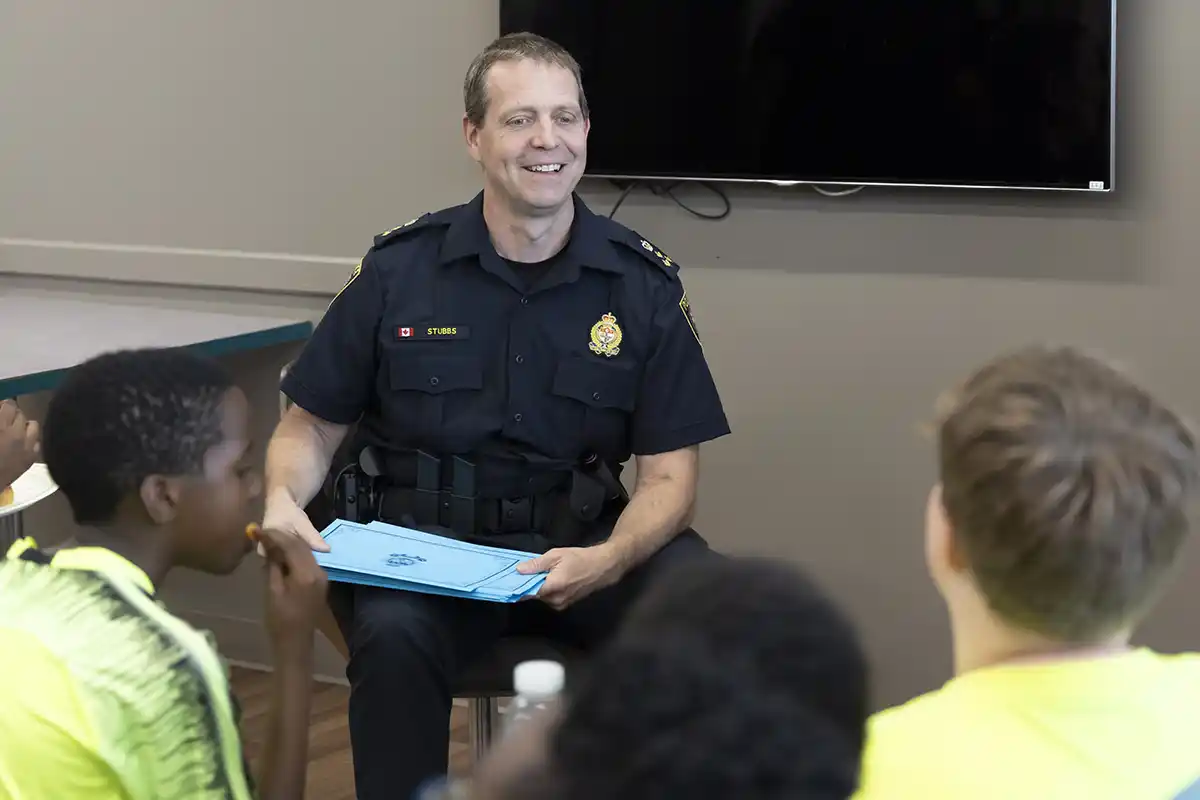
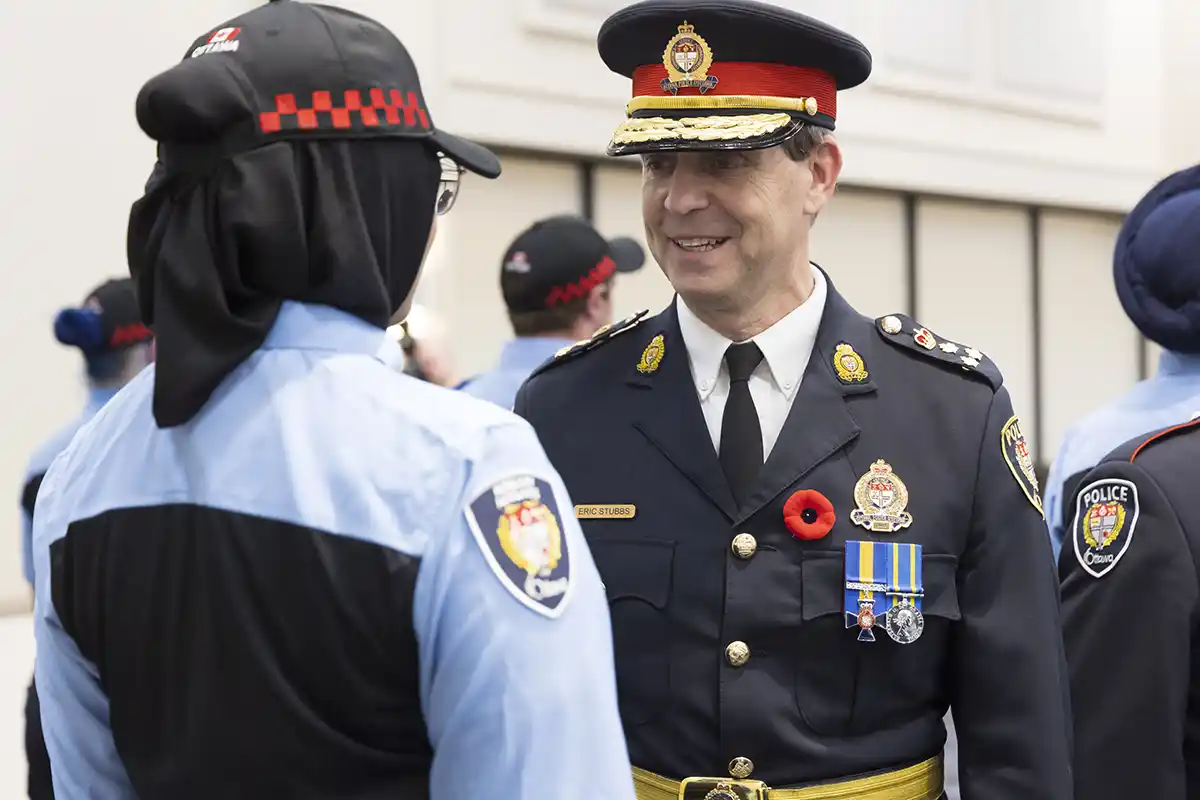
Rebuilding the Ottawa Police: Chief Eric Stubbs on trust, accountability, misconduct, staffing and the future of the Ottawa Police Service

The Ottawa Police Service has spent the past four years trying to rebuild something that is difficult for any institution to regain once it has been seriously damaged: public confidence.

The crisis that engulfed Ottawa during the 2022 trucker protest exposed deep problems within the city’s policing and civilian oversight structures. The occupation of downtown Ottawa lasted for three weeks, placing extraordinary pressure on the police service, municipal government and residents and businesses in the core. The subsequent Public Order Emergency Commission examined the response in extensive detail and documented significant problems involving police leadership, planning, communication, coordination and the deployment of resources.

The institutional consequences were immediate.

On February 15, 2022, Chief Peter Sloly resigned as Ottawa’s police chief after weeks of mounting criticism and internal and external pressure. Deputy Chief Steve Bell became interim chief. The Police Services Board then underwent its own upheaval, with Diane Deans removed as chair shortly afterward. The Public Order Emergency Commission described the changes as a dramatic transformation of both OPS and the Police Services Board leadership at the height of the crisis.

The damage to confidence was not simply about one protest or one police operation. It raised fundamental questions about whether Ottawa’s police service had the leadership, staffing, command structure and organizational culture necessary to provide what the legislation calls adequate and effective policing.

Those questions did not disappear when the trucks left Wellington Street.

OPS subsequently faced continuing scrutiny over staffing levels, emergency response times, workplace culture, internal accountability and police conduct. One particularly troubling area has been the unauthorized use of police information systems. In a recently published disciplinary case, for example, an OPS constable was alleged to have conducted dozens of unauthorized searches of police databases for personal reasons, illustrating why control over sensitive police information remains an important accountability issue.

At the same time, Ottawa’s policing environment was changing rapidly.

Mental-health crises, homelessness, addiction, organized crime, cybercrime, intimate-partner violence, firearms offences and human trafficking have complicated the traditional model of frontline policing. The geographical scale of Ottawa adds another challenge. The city covers approximately 2,780 square kilometres, while the police service has fewer sworn officers than some similarly sized Canadian services.

Then there is the financial pressure.

Approximately 85 per cent of the OPS operating budget goes toward compensation. The Service is forecasting an operating deficit of approximately $22 million in 2026, with non-recoverable overtime, compensation-related costs and investments in the District Community Policing Model among the pressures identified by the Chief.

It was into this environment that Eric Stubbs arrived.

Stubbs joined the Ottawa Police Service in November 2022, following a career with the RCMP that began in 1993 and included senior policing assignments in British Columbia and at RCMP headquarters in Ottawa. Before joining OPS, he had served in senior operational and investigative roles involving large numbers of frontline detachments and specialized units.

His appointment came at a moment when the Service needed more than a new chief. It needed stabilization.

Three years into his tenure, the question is whether that stabilization has developed into something more enduring: a fundamental renewal of the institution’s culture, operational capacity, accountability and relationship with the public.

In this Ottawa Life Magazine interview, Chief Stubbs discusses what he found when he arrived, the effort to rebuild staffing, the changing nature of policing, emergency response times, misconduct and unauthorized database access, workplace culture, the new district policing model, the financial pressures confronting OPS, federal funding for national-capital policing and the role of technology in the Service’s future.

Stabilizing an organization under pressure

Ottawa Life Magazine: Chief Stubbs, when you took command in late 2022, OPS was emerging from one of the most turbulent periods in its history. What was the first internal reality you felt needed to be addressed before any meaningful reform could begin?

Chief Stubbs: My first responsibility was to listen and learn; to understand the organization, our people and the pressures they were facing. I found an extraordinarily dedicated team that remained committed to serving this community, but it was also clear that years of staffing pressure and sustained operational demands had placed significant strain on members across the Service. We needed stability, clear priorities and a deliberate plan to rebuild capacity, which is why staff stabilization became one of the foundations of our work.

Ottawa Life Magazine: Ottawa’s policing demands have changed dramatically. Mental health, addiction, homelessness, cybercrime, and organized crime now dominate frontline workload. How has OPS adapted operationally to this new reality?

Chief Stubbs: The demands placed on police have changed significantly, and we cannot respond to every challenge with the same tools or with enforcement alone. We are adapting through district policing by focusing on the priorities and needs of different areas. We are strengthening our capacity, our use of modern technology and building closer partnerships with health, housing, social-service and community organizations. The Downtown Core Safety Plan is a current example of that approach: visible and targeted policing is combined with outreach, prevention and coordinated work with partners who are better positioned to address underlying needs. While we believe this plan has had a positive impact, there is much more work to do for police and our partners.


Editor’s note: The Downtown Core Safety Plan includes visible foot, bicycle, vehicle and mounted patrols, targeted enforcement, problem-oriented policing and coordination with community and social-service partners. The Mounted Unit is a high-visibility patrol that can be operational for crowd management, search support and community engagement. The OPS continues to develop responses involving mental health and substance use that preserve police capacity for incidents involving immediate risk or criminality. The OPS is also focused on cybercrime, fraud, intimate partner violence, human trafficking, firearms and organized crime require specialized training, investigative expertise and technology. 

Rebuilding the ranks

Ottawa Life Magazine: OPS undertook its largest recruitment intake in history in 2024. What operational gaps were you aiming to close, and how close is OPS to meeting its staffing and capacity targets?

Chief Stubbs: The Staff Stabilization Strategy was designed to address longstanding staffing pressures and rebuild the capacity needed to provide adequate and effective policing as Ottawa continues to grow. We have met our annual hiring targets under the strategy, and that progress is helping stabilize frontline and organizational capacity. The work does not end in 2026; we are now developing future hiring targets so that we can sustain that progress and continue aligning resources with the evolving needs of the community. Recent audits and assessments have informed us that we have a ways to close the gap, but we have stabilized the service and that was the first goal.

The Staff Stabilization Strategy, implemented in 2024 and continuing through the end of 2026, was developed because OPS staffing growth had not kept pace with Ottawa’s population growth, leaving OPS with one of the lowest officer-to-population ratios among comparable Canadian police services.

The strategy also responds to increasing crime complexity, rising calls for service, health-related absences and attrition through retirements and resignations.

OPS has met its annual hiring targets under the strategy, hiring approximately 145 sworn members and 40 civilian members each year. These resources have supported frontline capacity and service delivery across the organization.

The test of response times

Ottawa Life Magazine: OPS continues to face pressure on emergency response times. What structural or staffing changes are underway to improve performance in this critical area?

Chief Stubbs: Emergency response is one of the most important measures of the service we provide, and it is something we watch very closely, we monitor regularly and adjust our deployment based on that. We have our Community Connect program that gives us feedback direct from the residents we’re dispatched to help through 911. We want to make sure the right resources are being used for the right calls. Through staff stabilization, additional Special Constables, and alternative responses for some mental-health calls, we are seeing encouraging signs of improvement, particularly where staffing levels have increased.

OPS measures police response from the time a 911 operator answers the call until the first officer arrives on scene. Current 2027 service standards are: Priority 1 — 15 minutes or less, 95 percent of the time; Priority 2 — 15 minutes or less, 90 percent of the time; Priority 3 — 30 minutes or less, 90 percent of the time; and Priority 4 — 120 minutes or less, 90 percent of the time.

Priority 1 performance remains close to target; Priority 2 has been stable with early improvement in 2026. Priority 3 and Priority 4 represent nearly 70 percent of citizen-initiated mobile-response calls and remain the principal pressure point, with early improvement in Priority 3 while Priority 4 has remained relatively stable.

Project Complement increased District Special Constables from 4 to 18, adding operational capacity and allowing sworn officers to focus on core policing responsibilities. The Staff Stabilization Strategy has increased attendance from 87 percent to 90 percent, and Q1 2026 analysis identified a direct relationship between patrol staffing levels and faster response.

OPS has completed its Next Generation 9-1-1 cutover and expanded alternative mental-health response. Community Connect surveys sent after Priority 3 and 4 calls show 86 percent overall satisfaction, 83 percent satisfaction with response time and 94 percent satisfaction with officer fairness.

Misconduct and the abuse of police information

Ottawa Life Magazine: The unauthorized database-access cases revealed serious cultural and compliance failures inside OPS. What did you learn from these investigations, and what concrete steps have you taken to ensure this cannot happen again?

Chief Stubbs: While these were a few cases, a few cases are too many. The vast majority of OPS members serve this community honourably and professionally every day. Acknowledging that does not diminish the harm caused when some members fall short of the standards expected of them. These cases demonstrated that clear policies are not enough if expectations are not consistently reinforced, monitored and enforced. We still strengthened the policy, and increased the penalties associated with unauthorized access, but it was important to be clear to the entire service what the expectations are and that this would not be tolerated. Unauthorized access to police information is a serious abuse of trust, and members must understand that our systems may only be used for legitimate policing purposes. We have strengthened the focus on supervision, auditing, training, reporting and accountability, while also addressing the broader workplace behaviours.

“Change your behaviour or leave”

Ottawa Life Magazine: You delivered a blunt message to OPS members — “change your behaviour or leave.” What led you to take such a direct approach, and how has the organization responded internally?

Chief Stubbs: I took a direct approach because the conduct we were seeing was serious, it was causing real harm, and members needed to hear clearly that it was incompatible with the values of our service. The message was not directed at the overwhelming majority of OPS members who serve professionally and want the same thing: a respectful workplace and a police service the community can trust. The internal response has been largely supportive because our members do not want the actions of a small number of people to define them or undermine the work they do every day.

Transparency and rebuilding trust

Ottawa Life Magazine: You have been more publicly transparent about internal misconduct than previous OPS leadership. Why did you choose this approach, and how do you measure whether transparency is rebuilding trust?

Chief Stubbs: Transparency is not a communications tactic; it is part of accountability and part of how an institution earns trust. I chose to speak about it in the way I did because it was the best way to address our entire service. Despite 99 percent of our members serving this community honourably and professionally every day and not being the ones committing these acts, all of us have to be part of the solution. Trust will not be rebuilt through one statement or one initiative, but rather it will be measured over time through our actions, the information we provide, the confidence people have in reporting concerns and whether they can see meaningful, measurable change.

Who should respond to a crisis?

Ottawa Life Magazine: Modern policing increasingly requires coordination with health care, housing, and social services. What does effective partnership look like to you, and how is OPS adapting to this reality?

Chief Stubbs: Effective partnership means being clear about the role police should play and ensuring the right service responds to the right need. Police must be present when there is an immediate threat to safety or a criminal investigation, but we cannot solve homelessness, addiction or unmet health needs through enforcement alone. Our Community Safety and Well-Being framework is helping us take a more coordinated approach, working with health, housing, social services, community organizations and other partners to address concerns earlier and, where possible, prevent situations from reaching the point where a police response is required.

We are seeing a real increase in the willingness of organizations and communities to work with police, and we have invested in those relationships. The Integrated Community Situation Table is one example, bringing partners together to identify elevated risk and coordinate supports before situations escalate. We have also introduced civilian Community Intake and Relations Specialists in our districts to act as connectors between residents, community partners and police resources, helping us better understand local concerns and connect people with the appropriate services. Those relationships—with social agencies, communities, the City, businesses and other partners—are an important part of how we are changing the way policing is delivered in Ottawa.

Three years in: what does renewal look like?

Ottawa Life Magazine: Three years into your tenure, OPS appears more stable but still faces significant cultural and operational challenges. What does long-term institutional renewal look like to you, and what must OPS achieve to get there?

Chief Stubbs: We’re building an organization that is operationally capable, financially responsible, modern and worthy of the trust placed in it. District policing is a major part of that renewal. Ottawa is a large and diverse city, and the policing needs in the downtown core are not the same as those in suburban or rural communities. The district model is about putting more responsibility, resources and decision-making closer to the communities we serve, so local leaders can identify priorities, build relationships and deploy resources based on the needs of their area rather than relying on a one-size-fits-all approach.

It also creates clearer accountability. Our teams have greater ownership of local outcomes, whether that is crime, disorder, traffic safety, community concerns or access to police services. Over time, that should mean stronger relationships with residents and partners, better use of our people and more consistent service across Ottawa.

At the same time, renewal also requires us to stabilize our workforce, modernize how we use people and technology, strengthen partnerships and continue the difficult work of improving workplace culture and accountability. Success will be reflected in reliable service, a healthy and professional workforce, transparent decision-making and measurable results for the community.

The cultural change that must last

Ottawa Life Magazine: As you look ahead, what is the single most important cultural or operational change OPS must achieve to ensure lasting reform?

Chief Stubbs: Again, we’re building an organization where our people have the capacity, support and accountability required to serve the community at the standard it expects. Staffing, modernization and culture are not separate issues: we need enough people, we need to equip and deploy them effectively, and we need every member to understand the professional and ethical standards that come with police authority. If we get that foundation right, the organization will be better positioned to adapt to future challenges rather than continually reacting to them.

A big part of that is community policing that reflects the different realities across Ottawa. The needs of a rural community may centre on distance, response times and road safety; downtown neighbourhoods may face more concentrated issues related to disorder, homelessness, demonstrations and the night-time economy; suburban areas may have different concerns around growth, traffic, youth issues and property crime; and different cultural communities may have distinct experiences with police and expectations around trust, engagement and access to service. We need a policing model that is flexible enough to respond to those differences while still providing a consistent standard of service across the city.

The financial challenge

The institutional renewal Chief Stubbs describes ultimately confronts a less philosophical question: how does Ottawa pay for it?

OPS’s long-term financial forecast identifies recurring operating pressures, with a projected 2026 deficit of approximately $22 million. At the same time, the Service is attempting to stabilize staffing, reduce overtime, modernize technology and introduce a new district policing model.

Ottawa Life Magazine: OPS’s long-term financial forecast identifies a $28.9M deficit in 2025 and an expected $20–$25M deficit in 2026, with a multi-year plan (2027–2036) aimed at eliminating recurring operating deficits. Can you walk us through the structural reforms envisioned in the 2027–2036 plan — including staffing stabilization, deployment model modernization, and technology investments — and explain how these reforms are expected to eliminate annual deficits over the next decade? Which structural pressures are most critical to address first?

Chief Stubbs: Our objective is to provide sustainable policing services while being transparent about the structural pressures facing the organization. We are currently forecasting a 2026 operating deficit of approximately $22 million driven primarily by non-recoverable overtime, compensation-related pressures such as WSIB costs, and investments in the District Community Policing Model. Through the Efficiency Review, the 10-Year Long-Range Financial Plan and our Digital Transformation Strategy, we are working with the Board and the City to improve efficiency, strengthen long-term planning and return the organization to balanced budgets. That won’t be easy. When you compare Ottawa with the other Big 12 police services in Ontario, our annual increases have been considerably lower over several consecutive budget cycles. Those differences compound over time, and that has contributed to the financial pressure we are now working with the Board and the City to address.

Who should pay for policing the national capital?

Ottawa Life Magazine: OPS has stated publicly that cost overruns are consistently driven by policing demonstrations and federal-event pressures — Canada Day, Parliamentary protests, convoys, state visits. These events originate from federal institutions but fall on OPS’s municipal budget. Can you quantify the typical annual cost of policing federal-origin events and explain how these have evolved into predictable structural pressures rather than episodic spikes? What federal cost-sharing model — annual transfer, event-based reimbursement, or a standing federal-municipal agreement — would allow OPS to plan these expenses more sustainably?

Chief Stubbs: Ottawa has public-safety responsibilities associated with being the national capital that no other municipality experiences at the same scale or frequency. OPS receives federal contribution funding for Parliamentary District Policing and for certain extraordinary costs, including state visits and special events such as Canada Day, but there is no federal funding for many demonstrations connected to national or international issues. A more predictable funding approach would allow us to plan and deploy resources sustainably while ensuring local taxpayers are not left carrying costs generated by Ottawa’s national role. We will continue to build on the positive relationship we already have with Public Safety Canada and work closely with RCMP, and Parliamentary Protective Service to address some of the unique policing issues we have such as around Parliament Hill and embassies, and the volume of protests that come as a result of being the nation’s capital.

Labour costs and the future of policing

Ottawa Life Magazine: OPS’s 2026 budget shows that recent increases have gone almost entirely to negotiated salary growth, including a 6.85 percent raise in 2025 and a total 19.35 percent increase through 2029 under the current collective agreement. Labour represents the largest structural cost driver. How does OPS plan to manage long-term labour-cost growth within a structural reform framework? Are there long-term strategies — civilianization, staffing-mix adjustments, or technology-enabled efficiencies — that could reduce pressure on the operating budget while maintaining service levels?

Chief Stubbs: Policing is a people-intensive service, and approximately 85 percent of the OPS operating budget is compensation governed by existing collective agreements that are consistent and competitive with those of other Ontario police services. Our responsibility is to ensure we use sworn officers, special constables and civilian professionals appropriately, while preserving the staffing required to provide adequate and effective policing. Moving to the district policing model will help ensure proper deployment across the city, technology like AI will help on efficiencies in multiple areas of the service, including on the frontline, and of course a long-range financial plan will help residents, our board and the city better understand the funding pressures we have in the medium and long-term.


Editor’s note: Approximately 85 percent of the OPS operating budget is pay and 15 percent is non-pay, including uniforms, equipment, training, fleet and fuel. The city Auditor General’s Staffing Audit identified the need for additional sworn staffing to meet expected community outcomes and adequate-and-effective-policing requirements. OPS will undertake an Efficiency Review and explore a Digital Transformation Strategy. Deployment of 850 body-worn cameras by the end of 2027 is expected to support accountability and productivity.

Reducing overtime

Ottawa Life Magazine: OPS has identified overtime as a recurring structural pressure. In early 2026, OPS reported a 15 percent reduction in overtime due to increased staffing, special constables, and reduced sick leave. Can you outline how OPS intends to sustain these overtime reductions over the long term, and how staffing stabilization — including the 25 new positions planned for 2026 — fits into a broader structural reform plan? What long-term deployment or scheduling changes could further reduce overtime dependency?

Chief Stubbs: Overtime remains the most significant structural driver of our operating deficit, and we are addressing it through both immediate management and long-term planning. The non-recoverable overtime reduction plan introduced in January 2026 reduced overtime expenditures by 24 percent year over year as of July 31, while the Staff Stabilization Strategy and 25 additional positions in 2026 are helping reduce vacancy-related pressure and strengthen operational capacity. Overtime cannot be eliminated in a 24/7 police service, but through better staffing, deployment, scheduling and technology, we can ensure it is used for genuine operational requirements rather than covering shortages.

Ottawa’s position among Canadian police services

Ottawa Life Magazine: Comparable Canadian police services — Winnipeg Police Service and Edmonton Police Service — operate with per-capita funding in the ~$460–$470 range, slightly below Ottawa’s ~$480–$500. How would you characterize OPS’s structural position within this national landscape — not as underfunded or overfunded, but in terms of the unique pressures that shape Ottawa’s cost profile compared to Winnipeg and Edmonton? Which long-term factors most influence OPS’s structural needs?

Chief Stubbs: We are a unique jurisdiction being the capital of the country and the attention that brings from a policing perspective. Looking at the big 12 police services in Ontario, we’re simply not keeping pace with their funding. Comparing to similar sized police services across the country, whether it’s pop-to-cop, funding, size of the area we police, and considering we also carry national-capital responsibilities related to major events, demonstrations and dignitary visits, we’re not keeping pace. Our structural needs are shaped by many considerations that include geography, service demand, staffing, complexity and the unique operational requirements of policing Canada’s capital.


Editor’s note: OPS is generally within the range of comparable Canadian police services on a per-capita funding basis, but direct comparisons require consistent accounting and operating context. Ottawa covers approximately 2,780 km² compared with approximately 785 km² for Edmonton. Edmonton has approximately 2,000 sworn officers, compared with approximately 1,600 in Ottawa, despite serving a similarly sized population. Ottawa’s cost profile is also shaped by policing the national capital, including major events, demonstrations and dignitary visits.

The role of modernization

Ottawa Life Magazine: OPS’s long-term plan references modernization initiatives — digital evidence management, improved scheduling systems, expanded civilian roles — as potential structural stabilizers. Which modernization pathways offer the greatest long-term structural impact, and how do they integrate with OPS’s 10-year deficit-elimination strategy? What metrics will OPS use to measure whether structural reforms are reducing pressure on the operating budget?

Chief Stubbs: Modernization has to produce measurable improvements in service, accountability and sustainability. It’s something our Police Service Board advocates for and something I advocate for and working with the Board on now. There’s a lot of opportunities with AI and other new technologies. Through our work with the Canadian Association of Chiefs of Police we hear a lot about what other services are taking advantage of to modernize their day-to-day. For us, we are expanding the use of civilian and Special Constable roles where appropriate, investing in digital evidence and analytics, and improving the systems we use to manage our workforce and deploy resources. Just as importantly, we have built a performance framework so that these investments can be measured against both financial results and community outcomes rather than simply assuming that new technology or organizational change will create efficiencies.

Information, accountability and public oversight

Ottawa Life Magazine: Chief, one of the core structural challenges for any modern police service is the quality and reliability of its information systems — not just how data is collected, but how it is analyzed, shared, and used to support transparent decision-making. Since becoming Chief, what specific improvements has OPS made to its information-management systems, particularly in the way operational and financial data are gathered, analyzed, and disseminated to the OPSB, the Mayor, City Council, and the public? And more broadly, how has OPS strengthened the transparency pipeline — ensuring that accurate, timely, and actionable information flows consistently from frontline operations through to executive leadership and civilian oversight?

Chief Stubbs: Reliable information is essential to good operational decisions, public accountability and effective civilian oversight. We are becoming more intelligence-led and evidence-led in how we deploy resources and make decisions, using better operational data and analysis to understand where the risks are, what is changing and whether our approaches are working. But good decision-making cannot rely on police data alone. We also need to hear directly from the communities we serve, and longstanding partnerships such as the Community Equity Council (formerly known as the Community and Police Action Committee (COMPAC)) give us an important forum to understand concerns, test our assumptions and work together on solutions.

We have made significant progress in turning operational data into information that can be used by our members, our leadership, the Board and the public, and the Community Safety Data Portal is one of the clearest examples of that work. Through our Community Safety and Well-Being framework, we are also bringing information together with the knowledge and experience of the City, community organizations and other partners to better identify emerging risks and coordinate responses. The goal is a consistent and trusted flow of information that leads to better decisions, while respecting privacy, investigative integrity and the legal requirements that apply to police information.


Editor’s note: The Community Safety Data Portal, launched in 2023, has expanded into a public library of interactive crime maps, analytical dashboards, infographics, historical reports and open datasets. Products include information on shootings, hate crime, overdose calls and traffic stops, with more than one million records available through the platform.

The portal drew more than 100,000 users last year and has received recognition at the international Esri User Conference and from Ontario’s Information and Privacy Commissioner for transparency. The information pipeline draws from core operational systems, including Records Management and Computer-Aided Dispatch, into a cloud data warehouse and then through structured, scheduled transformation workflows before publication. Data products have defined ownership, including a product owner, backup, source-data owner and subject-matter expert, helping ensure consistent figures for both public and Board reporting.

The long road back

The Ottawa Police Service that Eric Stubbs inherited was dealing with the aftermath of an institutional crisis. The organization he is now attempting to build faces a different challenge: proving that reform can survive beyond the immediate crisis that produced it.

The measures are tangible. OPS has pursued aggressive recruitment, increased the number of Special Constables, introduced alternative responses to some mental-health calls, expanded its use of data, developed a district policing model and begun a long-term effort to reduce overtime and modernize its operations.

But institutional credibility is not rebuilt by strategy documents alone.

It depends on whether officers are properly deployed when residents call 911. It depends on whether misconduct is identified and dealt with. It depends on whether police information is protected. It depends on whether the public receives reliable information about how the Service is performing. It depends on whether the organization can live within its financial means while providing adequate and effective policing.

And ultimately, it depends on whether the people of Ottawa believe that the police service serving them is worthy of their trust.

Stubbs’s answer to that challenge is not a single program or initiative. It is an effort to shift the organization at every level: operational, cultural, financial and technological. The 2022 convoy crisis showed, in plain view, what happens when institutional weakness goes unaddressed. The test now is whether the reforms that followed, and the work Stubbs has driven, can deliver lasting strength — and whether the organization is prepared to hold itself to that standard. 

Photos Courtesy Ottawa Police Service