Remembering Rabbi Jacob Mirsky: Ottawa Community-Builder And Benefactor Of Its Jewish Brethren
Eighty-four years after his death, local Ottawa historian David C. Martin is spearheading an initiative to have a public space named after Jacob Mirsky, Ottawa’s first rabbi, who played a monumental role in shaping the city’s Jewish community, while also contributing to Ottawa’s progress.
Today, Ottawa is known for having the fourth-largest Jewish community in Canada, comprising approximately 15,000 residents. However, way back in the late 1800s, when there were just a handful of Jewish families in Ottawa, one person played a key role in the growth of the community. Rabbi Jacob Mirsky, Ottawa’s first Jewish rabbi, is remembered today as much for his notable contributions to community building within the Jewish community, as well as to Ottawa at large.
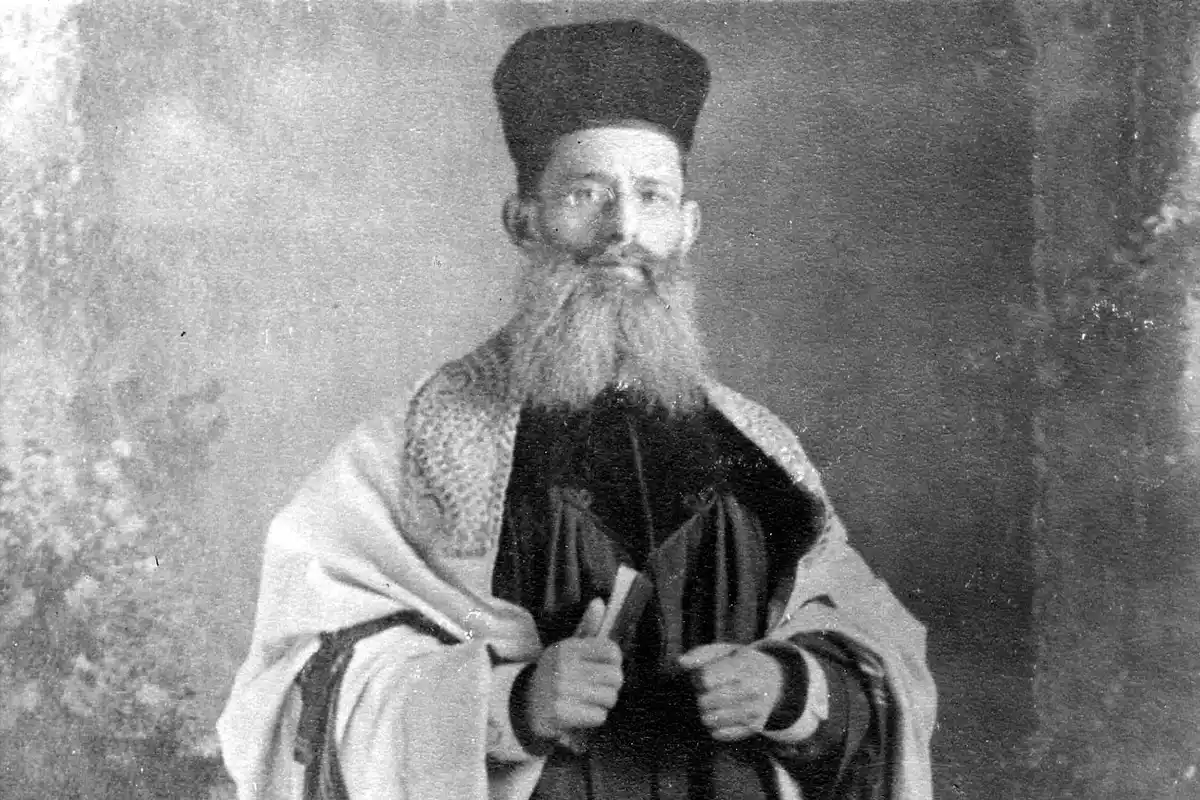
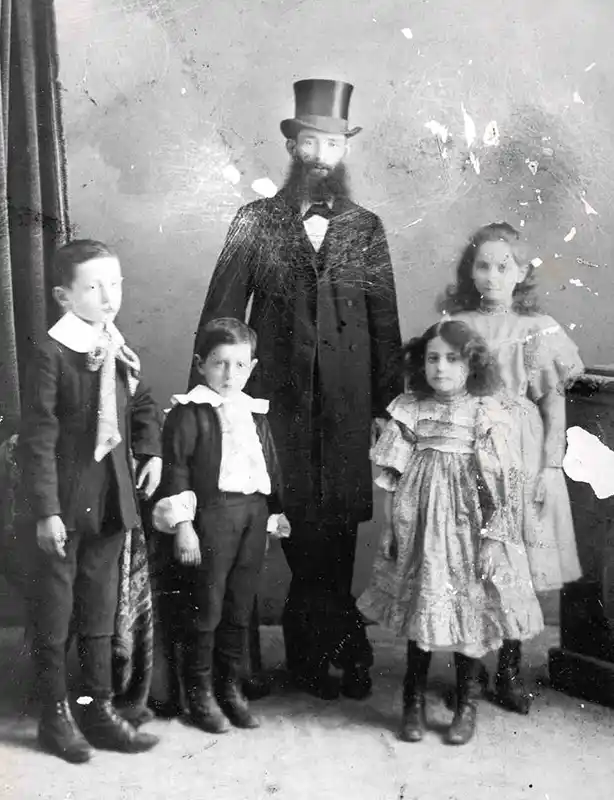
Born in Russia, Jacob Mirsky moved to New York in 1893 where he pursued rabbinical studies at a Jewish seminary. A Talmudic scholar and cantor, he was chosen by a three-member Jewish delegation in 1894 to lead Ottawa’s Adath Jeshurun congregation. At 35, Mirsky moved to Ottawa with his wife and four children in tow and began what would become a 33-year stint as a rabbi, cantor (prayer leader and singer), mohel (performing circumcision) and shoichet (ritual slaughterer) of Ottawa’s fledgling Jewish community.
A Pillar Of Ottawa’s Jewish Society
Based in Lowertown, Ottawa’s earliest Jewish neighbourhood, Rabbi Mirsky took up his task as spiritual leader and helped raise funds to build Ottawa’s first Jewish synagogue at 264 Murray Street, which was completed in 1904. Unwilling to isolate himself to his own orthodox Adath Jeshurun congregation, he soon went to work uniting Ottawa’s Jewish population into a cohesive whole, working with all the different congregations and becoming a pillar of support to all.
Beyond his religious duties, Rabbi Mirsky was widely acknowledged for his kindness, humility, empathy, and compassion, which made him a cornerstone of the Jewish outreach effort, extending social and charitable aid to those in need. This included assisting people with housing, food, healthcare and other resources or social services which were lacking at the time. He was also instrumental in helping community members find jobs, while aiding businessmen in setting up successful enterprises and supporting the building of several Jewish institutions. Additionally, he helped ensure brides from poorer families were provided with a dowry. In this way, he endeared himself to all members of the community.
Rabbi Mirsky also played a significant role in bridging the gap between the city’s existing Jewish population and new Jewish immigrants who came to Ottawa at the turn of the 20th century. He was revered for guiding the community through turbulent times such as the Great Depression, World War II and periods of rising anti-Semitism.

ABOVE: Rabbi Jacob Mirsky and his four children, David, Abraham, Rose and Reva (1898).
A talented cantor known for his melodic voice, he composed his own songs for congressional singing, introduced synagogue community singing and trained young boys in traditional Jewish singing. One of his original compositions Adam Yesodd Meofor was added to the Canadian musical history archives by the Canadian Musical Heritage Society in 1998.
Rabbi Mirsky retired from his duties in 1927, and a banquet was held in his honour at the Talmud Torah Hall commemorating his years of service as a spiritual and community leader. Even after his retirement, he was actively connected to most Jewish organizations and remained cantor of the Adath Jeshurun congregation till 1939.
A Well-Loved Ottawa Community Builder
Having spent 48 years of his life in Ottawa, Rabbi Mirsky was known for being a community builder and philanthropist, with an emphasis on giving back to the community and helping anyone in need, regardless of their faith.
In 1920, he was included in Ottawa General Hospital’s funding campaign to expand hospital capacity and improve services, alongside a list of other local patrons including Archbishop Charles-Hugh Gauthier, MPs, MPPs, then-Ottawa Mayor Harold Fisher, Hull Mayor Louis Cousineau, aldermen, diplomats, president of the Institut Canadien-Français, the provincial superior of the Dominicans, and rector of the University of Ottawa. This points to his standing beyond the Jewish community as part of Ottawa’s broader network of civic and social-welfare leadership.
He was also invited to the prorogation of Parliament in 1906 and again for its opening in 1907, a sign of his wider influence and notable reputation in Ottawa. Rabbi Mirsky also features prominently as the only religious leader in a book entitled ‘A Common Thread: A History of the Jews of Ottawa’, that chronicles the history and work of notable Jewish figures who contributed to Ottawa’s growth.
Of significance too, is the fact that Rabbi Mirsky’s son Brian went on to establish Pure Spring Company in Ottawa in 1925, once Canada’s largest independent soft drink company and a major employer till its closure in 1987. His other son Mervin who served in WWII, was a chairman for the Ottawa Food Bank in 1987 and co-chaired a funding campaign for the Children’s Hospital of Eastern Ontario.

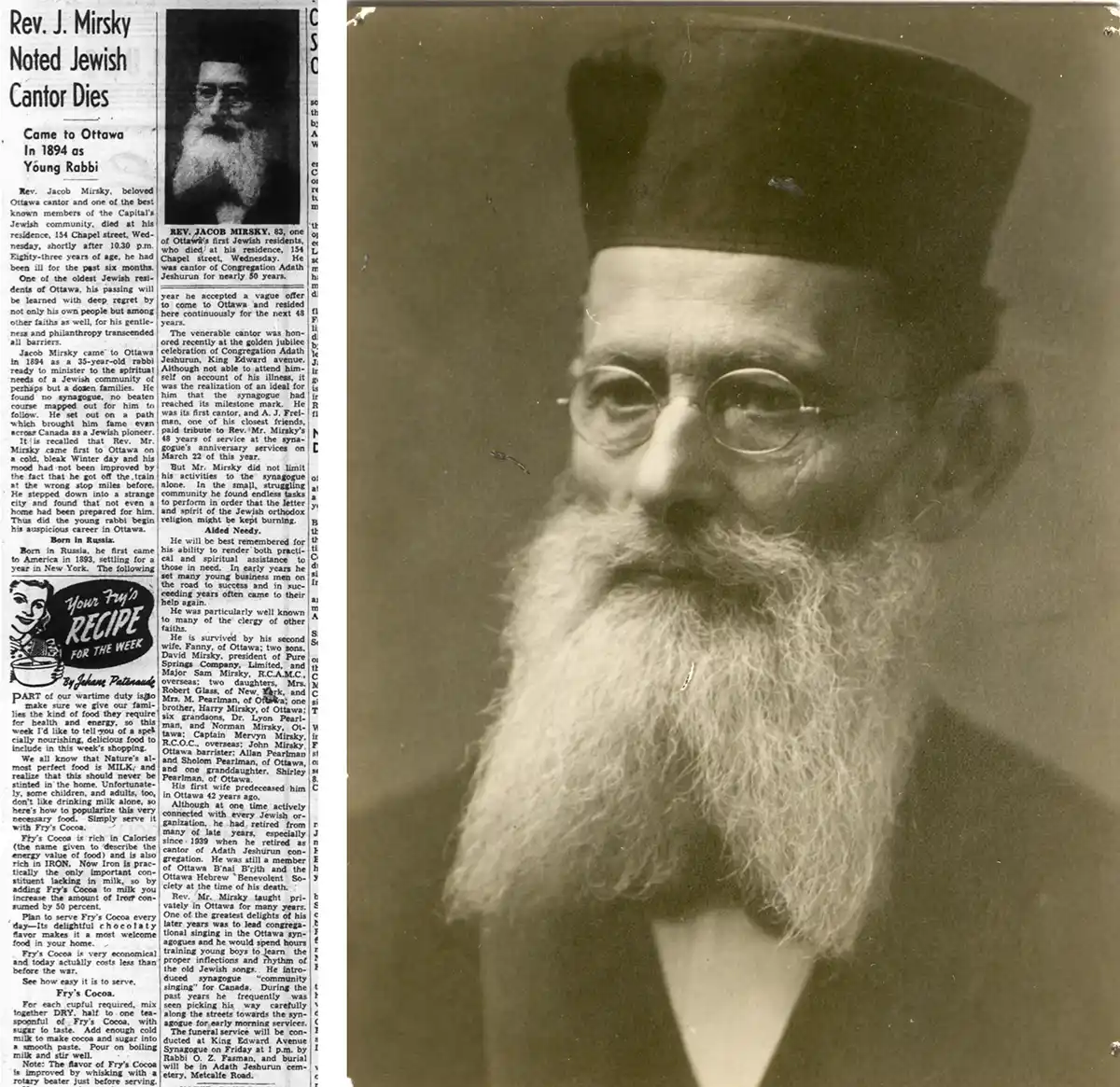
ABOVE: Newspaper clipping of the 1942 Ottawa Journal article featuring Rabbi Jacob Mirsky’s obituary on the front page. RIGHT: Rabbi Jacob Mirsky (1910s).
When Rabbi Mirsky died at the age of 83 in 1942, he was deeply mourned – not only by the flourishing Jewish community he helped build, but by Ottawans from all walks of life. Among the prominent faces who attended his funeral was then Mayor Stanley Lewis. In it’s front page obituary of Rabbi Mirsky, Ottawa Journal wrote, “One of the oldest Jewish residents of Ottawa, his passing will be learned with deep regret by not only his own people but among other faiths as well, for his gentleness and philanthropy transcended all barriers.”
An Enduring Legacy
Brian Mirsky, Rabbi Mirsky’s great-grandson speaks to his impact on his family and society. “A man of humble means, living on a modest salary in Lowertown, which was then one of the city’s poorest neighbourhoods, my great-grandfather traded his life in New York for one of sacrifice, committed as he was to the growth of Ottawa’s struggling Jewish community. He never cared about making money, but instead believed in sharing what he had and uplifting those less advantaged, irrespective of religion. He himself lived in a house with no running water, heat or electricity, but that didn’t stop him from extending a helping hand and building up the community. There’s a Yiddish word called mensch, which refers to a person of high integrity and honour, and that’s exactly who Jacob Mirsky was,” says the Toronto-based President of Pure Spring Holdings Private Equity Investment Company, who has four siblings based in Ottawa.

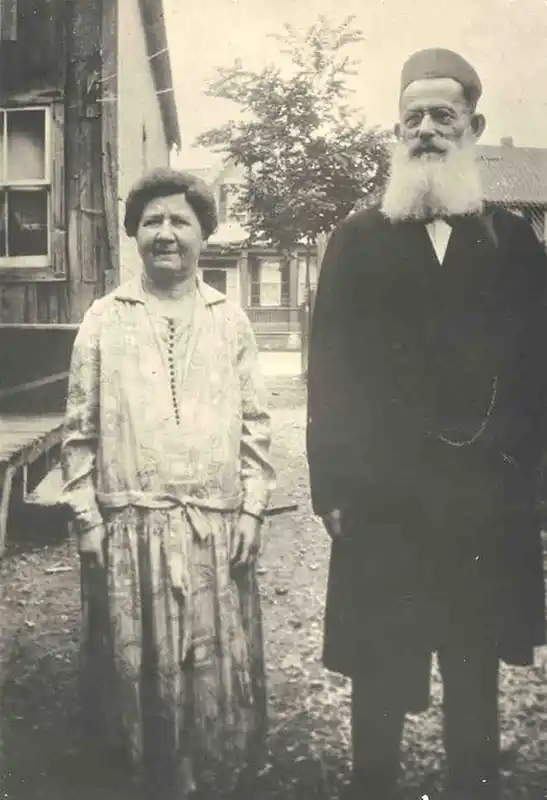
ABOVE: Rabbi and Mrs. Devorah Mirsky (1900).
Apart from teaching his children the principles and values of Judaism, Rabbi Mirsky also impressed upon them the value of hard work through self-sustaining careers so that they would not be a burden on society – an example of his liberal-mindedness in not forcing his children to pursue a religious career. However, he was quick to emphasize that their success should be used to build others up, always having a philanthropic mindset. “He believed in leaving behind a legacy of good deeds, which is the cornerstone of a life well-lived,” avers Brian, who was on the board of Toronto’s Daily Bread Food Bank, is currently chair of the board of Baycrest and is a member of Holy Blossom synagogue, thus playing an active role in Toronto’s Jewish community.
Initiative To Formally Recognize Rabbi Mirsky
In recognition of Rabbi Jacob Mirsky’s significant contribution to Ottawa and its Jewish community, local historian David C. Martin is spearheading a campaign to have a public space such as a street, park or square named after Mirsky, preferably in Lowertown where he lived and where Ottawa’s Jewish community took root. “Despite Rabbi Mirsky’s importance, there is little visible recognition of his legacy in Ottawa today. When I heard that the City of Ottawa has begun accepting applications for commemorative public space naming, I thought why not put forward his name, given that he’s a particularly deserving early member of Ottawa’s Jewish community who has never been formally recognized by the city,” remarks Martin.
Brian shares his thoughts about the campaign. “The Mirsky family is deeply grateful and honoured by this initiative, which will help serve as a permanent reminder of Rabbi Mirsky’s legacy to forthcoming generations of our family, to the Jewish community, and to the current generation of Ottawans, many of whom may not know who he was. Besides, it also demonstrates the impact that Rabbi Mirsky and our family has had as one of Ottawa’s early founding families.”
According to Martin, this initiative, coming in Ottawa’s 200th year, is also important in shining a light on the contributions of the larger Jewish community, who, though small in number, have deep roots in Ottawa where they have resided for close to 170 years and have had an outsized impact in shaping the community.
Brian agrees. “I think on a broader note as well, this would be an acknowledgement that Jews did help contribute to the building of the community, which is especially relevant in the current environment of antisemitism.”
Martin is currently gathering letters of support from local Jewish leaders and organizations to accompany a formal application and is also encouraging community members to back the campaign for commemorating Rabbi Mirsky as a sign of broad-based support towards this effort. So far, Martin has gathered letters of support from Rabbi Idan Scher of Congregation Machzikei Hadas, Soloway Jewish Community Centre, Ottawa Jewish Historical Society, Ottawa Jewish Archives and Historical Society of Ottawa.
“Naming a public space as a tribute to Rabbi Mirsky will help keep his memory alive and ensure his contributions aren’t forgotten. Hopefully, it will also inspire the community to follow in his footsteps so that, like him, we can leave this world a better place than we found it,” Brian concludes.
To learn more about this initiative or to support the campaign, you can write to davidczmartin@outlook.com
Photos courtesy Teigan Goldsmith Hitsman, Archivist, Ottawa Jewish Archives, Jewish Federation of Ottawa