• By: Dan Donovan

Canada–China Relations Gain Momentum After Carney–Xi Reset at Major Ottawa Symposium 

Ottawa symposium brings together influential political, diplomatic, business and academic figures from both countries in another sign of renewed engagement.


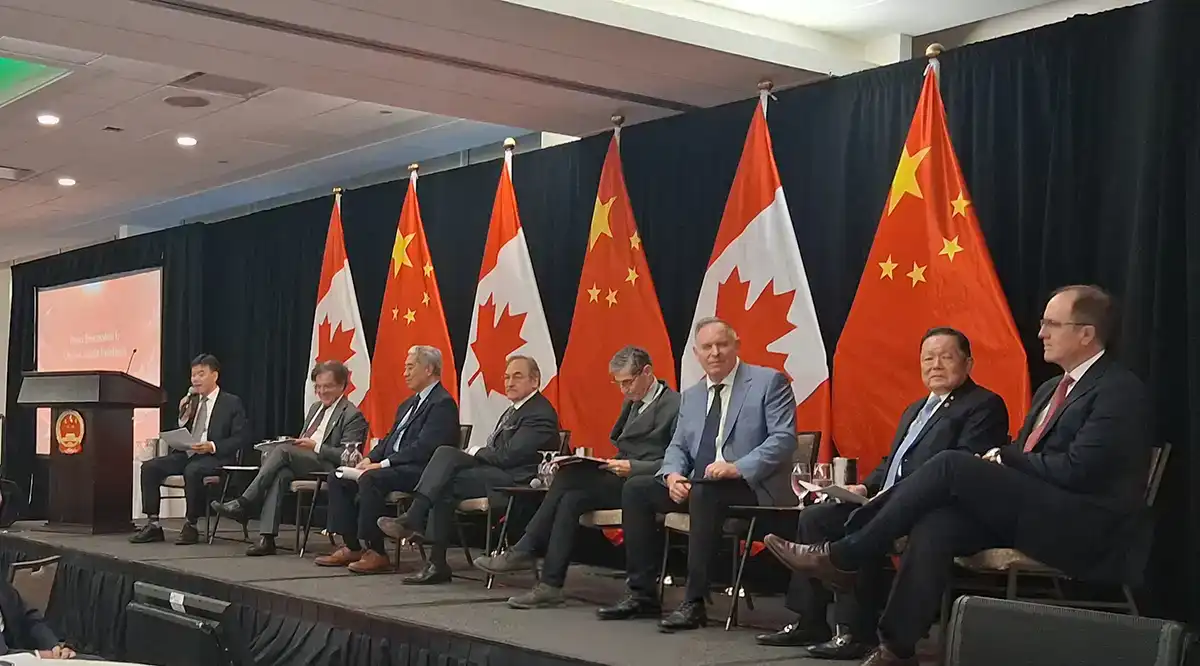
The renewed momentum in Canada–China relations was on full display in Ottawa on Thursday, as more than 80 representatives from political, diplomatic, business, academic and strategic sectors gathered for a symposium examining the future of the bilateral relationship.

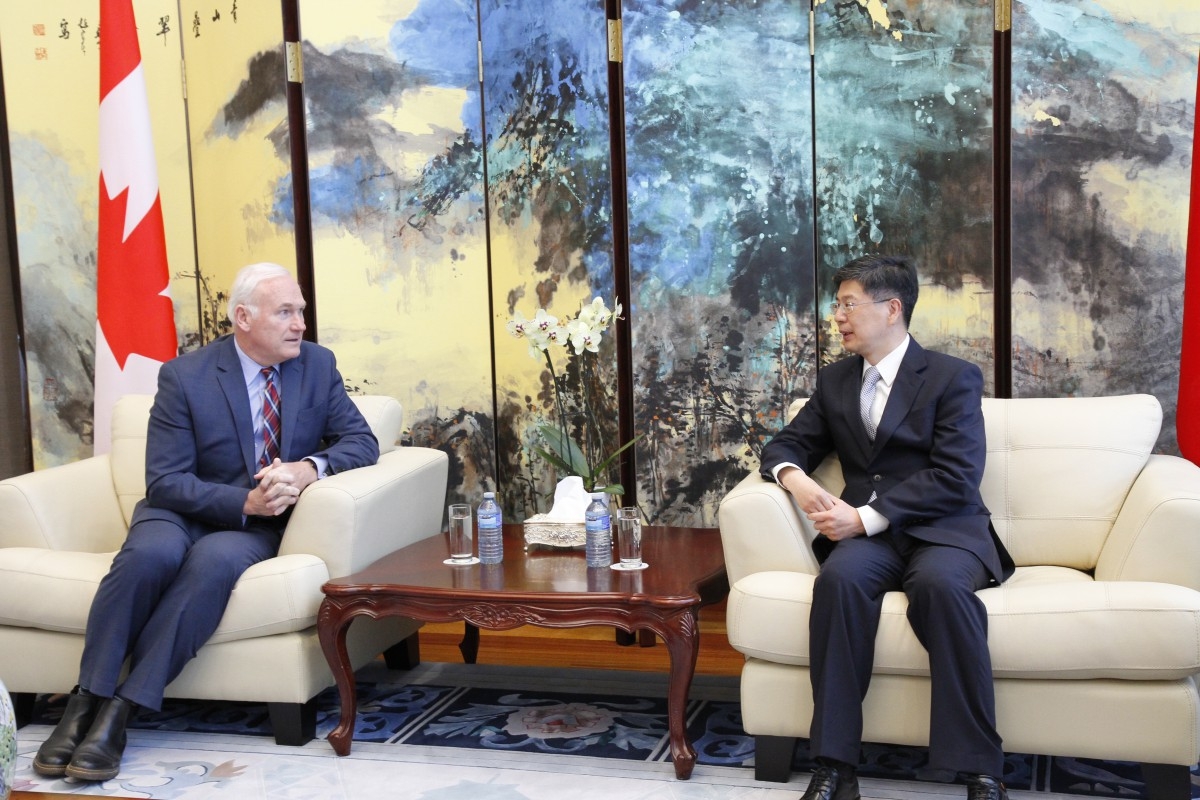
Hosted by His Excellency Wang Di, Ambassador of the People’s Republic of China to Canada, the Symposium of China-Canada Relations in the New Era brought together an unusually broad cross-section of people engaged in shaping, analysing and advancing relations between the two countries. The gathering included parliamentarians, a senator, former federal ministers, senior business leaders, university presidents, leading policy researchers and specialists in international affairs.

The significance of the meeting extended beyond its four panel discussions. It was another indication that the diplomatic reset initiated by Prime Minister Mark Carney and Chinese President Xi Jinping is developing into a broader process of engagement involving the political, commercial and intellectual communities on both sides.

Carney’s January 2026 visit to Beijing, the first by a Canadian prime minister since 2017, established the framework for a new strategic partnership. The two leaders identified five principal areas for cooperation: energy, economic and trade relations, public safety and security, multilateralism, and cultural and people-to-people ties. They also committed to expanding dialogue and pursuing practical results. 

Ambassador Wang’s decision to convene such a diverse group in Ottawa provided a forum for examining what that renewed engagement might mean in practice. His role as host was particularly significant in bringing together people whose professional responsibilities span government, trade, international policy and the academic study of China. The program was designed not simply to discuss the relationship in general terms, but to examine it through four distinct areas of cooperation and debate.

China-Canada Relations: Rebuilding the Bilateral Relationship

The opening panel brought together political and foreign-policy perspectives on the state of relations and the prospects for moving forward. Moderated by Liao Fan, director of the Institute of World Economics and Politics at the Chinese Academy of Social Sciences, it featured MP Michael Ma, Carleton University Professor Emeritus Jeremy Paltiel, former federal Justice Minister Martin Cauchon, Philippe Rheault of the University of Alberta’s China Institute, Colin Robertson of the Canadian Global Affairs Institute, and other specialists.

The first forum examined how Canada and China can build on the renewed diplomatic engagement to develop a more productive and forward-looking relationship. With both governments signalling an interest in expanding cooperation, the focus is increasingly on identifying shared priorities, strengthening dialogue and translating political commitments into practical results. The participation of parliamentarians, former ministers, diplomats and leading China specialists brought together a range of perspectives on how the relationship can evolve in the years ahead.

The opportunity extends well beyond diplomacy. Canada and China have substantial economic ties and complementary interests in areas including energy, agriculture, clean technology, education and international trade. The challenge—and the opportunity—is to build on the renewed political momentum by expanding mutually beneficial cooperation and creating more predictable conditions for businesses, institutions and citizens in both countries.

Practical Cooperation: Turning Diplomatic Progress into Economic Results

The second panel focused on the practical opportunities for bilateral cooperation. Moderated by Bijan Ahmadi, executive director of the Canada China Business Council, the panel included Senator Yuen Pau Woo, Graham Shantz of the Canada China Business Council, Daniel Breton of Electric Mobility Canada, Jun Deng of Bank of China (Canada), and representatives from the energy, agriculture, and international policy sectors.

The economic context is substantial. Canada’s merchandise trade with China reached $125.6 billion in 2025, according to Global Affairs Canada. Since Carney’s January visit, the two governments have made progress on several trade disputes. China reduced tariffs on Canadian canola seed and suspended additional duties on certain agricultural and seafood products, while Canada established an initial annual quota of 49,000 Chinese electric vehicles at a 6.1 per cent tariff rate.

These developments illustrate both the potential and the complexity of closer economic ties. Canadian exporters stand to benefit from improved access to China’s market, while Canadian policymakers must consider the implications for domestic industries, supply chains and economic security. Practical cooperation will ultimately be measured by the extent to which announced commitments produce sustained benefits for businesses and workers.

Global Governance: Canada and China in a Changing World

The third panel broadened the discussion to international institutions, economic governance and emerging global challenges. Moderated by Chen Dongxiao, president of the Shanghai Institutes for International Studies, participants included Jonathan T. Fried of the Canadian National Committee for Pacific Economic Cooperation, Daniel Schwanen of the C.D. Howe Institute, Duncan Cass-Beggs of the Centre for International Governance Innovation’s Global AI Risks Initiative, and Teddy Samy, director of Carleton University’s Norman Paterson School of International Affairs.

Canada and China have an interest in maintaining channels of communication on international trade, climate change, economic stability and technological developments. Both participate in multilateral institutions, including the United Nations, the G20 and the World Trade Organization. Yet their differing political systems, strategic interests and approaches to international security can make agreement difficult. The forum’s focus on global governance reflected an important dimension of the renewed relationship: the extent to which two countries with different perspectives can identify shared interests and work together on international problems.

People-to-People Exchanges: The Foundations of a Lasting Relationship

The final panel examined the role of education, research, culture and personal connections in sustaining bilateral relations. Moderated by Dan Donovan, publisher of Ottawa Life Magazine, it included Erika Simpson of Western University, Cen Huang of the University of Alberta, Robert Hanlon of Thompson Rivers University, Gabriel Miller, president and CEO of Universities Canada, human rights scholar Arnold August, and David Wright of the University of Calgary.

Academic and cultural exchanges can build understanding across national boundaries and maintain connections even during periods of political tension. Universities, researchers, artists and students also provide channels through which Canadians and Chinese citizens can learn about each other’s societies. Such exchanges, however, depend on openness, academic freedom and respect for differing perspectives. Human rights and concerns about foreign interference remain part of the broader relationship and cannot be separated from discussions about closer engagement.

Ambassador Wang delivered the closing remarks, concluding a program that had brought together participants from across Canada’s political, business and academic communities alongside Chinese policy and institutional representatives.

A Reset Still to Be Tested

The significance of the Ottawa symposium lies in the breadth of participation and the range of subjects addressed at a time when both governments are seeking a more constructive, cooperative and friendly relationship.

For Ambassador Wang, the event provided an opportunity to bring together Canadians with substantial experience in China and bilateral affairs, alongside Chinese experts and institutional representatives. For Canada, it offered a forum in which the opportunities associated with renewed engagement could be considered alongside the practical, economic and strategic challenges.

The Carney–Xi reset has created a framework for closer dialogue. Subsequent trade measures and ministerial engagement have begun to give that framework practical form. The presence in Ottawa of so many people working across the Canada–China relationship was another sign that the process is extending beyond the two governments.

The ultimate measure of progress will be whether that momentum produces tangible results: more predictable trade, greater opportunities for Canadian businesses, constructive cooperation on shared international challenges, and sustained dialogue on the issues where the two countries disagree. The relationship is moving into a new phase. Its durability will depend on what both sides do with the opportunity now before them.


About the Canada–China Cooperation Series:
Ottawa Life Magazine’s Canada–China Cooperation series explores the evolving relationship between Canada and China through news, analysis, interviews and commentary. The series includes independently reported editorial coverage as well as sponsored content supported by the Embassy of China. This article is sponsored by the Embassy of China. The sponsorship does not influence Ottawa Life Magazine’s editorial decisions, reporting, analysis or opinions. OLM retains full editorial independence and responsibility for its published content.