
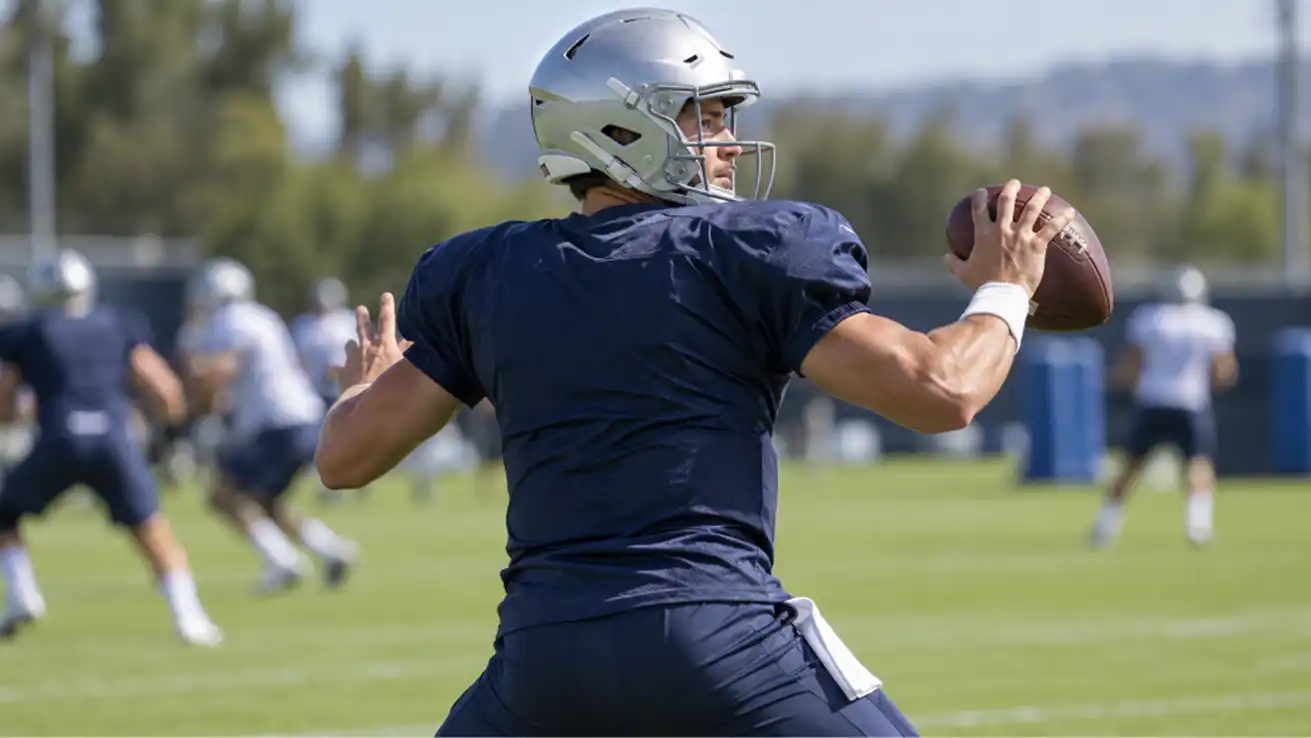
Beyond Passing Yards: Reading an NFL Quarterback’s Performance
A 300-yard passing game can describe a quarterback controlling the afternoon or one spending the second half trying to repair a large deficit. The total is real in both cases. What changes is the route taken to reach it.
For Ottawa viewers moving between Canadian and American football, the temptation is familiar: start with the biggest number on the broadcast graphic and let it explain the game. Passing yards are a useful starting point, but they become more revealing when paired with attempts, pressure and the situations in which the throws occurred.
Separate production from opportunity
Consider two hypothetical performances. One quarterback throws for 280 yards on 28 attempts. Another reaches 320 on 50 attempts. The second has the larger total, but the first averages 10 yards per attempt against 6.4 for the second.
That calculation does not settle which player performed better. It does show why volume belongs beside yardage. A team trailing for much of the game may throw repeatedly, creating opportunities to accumulate yards that a team protecting a lead does not need.
Completion percentage needs similar context. A short throw into open space is a different assignment from a pass down the sideline under pressure. Completing more passes can reflect accuracy, play design, receiver separation or a combination of all three.
The NFL’s use of tracking data offers a more detailed approach. AWS explains how completion probability accounts for the circumstances of a throw, including factors such as pass distance and nearby defenders. Comparing completions with their expected difficulty adds information that the raw percentage leaves out.
Ask what the number is supposed to answer
Passing yards describe one part of quarterback production. They do not directly measure how often an offence sustained a drive, how effectively it handled pressure or whether it converted a short field into a touchdown. Those questions require different evidence.
The distinction matters when interpreting player-prop betting markets. A passing-yardage line concerns the stated total under that market’s settlement rules, while a team-result market concerns who wins. In nfl betting, a quarterback can exceed a yardage line during a defeat, or finish below it while his team wins comfortably. Passing attempts and the way the score develops help explain both possibilities.
That is why a strong statistical total and a strong overall performance should not be treated as synonyms. A late sequence of completions against a defence protecting a substantial lead still adds yards, but it may tell a different story from throws that decided a close contest earlier.
Follow the plays that passing yards omit
Sacks are especially useful context. The quarterback may hold the ball too long, the protection may fail or the receivers may remain covered. A sack total identifies lost opportunities, but reviewing the circumstances is necessary before assigning blame.
Interceptions also need inspection. A mistimed throw into coverage differs from a well-placed ball deflected by a receiver. The box score records the turnover in either case. Film helps identify the decision and execution behind it.
Ottawa Life’s report on Ottawa’s September 2023 win over Saskatchewanprovides a local example. Dustin Crum and Jake Dolegala each threw for 243 yards, but Crum finished without an interception while Dolegala threw two. Matching yardage totals concealed an important difference between their performances.
Then consider down and distance. An eight-yard completion on third-and-six extends a drive. The same gain on third-and-15 can leave the offence facing a punt. The yardage is identical, while the value to that possession is different.
Build a small, useful picture
A practical review can begin with attempts, yards per attempt, sacks and turnovers, then move to third downs and scoring opportunities. Add the score at the time of important plays. There is no need to turn every Sunday into a spreadsheet exercise.
The goal is to make the broadcast total explain more, not to discard it. When a quarterback reaches 300 yards, ask how many throws it took, what the defence demanded and which possessions those yards sustained. The answer usually produces a more interesting conversation than the milestone alone.