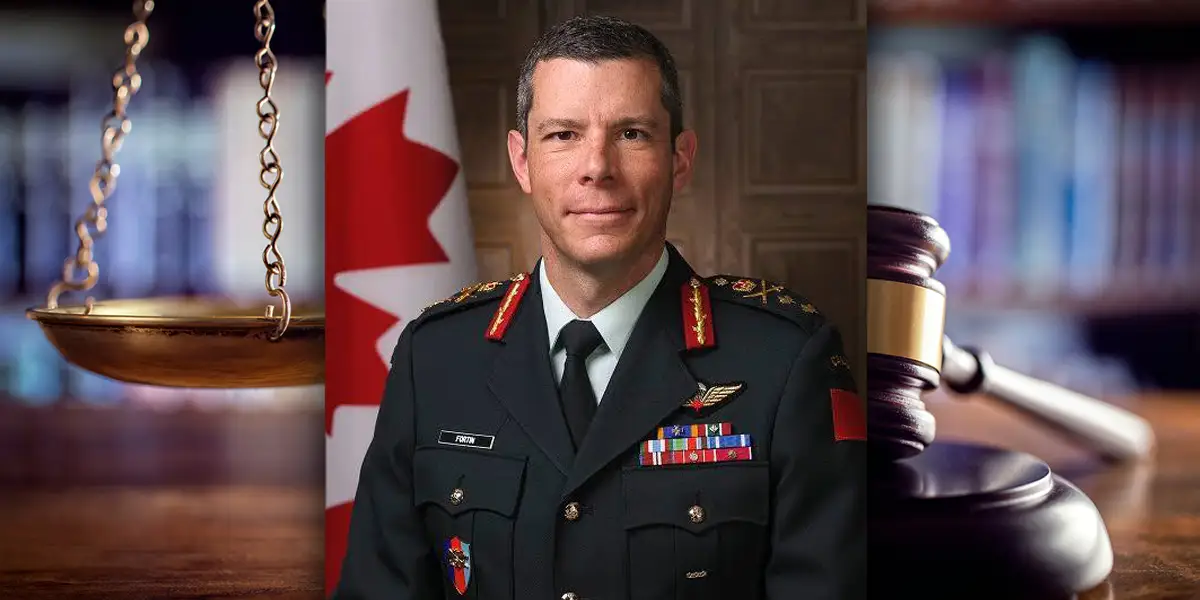
Accountability for Rogue Military Unit Shortcomings is Absent Without Leave
Military Police oversight body slams Defence for shambolic investigation of the Dany Fortin case
By Brett Boudreau
For years, the Canadian Armed Forces (CAF) has been the unhappy subject of unprecedented external scrutiny and demands to change behaviour deeply embedded in military culture, practices the institution acknowledged were preventing the institution “from evolving apace with the rest of society.”
Under pressure from serving members – though driven largely by external demands – National Defence recently spelled out an expansive list of behaviours deemed unacceptable, ranging from systemic harassment, discrimination, racism, misogyny, hateful conduct, abuses of power, systemic barriers, unsupportive environments, lack of inclusion, micro-aggressions, bullying, intimidation, threats, violence, employment inequity, unconscious biases and sexual misconduct.
Fixing all this, we are informed, stems from an earnest desire to create more healthy, inclusive, respectful, fair workplaces and “to ensure justice and accountability” for those times when existing systems fail. To the CAF’s credit, much effort has been expended to do better, and to be better. This includes a range of new support services, updated policies and compensatory pay-outs for certain groups of harmed persons. More visible expressions include apologies by senior-most leaders to those affected variously by sexual assault, sexual harassment, discrimination based on sex; gender, gender identity or sexual orientation; systemic racism, racial discrimination, and racial harassment.
One cohort is notably excluded from the benefits of organizational culture change reform, the ostensibly more enlightened institutional mindset, new justice and accountability measures, and the mental health salve of the recent apology largesse from Defence leaders. That group includes persons directly harmed as a consequence of long-standing investigative and investigator shortcomings in the military police and the Canadian Forces National Investigation Service (CFNIS) – or those indirectly harmed, like those who choose not to come forward with allegations of misconduct or worse, because of mistrust. As one colleague of this author put it: “The military police are dangerously incompetent and out of control. They destroy careers, damage lives, undermine trust, erode morale, shatter reputations, stigmatize the innocent, hurt families, endanger the financial stability of the accused, damage the mental health of the falsely accused, cost the Crown millions in lawsuits, cause long-standing reputational damage to the institution, and scare legitimate victims from coming forward.”
This week, the Military Police Complaints Commission (MPCC), an agency that aids in oversight of military police conduct, dropped yet another bombshell on the CFNIS’s reputation, with the release of its report into a complaint brought in January 2023 by retired Maj.-Gen. Dany Fortin.
To recap, in May 2021, Fortin was ignominiously and abruptly removed from his assignment with the Public Health Agency of Canada leading the COVID-19 vaccine distribution effort, over an allegation of sexual misconduct 30 years prior, while he was a student at military college in Québec. In mid-August 2021, on the strength of the NIS investigation, Fortin was charged with sexual assault. In December 2022, he was found decisively not guilty. Two military reviews that same month cleared him of any wrongdoing. In spite of these developments, Fortin was directed to retire by senior military leaders.
Fortin’s complaint alleged a biased NIS investigation and a prosecution influenced by external pressures to accept the complainant’s story. In its report, nearly three years in the making, the MPCC determined that “investigators did not conduct a thorough and rigorous investigation,” and described a litany of shortcomings in procedures, such as assigning investigators inexperienced in handling sexual assault cases; not taping interviews including with the complainant so as to produce a transcript; not interviewing prospective witnesses; not providing adequate supervision, and more – an aggregation of failures so basic it strains credulity on first read.
The MPCC also found the investigation was “compromised by tunnel vision, exhibited signs of investigative bias, inadequate supervisory oversight, and a failure to uphold core investigative standards.” They further determined that, “these shortcomings are not mere administrative oversights, they represent significant failures that erode public trust in military policing.” To the main finding of investigative tunnel vision and bias, the top military cop was completely dismissive: “No identifiable action required.” Responses like this to the few tactical-level recommendations in the report, the MPCC warned, raise “concerns about the organisation’s commitment to meaningful change.”
The two investigators, the MPCC determined, were remiss in a number of areas – we are talking ‘Investigation 101’ basics, here, not police challenges on the scale of tracking down drug fugitive Ryan Wedding. Among the more serious deficiencies was the failure of the lead non-commissioned officer by not “identifying and addressing inconsistencies in [the complainant’s] statements. His failure to do so represents a critical gap in the investigation.” Any reasonable observer would conclude on the basis of the evidence in court, the judge’s ruling, and MPCC report that a competent police investigation, supported by responsible management, proper supervision, and appropriate oversight, would not have recommended the laying of any charge.
In public remarks posted on his Facebook account, Fortin wrote, “The report is a stunning indictment of military police professional competence. It is also, by extension, a black eye for senior military leadership that continues to allow these behaviours and practices by the NIS to go unchecked.”
The MPCC did deliver one big whiff, though, in determining that “external considerations did not influence” the investigation. The commission based this assessment on hundreds of pages of trial-related documents and hours of audio-recordings – but more significantly – on the strength of interviews with key principals, including the chief of the defence staff (CDS), the deputy minister, and the top military cop. This outcome exposes the weakness of the MPCC’s limited remit, and its inability to grapple with a systemic problem set much broader than actions by military police investigators.
It is clear from Fortin’s Federal Court filings and the MPCC complaint that he did not suggest senior leaders explicitly directed or interfered in the investigation or the decision to lay charges. They did not need to overtly intercede because the ‘command climate’ created by the political, media and DND operating environment was more than sufficient to influence how investigations were conducted and managed.
Recall that in a nine-month period in 2021, more than a dozen men – 10 of major-general rank and above, representing roughly 20 per cent of the 48 most senior officers in the CAF, stood charged with, or accused of criminal offences or conduct deficiencies of a sexual nature, real or implied. During this period, political leaders, including the prime minister, deputy prime minister and minister of national defence, pre-empted due process by frequently commenting publicly on the cases, thereby appearing to imply the accused were guilty. The issue was the subject of massive media coverage for years and had such an impact that CDS Gen. Wayne Eyre described the CAF as being in “existential crisis” as a result. Under such challenging conditions and hard times as these, fragile institutions are prone to turtling and taking precipitous actions to protect themselves.
In a nudge-nudge-wink-wink moment, though, the MPCC did reference Eyre’s notes from a meeting of senior leaders early in the course of the Fortin investigation, with him writing, “increasing pressure on us to act”, and recording deputy minister Jody Thomas’s comment about “political pressure” and that “the government could fall.” Thomas explained to the MPCC that the various allegations against senior executives and officers meant the institution was “in shock.” As Fortin set out in his Federal Court filing, Eyre told him the decision to remove him from PHAC, “had a political calculus.”
‘Me too’ was the prevailing zeitgeist of the period, and complainants’ stories were widely reported, fueled by well-timed leaks of sensitive information from military investigations, long before allegations of assault or misconduct were tested in court, if they ever were. As Fortin later observed, “I did not do what I was accused of, but read a lot of commentary about myself in the media for many months after that, with no ability or means to defend my name.” Of course, as the number and form of misconduct allegations grew and the ensuing crisis gained traction, some actions and management decisions by senior leaders were downright bone-headed, and some behaviours were punished, including through the courts.
Is it reasonable then, to expect the warrant officer, who was the principal investigator (technically in an ‘assisting’ role rather than the designated lead, and appears to have done nearly all the work), undertaking her first case of this nature – and the military police/NIS as a profession – to remain entirely objective, and wholly immune to influence in the face of this hyper-charged media and ‘command climate’ environment? Of course not. The MPCC found that the investigation “suffered from inadequate supervision, insufficient oversight, and deficient case management particularly in the assignment of tasks and the preservation of documentation.”
If the characteristics of the Fortin case failures sound vaguely familiar, that’s because they are, with several other high-profile cases bearing a number of remarkable similarities of institutional group think and a desire to meet the politicized narrative. Even a casual read of the MPCC’s last several annual reports indicates the same recurring issues and behaviours. It is not obvious that anything substantive has changed, and senior CAF leadership continues to sit quietly on the sidelines as these harms continue to unfold, without even the common decency to publicly comment when trials or reports do not go in their favour. The system charged with holding others accountable, in large measure, is itself unaccountable and resistant to change.
For example, in October 2023, a Kingston judge stayed a sexual assault charge against Lieut.-Gen. Trevor Cadieu, because military police delays in disclosing statements and evidence breached his Charter rights to a timely trial. “Someone should be held accountable for allowing nine months to elapse before providing defence counsel with the complainant’s first statement,” ruled Justice Larry O’Brien, in a case stemming from allegations by a fellow military college cadet dating to 1994/95. “That someone is not defence counsel … It is not enough for the military to hand off the file [to Crown counsel]…without providing essential disclosure.” The stay saved both parties from testifying in court, but meant the opportunity for judicial clarity on the underlying events was lost. Cadieu’s military career ended as a result, and he had no option but to opt for early retirement in 2022.
Also in October 2023, the court martial of Lieut.-Gen. Steven Whelan – the most senior Canadian military officer ever court martialled – collapsed after an extended investigation and prolonged pre-trial process. The first of two charges (allegedly having an inappropriate relationship with the complainant) was withdrawn on the opening day of the trial after it became clear that the evidence could not sustain the allegation. Days later, the second charge, (alleging improper influence over the complainant’s annual evaluation) was withdrawn by the prosecution, citing evidentiary issues, minutes before she was to undergo cross-examination. Notably, these withdrawals happened after more than a year-long investigation and extensive trial preparation, and before the defence had called a single witness, or advanced any evidence on its own behalf. The manoeuvre came at a point when the chief of the defence staff and vice-chief of the defence staff were scheduled to testify. Given the scale of the institution attention and resources brought to bear, the timing of the prosecution’s decisions raises legitimate questions about investigative oversight, prosecutorial judgement, and senior-level governance. These questions merit closer examination rather than quiet dismissal.
Whelan was forced to retire despite the withdrawal of charges against him: his suit for $10M continues to crawl its way through the court. In a blistering statement of claim, he alleges the military police investigation was “flawed, unprofessional, and incompetent”, citing several examples of poor practice including inadequate documentation of interactions with the alleged victim and the chain of command during the police investigation, showing bias in her favour, improperly handling evidence, failing to interview key witnesses, and not disclosing information. He has also launched a complaint with the MPCC. The publicly available information about this case suggests institutional malfeasance and petty retribution of a rare magnitude. Interestingly, as the former head of military personnel, Whelan knows a thing or two about the machinations at the time, being in office as the crisis started anew with the revelations against former CDSs Jon Vance and Art McDonald.
In September 2024, Justice Matthew Webber delivered a scathing “not guilty” verdict in a trial featuring NIS-investigated sexual assault and indecent act charges against then-Vice-Adm. Haydn Edmundson, Whelan’s predecessor as head of military personnel. Justice Webber excoriated the complainant, calling her testimony “clearly tainted”, “fantastical”, and “completely implausible and unbelievable.” Edmundson testified he was forced to retire from the CAF in 2022.
And, the MPCC continues a public interest investigation into the tragic case of RCAF pilot instructor Maj. Cristian Hiestand, charged in November 2021 by military police with sexual assault, less than a week after ending a relationship with a civilian woman. Six weeks later, believing he was being railroaded, he committed suicide. Rory Fowler, the Hiestand’s family lawyer, explained the major appears to have asked the lead military police investigator if he could share his version of what happened, and show texts between him and the complainant that would back his side of the story. This was rejected, and according to Fowler and the family, Hiestand was told military police didn’t need to speak to him as they “had all the evidence they needed to prosecute him.”
A February 2024 review by the provost marshal’s professional standards office cleared the investigators of any wrongdoing: Fowler has called the review a “snow job” and a “superficial examination.” Hiestand’s sister, parents, and a former military police officer serving at the detachment at the time of the investigation, all lodged separate complaints with the MPCC. The former military police officer details a number of stunning allegations of investigative incompetence, including assigning inexperienced members to conduct the alleged victim’s initial police interview and not recording it, allowing an off-duty and intoxicated NCO to attend the interview, and allowing an unidentified person to sit in, only identifying him after the interview.
This tragic case excepted, often the deepest harm, generally invisible to the public, is the petty treatment following an accusation, even more so than the accusation itself. For instance, in Fortin’s case, the Federal Court ruled he would need to challenge his removal from the PHAC appointment through the military grievance process – one that Supreme Court Justice Morris Fish described as “broken”, and Wayne Eyre believed, “calls into question our very status as a profession and undermines the very principles of command.” When Fortin sought records via the Privacy and Access acts to support his defence, several key offices replied, “no records exist.” And, a condition of Fortin’s settling his lawsuit was to withdraw his MPCC complaint: the chairperson, seeing through this attempted dodge, declared the public interest investigation would continue.
It took the NIS 13 months (!) to charge Whelan with two counts under the “catch-all” section 129 conduct prejudicial to good order and discipline section of the National Defence Act, after a media leak about the investigation, still unexamined, effectively ended his career. With the charges against him dropped, and yet another embarrassing high-profile court case lost, senior military leadership subsequently cashiered Whelan under an “unsuitable for further service” release category item, ensuring significant reputation, and post-military career implications.
The ‘best way forward’ is not blindingly obvious. Bill C-11, legislation that seeks to strip the military of its ability to investigate and prosecute sexual assault cases, is not universally agreed to be the right answer and is not yet law. Even if passed, the attendant competence issues in the military police/NIS organization remain. The senior leadership’s non-response to the failed Fortin, Cadieu, Whelan and Edmundson trials and other less well-known examples, including those of lesser rank, shows there is no accountability for identified shortcomings, including the administrative handling of such matters, and no momentum for fundamental military police/NIS reform.
It is unlikely that a public interest hearing (vice ‘investigation’) by the MPCC would make considerable difference aside from some incremental transparency, since the challenge at hand – leaks of information, public affairs management of cases, the administration and management of accused persons and treatment of the acquitted and more – is broader than military policing alone. The DND/CAF Ombudsman’s office is focused mostly on individual cases of fairness, and has not proven interested or willing to tackle systemic issues of this magnitude. There has been neither support nor impetus for a military Inspector General office.
Military police incompetence and the unaccountability of senior military leadership in this respect have exposed a serious systemic problem with the CAF. That so many cases were unsuccessful, and so many careers destroyed, speaks to a level of institutional failure that still goes unacknowledged. Leaders, seemingly concerned more with optics than with due process, have been taking victory laps about culture change at the same time as allowing the serious harm to the lives of good people. The record of poor performance and court failures is dissuading real victims of mistreatment of any form from coming forward, and costing taxpayers millions in court proceedings and settling lawsuits.
It is time for a deep, outside look as to why this happened. Victims of misconduct, sexual or otherwise, and those wrongfully accused deserve better from the CAF, and its senior leadership.
Brett Boudreau is a Fellow with the Canadian Global Affairs Institute, and retired from the Canadian military with nearly 30 years service including assignments as a public affairs colonel at NDHQ, NATO HQ, PCO, and the CDS Office.