Recommended Articles

Art hopping across L.A.’s vibrant neighbourhoods
Magnifique Martinique: So Much More than a Simple Beach Vacation
The Marvels of Miramichi


“Amarillo by morning— and it stays with you long after.”
Oddly enough, the week I was in Amarillo, Texas, George Strait was playing down the road in Lubbock, which meant his name floated through every diner, hotel lobby and gas station conversation in the Panhandle. I had been humming Amarillo by Morning since I landed in Houston earlier that day, partly because it is a longtime favourite of mine and partly because I was fired up to visit a place I had only ever known from a song.
By the time our plane dipped toward the runway, I felt like I was arriving in a town I had been hearing about my whole life.
From my window seat, I saw the land opening up beneath us. Amarillo sits in the middle of a wide plain that extends in every direction. Wind turbines stand in long rows, turning in the steady wind common to this part of Texas. The ground appears dry, with pale soil and scattered scrub. Irrigated fields come into view as the plane gets lower. Cattle operations and working farms are spread across the flat terrain, showing the region’s role in agriculture despite its arid conditions.
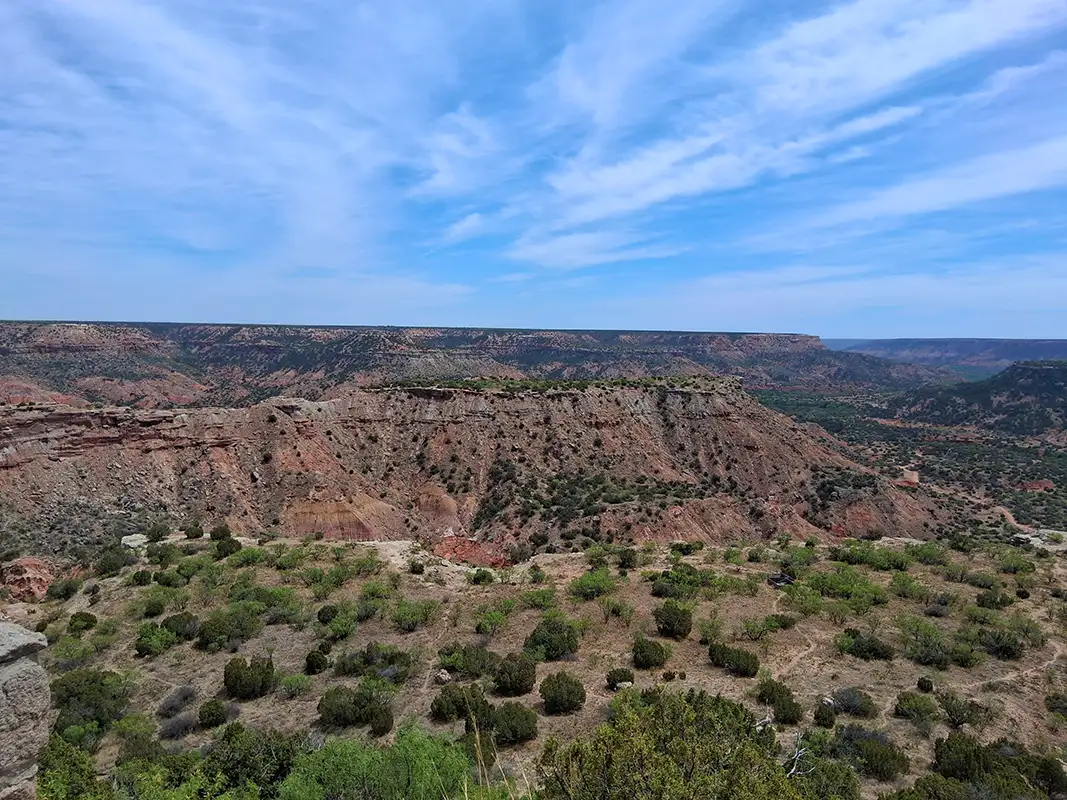
On the horizon, the plains drop into the red- and rust-coloured walls of Palo Duro Canyon, a deep cut in the landscape. The area is shaped by wind, weather and long‑established land use. The first peoples who lived here, including the Comanche and other Plains nations, adapted to the same conditions. Later settlers did the same, relying on endurance and routine to make the land workable.
My base for the trip was The Barfield, a beautifully restored historic hotel in the heart of downtown Amarillo. It is one of the city’s first true luxury boutique hotels, and it wears its Panhandle heritage proudly. The lobby mixes Western character with modern polish, the kind of place where you half expect a rancher in a Stetson to walk in and order an espresso. The building dates back to the 1920s, and its revival feels almost reverential, as if the walls themselves were relieved to be back in circulation.

Click here to read the full story on our sister site, Travel Trek & Tour

For more information on planning a trip to Amarillo, visit www.visitsamarillo.com
For more U.S. destinations, check out our articles here.