Auditor General Reports on Police Services Board Conduct During “Freedom Convoy”
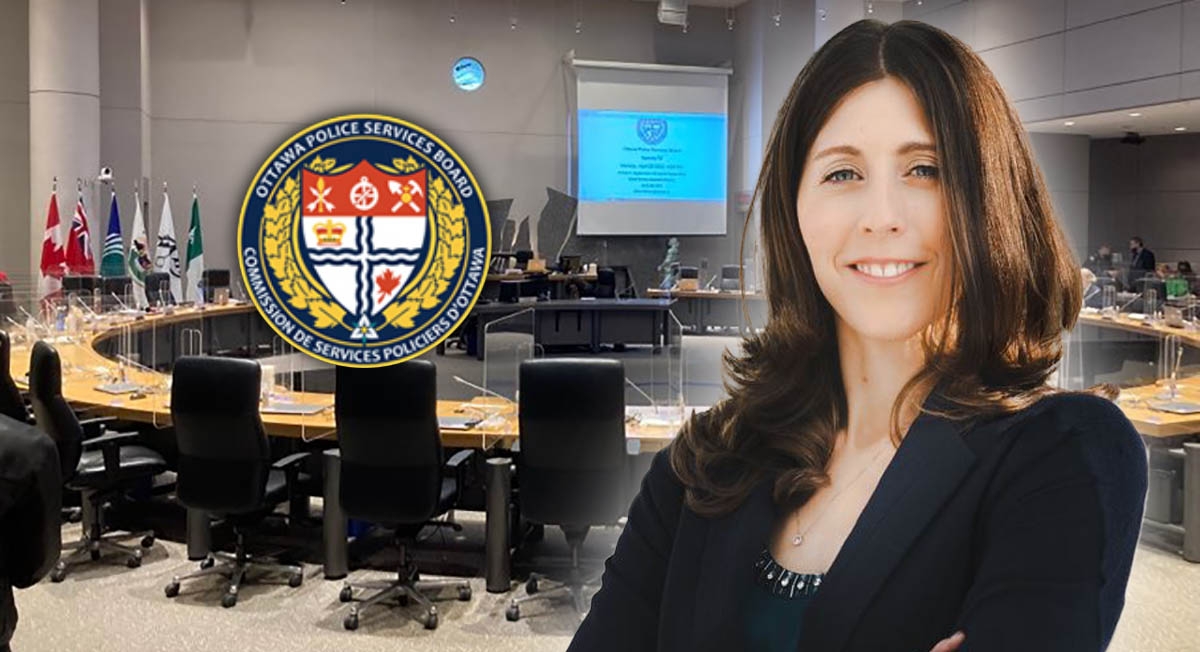
ABOVE: Auditor General for the City of Ottawa, Nathalie Gougeon, tabled her reports on February 9th at a special OPSB meeting.
The Ottawa Police Services Board (OPSB) held a special meeting on February 9 to discuss the City Auditor General’s report on the Ottawa Police Service’s (OPS) response to the “Freedom Convoy.” Auditor General Nathalie Gougeon presented a summary of the report, which focused specifically on the role and actions of the OPSB during the protest.
Gougeon began by reviewing the responsibilities of the OPSB under Ontario’s Police Services Act. She emphasized that while the board oversees the provision of adequate and effective policing in the municipality, it cannot direct the Chief of Police in day-to-day operations—though it can provide strategic direction. She reiterated that the audit aimed to assess whether the OPSB took all “necessary and appropriate actions” before and during the protest to fulfill its mandate.
The audit found that the board was not informed about the protest in a timely manner, contrary to the city’s major events policy. No prior consultation on policing objectives or priorities took place, and the board did not receive the necessary information to carry out its oversight responsibilities until the protest was nearly over.
Following the resignation of Chief Peter Sloly, Gougeon found that the process of appointing an interim chief lacked transparency. The report also highlighted that former OPSB Chair Diane Deans failed to share critical information with other board members. Additionally, the OPSB lacked a formal process to assess the skills and expertise of its members against the needs of its mandate. Gougeon concluded that orientation and training for board members need improvement.
Deputy Auditor General Joanne Gorenstein echoed these concerns, noting that new members were being appointed without identifying or seeking the qualifications needed to effectively govern a police service. She warned that some appointees may be “more challenged” in carrying out their roles.
Gorenstein also pointed out that board members receive no mandated training, despite being expected to navigate complex topics like community safety, law enforcement, labour relations, and civilian oversight. Without this training, members may struggle to fulfill their responsibilities effectively.
She further raised the issue of role conflict, arguing that having a city councillor serve as OPSB chair can lead to competing priorities, as both roles demand significant time and focus. She recommended looking to the Toronto Police Services Board, which has a dedicated full-time chair, as a potential model.
During the convoy protest, the OPSB held multiple meetings without public notice or published agendas—violating procedural norms. The City Solicitor General also attended closed-door meetings while advising Council on motions affecting the board’s composition, a move the Auditor General’s office deemed a conflict of interest.
The report concluded that the OPSB did not understand its role in relation to the protest and was not provided with sufficient information by the OPS, impairing its ability to make timely decisions. It also found that meaningful consultation on policing priorities never occurred and that the board violated legislative requirements governing its operations.
OPSB members Councillor Cathy Curry and provincial appointee Salim Fakirani expressed concern that the report implies City Council exerts influence over the board. Gougeon clarified that while Council appoints three members to the OPSB and can vote to remove them, the board itself is independent and selects its own chair. Diane Deans lost her chair position after being voted off the board by Council, underscoring that city councillors serve on the OPSB at Council’s discretion.
The Auditor General also presented a separate report on the OPS’s internal response to the protest. As an independent organization, the OPS operates separately from the City of Ottawa, so the audit focused solely on inter-agency collaboration. The report found that the OPS did not engage Ottawa’s Emergency Management department—an essential partner—in advance of the protest. Furthermore, the police failed to share intelligence with the City and did not coordinate with municipal resources for traffic management, undermining the city’s ability to respond effectively.
In the end, the Auditor General’s report is a damning indictment of the lack of coordination between law enforcement and municipal leadership. Still, with a new chief and three new City Council representatives now on the OPSB, the report is unlikely to result in resignations. Instead, it is expected to serve as a blueprint for improving future governance of the Ottawa Police Service.