
• By: Dan Donovan

Behind the Monuments: Meet Dr. André M. Levesque, Canada’s Voice of Remembrance

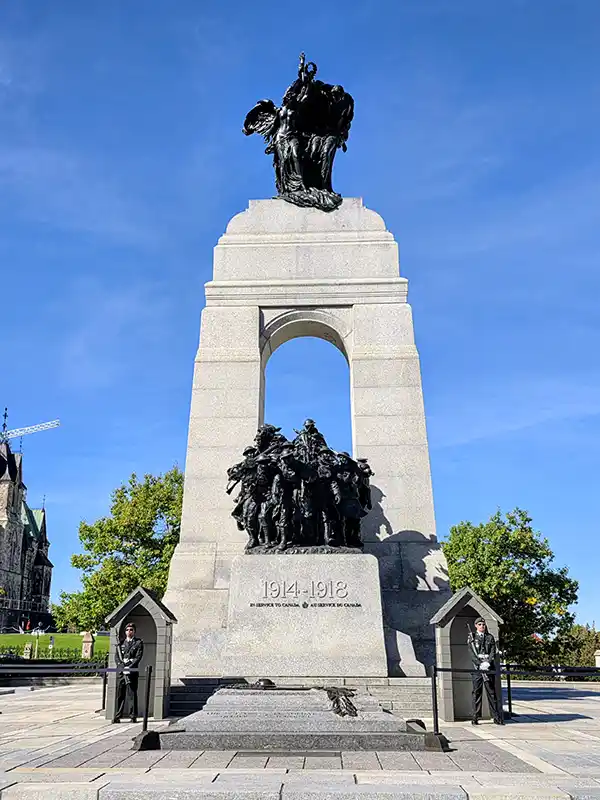
Dr. André M. Levesque is Canada’s leading authority on memorials and commemoration, whose work bridges monument design with the social practices of human grief and gratitude. He pioneered “memorialogy,” integrating architectural studies with the living, daily rituals of ordinary citizens. A key example of this discipline is Operation MEMORIA—the repatriation of Canada’s Unknown Soldier—which created a dual-site national sanctuary split between the National War Memorial in Ottawa and Memorial Hall at the Canadian War Museum.

When the unidentified Canadian soldier was disinterred from the Cabaret-Rouge British Cemetery near Vimy Ridge and brought home on May 28, 2000, it was far more than a logistical feat—it was a complex exercise in national psychology. Under Levesque’s guidance, this historic initiative established a powerful framework that intentionally split the experience of national remembrance between two distinct, interconnected spaces—one designated for public gathering and the other for quiet, individual reflection.

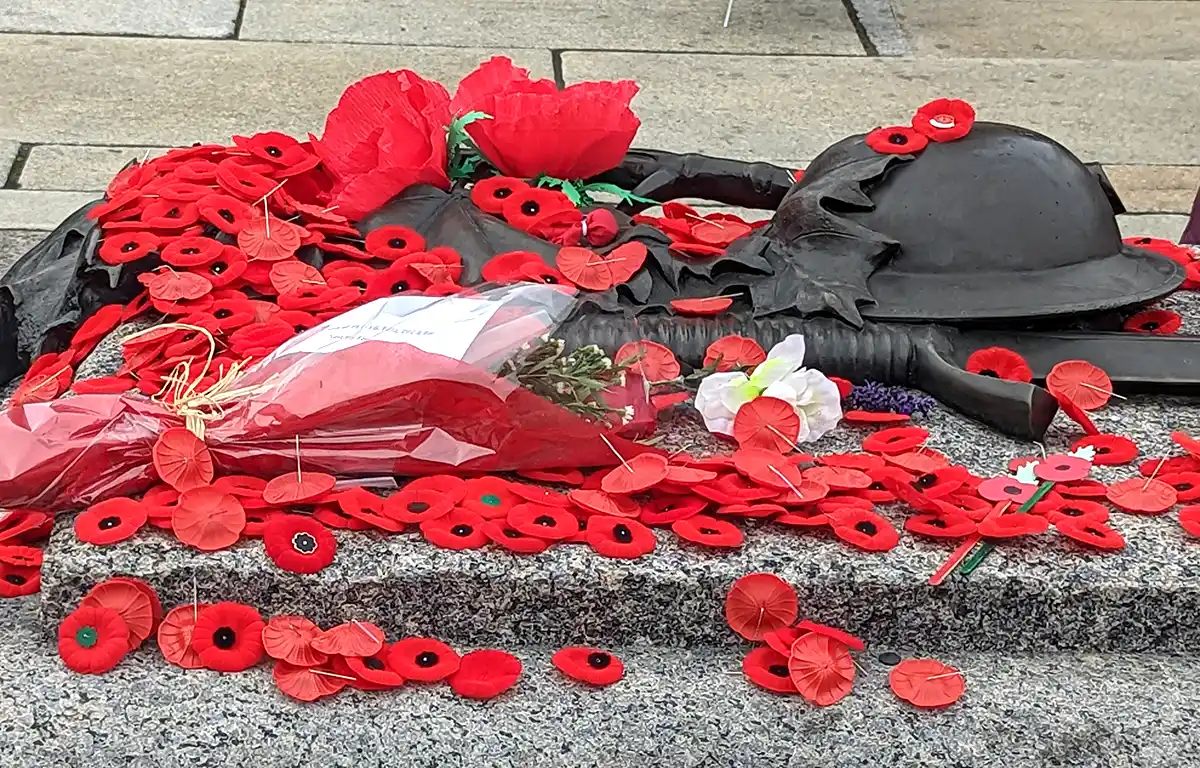
At the National War Memorial, the Unknown Soldier lies entombed within a dark granite sarcophagus. Here, remembrance is active and public—a space where the grassroots community takes true ownership of history. Every November 11, and throughout the year, citizens step past the formal barriers to lay poppies, handwritten letters, and family photographs directly onto the stone. Leaving the soldier anonymous ensured the tomb became a blank canvas for personal grief, inviting families of lost service members to look upon it and see their own relatives in the unknown soldier.

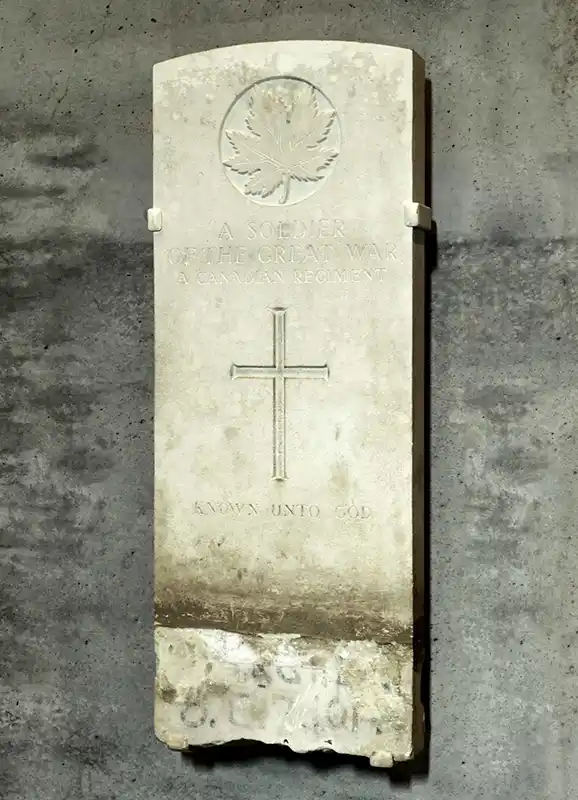
Yet, the ritual does not end in Confederation Square. One must cross over to Memorial Hall inside the Canadian War Museum, which houses the soldier’s original First World War headstone. Weathered by French rain and inscribed with “A Soldier of the Great War – A Canadian Regiment – Known Unto God,” the headstone represents the quiet, deeply contemplative alter ego to the public tomb.

Tombstone of Canada’s Unknown Soldier on display in Memorial Hall at the Canadian War Museum. (Photo: Courtesy Canadian War Museum)


The design of Memorial Hall is a masterclass in the spatial science of memorialogy. The room is stark, narrow, and silent, engineered so that every November 11 at exactly 11:00 a.m., a narrow stream of sunlight pierces a window in the concrete structure to perfectly illuminate the original headstone.

This solar alignment is the ultimate marriage of monument and practice, where the cosmic, historical, and personal converge. Through this dual presence—the public repository downtown and the solar-timed sanctuary across the Ottawa River—Levesque demonstrated how memorialogy bridges national identity with intimate, quiet reflection.

As the generation that fought in major twentieth-century conflicts fades, memorialogy faces a critical challenge: sustaining a living connection to a past that no longer has living witnesses. For Levesque, the answer lies in shifting how communities actively participate in the space around them. “Remembrance cannot be passive,” Levesque emphasizes. “The moment a monument becomes a piece of urban background noise—something people walk past on their morning commute without a second glance—the practice of remembrance has failed.”

Levesque advocates for a modernized framework that evolves alongside Canada’s cultural fabric to engage a younger, more diverse generation. By focusing on living practices, like interactive digital storytelling mapped onto physical structures, community-led oral histories, and educational programming linking historical sacrifice to modern human rights, the discipline ensures that national memory remains vibrant and inclusive. This transforms remembrance from an annual civic duty into a continuous, heartfelt dialogue between the past and present.

Canada’s National Military Cemetery

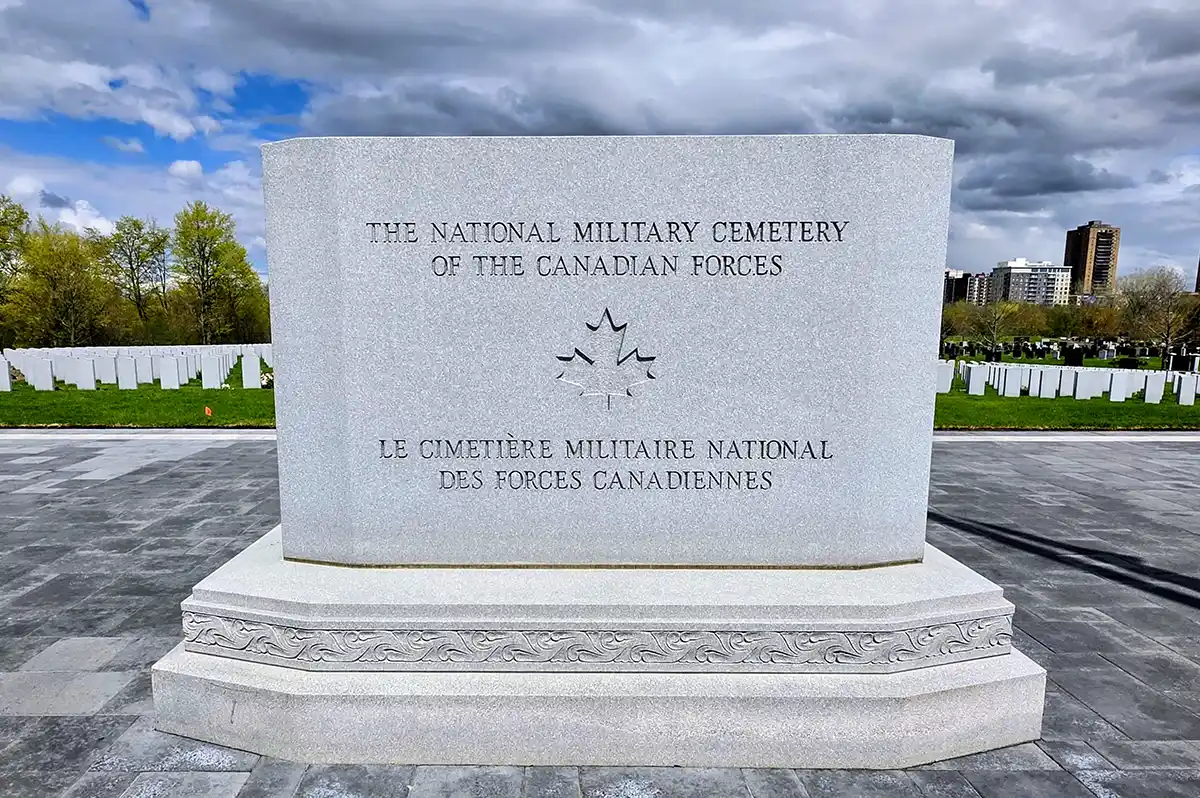
Only a year after Operation MEMORIA, Levesque served as the project manager for the creation of the National Military Cemetery at historic Beechwood Cemetery. Officially unveiled by Governor General Adrienne Clarkson on June 28, 2001, it stood as a monumental tribute to collective memory and commemorative vision.

 However, the field of memorialogy is defined by how people interact with a site, and the cemetery immediately faced an unexpected demand. A new generation of modern veterans requested the right to be buried side-by-side with comrades who fell during the conflict in Afghanistan. To Levesque, this grassroots groundswell from the field proved that a military cemetery is a sacred space of living camaraderie where survivors can remain forever tethered to the peers they lost on the battlefield.
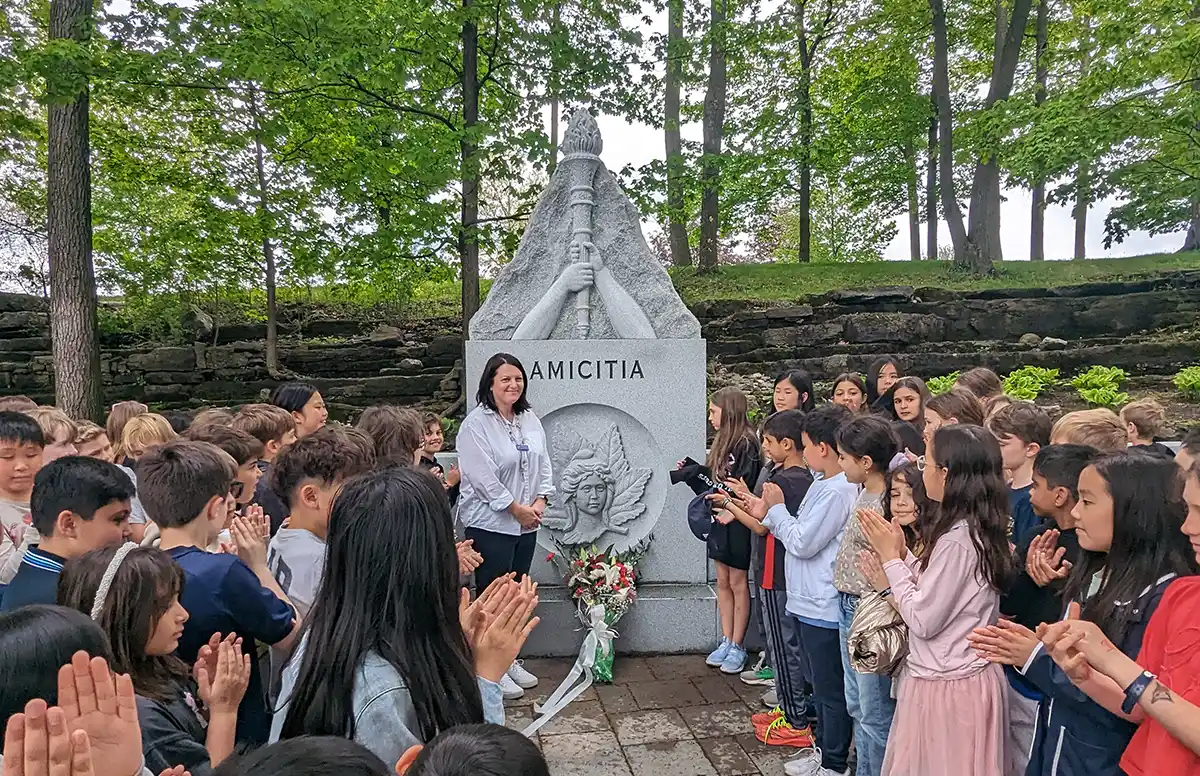
The Amicitia France-Canada Monument

Levesque’s work has consistently crossed international borders, permanently embedding historic military alliances into the modern landscape. Decades later, he co-initiated construction of the Amicitia France-Canada Monument. Situated near Beechwood Cemetery’s Cross of Sacrifice, this striking granite and bronze installation honours more than four centuries of shared heritage and nearly a century of bilateral diplomatic ties.

The monument serves as a permanent architectural testament to the shared sacrifices of Canadian and French forces, from Vimy and Normandy to modern joint counter-terrorism efforts. Cementing its bilateral significance, the rollout culminated in a moment of reflection when Prime Minister Justin Trudeau and French Prime Minister Gabriel Attal stood together on April 12, 2024, to pay tribute before its facade. This moment reflected Levesque’s core philosophy: that international diplomacy must always find its foundations in shared stories of human sacrifice.

The Architect of Living Memory

Ultimately, the lifetime of work pioneered by Dr. Levesque reveals that remembrance is a forward-looking obligation to the living. Through the lens of memorialogy, monuments cease to be static shapes. Instead, they transform into vital social infrastructure—vessels built specifically to carry the heavy, shifting weight of a nation’s gratitude and collective grief.

When Canadians gather at the National War Memorial, walk the paths of the National Military Cemetery, or stand before the Amicitia France-Canada Monument, they step into spaces intentionally designed to protect the human soul of heritage. Levesque’s enduring contribution is his unique ability to operate at the highest echelons of global diplomacy while never losing sight of the individual soldier, the local Legion, or the grieving family.

As the sun catches the original headstone at the War Museum this coming November 11, it will illuminate the blueprint of our national conscience. Dr. Levesque has built the grand stages where Canada remembers, ensuring that every ordinary citizen has a sacred place to stand, hold a poppy, and whisper: we will never forget.

Photos: Courtesy Dr. André M. Levesque