
Canada Can’t Defend What It Can’t Control
Canada is making a generational investment in defence. New fleets, aircraft, uncrewed systems, and renewed attention to our Arctic and maritime security are reshaping our country’s military capabilities.
Budget 2026 reinforces this direction, with new measures to strengthen Canada’s defence capabilities, secure supply chains, support domestic defence industries and increase the share of defence acquisitions awarded to Canadian firms.
But one critical piece of this investment deserves far more attention: the technology connecting it all.
Every modern defence platform depends on software and networks to transmit information, maintain communications, receive updates, and give operators the intelligence they need to make decisions. Without those systems, even the most advanced aircraft, vessel or vehicle can be limited in what it can do.
As Canada invests billions in new defence capabilities, we need to ask a fundamental question: Who controls the technology that makes those capabilities operate?
This is bigger than just owning the platforms. It is also about Canada’s ability to control the systems that connect them, the data they generate, and the technology they depend on to operate.
When software and network architecture are designed, controlled and supported abroad, Canada can become dependent on foreign suppliers for critical updates, maintenance and technical support. Depending on the contractual arrangements, security architecture and access rights involved, these dependencies can also affect Canada’s ability to modify systems, access operational data and maintain capabilities independently.
In routine operations, these dependencies may be manageable. In a crisis, they can become significant vulnerabilities.
Retaining meaningful control over the architecture, integration and operating systems underpinning its most critical defence capabilities should be a procurement priority, not an afterthought.
The good news is that the capabilities already exist in Canada.
Canadian companies are developing sophisticated technologies in secure networking, cybersecurity, computing and data management for aerospace and defence. The expertise is here. The engineering talent is here. Canada’s new Defence Industrial Strategy explicitly recognizes the importance of developing domestic capabilities in areas such as communications, cyber, aerospace and other strategically important technologies.
At CCX Technologies, an Ottawa-based company, engineers develop and manufacture technology that monitors multi-format data for anomalous behaviour, manages connectivity across satellite, cellular and tactical radio networks, and keeps mission data accessible when communications links are disrupted.
These capabilities address an increasingly important requirement for modern military operations: keeping aircraft, vessels and other platforms connected, secure and operational in environments where communications can be unreliable or unavailable.
Yet Canadian companies with proven expertise still face significant barriers to entering major defence procurement programs. Too often, domestic innovation is encouraged in principle but struggles to translate into procurement opportunities, operational testing and long-term contracts.
Canada needs to close that gap.
When procuring a new platform, the evaluation cannot stop at the aircraft, vessel or vehicle. Procurement requirements should also examine who controls the operating software, where mission data is stored, who can access it, how updates are managed, and whether Canada can modify or extend the technology without relying entirely on a foreign supplier.
These are questions of operational control. And Canada can’t defend what it can’t control. We need procurement to reflect this from the outset.
Programs such as Innovation for Defence Excellence and Security (IDEaS) have helped create opportunities for Canadian companies to demonstrate new technologies. The Department of National Defence’s program provides funding, testing opportunities and support to Canadian innovators. The government has also recognized the need to improve the transition from successful innovation projects to operational military capabilities, including through its Procurement and Operationalization of Innovation and New Technology (POINT) initiative.
But testing and demonstration are only part of the equation.
Canada needs stronger pathways to move successful domestic innovations into military programs, including opportunities to test alongside the Canadian Armed Forces, establish operational requirements and transition proven technologies into procurement.
If we want Canadian companies to build the capabilities our military needs, we must also give them a realistic opportunity to supply them.
The benefits extend beyond the defence sector. Technology that keeps a patrol aircraft connected over the Arctic can also support remote infrastructure, Coast Guard operations, emergency response and critical industries. Developing these capabilities at home creates high-value jobs, strengthens Canada’s industrial base, retains specialized expertise and gives us technologies we can bring to our allies.
CCX Technologies is one example of a Canadian company working in this area. On November 24, 2026, the Ottawa-based company announced the launch of RedLeaf, a platform designed to bring together secure communications, onboard computing, remote software management, mission data assurance and cybersecurity for aircraft, naval vessels, uncrewed systems, vehicles and critical infrastructure.
According to the company, RedLeaf is developed and manufactured in Ottawa and is designed to support operations in environments where communications are disrupted, intermittent or bandwidth-limited.
The product illustrates the type of domestic technology that deserves consideration as Canada modernizes its defence capabilities. Its ultimate value, however, will depend on how such technologies perform in operational environments and how successfully they can be integrated into military procurement programs.
But this is about much more than one company or one product.
Canada has made clear its ambition to strengthen its defence capabilities, rebuild its industrial base and take greater responsibility for its own security. Delivering on that ambition requires looking beyond the platforms we purchase to the technology that makes them operational.
We cannot achieve defence sovereignty if the systems our military depends on remain beyond our control. Canadian companies have a role to play in closing that gap, but government procurement policy must give qualified domestic suppliers a genuine opportunity to compete, demonstrate their capabilities and become part of Canada’s long-term defence infrastructure.
Defence sovereignty is not simply about buying Canadian. It is about ensuring that Canada has the technical expertise, intellectual property, industrial capacity and operational authority to maintain and sustain the capabilities on which its national security depends.
That is a strategic consideration Canada can no longer afford to overlook.
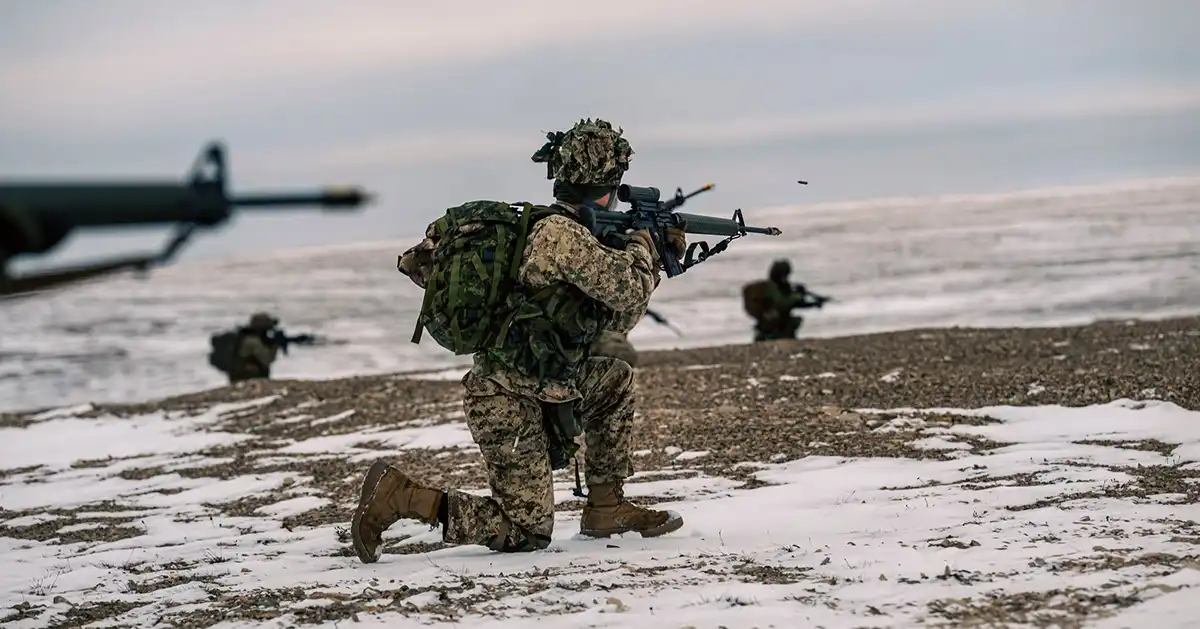
Photo: Corporal Gwyneth Lovell