
Canadian Health Care Needs Some Repair and Some Myth-Busting

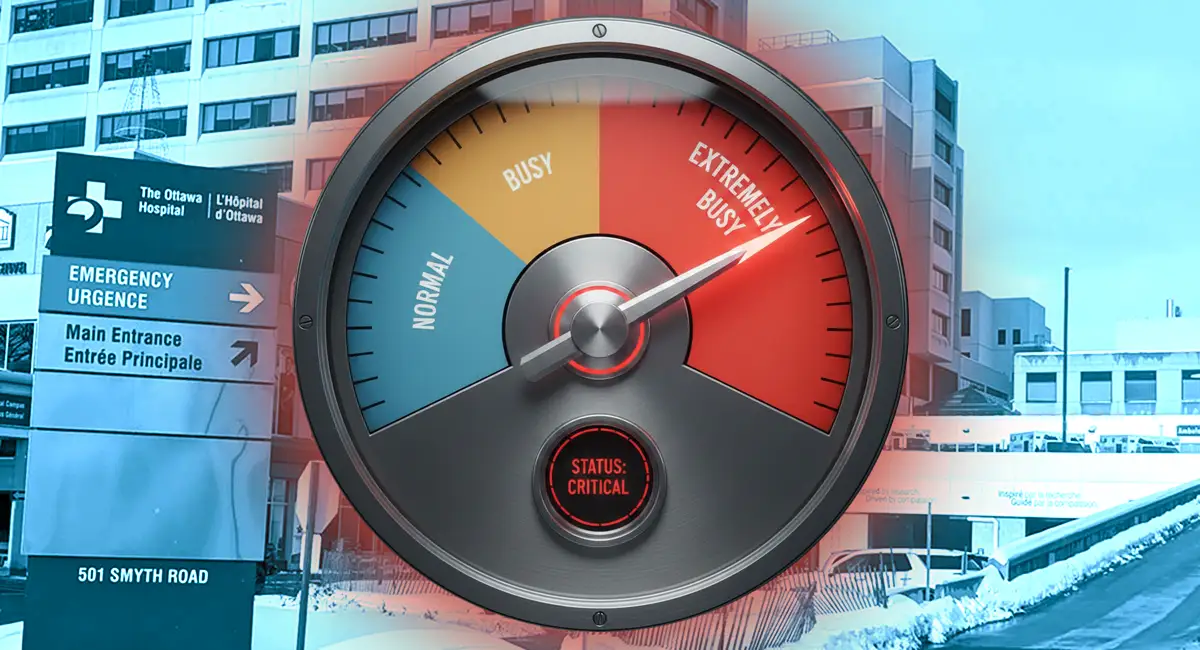
The concept of comprehensive health care provided for all and supported by taxation rather than user fees is admirable, but currently there is no province where it fully lives up to its stated objectives. Wait times for many medical acts are unacceptably long, and often these delays do harm. Large numbers of people do not even have access to a family doctor, and those who do may not be able to get a prompt appointment. Those who don’t have a family doctor end up using hospital emergency departments as a substitute, which further complicates and degrades the handling of real emergencies.

The deterioration is so profound that Canadian health care is now rated considerably lower than that of many OECD nations. But to fix it may mean tackling some mythologies and making some novel political decisions.

I will make three provocative statements, and then provide the explanations that back them up.

Statement #1:

While there may well be a shortage of physicians and surgeons in a number of fields, there are also structural features that prevent many doctors from seeing and treating as many patients as they would like to see. Thus, some of the problem is a lack of doctors’ services, rather than a lack of doctors.

Statement #2:  

The long waiting times for many procedures can be fixed with only modestly increased ongoing expenditures, but probably requires an odd one-time-only policy move that is quite counterintuitive.

Statement #3:

One particular form of two-tier medicine can dramatically improve the alacrity and modernity of the public tier, and increase access for all. I will explain why both dogma and language prevent Canadians from seeing how it could work.

Explanation #1:

There are at least four major factors which diminish the productivity of our current crop of physicians and surgeons. I have written about some of them before in this magazine.

The most obvious of these is the rise of exaggerated bureaucracy  and reportage, some related to data collection by provinces, and some required by various insurers. I know physicians who spend their weekends doing the endless paperwork generated by their clinical work during the week. There are, of course, two ways out of this morass. Either streamline the reportage or pay the practitioners enough to hire additional administrative staff to satisfy the appetite of the provinces and the insurers for the mountains of data that they wish to collect (but are probably never going to use). In either case, the outcome would be the availability of more time to see and treat patients.

But, for those practices which rely heavily on the hospital setting, there are other structural features that slow down the system. The most obvious of these is the shortage of active treatment beds in our hospitals. This results from two mistakes.

The first was the precipitous reduction in active treatment beds. I have watched Ontario gradually reduce the number of active treatment beds from 4.5 beds per thousand of population to 2.2 beds per thousand of population. Some of this decline was justified, as improvements in procedures have shortened hospital stays for many treatments, and a decent number of procedures which once generated a hospital stay are now outpatient procedures. But no consideration was given to “surge capacity”. Every improvement in techniques resulted in a decline of capacity, as we bumped our way along the lowest edge of what was barely adequate in normal times. Today, Canada has far fewer hospital active treatment beds per capita than most developed countries, and ranks at the bottom of the OECD countries in this regard.

The health care system is not unique in its lack of robustness. During the last thirty years, the idea of doing everything more economically by reducing costs with “just in time” delivery of goods and services has infected the whole society. That trick, which originated with the Japanese auto industry, became the Holy Grail for cost reduction in a whole range of endeavours. Of course, everyone loves a bargain. But, while tailoring every process for minimum inventory and minimum unused capacity may make it very price competitive, it also makes it vulnerable to shocks.

This absence of surge capacity in health care made the management of the Covid pandemic much harder.  The initial lockdowns and constraints were, of course, desperately needed to prevent unnecessary illness and death in the waiting period before we had excellent vaccines, and would have been imperative even if greater surge capacity had been available at that time. But the reason why there was a dire need for significant restrictive measures to be extended into 2021 and 2022, during those waves of the pandemic that occurred after the widespread availability of the vaccines, was primarily to spread out the expected hospitalizations over a longer period, in order to reduce the risk of overwhelming a health care system with no surge capacity to speak of. It will eventually be interesting (and sobering) to see studies on how many Canadians died during that period because of delays that the pandemic caused in treatment for conditions unrelated to Covid.

I recall that, while explaining a strategic report that I had chaired for the Department of National Defence in 2002, I had occasion to describe the surge capacity in the City of Toronto as, “enough to cope with perhaps a double bus crash, but not much more”. A wealthy country does not need to go so close to the line. Leave some room for the unexpected. Think of it as an insurance premium. It would sure have helped during the first part of the Covid pandemic.

The second cause of the active treatment and acute care bed shortage is the number of those beds occupied by patients awaiting places in long-term care or rehab settings. The failure to adequately manage and develop capacity in those settings, some of which remains in the private sector, is depriving the public of access to a non-trivial number of much more expensive active treatment beds.

Furthermore, a peculiarity of budgeting methodology considerably exacerbates the shortage of services by many physicians and surgeons. That peculiarity is the mismatch between how most practitioners are compensated and how hospitals are compensated. Other than full-time clinical faculty in the medical schools, physicians and surgeons are compensated on a fee-for-service basis. But hospitals have fixed budgets, and when they feel financial pressure, their only solution is to do less.

I know many hospital-based doctors who tell me they would very much like to do an extra clinic a week (or sometimes two), but the hospital can’t accommodate it. Why? Because the hospitals, with some of the flashiest capital equipment in the world, may well have decided for financial reasons that they can only use those operating rooms or imaging equipment suites or other high-tech diagnostic tools for five shifts a week (i.e. week days, eight hours a day), when, in fact, there are theoretically 21 potential shifts a week.

And those fancy machines that can’t be used for patients the other 128 hours of the week? Well, in some jurisdictions they do get used, but for extra income from veterinary service providers. In some places you can get an MRI or CT scan for your dog or cat right away, but your mother may have to wait weeks.

To be fair, in no nation do they operate such things 21 shifts a week, but in many countries, it is much more than five shifts, sometimes reaching 12 or 13. One possible fix for this is to put the hospitals on a fee-for-service basis too, so that when they do more they get more in the budget. This would allow them enough resources to hire the nursing, technical and admin staff needed to cover the extra shifts, and to purchase the extra supplies needed.

Yes, more doctors are needed, and the medical schools are increasing output. But let’s make the best use of the ones we already have, and stop inventing bureaucratic obstacles that prevent them from doing all they would wish to.

Explanation #2:

The long wait times for medical consultations and treatments in Canada are a profound tragedy, causing vast suffering. Furthermore, the money that the government thinks it saves by skimping on health care may well be an illusory saving, because, if wait times were short or non-existent, it would have the effect of returning large numbers of people to the workforce sooner, earning wages and paying taxes. And we know that shortened waiting times prevent many conditions from becoming more severe and requiring even more expensive and extensive treatment later.

So how much more would it cost, in steady state, to have only very brief wait times? To figure that out we need to understand a bit about the study of waiting lines. There is quite a literature on waiting lines and queuing theory. All waiting lines reduce demand for the service being awaited, but some waiting lines reduce demand by more than others. Most people who experience a long waiting line for a fast-food joint just go elsewhere or go home, representing a big compression of demand. But the compression of demand in the long waiting lines for health services is minimal. Health economists have estimated that our long wait times reduce the demand for medical acts by perhaps 5 percent. Much of that 5 percent is people getting better on their own while awaiting treatment. A considerably smaller portion is made up of those who die waiting, but such events embarrass the system, so it tries (not always successfully) to avoid that outcome. And a modest number of patients do go to some other jurisdiction at their own expense to be treated more promptly.

Thus, it would seem that if system capacity and throughput were increased by something over 5 percent, eventually there would be negligible waiting lines. Perhaps, but the problem word here is “eventually”. The difficulty is dealing with the existing long waiting line of pent-up demand. The current waiting lines are so long that a capacity increase somewhat greater than 5 percent would not see marked shortening of wait times for a long while, meaning not during the current electoral cycle, and possibly the next as well. That would be disastrous for any politician brave enough champion spending the money to increase capacity and throughput by, say, 7-10 percent, with no great improvement in waiting times before the next election.

But there is a solution, in two parts. First, the system capacity must be increased, somehow, as described above, to somewhat exceed the need (more on this in part 3). That is the desired new steady state. But the backlog must be dealt with by an additional manoeuvre, best described as a very radical political act. That act is to allocate a huge sum, but absolutely one time only, to send considerable portions of the backlog elsewhere for prompt treatment. This would dramatically shrink medical wait times before the next election and give the political figures who are brave enough to do this a very good chance of holding on to their legislative seats. And it would be an expenditure which, with adequate ongoing capacity, would not recur.

Explanation #3:

The idea of two-tier medicine makes most Canadians nervous. We pride ourselves on championing equal treatment for all, without favoritism based on wealth or status. It is a laudable ideal. But as I noted in the introduction above, no Canadian province today lives up to that ideal. Because of undercapacity, we have a system (or systems) which vary hugely in access. The rural/urban divide is still with us, as is variation from provinces to province. More significantly, the system is so overloaded that you need to be clever, articulate, medically knowledgeable and somewhat insistent to get adequate care.

As a former professor and department chair in a medical school, I know exactly what to say about any condition that I experience to get decent and adequate treatment without wasting the time of my doctors. But I am constantly aware of people who are much less well treated by the system. In effect, we already have two-tier medicine, but the tiers are defined by knowledge and geography, not by being tax-supported on the one hand and private sector on the other.

Our reflex opposition to that latter type of two-tier system, however, stems from two things. The first is our egalitarianism, as noted above, but the second derives, strangely enough, from the fact that most of us speak English, but not a lot of other European languages.

As a result, the two-tier health care systems that we know most about are the egregious ones in two English-speaking countries, the US and the UK. Both of those two-tier systems are deeply flawed, each in their own disgusting way. The US system is capitalism unchained, with huge profits made by insurers, pharmaceutical manufacturers and care providers, with minimal access to care by the poor and which leaves tens of millions without any care whatsoever. The UK public tier, the NHS, is overwhelmed, bureaucratic and of late has shown worse outcomes that those of most national systems, while the private tier in the UK has little crossover to the NHS. Both these two-tier systems are very unlike the two-tier systems in most other countries in Europe, where the result is overall better health care in both tiers, and better outcomes, on average, than in Canada.

The key to the much better two-tier systems in the non-English-speaking European countries is that practitioners are allowed and (sometimes) encouraged to work in both tiers simultaneously. This has two profoundly important effects.

The first effect is that overall system capacity increases considerably, resulting in short wait times for most patients in either tier. The capacity increase results from doctors being able to practice as much as they want, rather than being restricted to fewer clinics because of the budgetary problems of the public hospitals.

The second effect may be even more important. Implementing change or adopting innovations in the tax-supported public tier is usually fraught with bureaucracy, delay and resistance. But in the private tier, innovations that improve outcomes, streamline processes or save resources are relatively easily adopted. But if the practitioners in the private tier who can immediately see the benefits of such reform are also the ones working in the public tier, the pressure to allow those reforms to flow over to the public tier becomes unstoppable. Thus, the private tier becomes a reform engine for the public tier, which then advances much more rapidly than would otherwise be the case.

Furthermore, many or most doctors in those countries who practice in both tiers use their dual role to make the system less sensitive to economic inequality. A relative of mine of limited means, having been told by her private tier surgeon that she needed surgery, was immediately given a prompt appointment for him to do the surgery, but in the public hospital, so that she would be spared any further expense. A wealthier patient would not have had such a courtesy. This sort of economic reallocation actually reflects the long tradition of the medical profession and its foundational ethos.

Thus, appropriate responses to three provocative statements near the beginning of this article might lead us to a few tools to get Canadians the better health care they deserve.