CBC’s Anti-Israel bias Fuels Antisemitism

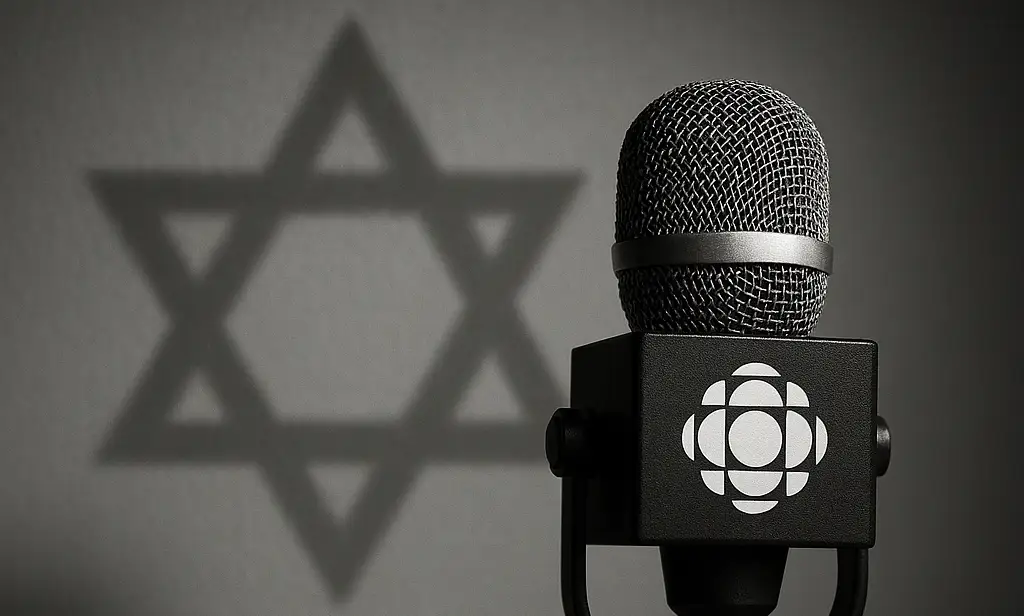
In a country that prides itself on pluralism and fairness, public broadcasting carries a special burden. The CBC is not just another media outlet competing for ratings. It is funded by taxpayers — including its Jewish community — and is entrusted to be honest, not biased. When that trust falters, the consequences ripple far beyond the newsroom. When bias is obsessive – particularly against an identifiable group – it incites and validates hate.

The CBC’s coverage of Israel consistently crosses the line from critical journalism into narrative framing that distorts, omits, and inflames. Just this week, the CBC made an issue of Israeli Prime Minister Netanyahu’s plane crossing Canadian air space on its way to Washington. Nothing is too small to avoid being twisted by the CBC against Israel.

Criticism of Israeli government policy is not only legitimate; it is essential in any democracy. But when reporting repeatedly strips context from Israel’s security challenges, minimizes Jewish historical ties to the land, or amplifies unverified casualty claims while downplaying atrocities against Israelis, it morphs from critique into propaganda. By so doing the CBC — and by the law of agency the government responsible for it — violate Charter and Criminal Code protections against incitement targeted at an identifiable group.

Across the past two years, multiple independent analyses and advocacy groups have documented patterns in CBC’s reporting that exhibit a concerted pattern of bias against Israel. Not just occasional missteps.

One detailed report by HR Canada Charitable Organization released just last month analyzed 2,789 CBC news articles published between October 7, 2023 and June 7, 2025, using large-scale textual analysis. It concluded that CBC’s online coverage displayed consistent narrative imbalance, routinely minimizing Israeli and Jewish experiences while privileging Palestinian perspectives and framing them with more sympathetic language. The analysis found that CBC was far more likely to “humanize Palestinians and de-contextualize Israeli responses,” raising questions about whether the broadcaster met its own journalistic standards for impartiality.

Similarly, a separate study by B’nai Brith Canada found only about 6 per cent of CBC coverage could be described as pro-Israel — while more than half exhibited a pro-Palestinian bias. These were not editorial judgements but statistical measures based on content analysis over hundreds of news stories and videos.

What do these patterns look like in practice? One well-reported case involved internal directives within CBC News leadership instructing reporters not to refer to Hamas — a group officially designated a terrorist organization by the Government of Canada—as “terrorists,” instead recommending the use of terms like “militants.” This change drew sharp criticism from politicians and media observers as a departure from basic factual description.

Outside of aggregate studies, watchdog groups have highlighted numerous CBC stories focused on humanitarian suffering in Gaza that did not mention Hamas’s role in starting the conflict, using Gazan civilians as human shields, the taking of hostages, or ongoing refusal to release those hostages, implicitly framing Israel as the primary cause of ongoing suffering.

These examples make clear why Jewish advocacy groups have taken their concerns to the Canadian Radio-television and Telecommunications Commission (CRTC), asking for an independent inquiry into CBC’s coverage. Among the points raised in their intervention were the platforming of Gaza-based journalists with documented anti-Israel positions without clear disclosure, and continued utilization of journalists who have signed partisan letters as frontline conflict correspondents.

Critics of these groups say that media watchdog reports can themselves carry agendas, and that any large news organization will make errors. That debate should continue — but it does not negate the specific, documented findings of bias that have been published.

Nor is this merely about who gets quoted more often. The framing of events — how civilian suffering is contextualized, whether terror attacks are described with accurate terminology, whose voices are centred — shapes how audiences understand the human reality behind the headlines. In a period when antisemitic incidents have surged across Canada, skewed public narratives about Israel embolden those who conflate legitimate criticism of one government’s policies with hostility toward an entire people.

Israel is the world’s only Jewish state. When media portray it as uniquely malevolent — judged by standards not applied to any other country — the line between anti-Israel sentiment and antisemitism becomes perilously thin if totally non-existent. Israel is not an abstract geopolitical entity but a core component of identity and historical survival. Coverage that consistently frames Israel as an aggressor devoid of moral foundation reinforces all the old tropes: Jews as powerful, manipulative, or collectively guilty.

The problem is rarely an overt editorial declaration. It is subtler — a matter of framing, headline language, guest selection, and what is emphasized or omitted. Are Hamas’ charter and stated genocidal aims given the same attention as Israeli military actions? Are Israeli victims humanized with the same empathy as Palestinian civilians? Are Jewish voices, including those who defend Israel’s right to self-defense, proportionally represented?

When the Jewish state is persistently portrayed as uniquely brutal or illegitimate, it emboldens those who conflate opposition to Israeli policy with hostility toward Jews more broadly. Social media then amplifies the most extreme interpretations, often stripped of nuance altogether.

Robust debate will, and should, continue. But when public broadcasting tilts in ways that reinforce demonization rather than understanding, it contributes to a climate in which antisemitism flourishes and synagogues are attacked and Jewish schools shot at.

The CBC’s mandate as a public broadcaster demands standards of verification, context, and fairness. Nothing less. A genuinely unbiased public broadcaster would be responsive to credible external analysis and willing to engage with documented concerns — not dismiss them. Because when national media falters, it’s not just public trust that suffers, it’s our shared civic foundation.


Beryl P. Wajsman,B.C.L.,LL.B.,KCR, is President of the Institute for Public Affairs of Montreal