Recommended Articles

Your Guide to Waffles
Get £15 In Free Bingo At These Sites

Accident Claim vs Own Damage Claim: What’s the Difference?



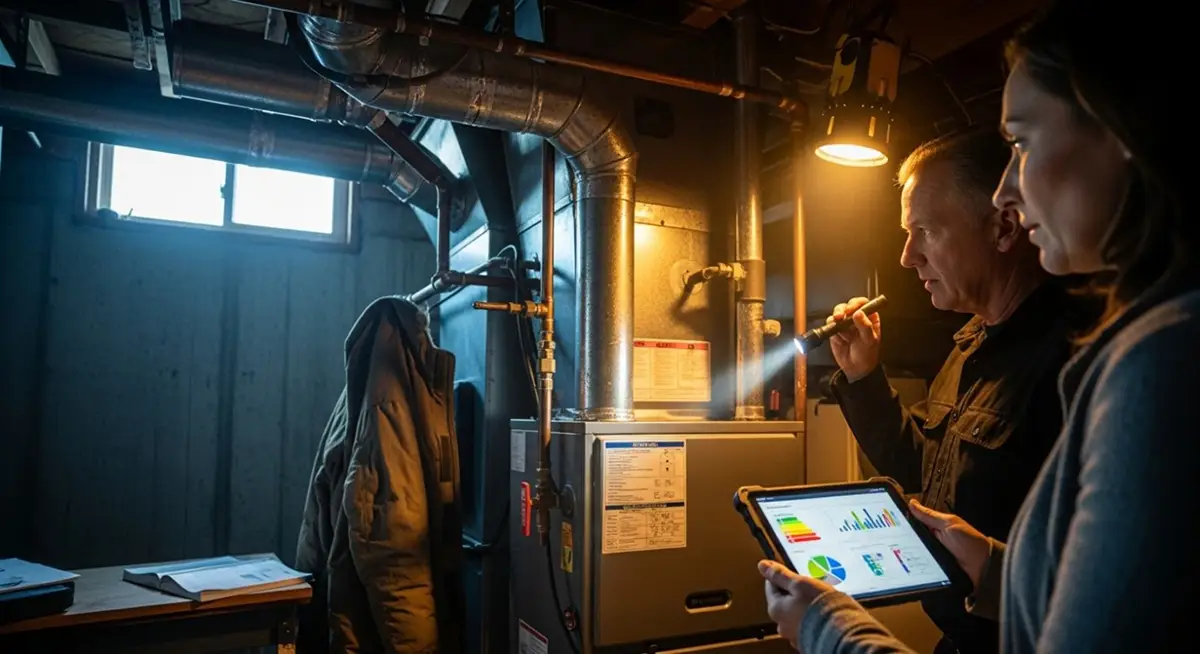
The first deep freeze of an Ottawa winter is an unmistakable feeling. It’s the biting wind whipping off the frozen Rideau Canal, the quiet crunch of heavy snowfall underfoot, and the city-wide conversation about snow removal standards that remain a challenge against an evolving climate. In these moments, the reliability of a home heating system transforms from a simple convenience into a critical necessity. For homeowners, this season brings a dual threat: the anxiety of an aging furnace failing during a polar vortex and the steady pressure of escalating energy bills on the household budget.
Choosing the right furnace is one of the most significant decisions an Ottawa homeowner can make, directly impacting their comfort, safety, and financial well-being for a decade or more. This decision is becoming even more important as Canada works to modernize its Energy Efficiency Act to improve affordability and competitiveness for consumers. A well-chosen furnace is not just about staying warm; it’s a strategic investment in a home’s long-term efficiency and resilience against the harshest Canadian winters.
Navigating the furnace market can feel overwhelming due to the technical jargon and various options available. Understanding the core components and performance metrics is the first step toward making an informed choice. From the fuel source to the efficiency rating, each specification plays a crucial role in determining how a furnace will perform in your home and how much it will cost to operate month after month.
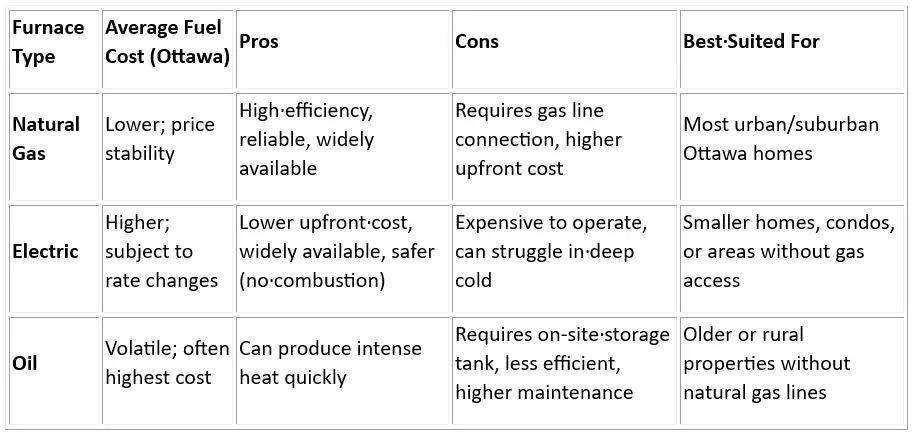
The type of fuel your furnace uses is the primary factor influencing both its upfront cost and its long-term operating expenses. In the Ottawa region, natural gas is by far the most prevalent and cost-effective fuel source, with infrastructure readily available in most urban and suburban areas. Electric furnaces offer a lower initial investment, while oil furnaces are typically found in older, rural properties that may not have access to the municipal gas grid.
The Annual Fuel Utilization Efficiency (AFUE) rating is the single most important metric for understanding a furnace’s efficiency. Think of it as the miles per gallon for your heating system; it measures the percentage of fuel that is converted directly into usable heat for your home. As the Government of Canada continues to update efficiency standards to help consumers save money, a high AFUE rating is a direct path to lower utility bills. Modern high-efficiency furnaces can achieve an AFUE rating of up to 97%, meaning only 3% of the energy is lost through the chimney or exhaust. Investing in a high-efficiency unit aligns perfectly with provincial initiatives like the Home Renovation Savings Program, which rewards homeowners for making energy-conscious upgrades to their properties.
Beyond the fuel type and efficiency rating, the way a furnace operates—its staging—has a profound impact on home comfort and energy consumption. This technology dictates whether your furnace runs at full blast every time it turns on or if it can adjust its output to match the specific heating needs of your home on any given day. This choice represents a critical trade-off between upfront cost and long-term performance.
A single-stage furnace functions like a light switch: it is either completely off or running at 100% of its heating capacity. This straightforward all-or-nothing operation makes it the most affordable option at the time of purchase. However, this simplicity can lead to noticeable temperature swings within the home, as the system delivers a powerful blast of heat to reach the thermostat’s set point and then shuts off completely, allowing the temperature to drop before the cycle repeats. This constant starting and stopping is less efficient than a more nuanced approach.
Two-stage furnaces represent a significant upgrade in both comfort and efficiency. These units have two output levels: low and high. A 2-stage furnace typically operates on its lower, energy-saving setting around 80% of the time, which usually runs at 60% to 70% of the furnace’s full capacity. The furnace only kicks into its high-power mode on the most frigid Ottawa days. This functionality provides more consistent heat, reduces temperature fluctuations, and can save homeowners 10-15% on heating bills compared to a single-stage model with an identical AFUE rating. At the premium end, variable-speed (or modulating) furnaces offer the ultimate in precise temperature control, as their motors use about two-thirds less electricity than single-speed models, adjusting their output in tiny increments to perfectly match a home’s heating needs.
The advanced technology inside multi-stage systems requires precise Ottawa furnace installation to deliver on its promises of efficiency and comfort. An improperly installed high-efficiency unit will fail to perform optimally, negating the benefits of the investment. This is where established experts add significant value. Companies like LG Home Comfort, for instance, possess deep expertise in the installation, maintenance, and repair of modern heating systems, ensuring that an investment in a high-efficiency furnace performs as designed for years to come.
One of the most common and costly mistakes a homeowner can make is choosing the wrong size furnace. Unlike many other home appliances, bigger is not better when it comes to your heating system. Correct sizing is a delicate balance that ensures optimal performance, efficiency, and longevity for your unit, and it is highly dependent on the unique characteristics of your house.
The consequences of improper sizing are significant and costly. A furnace that is too large for a home will engage in a process called short-cycling. It will blast the house with heat, quickly reach the thermostat’s set point, and then shut down, only to repeat the process a few minutes later. This constant starting and stopping wastes a tremendous amount of energy and puts excessive wear and tear on the furnace’s components, leading to premature breakdowns. Conversely, an undersized unit will run constantly on the coldest winter days, struggling—and often failing—to maintain a comfortable temperature in the home, all while increasing energy consumption.
Ottawa’s diverse architectural landscape means there is no one-size-fits-all solution for furnace sizing. A professional assessment must account for the specific style and age of a home to accurately calculate its heating needs.
1. Older Detached Homes (e.g., The Glebe, Old Ottawa South): These charming homes often have original windows, less insulation, and more air leakage. A careful heat-loss calculation is essential to ensure the furnace can overcome drafts and maintain a consistently warm temperature throughout the house.
2. Post-War Bungalows (e.g., Alta Vista, Carlingwood): While typically smaller and more straightforward in layout, insulation levels in these homes can vary drastically depending on past renovations. An energy audit is often recommended before sizing a new furnace to identify areas for improvement.
3. Modern Townhomes (e.g., Kanata, Barrhaven): These homes benefit from more recent building codes, better windows, and the insulation provided by shared walls. They generally require smaller, highly efficient furnaces to operate effectively without short-cycling.
4. New Construction: Built to the latest energy efficiency standards, these homes are tightly sealed and well-insulated. This demands an extremely precise sizing calculation to avoid the common pitfall of installing an oversized unit that will waste energy and wear out quickly.
A true professional will never size a furnace based on a simple rule of thumb, such as square footage alone. Instead, they use a detailed Manual J calculation, which is the industry standard for determining a home’s exact heating load. This comprehensive analysis considers numerous factors, including the local Ottawa climate, the R-value of the insulation, the efficiency of the windows and doors, the home’s orientation to the sun, and the number of occupants to arrive at a precise British Thermal Unit (BTU) requirement.
Making a smart furnace decision rests on three key pillars: understanding AFUE for long-term efficiency, choosing the right operating stage for tailored performance, and insisting on professional sizing for your specific home. By focusing on these elements, you can select a system that provides consistent comfort while keeping energy costs under control, transforming a daunting purchase into a confident investment.
A new furnace is more than just an appliance; it is a decade-long commitment to your family’s comfort, safety, and financial stability. As Ontario prepares to implement expanded carbon monoxide alarm requirements taking effect in 2026, upgrading your furnace presents a perfect opportunity to enhance your home’s overall safety and efficiency in one strategic move. Making an informed choice now ensures warmth and peace of mind through many Ottawa winters to come.
Image: AI Coutesy Gemini