
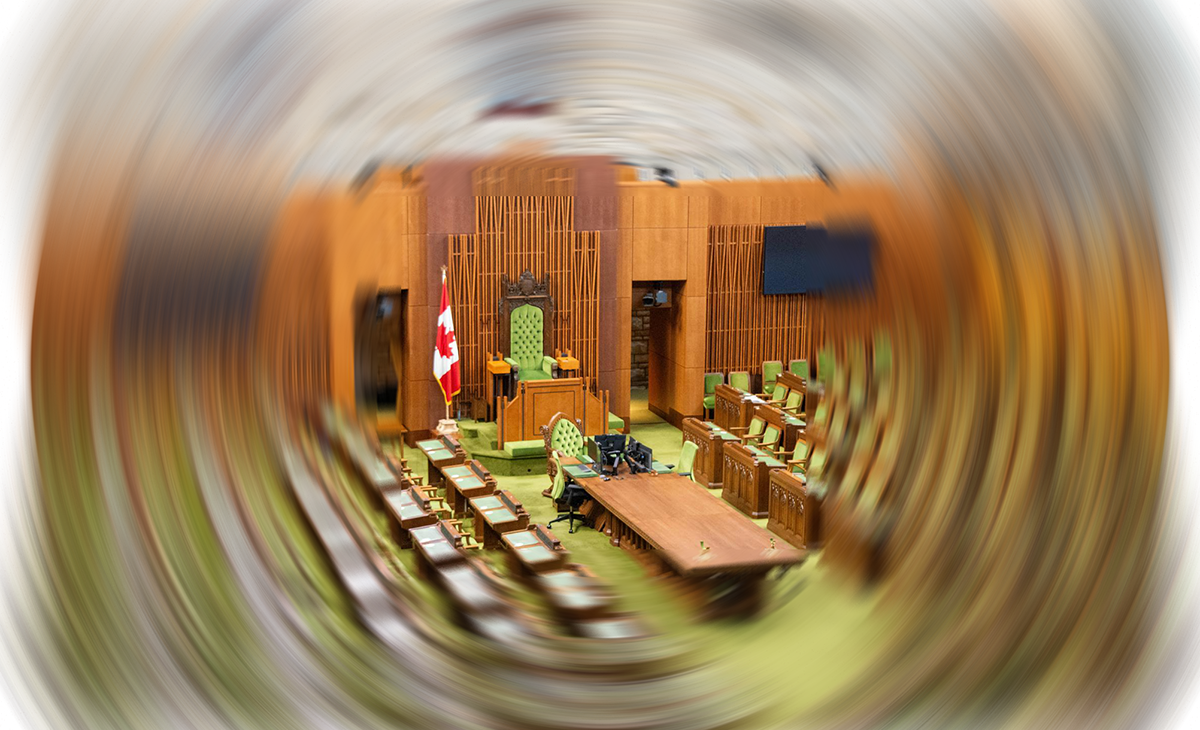
Crossing the Floor is Legitimate and Always Has Been

It is unsurprising that some Conservative Party MPs and some of their supporters have made public comments that showed their displeasure and annoyance over the four (so far) Conservative MPs who have crossed to the Liberals in recent months.

While a few of the reported comments were conventional and proper, expressing regret and disappointment, some were extreme, labelling the floor crossers as dishonest, or “traitors” to the Conservative Party. Some have argued that the floor crossers should have resigned, and run in the subsequent inevitable byelections as Liberals (if they could get the nomination), because the voters who elected them voted for the Conservative Party, not the Liberal Party.

But that is not an accurate understanding of the Canadian parliamentary system. Regardless of what some journalists and some partisans think, we do not actually vote for a party. We vote for a person in the expectation that, if the person wins, that person will become a member of parliament for our home constituency, and will be our representative in Ottawa. Part of the biography of that person is that, at the time of the election, the individual was a member of a particular party. But circumstances can change, and the member can change parties, or even eschew parties and sit as an independent. If the electors in the home riding don’t like it, they can fail to re-elect the person at the subsequent election. But once we elect someone to the House of Commons, for the life of that parliament, we rely upon their judgement to do what they think will be best for the majority of their constituents.

Most floor crossers would argue that they didn’t leave their party, but that their party left them, by taking stances that they were uncomfortable with and had never endorsed. When Leona Alleslev crossed the floor from the Liberals to the Conservatives in 2018, moving from the government benches to opposition, she made it clear that it was because the then Liberal government was failing in a number of areas, such as handling of the economy, tax reform, foreign affairs and trade, and underspending on defence. It is noteworthy that those who are complaining today didn’t complain about that crossing in the other direction.

While some of the complaining about floor crossing has been rooted in a core misunderstanding of our parliamentary system, as I have argued, some comes from another more worrisome source. The “backroom boys” who are not elected MPs, but who handle party affairs and advise the leaders, are often the source of such rhetoric. They wish the party apparatus to be more powerful and the MPs to be less powerful. It is they who particularly push the narrative that the voters voted for a party and not a person, because if it were so, it would increase the influence, power and importance of these unseen and unelected organizers and advisers.

Floor crossers are not a footnote, and are not inconsequential. In May of 1904, Winston Churchill crossed from the Conservatives to the Liberals over his opposition to Arthur Balfour’s shift towards tariffs, while Churchill favoured fewer restrictions on trade. In 1924, the decline in the Liberal Party caused Churchill to rejoin the Conservative caucus. The rest is history.

The Canadian system, rooted as it is in British parliamentary tradition, does not consider floor crossing to be unethical. Since 1867, we have seen 133 Canadian MPs cross the floor. It is part of the normal functioning of our democratic system. If the Conservative Party is unhappy about the recent spate of crossings, it might reflect on two things that may be driving this increased frequency of defections. One driver might be the widely perceived need for unity and a strong government in the face of foreign pressure, and the other might be how the Conservative Party may have been alienating significant portions of its customary base with its incessant MAGA-like carping and the virtual absence of an actual platform with specific policy proposals. These two deficiencies militate against any attempt to appear like a government in waiting. The migration of the Liberal Party somewhat to the right under Mr. Carney, as it strives to locate the brass ring of the exact centre, which is the holy grail of Canadian politics, may also be a factor.

While Mr. Poilievre has recently diminished his reliance upon sniping and made a few stabs at articulating actual plans, some party members doubtless feel that it is too little, too late. The recent, small and tentative pivot may need to become a thoroughgoing one to stop the haemorrhaging.

Photo: Pexls.com