Recommended Articles
Natalie MacLean’s Wine of the Week
Argentina’s Mouthwatering Malbec!
“All About Fish” Promotes Sustainability with Energy and Zest


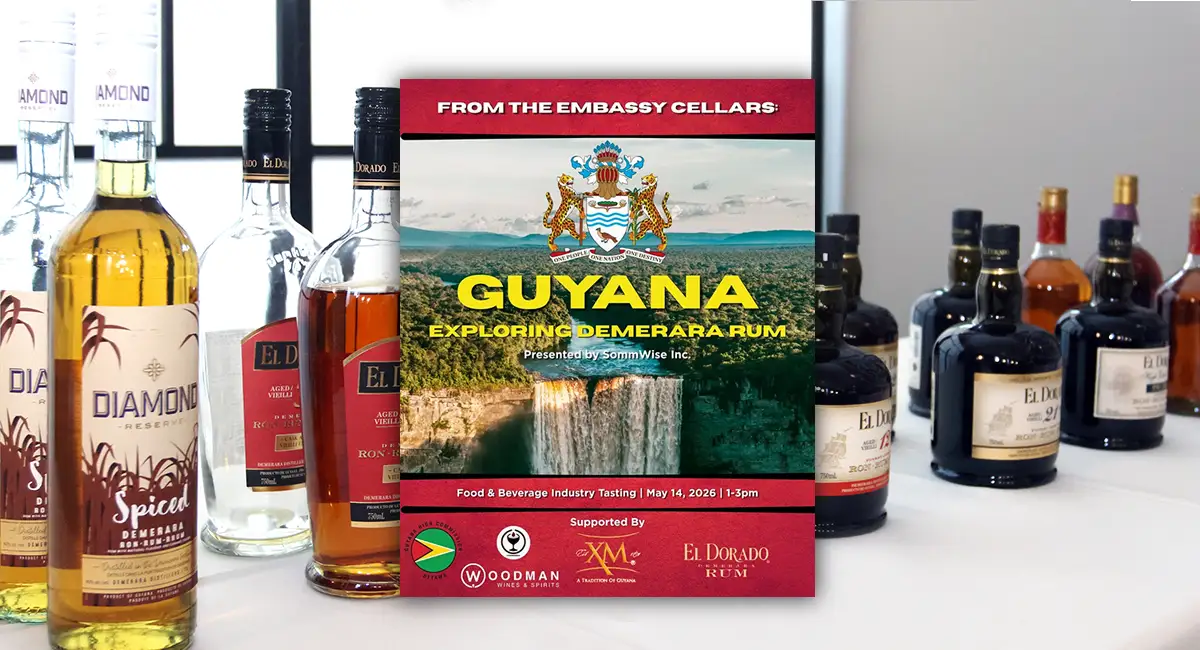
“From the Embassy Cellars” is a series of masterclasses offered by Tim Ouellette and Brittany Sabourin of SommWise Inc. The most recent event took a deep dive into the history and production of Guyanese rum, or “liquid gold” as it is sometimes called. I was privileged to attend and delighted to taste a wide range of premium rums at the masterclass event. The Acting High Commissioner, Cindy Sauers, welcomed us and introduced the class.
What did we learn? A lot!
• Rum is a distilled spirit made from sugar cane and its byproducts, i.e., molasses.
• Demerara is the name of a region, also the name of a river running through that region and of a sugar made in that area.
• Sugar cane was first brought to Guyana by Christopher Columbus on his second visit there, in the 1500’s.
• The Dutch visited in the 1600’s and established efficient drainage systems in the coastal Demerara swampland. Leave it to the Dutch! They know what to do with swampland. By the 1650’s, they began cultivating sugarcane, along with tobacco and cotton. Sugar cane was the most successful crop.
• Sugar cane, the base for all rum production, contains 75 percent water, 10-16 percent sugar and 10-16 percent fibre. During harvest, the canes are sliced just above the root, which contains the highest concentration of extractable sugar.
• Molasses, made from the sugar cane juice, contains 50 percent sugar and is the base for most traditional rums made today.
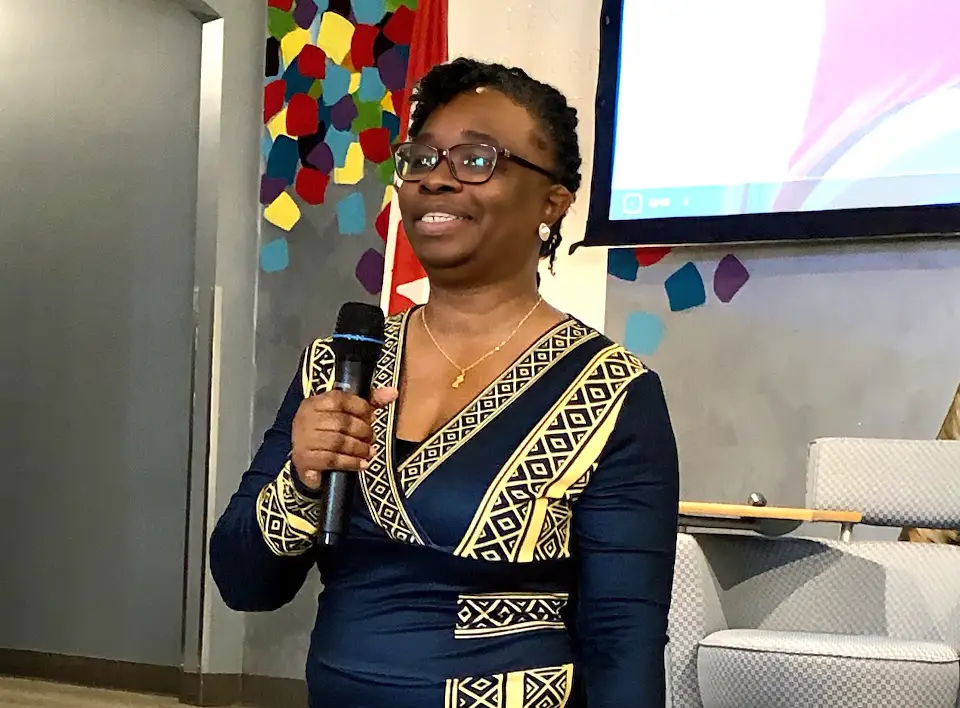
Above: Cindy Sauers, the Acting High Commissioner at the Embassy of Guyana in Canada.
There was a massive boom in the sugar industry in the late 1700’s. Europeans — British, French, Spanish, Portuguese and Dutch — who cultivated sugar in the Caribbean developed an economic system called the Atlantic Triangle of Trade in sugar, slavery and rum. It began with shipping molasses and raw rum stock from the Caribbean to the Atlantic seaboard of New England and eastern Canada and then on to Europe. Barrels of rum were then shipped to the West African coast and traded for slaves who were brought back to the “New World” colonies to work on plantations, thus completing the triangular trade system. The basis of the rum industry was intertwined with sugar and slavery. The more romantic associations of pirates, sunken ships and lost treasure have served as a distraction from the actual history of rum production.
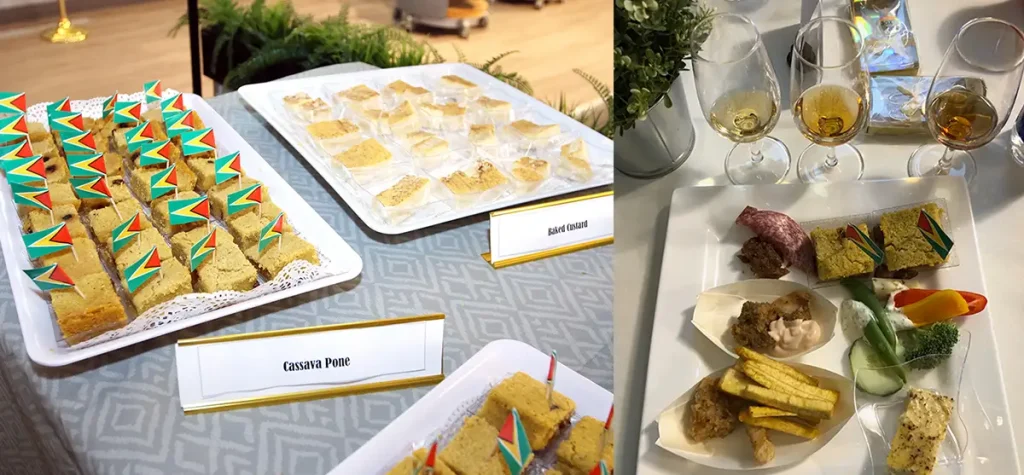
ABOVE: Guyanese desserts and, on the right, a delicious lunch served at the High Commission of Guyana tasting event.
We were led through a tutored tasting of several premium rums. We learned that XM on a label means Extra Mature. Rums with this label come from aged reserves that have matured in charred oak, sherry or bourbon casks under the supervision of Master Blenders. This barrel ageing process allows the absorption of flavours that contribute to each complex profile of aromas and flavours. The result of this ageing process is a unique and complex palate in the rum. XM rum is smooth and elegant with a sophisticated long finish. It’s described as the “Cognac of rums”, and when you taste it, you can easily see that it is the equal of Cognac or brandy as an after-dinner drink to savour.
One of my favourites of the tasting was the XM Special 12 Years Rum. The intensely perfumed nose gave inviting creamy vanilla, toasty oak, honey, ginger and raisin notes. The fabulous satiny palate showed candied orange, toffee, dark chocolate, mango, toasted oak and coffee, with a very long, persistent and delectable finish that echoed the palate. This would be superb paired with a dark chocolate cake, like Sacher Torte, or with crème brûlée.
Fast fact: Guyana has one of the fastest-growing economies in the world, thanks to the discovery of oil off its coast during the past decade.
This masterclass and tasting presented a fabulous opportunity to learn about the cultural background, as well as the history and production of Demerara rum. The hospitality of the High Commission of Guyana and the expertise of SommWise Inc combined to make a hugely successful and much appreciated event.
For more wine and food discovery from Jane Staples, visit www.bellovinoj.com