Hank Azaria on the Voices That Shaped Him — and His Bluesfest Debut

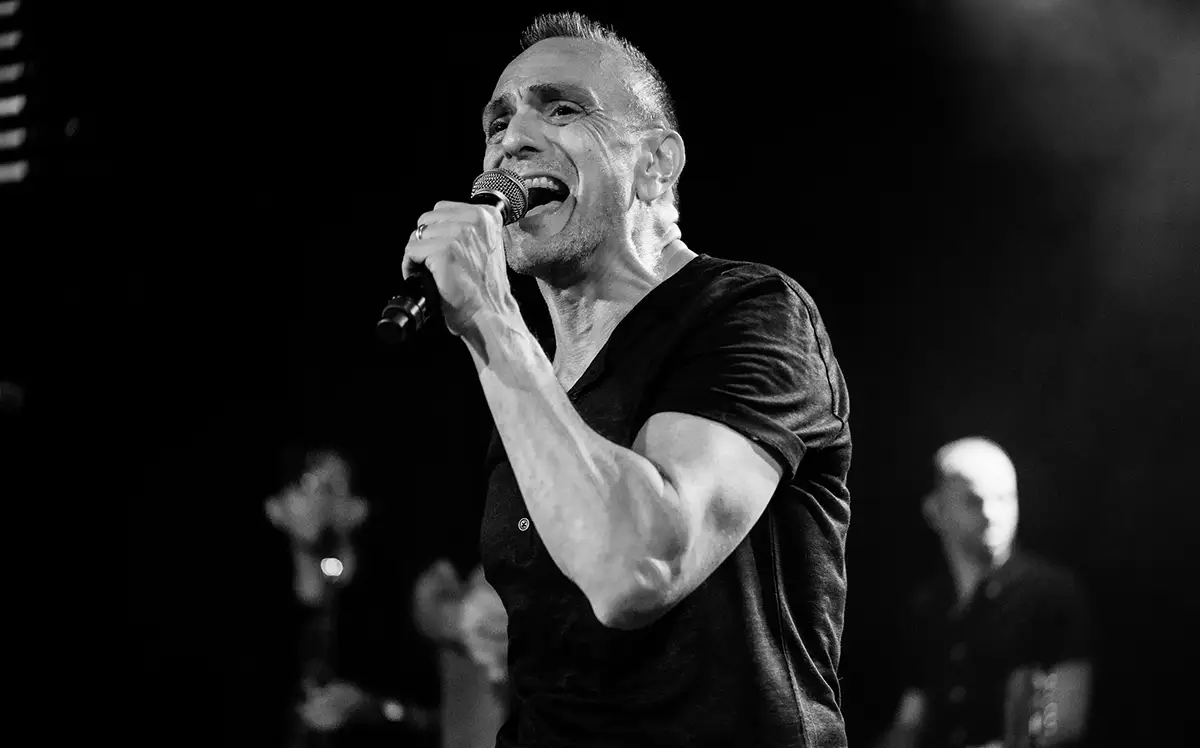
After a career of laughs voicing some of the most iconic characters in TV history on The Simpsons, amongst hundreds of other credits, Hank Azaria has expanded his horizons to music, and he’s bringing one voice with him. Azaria’s latest endeavour sees him covering the discography of Bruce Springsteen as Hank Azaria & the EZ Street Band, while transforming himself into the Boss to make it even more real.

We caught up with Azaria ahead of his tour stop at Ottawa Bluesfest on July 10 to talk about meshing Bruce with himself, his charity work, the long road to voice acting glory, and how his Simpsons characters can affect the way he thinks in the moment. Plus, we see if one Simpsons character might still sneak into his EZ Street Band.

Ottawa Life Magazine (OLM): Given your extensive background in voices, how did you want to approach doing a cover band like this of someone with such an iconic voice? Was it a matter of trying to be exact, or did you find it like with an original character, starting with an approximation, and working somewhere new from there, since it will never be 100%, Bruce?  

Hank Azaria: That’s a very interesting question. It requires a sort of inside-baseball, multi-part technical answer. As a mimic, I’m always trying to sound as much like the actual person as I can, and we have varying degrees of success with that. And sometimes you find you really can, with any impression, sound very much like the person. Sometimes you get close, but not quite! And sometimes you create a variation on the person that’s maybe not an exact, dead-on impression, but a good character voice. A lot of my instant voices came about that way. They were meant to be an impression, but they ended up doing sort of their own thing that was similar! With this, it’s sort of two parts, because I’ve been talking like Bruce’s speaking voice since I was a teenager, because I’d hear him talk in his live recordings. But singing Bruce is an entirely different endeavour. This was the first singing impression I ever really tried. And I love Bruce and his music very dearly. It’s a lot to me. I’m still working two years down the road, trying to sound as exactly like Bruce’s singing voice as I can with these songs, because with the band, the musicianship is really recreating the E Street Band. They’re great. So, I want to try to match that vocally. And so, although there’s been a lot of singing in my career, it’s always been comedy singing.

When I sing as Chief Wiggum, or with Mo, or even when I sang on Broadway for Spamalot, as long as I was funny and carried the tune, that was all anybody really cared about. And music was in character, in a voice. So, in order to imitate Bruce properly for this, I really had to take singing seriously for the first time in my career. I’ve had lessons as a young actor, but I never really focused on it very hard. But I have the last couple of years, and that’s what I’ve really been enjoying. And my key’s gone up three or four steps, songs that I now sing in Bruce’s key because my voice is naturally deeper, and I’m only a half step below, which enhances the impression, the closer I can get to Bruce’s key. So, it’s been a whole new world for me, which I’ve really been enjoying.

OLM: How did you come about balancing the banter for this show? You’re sharing stories about your personal life while in character, while also doing real stories from Bruce about the songs’ various backgrounds. How did you land on this choice, and did you feel obliged to keep the spell of Bruce going for the whole show, despite still putting yourself back into the show?

Hank Azaria: So that does go back to the origin of this show, which was my birthday party because I was turning 60, and I was emotional about that. And in order to distract myself, I think, from the angst and negative feelings about turning 60, feeling a certain way about it, as the kids would say, I sort of created this project and got this idea that most of my friends are Springsteen fans. So I throw this huge party, tell them all to dress as their favourite classic rock star, like a theme party! And so I could be there, dressed as Bruce, without anybody noticing anything! And then I’d tell them all I had this Springsteen tribute band coming, but not telling them that I’d been working for months on this impression and front it, as a kind of reverse surprise party. But I had 550 people at City Winery for this, and I realized that while most of the room were probably big Bruce fans that would know every song, some might not. So I felt like I should give context for some of these songs and as to why they meant a lot to me or what the story was about them or why Bruce wrote it or whatever, not realizing I’m essentially kind of creating a little one-man show concert here.

One of my favourite Bruce songs is from the Born to Run album, it’s called “She The One.” And I thought it’d be fun to tell the story of how I met my wife and how it was truly love at first sight, as an intro to that song. And I asked the question, well, do I tell this as Hank and then sing it as Bruce? Do I tell the story in my Bruce impression? I went to my wife and said, “What should I do?” And she said, “You have to tell the story of how you met me as you, because it would be weird to tell it as Bruce, right?” I said, “I think you’re right, but let me give good to you both ways.” And I told it to her as me, and then I did it in the Bruce voice! And because I sort of wrote them to introduce the Bruce songs, and that’s so ingrained in me. Bruce speaks in a kind of poetic rhythm. It’s almost like spoken word, the way he delivers his talks in concert. And I did it as Bruce for my wife, and she said, “It’s crazy, but it’s much better when you tell that story as Bruce.”

And for some reason, it just seems to, even when I’m talking about myself, it just works better if I’m relaying it in the middle of this Bruce show, in the idiom of Bruce, including what he sounds like. And sometimes I tell the story of the two times I met Bruce and how I fanboyed so hard I made an idiot of myself twice. And I will break character then. In that story, I’ll talk as me, and then I’ll talk as Bruce when Bruce is talking. But for the most part, I just stay in the Bruce character. I know, emotionally, for me, my whole gig in life has been talking like other people, and that sort of unlocking a persona for me that I feel more comfortable relaying. I feel more comfortable sharing even things about my own life using another voice. And that sort of holds true in this show. It just kind of worked, and it’s fun.

OLM: I know you’ve talked about pulling from your grandma while you were playing Agador in “The Birdcage.” And people like Snake were based on an old roommate you had, and Comic Book Guy was also somebody you knew in college. So, when you’re doing characters like that, where you’re pulling from someone in your life, do you feel that you’re injecting those people back into the voices when you play those characters? Or is it more their mannerisms bleeding into your performance of them?

Hank Azaria: Some of both. I mean, it’s hard for me to, if I talk like Agador, [As Agador] which is very much how my grandma sounded. It’s hard not to have the body just follow. [As Comic Book Guy] And same with Comic Book Guy, he sort of creates a whole persona and a way of thinking. [As Moe]  If I talk like Moe, if I keep talking like Moe, I’ll start getting kind of edgy and angry, genuinely. Like Moe, he’s just filled with hatred! [As Chief Wiggum] And if I start talking like Chief Wiggum, my IQ starts lowering, and it’s really kind of true. [Back to Hank] Any actor will tell you a role you take on, over time, especially, will start affecting your psychology, really. So it’s more fun doing comedies, cause it’s all about how we can find a laugh! As drama tends to be about heavy stuff, and in order to do them well, you kind of have to draw on times in your life that were rough, and that wears on you even unconsciously. So it’s kind of no different. I’m so cued into vocal stuff that if I start talking a certain way, it kind of takes my personality and mannerisms there too!

OLM: I remember you said in another interview, too, that you had an acting teacher who got in your head about being able to play yourself before you can play a character. But in your case, it’s almost like a symbiotic relationship at a certain point, right?

Hank Azaria: Yes, that’s true. Roy London was a great acting teacher! And I was already on The Simpsons then, and he kind of sized me up, and he was really brilliant as an acting teacher. He said, “Okay, you’re not allowed to do a voice or even be funny in this class. You’re just going to be yourself in front of people.” Which I found excruciatingly difficult and took me a couple of years to really settle into that. I thought acting was being everybody but yourself and putting on voices. And it is sometimes, but I had skipped a big part of the process, which was, can you just stand there and reveal yourself to people? I really wasn’t comfortable doing it, and I found that after I had learned to do that better in Roy’s class, it actually made all those characters better. I don’t think I could have done “The Birdcage” or a lot of things. It made my Simpsons voices funnier, let’s put it that way, much to my surprise.

OLM: You are such a prolific voice actor, but as you’ve gone through Hollywood, I see you pop up in these live-action roles. And I was kind of curious about when you’re doing stuff like “Brockmire,” which is a mix of a voice character into live-action, but you also do shows like “Hello Tomorrow” or even “The Idol.”  So, do you approach these live-action roles differently from the more voice-centric, off-camera roles? And with this in mind, how you approach drama as well, since your comedic roles on camera feel in line with your voicework?

Hank Azaria: I mean, pretty much acting is acting. I don’t really approach comedy and drama too differently. You just try to commit as hard as you can. But I do make a distinction of “Am I using any kind of a voice in this subtly or unsubtly? And if so, what is it and how does that affect the character? Sometimes you have to, for “Along Came Polly”, I needed to have a French accent, which did not come easy. And so I worked for a few months with a dialect coach, and I got a fairly convincing French accent! The character was rather silly, but I was trying to have as authentic a French accent as I could. I had a Polish accent once, too. Some are easier than others, but no, other than what’s the character’s voice, it’s approached the same way. My idol was Peter Sellers, and one of the things I admired about him was [As Inspector Clouseau], even though Clouseau was a silly voice, or [As Dr. Strangelove] Dr. Strangelove was a completely crazy German accent, [Back to Hank] or even Jackie Gleason, another really ostensibly broad comedian, but the emotional life of the characters were completely real. Not that I’m anywhere near Gleason or Sellers, but that’s my aspiration. It’s almost a game. Can you have a character, have a wild voice that’s funny, and then actually fill them in with real emotion, and real commitment, and real humanity. That’s what I’m trying to do.

OLM: Listening to your clips and talking just now, and maybe this is only because I’ve seen so many episodes of The Simpsons, but your Bruce kind of sounds like a New Jersey Kirk Van Houten, or at least has roots there. And perhaps that actually stemmed from a lifetime of doing the Bruce impression first! 

Hank Azaria: Very astute. You’re right. I noticed a long time ago that Bruce sounded a little like Kirk, and it’s funny with Kirk. For Milhouse’s dad, I was just trying to imitate what Milhouse sounds like as much as possible so that it would just sound like an older male version of Milhouse. So, I’m imitating what Pamela Hayden was doing with Milhouse, knowing that, coming out of my deeper filter, it would sound like that. [As Kirk] But then I realized, oh yeah, Bruce kind of sounds like a cooler version of Kirk!

OLM: You probably haven’t even thought of doing, “Can I Borrow a Feeling?” as Bruce either, then?

Hank Azaria: No, I wouldn’t want to do that. I don’t want to call attention to it. It’s one thing for me to know and for your astute view to pick up on it, but it’s not the thing I want to put in people’s minds. Although the singing part of Bruce has developed so much that I don’t feel that sounds like Kirk too much anymore. [As Kirk] No, but the talking kind of does.

OLM: Of course, it’s really more the subtle notes. It’s like hearing the root of something in something else. It’s not the same voice, but almost like a New Jersey Kirk or something like that. 

Hank Azaria: Yeah!

OLM: It was crazy to hear that back in the day, when you started on The Simpsons, you were basically doing Moe as a riff on early Al Pacino, and you basically thought, “Okay, they’re never going to call me back.” But then you had this piecemeal momentum, where they kept calling you back every few episodes for either Moe or a different character. And then, lo and behold, years later, you’re 80 perecent of Springfield vs. the rest of the cast who play the family, and a few others. But really, you’re the town. You’re basically an entire population of a city. So, how is it, looking back now on that, going from being the new guy to being more of the guys than some of your co-stars?

Hank Azaria: It’s hard to remember anymore. It was 38, 39 years ago. But yeah, it did grow one voice at a time. Most of the voices were sort of one-liners or two-liners! And it was really thrilling, but it was very gradual. It was like the frog in the water! You turn up the heat. Because it was even a year or two before the show even aired, we had been at it; it took so long to animate back then and get things going. And I guess right from when it aired, it was a big hit! But it was pretty gradual, all that. That sort of doing more and more and more voices. And it took a few years before even any one of my characters got a significant storyline, or their own episode. So it wasn’t like it happened while I wasn’t looking. And then I kind of woke up one day like, gee, I do a lot of these voices.

OLM: I know you’re touring this as a charity tour with the 4 Thru 9 Organization, and I thought it was really interesting and inspiring to read about how your Human Solidarity Project came out of you processing everything that was going on around Apu a few years back. And I was interested to hear how you decided to start this tour with the EZ Street Band as a charity tour! And could you explain some of your work with the 4 Thru 9 Organization? 

Hank Azaria: At this birthday party, when I invited so many people, I realized a few weeks out that I had forgotten to tell everybody no gifts. They wanted to give me gifts, but I said, “Oh, if you donate to the foundation,” which I had started a few years earlier, really mostly because I’ve been giving to education and human rights and also recovery causes, mostly for years, those three buckets. And I was tired of fighting with my business manager every year about how much I should give or not, because business managers always say to you, well, that’s a lot. They always try to keep you from spending! So, I realized that if I set aside a certain amount of money, then my business advisor can’t argue with me about how much I’m giving. We just started deciding where it goes, so it became easier to give from there. And so essentially, I’ve been doing it for years and years. I just kind of formalized it with a foundation several years ago. And that night of that party, my party, we raised about $30,000. Much to my surprise! And so we played, it went really well. I loved it. People seemed to enjoy it. We raised money and the lightbulb went off, why don’t we keep doing this and we’ll give all the net proceeds to the foundation, which is what we’ve been doing.

And yeah, education. I really feel like I took my own education for granted too much growing up, and I feel like so many of society’s problems, if we intervene with children and give them an actual chance, it takes care of so many problems that we can’t solve or don’t have enough money to solve down the road. Not to mention we’re helping children. And yes, the Apu thing really opened my eyes about blind spots I had as a performer, someone in show business and just as a white person, things I never thought about, and I wanted to give back in that way. And then we work on recovery. I’m sober 20 years in July.

OLM: Congratulations!

Hank Azaria: Thank you. So, I’m always going to support health and wellness, mental health, emotional health. So that’s what the foundation does, and that’s what all the proceeds go to after we pay the kids in the band.

OLM: Just to wrap here with you, realizing that I was going to enter a call with the voice of Moe, there was a part of me that thought of all those prank calls. Has anybody ever answered or started a phone interview with you, trying to do the Bart-Moe prank call without you knowing in advance? 

Hank Azaria:  No, I can’t say that anybody’s tried, they’ve mentioned those things many times, [As Moe] but no one ever had the cojones to hit me with something like that there.

Photos: Leah Bouchier-Hayes