


How to Fight a Traffic Ticket in Ontario: A Step-by-Step Guide

Most people pay their traffic ticket without thinking twice. They assume the officer was right and the fine is fixed. Even if they didn’t deserve the ticket, they don’t bother fighting it, thinking it’d just waste a day in court.

That assumption costs Ontario drivers a lot of money every year. They can often get their tickets reduced or thrown out if they just show up and dispute them.

Sometimes the officer doesn’t appear. Sometimes the evidence falls apart on closer inspection. Other times, a quick chat with the prosecutor knocks the charge down to something smaller with no points attached.

Many drivers are unaware of this entire process, so they never try.

This guide explains what to do after you get a ticket in Ontario, how the system works, and when it makes sense to fight back.

What Are Your Options After Getting a Ticket?

When you get a traffic ticket, you should flip it over. The back lists three choices, and you have 15 days to pick one.

If you miss that window, you’re automatically considered guilty, which means the fine gets added to your record without you ever getting a say.

Here’s what each of the three options means:

Option What It Means When It Makes Sense
1. Plead Guilty You accept the charge and pay the fine The ticket is minor, accurate, and carries no demerit points you care about
2. Early Resolution You meet with a prosecutor before trial to negotiate You want a reduced fine or fewer points without going through a full trial
3. Request a Trial Your case goes before a justice of the peace You believe the ticket is wrong, or you want the strongest chance of beating it


Option 2 is worth knowing about because it works in favor of a lot of drivers. An early resolution meeting lets you talk through the charge with a prosecutor.

They might agree to drop the demerit points, lower the fine, or swap the charge for something less serious.

That said, early resolution isn’t offered everywhere in the province, and it isn’t available if you’ve already been issued a summons (an order to appear in front of a justice of the peace).

According to Ontario government website, this option is currently available in the following areas:

Understanding Demerit Points Before You Decide Anything

Before you choose how to respond, look at what traffic tickets cost you beyond the fine. Demerit points are usually the bigger problem because they stick to your record for two years and push your insurance premiums up.

For speeding tickets, demerit points are based on how far over the limit you were going:

Speed Over the Limit Demerit Points Insurance Impact
1 to 15 km/h over 0 points Minor
16 to 29 km/h over 3 points Noticeable increase
30 to 49 km/h over 4 points Major hike, often classified as a serious offence
50 km/h or more over 6 points or a stunt driving charge Severe consequences, possible licence suspension


The jump from 15 km/h to 16 km/h and over is where demerit points start stacking up. One kilometre per hour can be the difference between zero points and three points.

The same goes for the leap from 29 to 30 km/h, which bumps you from a minor to a major ticket in the eyes of most insurers.

And just so you know, tickets for going 50 km/h over the limit rarely get written as regular speeding offences anymore.

Officers tend to charge those drivers under section 172 of the Highway Traffic Act, which covers stunt driving. That’s a much heavier charge with immediate roadside penalties, so if you’re facing one, you should speak to a paralegal or lawyer right away.

The point is, your demerit count matters as much as the fine itself, sometimes more. Know what you’re dealing with before you decide whether fighting the ticket is worth it.

Step-by-Step: How to Fight Your Ticket

If you’ve decided the ticket is worth fighting, here’s how the process works from start to finish.

Step 1: Read the Ticket Carefully

Look for mistakes. Officers fill out hundreds of these, and errors happen more often than you’d think.

Check the date, time, location, your name, your licence number, the plate number, and the offence section.

A wrong detail won’t always get the ticket dismissed, but it can weaken the prosecutor’s case during negotiation or at trial.

Step 2: File Your Response Within 15 Days

There are two ways to submit your choice, depending on what the choice is.

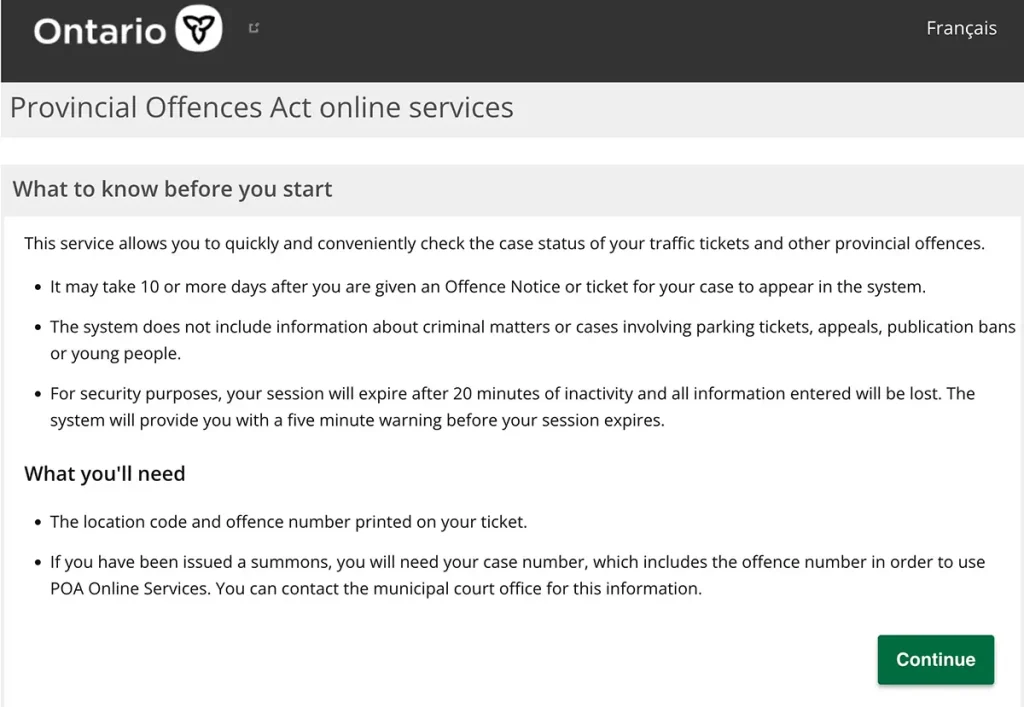
If you choose to pay the fine or request a meeting with a prosecutor, you can do that through the Ontario provincial offences portal.

The third option, i.e., request a trial, cannot be applied for online. The instructions for requesting a trial are given at the back of the ticket. If you have lost your ticket, you can contact the relevant municipal court office to ask for that information.

And remember, these options must be chosen within the 15-day deadline.

Step 3: Request Disclosure

If you requested a trial and the trial date is set, send a written request to the prosecutor asking for disclosure. This is the evidence they plan to use against you, including the officer’s notes, calibration records for any radar or laser device, and any photos or videos.

Most cases are won or lost due to disclosure. Officer’s notes that are vague, incomplete, or missing key details give you something to work with. Or a radar that wasn’t tested at the start of the shift gives you a chance to challenge.

Disclosure is important to build a defence in court.

Step 4: Build Your Defence

Once you have the disclosure, go through it line by line. Look for gaps, contradictions, and procedural mistakes.

Gather your own evidence too, like dashcam footage, photos of the road, or statements from anyone who was in the car with you.

If the case is complex or the stakes are high (four-point tickets, careless driving, etc), consider getting professional help at this stage.

Step 5: Show Up to Court

On your trial date, arrive early and dress like you’re going to a job interview. The justice of the peace will hear the prosecutor’s case first, then yours. You’ll have the chance to cross-examine the officer, which is often where tickets fall apart.

If you don’t feel ready to handle it yourself, a paralegal can attend on your behalf. You don’t even need to be there in most cases.

Which Tickets Are Worth Fighting?

Some traffic tickets are easier to challenge than others. Before you commit to a court date, it helps to understand what you’re up against.

Ticket Type Common Defence Angles Difficulty to Fight
Speeding Radar calibration issues, officer’s notes, location of the speed sign Moderate
Red Light (camera) Yellow light timing, vehicle ownership, image clarity Harder
Running a Red Light (officer) Officer’s line of sight, signal timing Moderate
Distracted Driving Proving the phone was not in use, lack of clear evidence Moderate
Failure to Obey a Sign Missing or obscured signage, visibility conditions Easier
Careless Driving Witness statements, road conditions, lack of proof of negligence Hard
Following Too Closely Subjective officer judgment, traffic conditions Moderate


Speeding tickets are the most commonly contested in Ontario. The prosecutor has to prove the radar or laser device was working properly on the day you were stopped.

If the officer can’t confirm it was tested at the start and end of their shift, or if their notes contradict the ticket, the case often falls apart.

Careless driving is a different situation entirely. The penalties include six demerit points and a possible licence suspension, so fighting back almost always makes sense even when the evidence looks strong.

Many of these charges get reduced to lesser offences through negotiation with the prosecutor.

Distracted driving tickets can be tougher because the officer’s testimony usually carries weight in court. That said, if there’s no clear evidence you were holding or using a device, you have an opportunity to push back.

Tickets for failing to obey a sign are sometimes the easiest to challenge. If the sign was blocked by a tree branch, faded beyond recognition, or knocked over, a few photos taken the same day can do most of the work for you.

Should You Hire a Paralegal or Do It Alone?

This is the question almost every driver asks themselves after getting a ticket. The honest answer depends on what kind of charge you’re facing and how much is at stake.

For a minor speeding ticket with no demerit points, representing yourself is reasonable. The fine is small, the consequences are limited, and you can usually negotiate a small reduction at an early resolution meeting without much trouble.

Demerit points are a deciding factor for whether you should hire a paralegal.

Insurance companies pay close attention to your driving record, and a single conviction can raise your premiums by hundreds or even thousands of dollars over the next three years.

If the demerit points of your ticket are high (4 or more), the cost of hiring a paralegal often pays for itself.

Here’s what professional representation can get you:

• Familiarity with the local prosecutors and what kinds of deals they tend to accept
• Knowledge of the technical defences that work for specific charges
• Experience in cross-examining officers, which is where many cases are won
• The ability to attend court on your behalf so you don’t miss work

If your ticket falls into one of the following categories, getting help is almost always worth it:

• Stunt driving or street racing charges under section 172
• Careless driving
• Any ticket carrying four or more demerit points
• Charges that affect your commercial licence or job
• Cases where a conviction would push you toward a licence suspension

Firms like JUSTICEJOLT handle these cases across Ontario and can give you a realistic read on whether your ticket is worth fighting before you spend a dollar. Most paralegals offer free consultations, so there’s no harm in asking.

The flip side is also true. If you’re dealing with a 10-over speeding ticket and zero demerit points, paying a paralegal more than the fine itself doesn’t make sense. Use your own judgment, and weigh the cost of representation against what a conviction will actually cost you over time.

The Bottom Line

Traffic tickets in Ontario aren’t the accurate convictions most drivers assume they are. The system gives you options, and the people who use those options often walk away with reduced fines, fewer demerit points, or no conviction at all.

You can make a big mistake by not using any of the options and simply paying. Paying the ticket without thinking it over locks in the demerit points and the insurance hike that follows.

Filing a response within those first 15 days keeps every door open, even if you eventually decide to plead guilty.

If your ticket is minor, handle it yourself and save the money. If the stakes are higher, get advice from a professional before you make any decisions. A short call with a paralegal at JUSTICEJOLT can tell you whether your case has legs and what it would take to fight it properly.

Either way, read the ticket, know the deadline and your options, and make the choice that protects your record and your wallet.