
Interview: Tariq Ali Faraj Al-Ansari, Ambassador of the State of Qatar to Canada
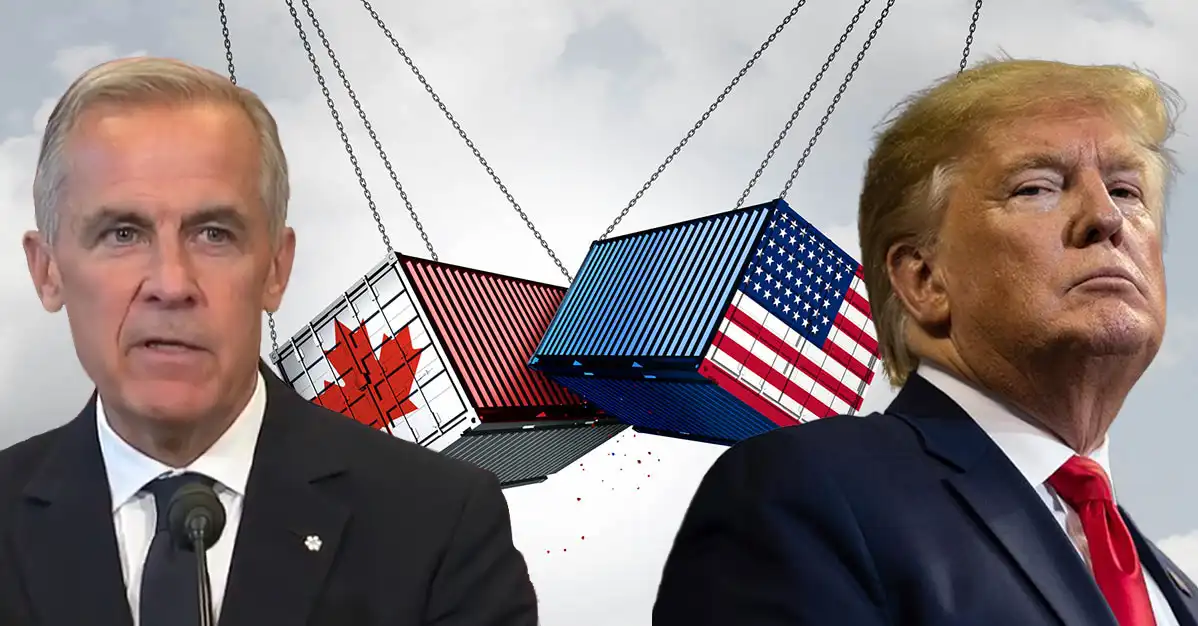
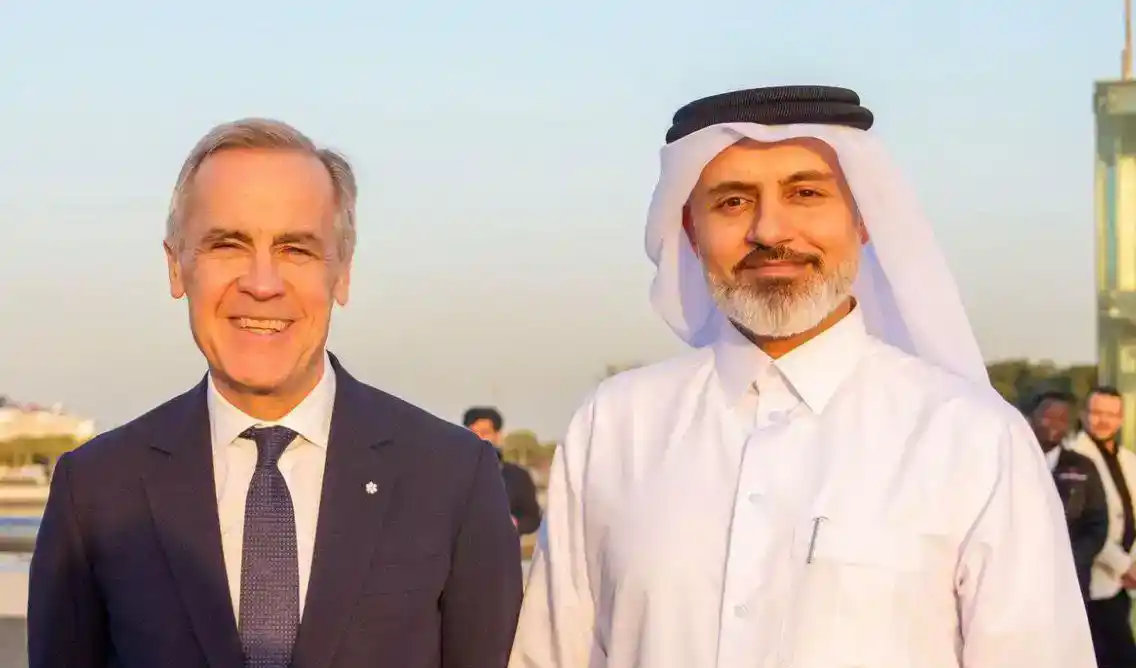
Few bilateral relationships have evolved as rapidly in recent years as that between Canada and the State of Qatar. While diplomatic ties between the two countries date back more than five decades, the relationship has entered a notably more ambitious phase under Prime Minister Mark Carney’s government. In January 2026, Carney became the first sitting Canadian prime minister to visit Doha, where he and Qatar’s Amir, H.H. Sheikh Tamim bin Hamad Al Thani, announced a broad framework for expanded cooperation in trade, investment, defence, artificial intelligence, technology, agriculture, and advanced manufacturing. The two countries also committed to accelerating negotiations on a Foreign Investment Promotion and Protection Agreement, expanding economic ties, and deepening strategic dialogue between Ottawa and Doha.
At the same time, Qatar remains one of the most closely watched and often debated countries in the Middle East. The Gulf state has earned international recognition for its role as a mediator in regional conflicts, including efforts involving Gaza, hostage negotiations, Afghanistan, and Ukraine. Yet Qatar has also faced criticism from some governments, commentators, and pro-Israel advocates over its past relationships with Hamas officials and its approach to regional diplomacy. For many Canadian Jews, the October 7 attacks on Israel and the ongoing war in Gaza have heightened questions about Qatar’s role in the region and how its policies affect prospects for peace and security. Against that backdrop, understanding Qatar’s perspective has become increasingly relevant for Canadians seeking to make sense of a rapidly changing Middle East and Canada’s growing relationship with one of its most influential regional actors.
It was in this context that Ottawa Life Magazine Publisher and Managing Editor Dan Donovan sat down with His Excellency Tariq Ali Faraj Al-Ansari, Ambassador of the State of Qatar to Canada, to discuss the future of Canada-Qatar relations, economic cooperation, regional diplomacy, and the challenges and opportunities facing both countries in an increasingly complex world.
Qatar’s Post‑Mediation Role After the Hostage Releases
OLM: Qatar played a central role in the negotiations that led to the return of all hostages to Israel. How does Qatar view its diplomatic responsibilities in the ongoing Gaza conflict, and what role can Canada play in supporting regional stability?
Ambassador: Well, first I would like to thank Canada for the very clear and positive position towards supporting Qatar’s movement in mediation between the Palestinians and the Israelis. We started to have this role following the conflict that started in October.
I was ambassador to Egypt before I came to Canada, so I know how difficult it is and not easy for the mediation and for the mediating parties to perform their roles and to halt the escalation of the violence against the civilians, especially at the Palestinian side.
Because you know Israel started a very strong military assault and of course, based on the Arabic principles, we believe that the best way for people to live together is to diffuse tensions and resort to dialogue and talk frankly about how to diffuse the tensions and tackle the root causes. So, we did that, and we are still doing that role with Egypt, with the support of the United States, as well as the encouragement of Canada and other peace-loving countries.
This is a principle of the United Nations. It is also stipulated very clearly in the Charter of the United Nations, including Chapter 6, which provides that countries should step in and exert efforts in mediation and good offices.
We are responsible members of the international community, and we believe that the Middle East is an important region. We are from the Middle East. We know the culture of the Middle East. We know the historical root causes of the problem.
So, we are trying our best. We finished the two phases of the mediation, and you know that the Board of Peace was established, and we continue also to exert this effort to halt the escalation. And it’s not only good for the Palestinians, but also for the Israeli people as well. Stability in the Middle East will benefit all of us.
OLM: The conflict affects people far beyond the region, including Canadians. From Qatar’s perspective, what is being done to prevent further escalation, and what would be the most productive role Canada could play in supporting stability and diplomacy?
Ambassador: Canada’s position was very clear on supporting de-escalating the situation in the Middle East and ending the war between Iran and the United States and the Israelis; this was very clear and we thank Canada also for its very clear position in condemning the Iranian attacks on the Gulf States, including my country Qatar.
Qatar’s Relationship with Hamas and International Criticism
OLM: Qatar’s role as a mediator has been widely acknowledged, but it has also faced criticism that maintaining political channels with Hamas during the Gaza conflict creates diplomatic complications. As you know in Canada, Hamas is a designated terrorist organization. Now that the hostage issue has concluded and the situation has shifted, how does Qatar respond to those criticisms?
Ambassador: First, let me say that the question of whether Hamas should be legitimized or delegitimized is ultimately one for the Palestinian people to decide. Hamas did not emerge in a vacuum. We are talking about a situation involving decades of occupation, and when people are living under prolonged hardship and uncertainty, conditions can arise that fuel violence and extremism.
This is why Qatar has consistently supported the Arab Peace Initiative, which calls for normalization with Israel in exchange for a just and lasting peace based on the establishment of an independent Palestinian state. We believe the root causes of the conflict are well understood by the international community. Addressing those causes requires strategic decisions and political will from all parties, including the occupying power.
Qatar, like Canada, Israel, the United States, and other countries, operates within the framework of the international and multilateral system. We are all members of the United Nations and are committed to implementing international obligations, including relevant UN General Assembly and Security Council resolutions.
The Security Council has designated certain individuals and entities as terrorist organizations. Hamas, however, has not been designated as a terrorist organization by the UN Security Council. Qatar therefore implements Security Council resolutions while respecting the sovereign right of individual countries to make their own determinations regarding such groups. We expect that same respect to our sovereignty by our friends.
In fact, Israel should recognize and appreciate Qatar’s substantial contributions to supporting the Palestinian people, not only for their humanitarian impact, but also for the financial burden Qatar has helped shoulder. Under international humanitarian law, Israel, as the occupying power, has obligations toward the civilian population, including ensuring access to food, medical supplies and essential healthcare services. Over the years, Qatar has provided significant humanitarian and financial assistance, including support for healthcare, education, infrastructure and civilian salary payments. These contributions have helped sustain essential services and alleviate some of the financial pressures associated with meeting the needs of the Palestinian population. This is particularly relevant given Israel’s withholding of Palestinian tax and customs revenues, which are collected on behalf of the Palestinian Authority and constitute its largest source of revenue, affecting its ability to pay salaries and maintain public services. Qatar’s assistance has therefore served two important purposes: supporting the welfare and dignity of Palestinians while helping shoulder costs associated with essential civilian needs. It is in this context that Qatar’s contributions deserve recognition and appreciation, rather than being characterized simply as support for a political faction. In practice, this approach has enabled Qatar to play a constructive mediating role between Palestinians and Israelis. Had we adopted a different position, our ability to facilitate dialogue and mediation would have been significantly limited. Our objective is to help create conditions for peace and stability, which benefits not only Palestinians and Qataris, but Israelis as well. We operate from the principle of responsibility to protect.
OLM: Qatar has faced criticism from some governments and commentators over its past engagement with groups such as Hamas and allegations regarding terrorist financing. How do you respond to those concerns, and what safeguards has Qatar put in place to ensure its financial system cannot be used to support terrorism?
Ambassador: With regard to Qatar’s counterterrorism framework, there is an established comprehensive legal and institutional system to combat terrorism and terrorist financing. Qatar has enacted laws and regulations to combat money laundering and terrorism in all its forms and manifestations. We have also criminalized the incitement of hatred and violence. Beyond the legal framework, Qatar has established national committees, executive bodies, law-enforcement institutions, and regulatory mechanisms dedicated to implementing these laws. The country works closely with international partners and possesses the expertise and institutional capacity necessary to implement its obligations under United Nations conventions and Security Council resolutions.
OLM: You mentioned the Responsibility to Protect, or R2P, a principle closely associated with former Canadian foreign minister Lloyd Axworthy. Developed in the aftermath of tragedies such as Rwanda and Srebrenica, it sought to establish a moral and international obligation to protect civilians from mass atrocities. You would have been an early-career diplomat when these ideas were taking shape. What about R2P resonated with you personally, and why has it remained important to Qatar’s approach to international affairs?
Ambassador: Yes, we know of Mr. Axworthy and Canada’s leadership in R2P. It was very important. Qatar attaches great importance to the Responsibility to Protect. In fact, Qatar was the first Arab and Muslim country to designate a national focal point for R2P, reflecting our commitment to the principle and its objectives.
I remember how the international community failed to prevent the genocide in Rwanda, where hundreds of thousands of civilians were killed in a matter of months. There was also the failure to protect civilians in Srebrenica. These tragedies forced the international community to reflect on how such events could be prevented in the future.
Canada played an important leadership role in that process. Through its intellectual leadership, policy work, and international engagement, Canada helped advance serious discussions and practical recommendations that contributed to the development of the Responsibility to Protect doctrine. Canada has a long history of making important contributions to international cooperation and peacekeeping, helping shape concepts and institutions that serve the broader international community.
What is particularly impressive is that Canada has consistently used its influence, diversity, and expertise to generate ideas that benefit not just Canadians, but people around the world.
This is one of the reasons Qatar and Canada work well together on many international issues. We share a belief in humanitarian values, international cooperation, foreign assistance, and the protection of vulnerable populations. These common principles provide a strong foundation for dialogue and cooperation between our two countries, particularly in the areas of humanitarian action and development.
Energy Security and Canada-Qatar Cooperation
OLM: As one of the world’s leading LNG exporters, Qatar plays a major role in global energy stability. How does Qatar view Canada’s potential as an energy partner, and what opportunities exist for deeper cooperation in energy security, investment, and economic development?
Ambassador: Canada and Qatar have significant opportunities to work together in areas that support long-term economic growth, energy security, innovation, and investment. Qatar has developed considerable expertise in energy, infrastructure, logistics, and global finance, while Canada offers tremendous strengths in natural resources, technology, advanced manufacturing, agriculture, and research.
What is particularly encouraging is that the relationship is gaining momentum at the highest levels. Earlier this year, Prime Minister Mark Carney made a historic visit to Doha, the first official visit by a sitting Canadian prime minister to Qatar. That visit marked an important milestone in the relationship and reflected a shared desire to deepen cooperation across a wide range of sectors. During the visit, both countries committed to expanding collaboration in trade, investment, security, technology, education, and economic development, while also establishing new institutional frameworks to support long-term cooperation. We see considerable potential to deepen cooperation and build a broader partnership that creates economic opportunities while contributing to regional and global stability.
Growing Bilateral Ties Beyond Energy

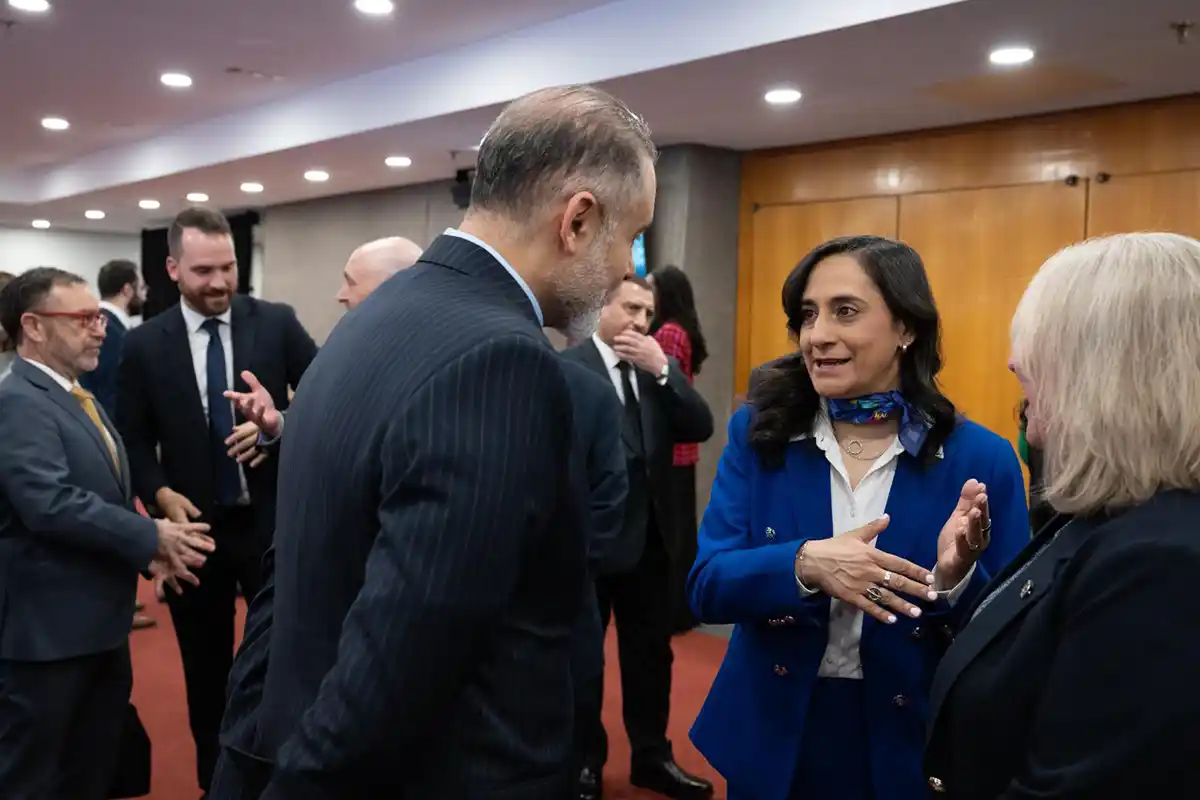
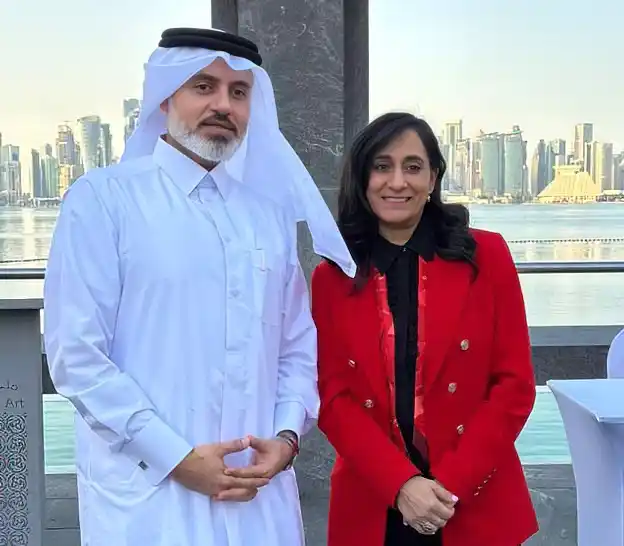
H.E. Tariq Ali Faraj Al-Ansari, Qatar’s Ambassador to Canada, meets with Canada’s Minister of Foreign Affairs, Anita Anand, to discuss bilateral cooperation, regional stability, trade, and diplomatic engagement.
OLM: Beyond energy and trade, you’ve spoken about expanding cooperation in healthcare, education, investment, and cultural exchange. Where do you see the Canada-Qatar relationship heading over the next few years?
Ambassador: We have also seen productive engagement with senior members of the Canadian government, including The Honourable Anita Anand, Minister of Foreign Affairs of Canada. In her discussions with Qatari leadership, Minister Anand has emphasized the importance of strengthening Canada-Qatar relations and advancing cooperation through a Strategic Dialogue focused on economic, security, and investment priorities. She has also acknowledged Qatar’s diplomatic efforts to support regional stability and de-escalation in the Middle East. In May 2026, Minister Anand signed a Memorandum of Understanding in Doha establishing a ministerial-level Strategic Dialogue between Qatar and Canada.
Healthcare, Education and the Future of Canada-Qatar Relations
OLM: Beyond diplomacy and trade, some of the strongest ties between Canada and Qatar are in healthcare and education. You’ve spoken about Canadian-trained physicians working in Qatar and about Qatar’s investments in higher education. How do these people-to-people connections help strengthen the relationship between our two countries?
Ambassador: Healthcare and education are among the strongest pillars of the Canada-Qatar relationship. In healthcare, Qatar has benefited greatly from partnerships with Canadian institutions. We have physicians who pursue advanced medical training, master’s degrees, doctoral studies, and specialized education in Canada. Many of these highly qualified professionals return to Qatar and contribute to the continued development of our healthcare system. We also have Qatari students studying medicine and health sciences at Canadian universities, creating lasting professional and academic ties between our two countries.
Education is equally important. Qatar places a high value on education and considers it essential to national development, innovation, and human progress. It is a central component of Qatar National Vision 2030 and closely aligned with the United Nations Sustainable Development Goal on quality education.
One of the achievements we are most proud of is the Educational City, a world-class academic and research hub established through the vision and leadership of Her Highness Sheikha Moza bint Nasser. Her commitment to education helped transform an ambitious idea into one of the leading centres of learning and research in the region.
In Qatar, the Educational City is home to branch campuses of leading international universities, research institutes, innovation centres, student residences, and the Qatar National Library. Students and scholars from around the world study, conduct research, and exchange ideas there in an environment designed to promote excellence, creativity, and international collaboration. The Educational City is unique because it brings together education, research, innovation, and community in a single place. We believe that investing in knowledge and people with partners is one of the most effective ways to build a prosperous future. I always encourage visitors to experience the Educational City firsthand because for Qatar it is not only a national priority but also as a bridge between cultures, countries, and people. In many ways, that is something important in the growing partnership between Qatar and Canada. Our philosophy is that education is an essential tool to prepare future generations, instil a culture of peace, and protect youth from the scourge of violence and extremism, culminating in building peaceful and inclusive societies. This nexus is a top priority in the UN development agenda (SDGs 4 and 16).
I think Canada and Qatar increasingly see one another as trusted partners. The relationship today extends well beyond diplomacy. It includes growing economic ties, educational partnerships, healthcare cooperation, people-to-people exchanges, and a shared interest in supporting international stability and prosperity. I believe the potential of the Canada-Qatar partnership remains far greater than what we have achieved so far, and I am optimistic about where it is heading.

H.E. Tariq Ali Faraj Al-Ansari, Qatar’s Ambassador to Canada, snaps a selfie with FIFA President Gianni Infantino, Prime Minister Mark Carney, and Diana Fox Carney during the Qatar-Canada FIFA World Cup match in Toronto.
OLM: Finally, Mr. Ambassador, you spent time with Prime Minister Carney in recent months, including hosting him in Toronto at the World Cup match between Canada and Qatar. Now Canada did well in that game – how was all that? (Canada won the game 6-0)
Ambassador: (he laughs and smiles) Honestly, it was fantastic. You know it was a great day and a win for everyone. A successful World Cup for everyone — in Qatar and here in Canada with friends…and, of course, I think Prime Minister Carney was very pleased with the outcome, too! I also had the pleasure of meeting with British Columbia Premier David Eby, where we discussed the possibility of establishing direct flights between Doha and Vancouver. Thousands of Qataris visited Canada during the World Cup, and they were delighted to experience Canadian culture and hospitality. I believe a direct connection between Doha and Vancouver would be a wonderful opportunity to bring our two countries and peoples even closer together.
Editor’s note:
Looking Ahead: The Future of Canada-Qatar Relations
Canada and Qatar find themselves at an important moment in their bilateral relationship. As Ottawa looks to diversify trade, investment, and strategic partnerships, Qatar is emerging as a significant partner in a region of growing economic and geopolitical importance. The commitments announced over the past year suggest that cooperation between the two countries is likely to deepen across multiple sectors in the years ahead.
Yet stronger engagement also brings greater scrutiny. For Canadians, including members of the Jewish community who continue to follow developments in Israel and the broader Middle East with understandable concern, questions about security, regional stability, and peace remain central.
Ambassador Al-Ansari’s comments offer readers a direct opportunity to hear Qatar’s perspective on these issues. In an era often defined by polarization and mistrust, dialogue remains essential. Understanding the viewpoints of key international partners is a necessary part of informed public discussion and effective diplomacy.
This conversation with Ambassador Al-Ansari is intended to contribute to that understanding. It offers insight into how Qatar views its relationship with Canada, its role on the world stage, and the opportunities and challenges that lie ahead for both countries.
Photos: Courtesy of the Embassy of the State of Qatar to Canada.