• By: Dan Donovan

Is Carney the Real Deal—or Just a Mirage? The Fall Session of Parliament Will Decide

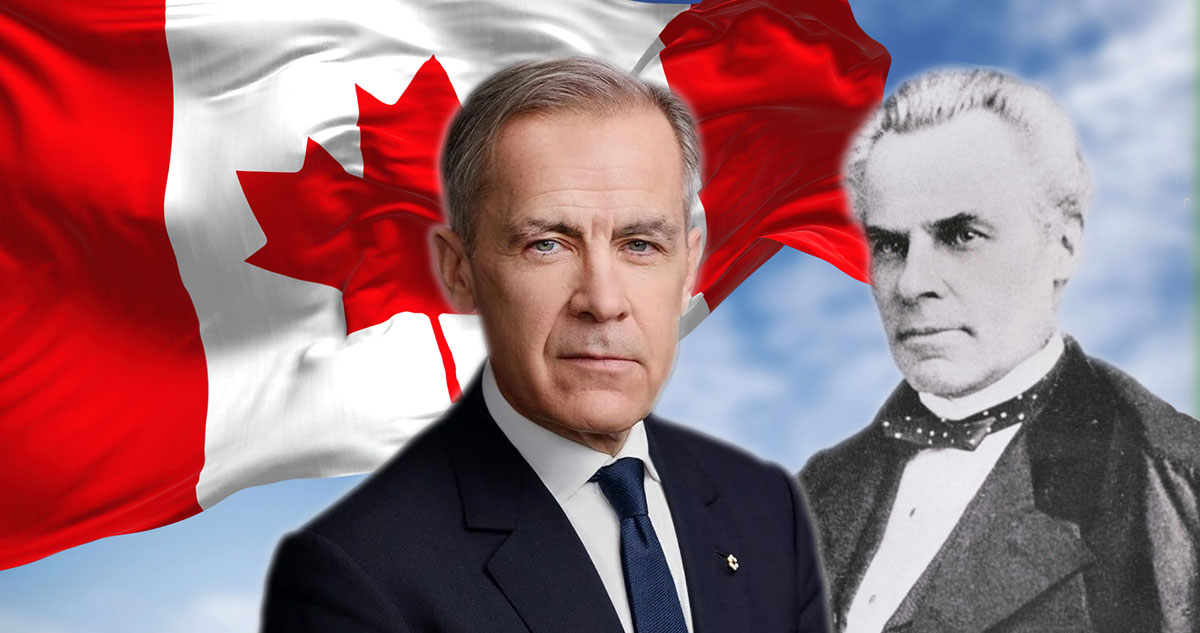
Mark Carney’s early tenure as Prime Minister has been marked more by symbolism than substantive action. His cabinet appointments in the spring were met with cautious optimism, particularly the selection of Ottawa South MP David McGuinty as Minister of Defence and Markham—Thornhill MP Tim Hodgson as Minister of Energy and Natural Resources—both viewed as steady, competent choices. Yet as summer progressed, the realities of governing quickly surfaced. Parliament recessed almost immediately following Carney’s swearing-in, stalling any legislative momentum or sense of urgency to get Canada back on track. While his public image remains largely intact, recent polling indicates that the Carney political honeymoon may soon be over as Canadians continue to struggle with bread-and-butter issues.

According to the latest Abacus Data survey conducted in August, the Conservative Party has pulled ahead of the Liberals in national vote intention for the first time since the election. Forty-one percent of decided voters now support the Conservatives, compared to thirty-nine percent for the Liberals. The shift appears tied to growing concern over affordability, with sixty percent of respondents naming the rising cost of living as their top issue. Housing, healthcare, and the broader economy followed closely behind. These are areas where the Conservatives now lead the Liberals in perceived competence. As pollster David Coletto noted, the Carney government “still enjoys a solid approval rating,” but frustrations around affordability and housing “may be beginning to wear on that goodwill.”

The pressure on Carney will intensify the moment Parliament returns. Canadians aren’t looking for more polished rhetoric about strategic partnerships or economic diversification—they’re demanding real solutions. If Carney fails to deliver a serious, detailed plan to stabilize the economy and confront Canada’s deepening debt spiral, the carefully curated image of competence that brought him to power could collapse. It would confirm what his critics and opponents already suspect: that the emperor has no clothes. But until that plan is revealed, the question remains suspended in the air—unanswered, but unavoidable.

For many Canadians, this summer’s Air Canada strike served as more than a disruption—it became a metaphor for a broader pattern emerging under Mark Carney: a government that continues to align with corporate elites, sidestep accountability, and recycle the same evasions that defined the Trudeau era. The branding may have changed, but the governing instincts remain familiar.

The strike exposed deep flaws in Canada’s labour relations and governance. Flight attendants represented by CUPE were seeking fair compensation and improved working conditions. Air Canada—a monopoly repeatedly bailed out by taxpayers—is led by a gluttonous and elitist CEO, Michael Rousseau, who earned $12.5 million last year. The airline’s management, equally steeped in elitism, refused to negotiate in good faith, seemingly confident that the federal government would intervene before a strike disrupted peak travel season. That confidence proved justified.

Within hours of the strike’s launch, Minister of Jobs and Families Patty Hajdu invoked Section 107 of the Canada Labour Code to impose binding arbitration, effectively suspending the workers’ right to strike. The arbitrator appointed to oversee the dispute was Maryse Tremblay, Chair of the Canada Industrial Relations Board, who had previously served for years as senior legal counsel for Air Canada. Tremblay did not recuse herself, despite her long-standing ties to the airline—a decision that raised serious concerns about her judgement and impartiality, and questions regarding her very competence to lead such an important federal agency.

What’s most troubling is that this unfolded under a prime minister who promised a new standard of leadership. Yet, as with so many scandals before it, there were no consequences. Michael Rousseau remains CEO of Air Canada. Patty Hajdu remains in cabinet. Maryse Tremblay remains Chair of the Canada Industrial Relations Board. The only people who paid a price were everyday Canadians—tens of thousands stranded, inconvenienced, and forced to rely on a monopoly that continues to operate with impunity. As the saying goes, ‘Air Canada-we’re not happy til your not happy!’  (The good news is that, right up until the strike, passengers could still choose between a handful of stale nuts or a limp biscuit—perfect accompaniments to the signature Air Canada brew: coffee that tastes like it lost a fight with a mop bucket).

This wasn’t just a labour standoff. It was a case study in how entrenched interests and institutional complacency persist under Carney’s leadership, despite promises of change. The response to the strike felt eerily familiar—a rinse and repeat of the same lack of transparency, absence of consequences, and deference to corporate power that Canadians were told was behind them. The faces may be new, but the outcomes haven’t changed.

That same pattern of inertia and mismanagement is playing out across other critical portfolios. Minister of Immigration Lena Metlege Diab has struggled to manage record intake levels. In 2024, Canada admitted over 471,000 permanent residents and issued more than 800,000 temporary permits. By mid-2025, those numbers have surged again, with over 760,000 newcomers arriving in just eight months. Yet, housing completions remain stagnant, and social services are stretched to the limit.

Meanwhile, Minister of Housing and Infrastructure Gregor Robertson appears to be treating the housing crisis like a long-term vision board exercise—lots of talk, very little urgency. Despite repeated warnings from the Canada Mortgage and Housing Corporation that 3.5 million new homes are needed by 2030, his response has been a masterclass in vague gestures and delayed action. If there’s a fire in the kitchen, Robertson seems content to draft a memo about stove safety while the curtains go up in flames.Here is a clue. Get government process and regulations and insane developer fees out of the way and let companies start to build the millions of homes Canada urgently needs.

Together, Diab and Robertson embody a kind of bureaucratic zen—calm, detached, and seemingly unaware that the country is in triage mode. Under Carney’s leadership, the promise of fresh thinking has so far looked more like a slow-motion replay of the same old drift.

Meanwhile, the federal bureaucracy continues to be a financial drain that needs to be neutered. Since 2016, the Liberal government has added 99,000 new bureaucrats. Personnel spending is projected to reach $76.2 billion by 2029, according to the Parliamentary Budget Officer, with average compensation per employee expected to exceed $172,000. Yet service delivery continues to falter. Half of respondents in a recent Leger poll said federal services have worsened since 2016, and more than half support reducing the size and cost of the bureaucracy.

The economic picture is also darkening. Statistics Canada reports that the economy contracted by 0.4 percent in the second quarter of 2025, driven by significant declines in exports and reduced business investment in machinery and equipment. This downturn coincides with record immigration levels, raising questions about the government’s planning and priorities. The disconnect between population growth and infrastructure capacity is becoming harder to ignore.

The Carney government has also inherited—and arguably perpetuated—a culture of corruption and impunity around federal spending. The ArriveCAN scandal remains unresolved, despite Auditor General Karen Hogan’s damning report that revealed missing documentation, sole-sourced contracts, and millions paid to firms like GC Strategies with no clear deliverables. The app, originally budgeted at $80,000, ballooned to over $54 million.

But ArriveCAN is only one example. Other cases include the $400 million spent on quarantine hotels during the pandemic, the $3.5 billion in untracked gender equality funding by Global Affairs Canada, the $12 million in questionable contracts at the Public Health Agency, the $100 million in unverified consulting fees at Employment and Social Development Canada, and the $200 million in IT outsourcing at Shared Services Canada with no performance metrics. In each case, civil servants played central roles in mismanagement, yet few have faced consequences. The Carney Liberals appear more interested in moving past these scandals than investigating them.

This pattern of avoidance and deflection is part of a broader contradiction—one that defines the current government’s approach to leadership. It’s a contradiction between image and impact, between global prestige and domestic performance.

Since taking office in May 2025, Carney has delivered a handful of early wins that reflect his policy priorities. He passed Bill C-5 to eliminate federal barriers to interprovincial trade and labour mobility—fulfilling a key Canada Day pledge. His government secured a $557.5 million infrastructure package for Quebec, including $84 million earmarked for transit and housing in Montreal. He also launched a strategic energy and critical minerals partnership with Germany, anchored by port expansions in Montreal and Churchill. On the international stage, Carney strengthened defence and trade ties with Poland and Ukraine. Domestically, he unveiled a unified set of seven national priorities aimed at streamlining federal governance and improving accountability across ministries.

Yet none of these initiatives directly confronts the most urgent issue facing Canadians: the cost-of-living crisis. Inflation, housing shortages, and strained public services continue to dominate daily life. And it’s here that the Carney contradiction becomes impossible to ignore.

The first and most glaring example is the disconnect between economic performance and immigration policy. The government has welcomed over 760,000 newcomers this year alone, even as GDP contracts and business investment declines. The result is mounting pressure on housing, healthcare, and social services—systems already stretched to the limit.

Second, the bureaucracy continues to grow, yet services deteriorate. With nearly 100,000 new federal employees added since 2016, Canadians still report longer wait times, slower processing, and reduced access to basic programs.

Third, the housing crisis remains unaddressed. Despite urgent warnings, completions hover around 220,000 units annually—far below what’s needed. Rents in major cities have risen nearly ten percent year-over-year. Young people have all but given up on the dream of owning their own home.

Fourth, Canada’s healthcare systems are overwhelmed. Emergency rooms are overcrowded, family doctors are increasingly scarce, and mental health services remain chronically underfunded. Immigration growth has not been matched by proportional investment in healthcare infrastructure. Many Canadians are asking why newcomers—who have yet to contribute to the country’s social programs—are granted immediate access to publicly funded services like dental care and primary health coverage, while long-time residents struggle to find a family doctor or routinely wait 12 to 18 hours in emergency rooms. The frustration is real, and the system is showing signs of strain

Fifth, crime in urban centres is rising. Cities like Toronto, Ottawa, Calgary, and Vancouver have reported increases in violent incidents, particularly assaults and weapons-related offences. Yet federal responses have largely been limited to pilot programs and broad-stroke commitments, with few concrete measures to address the surge. Ontario Premier Doug Ford has repeatedly called for immediate changes to the Criminal Code—specifically around bail reform and stricter detention for violent repeat offenders—but those appeals have been met with silence from Carney’s government in Ottawa.

Sixth, the opioid crisis continues to escalate—and the toll is staggering. Since 2016, over 50,000 Canadians have died from opioid-related overdoses. In 2024 alone, 7,146 lives were lost, averaging 20 deaths per day. These are not just statistics—they represent families shattered, communities destabilized, and neighbourhoods hollowed out by addiction, grief, and fear. The financial burden is equally severe: billions in healthcare costs, emergency services, and lost productivity, all while addiction services remain fragmented and underfunded. Hospitals are overwhelmed, frontline workers are burned out, and cities like Thunder Bay now report the highest opioid death rates in Ontario.Yet despite the scale of this public health emergency, the federal government has failed to present a coherent national strategy—or any strategy at all. The crisis is not just growing—it’s metastasizing, and Ottawa’s silence is deafening.

Seventh, air travel has become a symbol of dysfunction. The Air Canada strike, compounded by high ticket prices and monopolistic practices, exposed the fragility of Canada’s transportation infrastructure. Canada is a big country and must open its domestic routes to international carriers to bring prices down and service up.

Eighth, corruption scandals have gone unpunished. From ArriveCAN to pandemic-era spending, billions have been misallocated with little accountability. Civil servants implicated in these failures remain in their posts.

Ninth, the government’s focus on diversity and inclusion has often come at the expense of service delivery. Departments are increasingly consumed by internal audits and ideological compliance, while core functions suffer.

Tenth, Mark Carney’s international reputation has yet to translate into meaningful domestic results. His tenure as Governor of the Bank of England and his prominence at global climate summits may earn admiration abroad, but they offer little reassurance to Canadians grappling with rising costs, stagnant wages, and deteriorating public services.

These contradictions aren’t theoretical—they’re lived daily. They show up in grocery bills that outpace paycheques, in overcrowded hospitals, unaffordable rental markets, and flight delays that stretch for hours. While Carney remains personally popular, recent polling suggests that public patience is wearing thin. The Conservatives now lead on core issues like affordability, housing, and economic management. The Liberals retain strength on climate and foreign policy, but those aren’t the issues dominating kitchen-table conversations.

Competence in government isn’t defined by credentials—it’s defined by results. And unless the Carney government delivers a clear, actionable agenda to address these domestic pressures in the fall session of Parliament, the perception of competence may prove to be just that: a mirage.