July Talk Touch on the Past and Stay Bloodthirsty as Ever
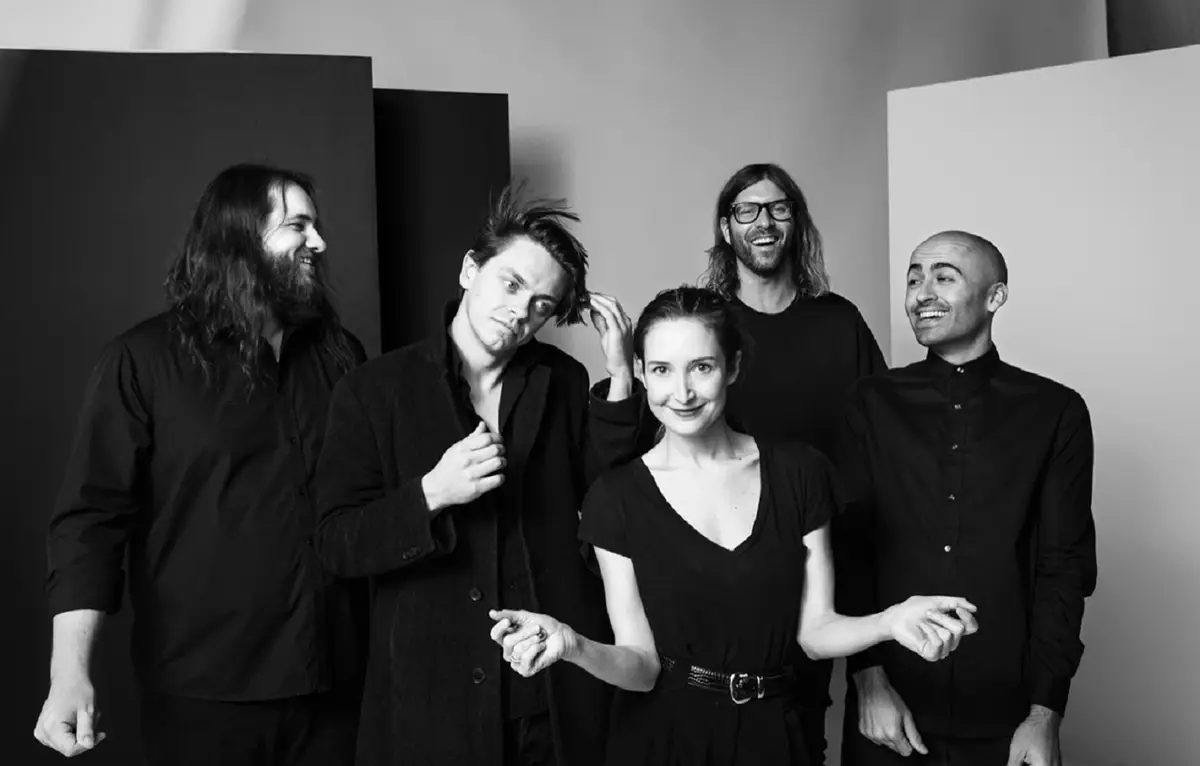
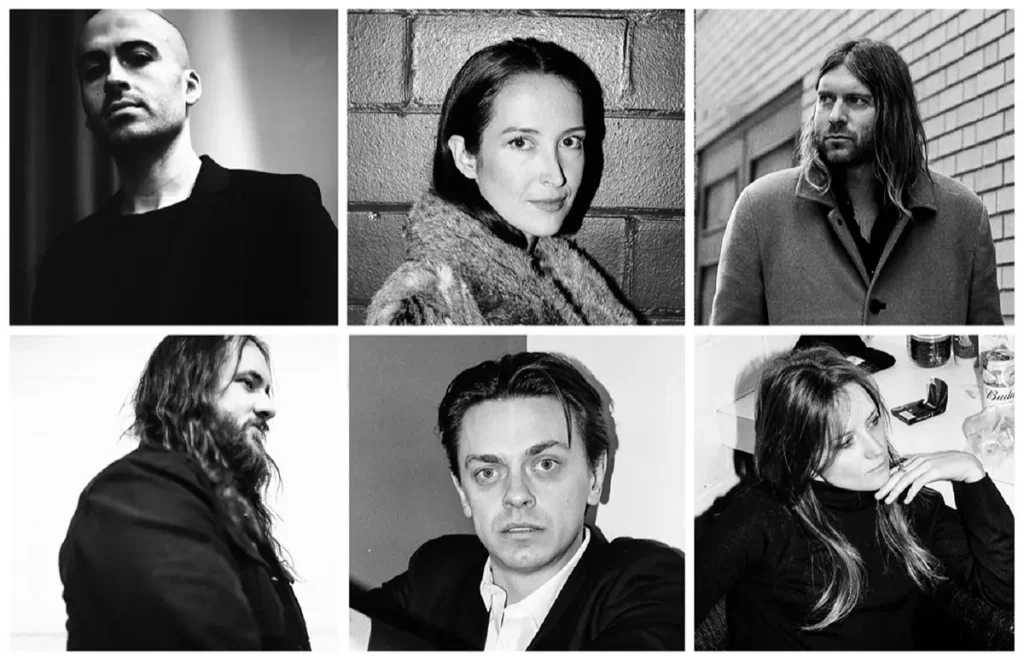
A decade on from Touch, July Talk are very aware of how significant the album was to defining them. A record packed with equally playful and snarling hits, and many of the band’s most transparently personal songs. With that perspective, and a year of road-testing the songs, the band is revamping them with a live edition of the album, Touch X, complete with a whole other “lost” record, Love’s Not Dead, of material recorded from the time that just never saw the light of day. We caught up with the band’s vocalists Peter Dreimanis and Leah Fay Goldstein ahead of their tour for the album (which stops in Ottawa on March 25 & 26) to talk about revisiting old material, keeping the live show so explosive, their other projects in Toronto, and a brief detour about Sinners!
Ottawa Life Magazine: I feel like with July Talk, a live anniversary album for Touch X is such a no-brainer. Your shows are just so electric. So, what was the process to capture that live energy for the anniversary album? And beyond that, given how fiery that original album is, how did you work to keep it distinct from the original studio cut?
Peter Dreimanis: First thing that comes to mind for me is that when we first thought of it, we were like, oh, maybe we could do it with, like, a small audience. We could have it be that way, but for whatever reason, sometimes live albums with audiences…have less value in some capacity, I feel like people kind of gloss over them or something. Our idea for this goes back a long time. Every time we make a record, we’re often still writing it as we’re making it, and we always talk about how great it would be to be able to tour the album after writing it and then come back and record it. So, you’re not reading the lyrics off a page and still letting the album take its form. And so, in this case, I think a lot of it had to do with working with people who just knew us almost as well as we know ourselves.
So, the person who engineered it is Tom D’Arcy. We’ve been working with him since writing Touch. And then Ian Docherty, our lead guitar player, mixed the record and really developed the sound of it. So, I think it was really just about going back and playing songs that we’ve been playing live for 10 years and having that confidence. And just leaning into single-take performances and not getting into the details, really, just delivering it like we would on stage.
Leah Fay Goldstein: Yeah, it felt much more essential just because you know, you can’t get into the perfectionism of it, when you’re doing something like that! It’s like you’ve already played it thousands of times, and so it kind of just is what it is. Once you record it, all the work has already been done. And so, when you’re listening to something, I’m sure this is most musicians, but you tend to be pretty critical when you’re listening back. Whereas this felt like listening back to your essence and being, like, yeah, okay, that must just be how it is!
OLM: Speaking to that same kind of electricity on stage, so many of my memories of you are from live shows. I’ve seen you flopping around the stage rehearsing at the Junos, at Bluesfest one year, you poured bourbon into the photo pit, and Ming Wu walked out saying you poured him three shots at a time…
LFG: (Laughing) It was hard to measure!
OLM: And I even have a photo holding you up at one show, Peter. So, with all this energy, how do you keep that spark of energy going and keep it fresh day after day, tour after tour? Especially considering how aggressive some of it can get (ie, pulling each other’s faces, etc.), has it ever backfired and left you guys injured by the end?
PD: Yeah…ahaha! Yeah, I mean, there’s a million ways to answer that question. It feels like, yes, it has gone wrong.
LFG: There’ve been hospital visits, stitches in Ottawa!
PD: But, yeah, I guess it’s a precarious activity. And I don’t know, it’s a precarious exchange. Even last night, there was a moment where I recognized I didn’t have as much time to get back to my mic to get my vocals as I thought I did. At the moment, I was really running in a way! But, in the corner of my eye, I see Leah, and I’m able to just drop the headstock on my guitar in time so that I don’t make any contact, you know, if I go by! And then by the time I’m singing my vocal, she’s got her full body weight pushed against my shoulder with her hand in front of my face. You know, I think it’s a tangle, right? And I think that’s hard to know. You know, chicken or the egg sort of scenario of how these things begin.
I think that when you go through the conception of a project in your formative years. Definitely having witnessed Leah in the bands she played with prior! She’s an extremely physical, experimental performer using things in her surroundings to elevate and also sort of humanize the experience. You know, she wasn’t somebody that was super interested in the curtain line or the stage line, where that’s the crowd, and that’s me. I think she was always someone grabbing a potted plant and breaking down the expectations of what was going to be! And I think in my previous projects, playing music, I was always a physical performer as well. It’s just our interpretation of what we think is vital. I think in the way that we meet on stage, we’ve developed somewhat of a language, but it’s not really something we discuss.
And so I would say, just like last night, you’re kind of constantly in this back and forth. And it’s playful, and it’s an honour. And it’s messy. And it means that you make mistakes and things go wrong sometimes, and it’s hard to remember that that’s part of the magic of it. And sometimes injuries happen. And that’s never worth it. You never wish that to happen! But in general, if something goes wrong and you can’t get your keyboard to do the thing or whatever you kind of recognize that someone in the crowd is out there being like “Jesus! What’s gonna happen next?” And that kind of precarity, I think, is sort of an essence of what we do!
LFG: Yeah, it’s not really something we think about. Or talk about, I don’t think. And so, it’s interesting to be trying to put words to it. I do feel like there’s a certain formality with stage performance. Where it’s easy for the humanness of a person to be left out of it, because of societal expectations. Like in my first band, one of the instruments I played was like big kitchen knives as a percussion instrument! And I remember seeing Pete. Was it a chain that you were just like hitting?
PD: Yeah, it was a hammer and a chain on a board.
LFG: I had a hammer on a big atlas at one point. We’re probably kindred spirits in that way, who just found each other! And then, luckily, everyone in the band is just into it, or to say, they weren’t scared! They didn’t run. They leaned into it!
PD: And have given us a backbone to do that experimentation. They’re the tight scaffolding that we’re able to swing around on.
LFG: Yeah, and it’s the thing that I think normalizes it, our abandon makes us a cohesive whole! When you see a band where the front person is freaking out, and it seems like a problem for the rest of the people on stage, then obviously that’s a different energy! But being able to approach it as a united front changes it, and makes it seem like it should be happening. This is the second tour we’ve done while I’m pregnant. And I love being able to do what I love doing while in this state. And talking about precarity, I’m aware that at any point, the baby could just put their foot in my diaphragm. Or like, move in a certain way where I can no longer walk! Pregnancy is just a really wild ride, obviously, and it affects all bodies very differently. And so, there’s a certain surrendering that needs to happen in each show, where you don’t really know how it’s gonna go.
And also, I think there’s a real precarity just living in 2026, in terms of everything that’s happening in the world right now. The thing I’m finding so special about touring is just how amazing it feels for humans to connect and be together in one space, with a common interest, which is just wanting to feel something. Feel joy, and feel love. I just think it’s really easy to go into our phones and our algorithms and feel completely isolated and alone. Live performance is the opposite of that! And that feels really freeing.

OLM: Along with the live version of Touch X, you announced you’re also releasing Love’s Not Dead, which was recorded in 2016, in the same creative spur as Touch, but never actually released! So why was it shelved, and what made it feel right to put it out now?
PD: To be honest, I think it was a bit reactive to the world and the way the world has changed since 2016 that made me want to put out the material. I think the best way to explain the Touch record is by the line, “Don’t want to give ourselves away too much.” I think we were pretty invested in keeping a Film Noir shadow cast over large parts of the band. And I think that, having watched what’s happened since, I don’t know, I spent a lot of time mourning mystery over the last 10 years, and witnessing the ways in which people interact online, and missing a level of leaving the blanks blank! But over time, I think, like any aging artist, you kind of have to embrace the task at hand! You have to look for and find beauty in the ways people interact now. I think that’s what we’ve tried to do, and what came out of that was a real love for some of the music we’ve made in the past, that did have its heart on its sleeve, and that said exactly what it meant, and was more upfront. You know, it was in ways that felt maybe on the nose at the time. Now, I listen, and I think, man, this is exactly what was going on then, and it’s only gotten worse since! These lyrics feel extremely, extremely vital! We have songs that are cutting down misbehaviour by power-hungry men. We have songs that are picking apart our relationships and addictions to screens. We have songs that are breaking down, the excess that I think we tried to chronicle on “Push and Pull!” There’s a lot of stuff that I think we were going through and we were witnessing in 2015, 2016.
It’s probably most illustrated by the song “Love’s Not Dead,” which is why we called the record that. Just this immense loneliness that can come over you, especially in young years, when you don’t have a foundation of trust around you. And in these bleak times, we just looked, and we said, “Man, we have to put out this stuff!” And these are statements that I don’t know if we could muster right now because the world is so chaotic, and it’s all run by Batman villains! And now it feels like, oh man, we made this statement that we feel people need to hear now, but we made it 10 years ago. And we duct-taped our mouths shut so that it didn’t come out. So, it felt like the perfect way to celebrate 10 years of Touch was to embrace and do the thing we were initially afraid of doing. I would characterize the album as more heart on its sleeve.
OLM: And are you playing any of the songs live on tour?
PD: We have been playing it. We played a couple of new ones in Victoria, and we played one new one last night. And the response has been amazing, it just feels like the energy in those songs is f*cking crazy. It’s like 90s, guitar feedback, crazy dance-y… there’s just so much joy in it. It’s very vivacious, you know? It’s been a crazy process. It’s hard, and I think on a personal level, it’s a little hard to put out stuff that you’ve trained your brain to thinking like, “Oh, that’s not us.” But of course, you know, the “Lola and Joseph” and “Push and Pull,” and all of these songs were in the same batch. You know, we thought those songs were cringy at a time, too. And just because the world knows them, now it’s like, oh, well, they exist! So, it’s a strange thing as an artist to draw those lines as to what’s good and what’s bad, and where you’re at your best, where you’re at your worst, and all those things! I’m definitely grateful that we’re putting it out into the world, and I hope that people taking that record home can find a joy in it that they can’t find elsewhere right now. I don’t think it could be made now.
OLM: You mentioned about Batman villains, so I have to ask you, Peter, about your role in Sinners. I remember seeing that in theatres, and coming to the realization in real-time that not only did Bert look like you, it WAS you! I know you came by an audition after Ryan Coogler heard your cover of CCR’s “Bad Moon Rising” in a trailer. So what was the collaborative energy like on that set?
PD: The collaboration was incredible, and every person on that set is just an incredibly generous and welcoming individual to a guy who hasn’t worked on something of that scale before. It was incredible to witness and just be there and take part in it.
OLM: And furthermore, I was intrigued to hear your softer vocals throughout 90 percent of that movie, because listening to you sing, your growl is so iconic. And in a movie playing a vampire, even my first thought was, “Match made in heaven for a growling vampire singer.” So how did you land on that timbre and part of your range for the role?
PD: Interesting question. I would say with the vocal level, it was interesting. I think that we started by having Jack [O’Connell] in the middle octave and Lola [Kirke] up top, and then me down low. And there was a lot of experimentation with key and stuff. I would probably put it towards, they are very invested in not having their villains be only villains. And so, I think they did a lot in that movie to make Jack and Lola, and I feel more, I don’t know, approachable, and relatable. Where a lot of movies would just go, “They want to be the pure evil side of this story.” There was a lot of research being done into what these characters were actually going through and why they were the way they were, and the sort of scarcity complexes, particularly in the American South. So, I think the decision to make me not, sort of a flat growling, bad guy, I think, probably would land within that ethos of trying to make the villains not completely evil, and the heroes not completely heroic. Kind of anti-villains.
OLM: You two have both worked with Pavan Moondi over the years on different projects, but each coming from different angles. Leah, you’ve been acting in some of Pavan’s projects, and Peter, you’ve been a camera op and involved in cinematography. So, given your background with Pavan, your time together in the band, and your film backgrounds from these different positions, what was it like working on his film “Middle Life,” where you were both acting head-to-head? And additionally, how different was it from performing together in the band?
PD: It was new! It was definitely a new mode. I think Paving was really driven to make a really cozy film. I think it follows in the footsteps of Albert Brooks and Rob Reiner. It’s a movie you want to cozy up with on the holidays, and watch with your family on the living room floor. So, working together in that mode, there’s one thing if we’re gonna go, you know, act together, but then to also be doing so in a rom-com, it was a really fun thing. It felt like a definite fish out of water, you know, challenging ourselves! And I think that we enjoyed the hell out of it. I think Leah and I just want to work together in all ways. And so, it’s just checking another box of a new way that we could. Making a scene is somewhat similar to making a song, in that you do it. And then you talk about how it made you feel. And then you try to make small changes, and make it better, and more relatable, and more interesting, and more compelling and layered and all that. And so to work with someone that you’ve developed a shorthand with over many, many years, it was just a total honour and a blast to work together in that new way.
LFG: I think it came at a special time too, where we had just had a kid. And, so much has changed in the music industry because of the pandemic and so many other things. It’s just a different world now. The opportunity came at a time in this really organic way, where Pavan just came to us with this idea for a movie. And it’s the type of thing where, if you asked us in any other era of our lives, we would be like “A rom-com together? Are you f*cking kidding me?” But in this moment of your identity being completely blown apart and expanded, and then trying to consider what is worth your time, when you have so little time and capacity…just, what do you want to do with that? I think Pavan’s intention of creating something that’s just meant to make people feel good, in a world where very few things are doing that, is revolutionary in its own cute, “When Harry Met Sally” kind of way. And I think it also fits perfectly into this era of where we’re at as artists, of just being able to embrace something that we previously would have been afraid to do because of a quote-unquote “cringe factor.”
OLM: I don’t think many people realize, Peter, that you have a background in camera work and cinematography. I know you worked with Matt Johnson on the original Nirvana the Band the Show, and The Dirties, which also connects you to cinematographer Jared Raab, who would go on to shoot a few music videos for Touch. But knowing you have this background and have continued to work behind the camera on occasion, do you find that when you’re performing in a music video or acting in something like Middle Life or Sinners, it affects how you’re playing to the camera? Or at least, does it get you bouncing ideas off the crew on how to shoot things when you’re supposed to be in front of the camera?
PD: It’s hard to have perspective on any of that. I feel like, as you move through various mediums, you can learn things along the way, and they all influence each other for sure. Definitely feel like somebody who sees songs in a pretty visual, story-like way. Leah and I both like atonal, weird guitar playing more than melodic guitar playing, for instance! And just the story that you can tell by bringing in strange sounds that don’t quite fit. Definitely work in all mediums, influence each other! I love how we’re able to push each other and work with a tight-knit community we’ve worked with for over 20 years. Give each other feedback. And you know, when we finish a project, we send it out to all those people you’re talking about. And they give us ideas on how to make it better. And that’s been ongoing for my whole life. And I’m just grateful to be a part of that community. And I think we all influence each other, we’re very grateful to be a part of it.