Law as Liberty: Why Chinese society might be more “free” than the West

By Chris Pereira

There is a Chinese saying that has stayed with me since I read it in a public essay published a few days ago by a writer in Shenzhen: “没有规矩,就没有秩序.” Without rules, there is no order. The author, Li Jiasheng, was writing about families and organizations, and how leaders who do not model the rules they set ultimately destroy those rules more surely than any external force. He was not writing about geopolitics, but it prompted a broader question: what is the relationship between rules and freedom?

There is a common view that China represents restriction and the West represents freedom. I have been thinking about this a lot recently – what it means to be free. The distinction between East and West, rules and freedom, Renaissance vs. Feudalism.

Interestingly, the story of Western civilization is actually, at its root, a story about the establishment of rules. And the story of the West’s current state of decline is a lesson about what happens when a civilization forgets why it built these rules in the first place.

The West: built on rules

The story of Western civilisation is not one of liberation from rules, but of the gradual construction of increasingly sophisticated rule systems.

In ancient Rome, law was clearly a set of prohibitions which provided a framework for organizing society, resolving disputes, distributing powers, and protecting property. It assumed that individuals were equal before the law (at least in theory), that rights came with obligations, and that institutions, not individuals, held authority. The Romans were brutal conquerors, but the structure they built outlasted their empire by fifteen centuries. Every modern legal system around the world descends from it in some way or another.

The British system extended this logic. (Is there anything more British than rules and etiquette?) Common law evolved over centuries through precedent, case by case, with courts independently checking executive power. In 1215, Magna Carta established the principle that even the sovereign was subject to law. Parliament and habeas corpus placed limits on arbitrary authority; these structures made economic and social life possible. When rules are stable and consistently enforced, individuals can plan, cooperate, and invest in the future with confidence. Is this not, in its most practical sense, freedom?

The post-World War II international order exported this model globally. Institutions such as the United Nations, along with frameworks like the Universal Declaration of Human Rights, General Agreement on Tariffs and Trade, and Bretton Woods attempted to embed predictable rules into international relations and trade. Whatever its flaws, this “rules-based order” coincided with unprecedented global growth. Between 1950 and 2000, global GDP per capita roughly tripled, life expectancy in developing countries rose dramatically, and extreme poverty fell at an extraordinary rate. These outcomes were enabled by systems in which rules were broadly stable and enforced.

I am also reminded of motivational podcasts I hear at the gym. Discipline equals freedom as David Goggins would put it. I go to the gym every day. I am not free to skip a day. Yet that constraint makes me more free in my daily life, because I am healthier and happier. The way I see it, societal rules operate in much the same way: discipline, in the form of the rule of law, creates the conditions for individual freedom.

And so, my key point is this: the West’s rise was not powered by freedom from rules, but by the strength of its rules.

When rules became optional in the West

From the 1960s onwards, something shifted in Western cultural life. The shift was not sudden and it was not without cause. Civil rights, Vietnam, institutional hypocrisy: there were genuine reasons for a generation to question authority. But over time, this critique expanded beyond unjust rules to a broader suspicion of rules themselves.

Freedom was increasingly redefined from a form of discipline to a sort of hedonistic relaxation of societal norms. Where previous generations understood freedom as the capacity to act within a stable structure of rights and responsibilities, the new conception meant freedom from structure altogether. Discipline came to be seen as oppressive. Tradition, etiquette, and institutional norms were reframed as arbitrary impositions: do what feels right, reject constraints, question all norms.

What followed over subsequent decades was a slow institutional corrosion. Divorce rates rose and family formation declined – after all, if you are unhappy, you can simply leave; you are “free” to do so. Civic participation has weakened across Western nations. Trust in institutions has declined, because the cultural framework that once justified them has eroded. Li Jiasheng’s observation about organisations applies here as well: when those at the top stop modelling the rules, people stop believing the rules apply. Once that happens, rules become, as he put it, “decoration on a wall.”

For much of recent Western cultural discourse, the emphasis has been on dismantling rules. It is as if I decided I did not need to go to the gym at all. Tradition and etiquette are treated as structures to be overturned rather than accumulated social technologies. Table manners, dress codes, formal speech, professional norms, and even basic civic courtesies have increasingly been reframed as arbitrary impositions. The counterculture that began as a legitimate challenge to injustice gradually became, in its mainstream form, a preference for formlessness. Yet it was precisely this shared behavioural grammar that allowed strangers to cooperate, institutions to function, and societies to remain coherent over time.

The result is what we see now: a Western world in which the rules-based order is being eroded from within.

East and West: reconsidered

This is where the China-West comparison starts to invert in interesting ways. The Western world began congratulating itself on liberation while systematically dismantling the architecture that had made its prosperity possible. Meanwhile, societies in Asia were doing something the Western narrative rarely acknowledges: building institutional structures and enforcing the law.

The core idea that rules are not the opposite of liberty but its precondition is not a novel insight. It runs through the work of legal philosophers from Locke to Hayek, and it is intuitively understood in everyday life. Children raised with clear and consistent boundaries tend to develop more confidence, creativity, and genuine independence than those raised without them. Structure does not limit development; it enables it. The rules function as a scaffold.

Li Jiasheng captures this neatly: 规矩不是束缚,而是保障. Rules are a guarantee, not a constraint. The same logic applies in simple terms: if you go to the gym, you become healthier. The constraint produces the outcome. Similarly, if societal rules are consistently applied, they create stability and long-term progress.

However, the dominant Western narrative continues to frame this differently. Asian societies are often described as rule-bound and therefore constrained, while Western societies are seen to be freer and more successful. Spend time in Singapore and that framing becomes very hard to sustain. The city functions with a level of consistency and predictability that is rare in Western capitals. Institutions work as expected; corruption is structurally limited; infrastructure and public systems function because enforcement is reliable. This produces freedom: the ability to build a company, to raise a family, to walk home at night safely, and to rely on public order. These are not freedoms that survive the dismantling of institutional structure.

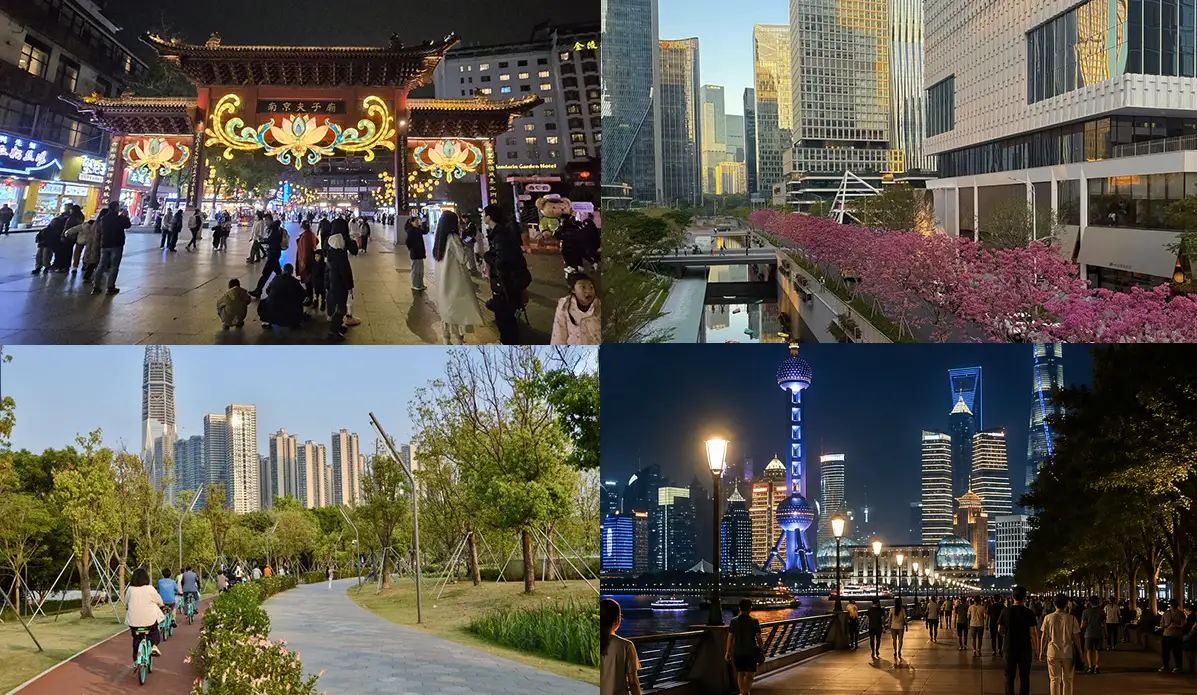
China presents a more complex picture, but the underlying pattern is similar. Whatever one thinks of its political system, its economic transformation over the past four decades includes the largest reduction in extreme poverty in recorded history: roughly 800 million people lifted out of poverty between 1980 and 2020. Whatever explanatory framework one uses, the Western “freedom versus restriction” binary can not explain this outcome.

The article I read this week was not a geopolitical argument. It focused instead on everyday systems of behaviour: families, workplaces, and the quiet transmission of values through behaviour. He also quoted a Confucian line: 君不君,臣不臣,父不父,子不子. When rulers do not act as rulers, ministers do not act as ministers, fathers do not act as fathers, and sons do not act as sons, order collapses. This is essentially a theory of functional accountability: every role carries obligations, and systems depend on those roles being enacted consistently. When those at the top abandon their obligations while expecting compliance from others, the system loses coherence. Such inconsistencies gradually erode the legitimacy of the rules themselves.

That is precisely the story of the Western institutional crisis of the past sixty years. The rules themselves were largely sound. The problem is that those most responsible for modelling them increasingly acted as though they did not apply to themselves.

So, should we copy China?

I am not arguing that Asia is perfect, or that Western liberal traditions have nothing to offer. Having lived in China for over twenty years, I remain shaped by the Western intellectual tradition; Socrates and Aristotle exist deeply within my soul.

From that perspective, I want to raise a final tension in the familiar “China is restrictive, the West is free” framing. At a moment when Western institutions are weakening, when the rule of law is increasingly contested from within, and when even powerful Western states treat long-standing commitments as optional, it becomes harder to rely on simple categories of freedom and restriction.

The rule of law, individual rights, separation of powers, and freedom of speech are major human achievements. They were built painfully over centuries and are worth defending. But defending them requires understanding why they exist and what makes them durable. This understanding needs to be passed on.

Seen in broader terms, structure is what enables freedom rather than restricts it. A child raised without consistent boundaries does not become freer; they become less capable of exercising independence. The same is true at a societal level: institutions that are dismantled in the name of liberation tend not to produce more freedom, but less stability and greater exposure to arbitrary power.

From the outside, discipline looks like constraint. It looks like surrender of the self. The experience is the opposite. The discipline is the freedom. The rule is the guarantee. The scaffold is how you build something tall enough to see from a distance, and it holds you in place.

The West built much of its historical strength on this principle. It is therefore striking that this reflection was prompted by a Chinese-language WeChat article I read recently. In an indirect way, it is a reminder that arguments about Western civilisation are often sharpened most when seen from outside it.

This article has been reprinted with permission from substack.com 


Chris Pereira is a Singapore-based entrepreneur, author, and commentator with more than two decades of experience at the intersection of Chinese business and global markets.