Maple Sugaring Time in The Ottawa Valley
By Lynn Jones, Ottawa River Institute
There is an unbroken maple sugaring tradition that goes back thousands of years in the Ottawa Valley. The Algonquin Anishinaabe people have been tapping maple trees, using the “sweetwater” as medicine, and processing it into syrup and sugar since time immemorial. Anishinaabe people consider maple sap, syrup and sugar to be gifts from the great spirit, Gitchi Manidoo.
Knowledge about maple sugaring was one of many gifts from Indigenous Peoples to European settlers in Eastern North America. Maple sap and its products were important survival foods for Indigenous peoples and settlers alike in late winter and early spring when food stores were depleted and snow still covered the ground.
Maple sap runs in the early spring when the day time temperature rises above freezing and nighttime temperatures drop below freezing, during what is called the Sugar Moon. Traditionally, Anishinaabe people collected sap in birchbark baskets or moose-hide vats.
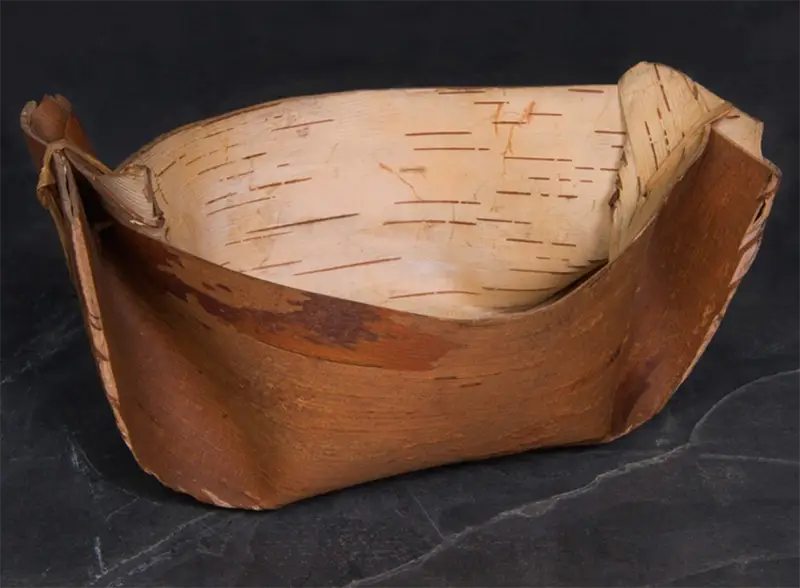
Before buckets and tubes, this type of container, called a Mokuk, was used to collect maple sap. Folded and tied from a single piece of bark, this Algonquin basket is seamless and leak-proof. (Canadian Museum of History)
To process the sap, they heated smooth, dense river stones in a fire and transferred glowing-hot stones into the liquid filled containers with wooden tongs. Each stone would cause vigorous boiling and steam evaporation. Workers continuously replaced cooled stones with fresh ones to sustain the heat until the sap reduced to syrup.
Sap was often moved through a series of containers, with progressively thicker sap being finished in a smaller vessel, which helped control temperature and prevent burning.For granulated sugar, thickened syrup was poured into wooden or carved troughs, then stirred or paddled until it crystallized into sugar cakes that stored well.
Indigenous people used maple syrup to cure meats, as a sweetener for bitter drinks or medicines, an anesthetic and a spring tonic. Maple sugar contains nutritious minerals like phosphorus, magnesium, potassium, iron and calcium. Maple sugar was also used as a trade item as noted in this quote from the Globe and Mail article “As Anishinaabe as maple syrup.”

The First Peoples of the 17th to 19th centuries sold maple sugar in blocks, packaged in birch bark containers known as makaks, that could weigh up to about 12 kilograms each, supplying fur trading companies who redistributed the sugar to their trading posts.
In her wonderful book of Indigenous wisdom entitled “Braiding Sweetgrass”, Robin Wall Kimmerer notes that Indigenous people learned to make sugar from the squirrels. As legend goes, one spring day, a squirrel climbed up a maple tree, bit into a branch and drank. An young Indigenous boy looking up from under the tree wondered why the squirrel was doing this since there was a freshwater spring nearby. Deciding to imitate the squirrel, he made a slash in the tree with his knife and discovered the wonderful sweetwater running in the veins of the maple tree.
Maple sugaring by squirrels has been scientifically documented. In 1992, Bernd Heinrich published a paper in the Journal of Mammalogy entitled Maple Sugaring by Red Squirrels. Heinrich observed chisel-like grooves made by red squirrels on sugar maple trees at 22 sites in Vermont and Maine…He noted that the squirrels did not drink the sap immediately but returned to lick up the more concentrated sap after allowing for some of the water to evaporate.
Maple sugaring time will continue for a few more weeks in the Ottawa Valley, until nighttime temperatures are consistently above freezing. At that point, the flow of sap will be reduced and bitter flavours will start to be present. But, thanks to Indigenous knowledge, honed for millennia, and generously shared, we can enjoy the wonderful gifts of maple sugar and syrup from Gitchie Manidoo all year round.

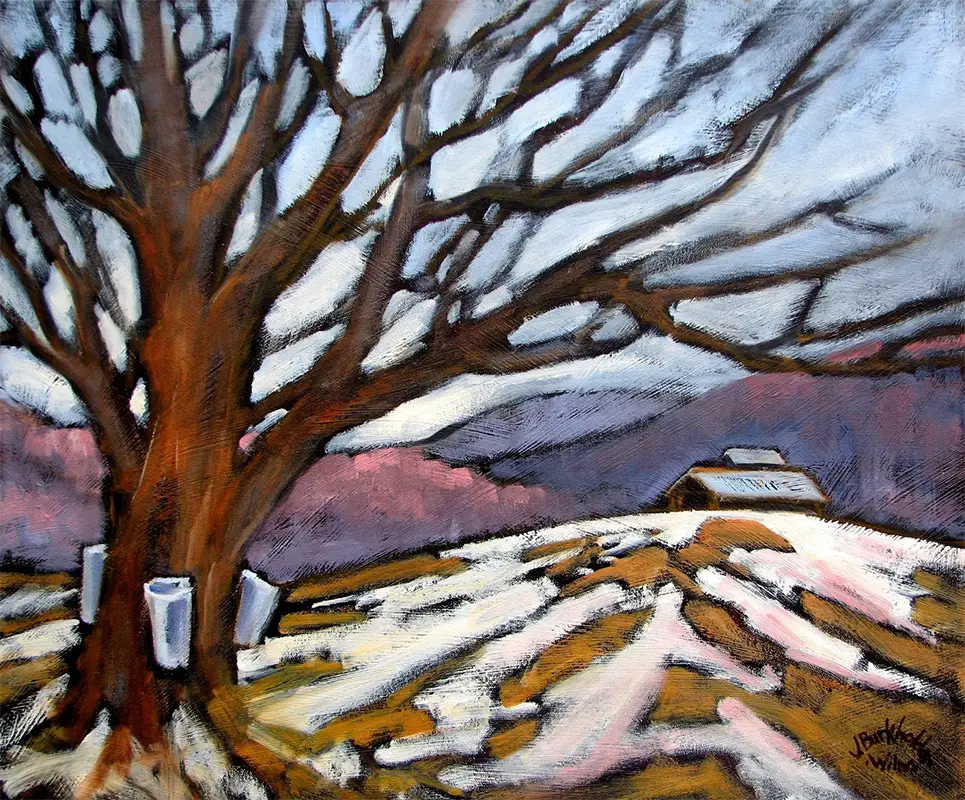
Syrup Season, by Joyce Burkholder. You can see more of Joyce’s art and find out how to visit her Ottawa Valley studio here
Lynn Jones is a founding member of the Ottawa River Institute, a non-profit, charitable organization based in the Ottawa Valley. ORI’s mission is to foster sustainable communities and ecological integrity in the Ottawa River watershed.
Header image: PaulMcKinnon