
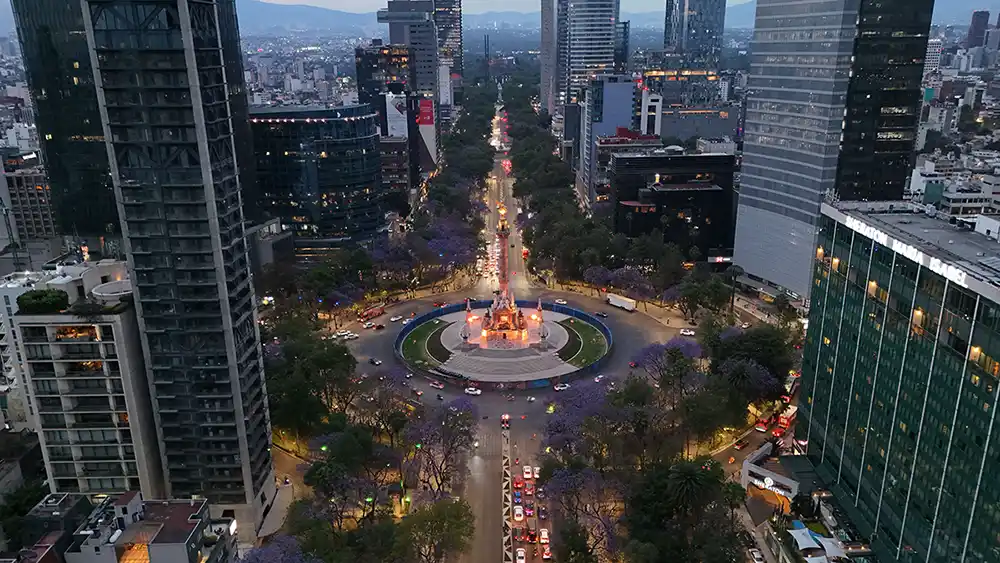
Mexico City: The Ultimate Hub for Digital Nomads
You land in Mexico City with one suitcase, elementary Spanish, and a laptop. Six weeks later, you’re getting fresh tortillas from your corner store, taking mezcal shots with your ‘vecinos’, and greeting your local cafe barista by name – in Spanish.
That’s the honest pitch for CDMX. It’s not just cheap and sunny – it’s a place where a remote life can assemble itself quickly if you make a few smart moves early. Here’s how to do that without wasting your first month and figuring it out the hard way.
Getting there and surviving the first week
Most flights land at Benito Juarez International (AICM), the largest airport in Mexico. Skip the taxi stands near arrivals and book an Uber or DIDI from inside the terminal.
Alternatively, you can book a taxi at an authorized “sitio” taxi booth, where you pay upfront and avoid any price gouging or potential scams. For the more adventurous traveller, the metro is an option too if you are light in luggage.
Book your first couple of weeks somewhere flexible, not a full lease. Walk the different neighbourhoods with your own feet before committing. A street that may look perfect on a map can be dead quiet or shockingly loud depending on the block.
The paperwork nobody explains clearly
Here’s the part you may gloss over – Mexico doesn’t have an actual digital nomad visa. Citizens from the US, Canada, the UK, and most EU countries can enter visa-free and get up to 180 days as a tourist, no income proof required.
For something more solid, the Temporary Resident Visa is the real path for nomads wanting to ground in CDMX. Apply at the Mexican consulate before you travel. Expect to show recurring monthly income or a lump savings balance, both tied to Mexico’s UMA economic index and adjusted yearly. Check with your consulate to confirm the current number rather than trusting an old blog post.
Approved applicants get a valid card for one year, renewable up to four years, after which permanent residency opens up. Whichever route you pick, don’t work for a Mexican employer. Income needs to come from outside of the country.
Choosing the right neighbourhood
Roma Norte is one of the most popular neighbourhoods for digital workers, and for good reason. A dense selection of cafes, walkable everything, and a coworking scene thick enough that you’ll never lack a desk. It’s also the most saturated with fellow nomads, which cuts both ways.
Condesa sits right next door and trades some of that energy for a more tree-lined, quiet vibe. It’s also one of the more expensive neighbourhoods in Mexico City. Don’t expect cheap tacos, local prices, and low rent.
For luxury dining, a Polanco stay puts you in Mexico City’s most upscale neighbourhood, home to some of the best restaurants in Latin America. Wide, leafy avenues and high-end shopping give it a polished, almost European feel with a matching price tag.
Colonia Juárez offers cheaper rent, a central location, and is still walkable to the action of Roma Norte and Condesa. Just further south is Coyoacán, filled with cobblestone streets and a slower pace of life, with a real discount, at the cost of a longer commute.
Coworking etiquette that actually matters
Cafes function as informal coworking spaces across the city, but there are unwritten rules. Order something every hour or so, don’t camp out during the lunch rush, and don’t sprawl your laptop, notebook and coffee cup across a four-person table. If you need a workday of calls, pay for an actual coworking membership.
CDMX is full of coworking spaces and ideal for a variety of workers, from startups to freelancers, consultants, and entrepreneurs. Homegrown spots tend to have friendlier prices and more local crowds than the international coworking chains. Most run day passes if you’re not ready to commit monthly.
Staying connected without the roaming panic
Don’t rely on your home carrier’s roaming rates; they add up fast, and coverage is inconsistent once you’re outside the city center. An eSIM for Mexico with mobile data is the easier fix. You set it up before you land and your data works the second you touch down, no SIM card swap, and no hunting for a kiosk at the airport. Easily order an Uber or DIDI to your accommodation without worry.
Be the kind of guest the city wants more of
Mexico City’s affordability has a real cost, and it’s showing up in neighbourhoods like Roma and Condesa, where rents have climbed sharply enough to spark real anti-gentrification protests over the past year.
You don’t have to feel guilty about being there, but be intentional about your stay and impact on the local community. Don’t treat the city as a shortcut to a better life abroad. Learn some Spanish, look into local pressures, culture, and the local way of life.
Photo: Jesus Alfonso, Pexels