Punished for Protest, Rewarded for Violence: Canada’s Criminal Justice in Crisis

“Justice is no longer a concern of the justice system.” — Paul Craig Roberts


Canada’s Criminal Justice System: Inversion Over Reform

Canada’s justice system isn’t broken—it’s inverted. Violent offenders walk free. Drug traffickers receive house arrest. Gang members are released within hours. Meanwhile, peaceful protesters face harsher penalties than convicted terrorists.

Consider the two cases currently making headlines—both prosecuted by the Public Prosecution Service of Canada (PPSC), the federal agency responsible for enforcing criminal law across the country.

First, in Quebec, PPSC prosecutors oversaw the terrorism case of Oumaima Chouay, a Montreal woman who joined ISIS and pledged allegiance to its extremist doctrine. She left Canada to marry an ISIS fighter and raise children under the group’s rule. Her social media proudly displayed the ISIS flag and messages declaring she would never return to “a country of kuffars.” Upon repatriation in 2022, Chouay became the first Canadian convicted of providing family support to a terrorist organization. Yet last week, Quebec Superior Court Justice Marc-André Blanchard sentenced her to one day in prison. The Crown, citing remorse and a low risk of reoffending, agreed to the lenient deal. No dramatic presentation. No moral outrage. Just a quiet plea bargain and a pat on the head.

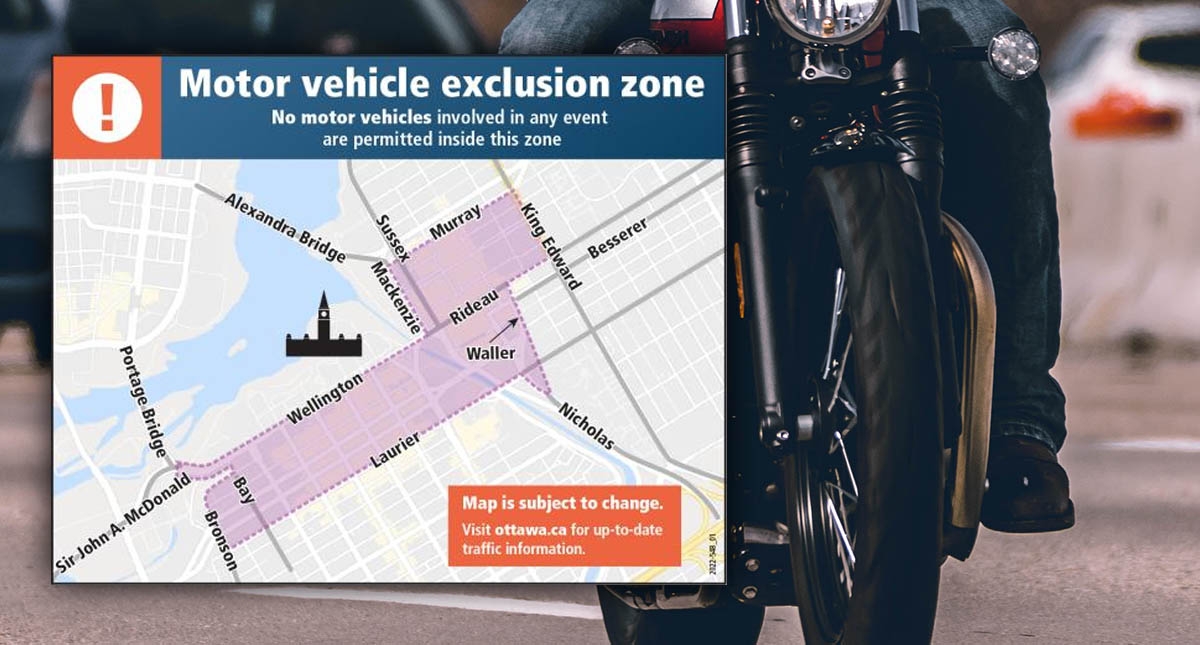
Now compare that to the PPSC’s prosecution of Tamara Lich and Chris Barber, the organizers of the 2022 Freedom Convoy protest in Ottawa. The Crown is seeking seven years in prison for Lich and eight for Barber. Their charge? Mischief. Not violence. Not weapons. Not incitement. Just political dissent.

Yes, the convoy was disruptive—frustrating to residents and logistically chaotic. But as two public inquiries later confirmed—the Public Order Emergency Commission (led by Justice Paul Rouleau) and the Ottawa People’s Commission—the protest spiralled not because of extremist plotting, but due to incompetence. The convoy was triggered by the Trudeau government’s abrupt CBSA vaccine mandate and prolonged by failures in policing, including an absence of coordinated response. The crisis persisted because no one—not the government, not the Ottawa Police Service—knew how to handle it.

Yet it’s Lich and Barber, not the institutions that fumbled the response and invoked emergency powers, who now face jail time—as if honking a horn were tantamount to aiding terrorism.

To make matters worse, the PPSC prosecutors in Ottawa, including Tim Radcliffe and Siobhan Westcher, have turned the Lich-Barber trial into a judicial charade at best and a kangaroo court at worst—funded entirely by the taxpayer. Their courtroom strategy includes a 106-slide multimedia presentation filled with drone footage, social media posts, and overhead views of parked trucks, painting the protest as a Bond villain’s lair. Their language drips with moral outrage: the convoy was “disruptive,” “coordinated,” “mischievous”—grounds, apparently, for near-decade prison sentences.

So let’s recap: One day in jail for aiding ISIS. Seven years for political dissent. Both prosecutions, same federal agency.

If the PPSC had a motto, it might read: “Protest peacefully and we’ll bury you. Join a terrorist group and we’ll give you a hug.”

This isn’t justice—it’s performance. Ideologically driven, selectively enforced, and wildly disconnected from public expectations, Canada’s legal machinery has become a stage. The same federal institution now plays both sides of a broken coin, prosecuting peaceful dissent with theatrical zeal while letting real threats off with a whisper. The result is a system no longer anchored in fairness—but in farce.

That farce becomes even clearer when you zoom out. The federal government that helped spark the convoy through its own incompetence—via chaotic mandates and policing failures—is now watching another federal arm, the PPSC, stage a show trial to punish those caught in the fallout. The message is clear: bureaucratic blunders don’t lead to accountability—they lead to performance prosecution. And that, in Canada today, is what passes for justice.

Trudeau’s Legacy: Where Protesters Are Criminals and Terrorists Are Victims

The decline of Canada’s once-respected justice system didn’t happen overnight. It began when the Trudeau Liberal government put political messaging ahead of public safety. Rather than strengthening the courts, they refashioned them into an ideological instrument—where rulings increasingly mirror very partisan Liberal priorities instead of the principles of justice. This wasn’t reform; it was repurposing. And the result is a justice system so compromised it now undermines the very values it was meant to protect.

At the heart of this transformation was David Lametti, who served as Justice Minister from 2019 to 2023. Lametti wasn’t a reluctant participant; he was the architect. In 2021, he introduced Bill C-5, which repealed mandatory minimum sentences for fourteen Criminal Code offenses, including weapons trafficking, robbery with a firearm, and drug trafficking, and all six drug-related mandatory minimums under the Controlled Drugs and Substances Act.

He also expanded conditional sentencing, allowing judges to issue house arrest for offenses such as assault with a weapon, breaking and entering, and criminal harassment. Lametti defended his changes in Parliament: “Mandatory minimum penalties just don’t work. They have failed to deter crime. They have clogged our courts. They have led to unfair outcomes.” His pitch centred on fairness, equality, and rehabilitation.

But what followed was a justice system that bent over backwards to avoid punishing offenders, especially repeat and violent ones. Lametti’s reforms emphasized leniency and discretion over deterrence and accountability. Bail conditions were relaxed, conditional sentences widened, and the consequence for serious crime became negotiation rather than justice.

Crime by the Numbers: A Nation Under Siege

Canadians are feeling the fallout. Violent crime rose by 50 percent from 2014 to 2022. Gun crime jumped 116 percent. Sexual assault increased 75 percent. Extortion exploded by 357 percent. Auto theft alone cost Canadians $1.5 billion in insurance claims last year. These aren’t statistical anomalies—they’re direct consequences of federal reform.

Bail Roulette: Spin the Wheel, Release the Offender

In 2021–2022, 587 repeat violent offenders were granted bail, only to commit 1,675 additional offenses—including 56 involving firearms. One of those offenders went on to murder Ontario Provincial Police Constable Greg Pierzchala, despite having been released just 18 days earlier. In Vancouver, a woman charged with manslaughter was released—twice. These examples aren’t rare; they’re the new standard.

Lametti’s reform package—Bill C-75, C-5, and the proposed C-22—shredded the remaining fabric of deterrence in Canada’s criminal law. The bail system became a revolving door. Courts grew bogged down with complex Charter challenges. Victims were retraumatized. And Canadians were left wondering why public safety had become optional.

Judicial Cowardice: When Immigration Trumps Justice and Accountability

Among the most disturbing examples of misplaced judicial priorities came in the recent case of R. v. Alizadeh, presided over by Ontario’s Justice Geoffrey Griffin. The offender—a landed immigrant convicted of sexual assault—had his charge downgraded to simple assault. Not because of evidentiary concerns. Not because of a procedural error. But to avoid triggering deportation.

The victim was a young Canadian woman. The message was unmistakable: the immigration status of a sexual offender and pervert now takes precedence over justice for the sexually assaulted woman. Griffin’s ruling wasn’t nuanced—it was a calculated concession, a performative gesture disguised as compassion. The victim’s trauma was treated as a bureaucratic inconvenience. Her rights were quietly subordinated to the court’s bizarre deference to ‘immigration sensitivities’ for the rapist. It was a live demonstration that Canada has sitting judges who appear to suffer from severe cognitive dissonance.

Legal experts and advocacy groups expressed deep concern. The Canadian Bar Association has long warned against prioritizing immigration consequences over criminal responsibility. And many Ontarians rightly asked: Is justice still justice if it only applies to the politically protected?

Carney’s Challenge: Clean Up the Trudeau Liberal Mess

Prime Minister Mark Carney didn’t create this mess, but he now owns it. His appointment of David Lametti as Principal Secretary, one of the most powerful advisory roles in government, is both bewildering and alarming. Lametti’s policies ushered in one of the most dangerous eras in Canadian criminal history. Under his direction, deterrence disappeared, crime surged, and public confidence in the justice system collapsed.

Carney must now ask the difficult questions: Can Lametti admit that his reforms weakened public safety? Is he willing to acknowledge that Bills C-5, C-75, and C-22 turned the courts into revolving doors for repeat offenders? Can he recognize that his vision of judicial compassion came at the cost of community security?

If the answer is no, then Carney must find a new advisor—because the man who presided over the dismantling of public safety cannot be entrusted to restore it, unless he’s had a profound epiphany. If Lametti has had that moment of clarity and is prepared to admit that his legislation was a failure that weakened Canada’s justice system, then maybe—just maybe—he can begin to rebuild trust. But it starts with accountability. This could be his chance to redeem himself. A wake-up call, followed by a bold pivot in the right direction. If he’s ready to help fix the very system he helped unravel, then let him prove it. After all, as T.D. Jakes once said, “Every setback is a setup for a comeback.”

Expert Voices: What Canada Must Do Next

Legal experts across Canada say reform is no longer optional—it’s urgent. Marie Henein, one of Toronto’s leading criminal defense lawyers, warns that “the pendulum has swung too far. We need proportionality, not permissiveness.” Former Alberta Crown prosecutor Scott Newark adds, “Bail should be a privilege, not a revolving door,” pointing out that the current system invites danger. Constitutional lawyer Howard Anglin has proposed a judicial review board, arguing that “judges must be accountable to the public—not just their peers.” Ottawa lawyer Michael Spratt raises an essential question: “Why are some offenders released and others punished?” And victims’ rights advocate Pamela Cross underscores the moral cost: “House arrest for violent offenders is a betrayal of victims.”

Their message is unified: the system has lost its moral compass.

Carney’s Roadmap: A Path to Reform

If Mark Carney is to restore faith in Canada’s justice system, the path forward must begin with action:

• Conduct a full audit of Lametti-era legislation—Bills C-5, C-75, and C-22—and assess their public safety impact.
• Introduce a Victims’ Bill of Rights with enforcement powers that protect citizens, not just theoretical rights.
• Fund rehabilitation initiatives but tie them to meaningful accountability and compliance requirements.
• Establish a national task force on judicial reform to examine sentencing disparities and bail inconsistencies.
• Reform prosecutorial guidelines to ensure proportionality and eliminate ideology-driven enforcement.

Canada’s justice system isn’t just failing—it’s betraying its citizens. Criminals are met with compassion. Protesters are treated as pariahs. Victims are left voiceless. ISIS supporters walk free, while dissenters are jailed. Judges downgrade sexual assault convictions to avoid deportation, sending a chilling message that citizenship status now trumps accountability.

Mark Carney must decide: follow the path of a failed progressive policy that delivered regressive results or chart a new course that puts  accountability,justice  and order before politics. If he  doesn’t act soon, satire wins.

Photo: iStock