Review: Chris Pratt Shines in a Tense Sci‑Fi Drama That Can’t Stick the Landing

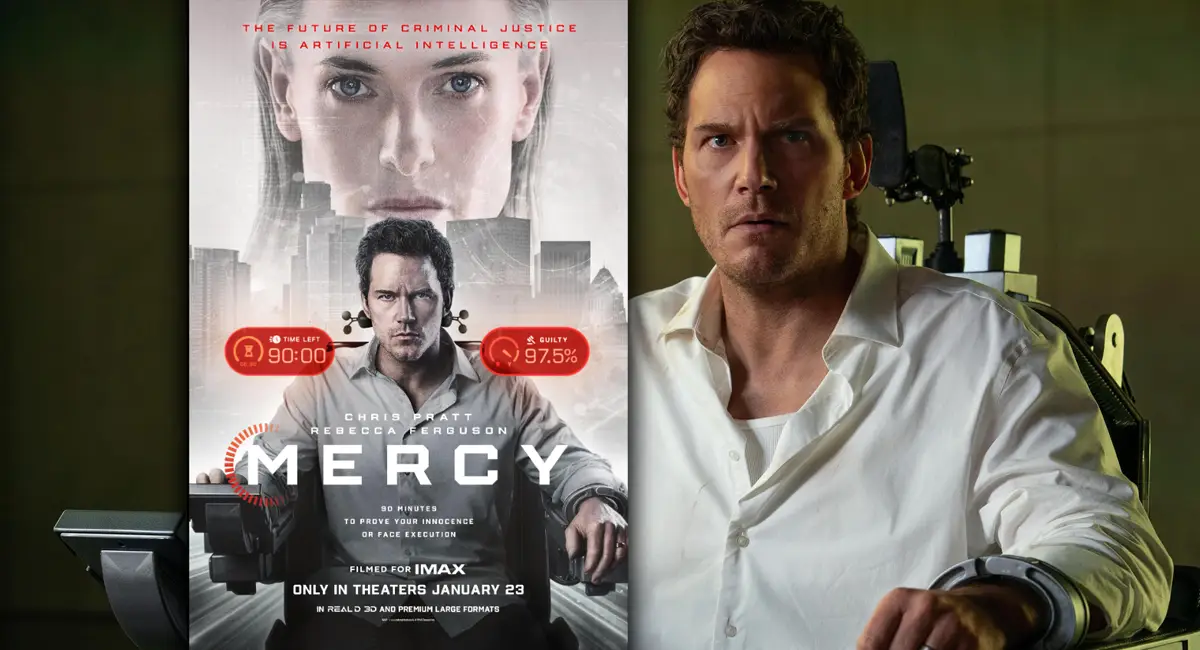
Synopsis: Set in the near future, a detective accused of murdering his wife has 90 minutes to prove his innocence to an advanced AI judge.
Director: Marco van Belle
Stars: Chris Pratt, Rebecca Ferguson, Kali Reis, Annabelle Wallis, Chris Sullivan


Mercy begins with a sense of confidence that suggests it knows exactly what kind of movie it wants to be. Set in a near-future world shaped by surveillance, moral compromise, and institutional control, the film opens with urgency and focus, pulling the viewer into a tense, morally charged situation. For much of its runtime, Mercy works as a sleek, efficient thriller that raises compelling questions about justice, power, and who gets to decide what “mercy” really means.

Chris Pratt anchors the film as a man caught between personal loyalty and a system that demands obedience. It’s fair to say Pratt has never quite been a natural fit for heavy dramatic roles. His strengths have always leaned toward charisma, humour, and physical presence rather than emotional depth. But Mercy feels like a smart project choice for him, one that plays to his limitations rather than fighting them.

The character doesn’t require grand monologues or complex psychological unravelling. Instead, Pratt is asked to project restraint, weariness, and quiet conflict, and he largely delivers. His performance isn’t revelatory, but it’s solid and believable, grounding the film when it needs a steady centre.

The first two acts are where Mercy shines. The pacing is tight, the world-building is clear without being overwhelming, and the stakes feel personal as well as systemic. The film does a good job of establishing its rules and moral framework, allowing the tension to build naturally. Supporting performances help elevate the material, adding texture and urgency to a story that could have easily drifted into generic sci-fi territory. There’s a sense, early on, that the film is building toward something sharp and unsettling.

Unfortunately, Mercy begins to lose its grip in the third act. What starts as a thoughtful, character-driven thriller gradually shifts into more conventional territory, relying on familiar twists and emotional shortcuts. The final act feels rushed and oddly safe, resolving conflicts in ways that undercut the moral complexity the film worked so hard to establish. Moments that should land with emotional weight instead feel underdeveloped, as if the film is more eager to wrap things up than to fully reckon with its ideas.

This drop-off doesn’t ruin Mercy, but it does limit its impact. The film never fully capitalizes on the strong foundation it lays early on, and the ending lacks the punch needed to make the story truly linger. Still, there’s enough here to recommend it, particularly as an example of Chris Pratt being used effectively rather than miscast.

Mercy may falter in its final stretch, but it remains a competent, often engaging thriller that shows how the right material can bring out the best in an actor—even if that actor isn’t a natural dramatic lead.

Grade: C+


Watch the movie trailer: