• By: Allen Brown

Sport Fandom in North America: How We Watch, Bet and Connect

Sports fandom comes in many forms.

Some fans build their weekend around kickoff. Some only tune in for the biggest games. Some wear the same lucky jersey every game day. Others spend more time in the group chat than watching the action itself.

Across North America, fandom has become bigger than simply watching a game. It is a schedule, a superstition, a social life, a spending habit and, increasingly, a second-screen experience. It sends people to the arena, to the sportsbook, to the couch, and into online communities where every play is debated in real time.

From lucky rituals and workplace absences to regional rivalries and digital communities, modern fandom shows up in surprising ways. We looked at public surveys, labour reports, sports participation data and fan research across Canada and the U.S. to find out what today’s sports fans really look like.

Key findings

• Super Bowl Monday is basically an unofficial holiday. In 2026, 26.2 million U.S. employees were expected to miss work after the Super Bowl. [UKG]
• Canadian workers know the sports flu is real, too. More than one-third of Canadian professionals said they knew someone who had skipped work after a major sporting event. [Robert Half]
• The lucky jersey still has a job to do. More than one in five American sports fans say they have a pre-game ritual, and nearly a third believe that ritual can help their team or player win. [Talker Research]
• Canada’s sports identity is still hockey-heavy. A national survey found the NHL is Canada’s most-followed pro league, ahead of the NFL, MLB, CFL and NBA. [CBC]
• But what Canadians watch and what they play are not always the same. Among Canadian adults who participated in sport, swimming, cycling and running ranked among the most common activities. [Statistics Canada]
• Women’s sports are no longer a niche interest. An estimated 17 million Canadians aged 13 to 65 consider themselves fans of women’s sport. [Canadian Women & Sport]
• Betting fandom is not just a football story.S. fan research found sports betting penetration was highest among MMA, eSports and motorsport fans, even though the NFL had the most bettors overall. [SBRnet]

The office “flu” has a game-day pattern

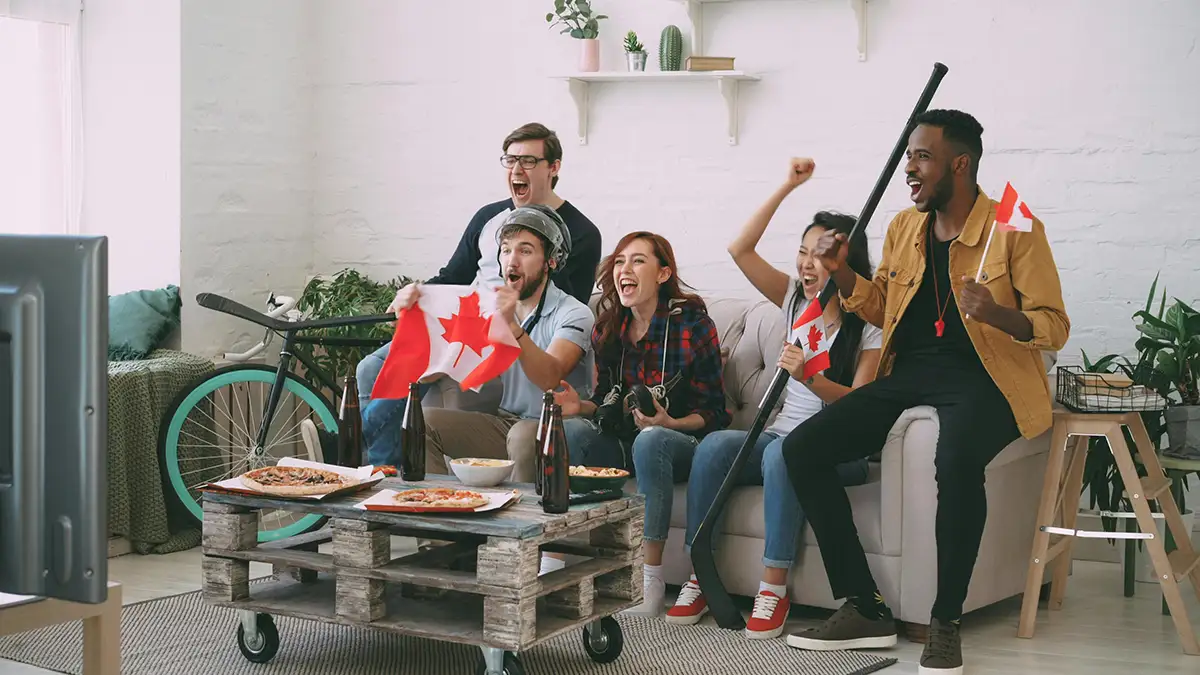
Every major sporting event creates its own weather system. The group chats start early. The snacks get planned. The jersey comes out. And for some fans, Monday’s work calendar starts looking negotiable.

The Super Bowl remains the biggest example. In 2026, an estimated 26.2 million U.S. employees were expected to miss work after the game, including people taking approved time off, swapping shifts, calling in sick without being ill, or simply arriving late. [UKG]

It was not a one-year blip. The same research estimated 22.6 million U.S. employees planned to miss work after the Super Bowl in 2025, up from 16.1 million in 2024 and above the previous record of 18.8 million in 2023. [UKG]

The sports calendar does not stop there. The 2026 FIFA World Cup is expected to put even more pressure on workdays, with matches spread across June and July and many games landing during business hours in North America. One workforce survey found the tournament could affect attendance for 36 million U.S. employees. [UKG]

The sports most likely to empty the office

Event Why it matters
Super Bowl Monday An estimated 26.2 million U.S. employees were expected to miss work after the 2026 Super Bowl.
FIFA World Cup 2026 Workforce surveys estimated the tournament would affect attendance for 36 million U.S. employees, making it one of the year’s biggest workplace-disrupting sporting events.
March Madness Workforce surveys estimated the tournament would affect attendance for 18 million U.S. employees, driven by daytime games and widespread engagement with tournament pools.
NHL, NBA and MLB playoff runs Late-night playoff games can turn local fanbases into sleep-deprived workforces, especially when teams make deep postseason runs.
Major international tournaments Events like the Olympics, World Baseball Classic and Ryder Cup often overlap with work hours and attract global audiences.


In Canada, the pattern is familiar. A Robert Half survey found 37% of Canadian professionals knew someone who had called in sick or made an excuse to skip work after a major sporting event. [Robert Half]

Apparently, “I’m not feeling well” sometimes translates to “my team went to overtime.”

The lucky jersey is not just laundry avoidance

Every fan knows the rules.

Do not wash the lucky shirt during a win streak.
Do not change seats in the third period.
Do not say “shutout” before the final whistle.
Do not text the friend who always jinxes the lead.

It sounds irrational. It also sounds very normal.

A survey of American sports fans found 22% have a pre-game ritual. Among hardcore fans, that rises to 32%. Even better: 31% believe their ritual actually improves their team or player’s chances of winning. [Talker Research]

The most common rituals are classic fan behaviour: wearing team gear, hosting a cookout or tailgate, chanting, dancing, praying, lighting candles and, in some cases, body painting. [Talker Research]

Researchers have found that fan rituals can be more than superstition. A recent study of Brazilian football fans found a pre-game ritual created intense emotional synchrony among supporters—in some cases, even more than moments of the match itself. While fans may debate whether lucky jerseys or game-day routines affect the outcome, the research suggests these traditions help create the sense of belonging and collective energy that make sports fandom unique. [PNAS]

Canada watches hockey. Canada plays almost everything.

Ask Canadians what sport defines the country, and hockey still has a strong case.

A national survey found 77% of Canadians describe themselves as sports fans, with 29% identifying as big fans. The NHL was the most-followed professional league in the country, followed by the NFL, MLB, CFL and NBA. [CBC]

But participation tells a wider story.

Among Canadians aged 15 and older who participated in sport, Statistics Canada found swimming, cycling and running among the most common activities. Soccer, basketball and tennis were especially common among immigrant participants, while Canadian-born participants were more likely to report winter sports such as hockey, ice skating, skiing and snowboarding. [Statistics Canada]

For younger Canadians, the picture is even more soccer-forward. Among Canadian sport participants aged 5 to 17, soccer ranked first, followed by basketball and hockey or ringette. [CFLRI]

So Canada’s sports personality has two sides: the sports it loves to watch, and the sports people actually play.

Hockey may still own the national mythology. But the weekend schedule is much more crowded.

Women’s sports have moved from side plot to main storyline

Women’s sports fandom is no longer waiting for permission to become mainstream.

Canadian Women & Sport estimates that 67% of Canadians aged 13 to 65—more than 17 million people—consider themselves fans of women’s sport. Of that group, roughly 10 million are considered avid fans. [Canadian Women & Sport]

The growth is showing up in the numbers, too. During its third regular season, the Professional Women’s Hockey League (PWHL) welcomed more than 1 million fans to games for the first time, while average attendance increased 52% year over year and total attendance rose 52.5% to more than 737,000 fans. The league also recorded a 32% increase in U.S. viewership and a 78% increase in Canadian viewership compared to its inaugural season. [PWHL]

The commercial case is getting louder, too. The Canadian Women & Sport research found many fans want brands to do more to support women’s sport, and a significant share say they are more likely to purchase from brands that support women’s sport. [Canadian Women & Sport]

This is not just a values story. It is a fandom story.

Women’s leagues and athletes are building fanbases in a different media environment than legacy men’s leagues did. Instead of relying only on traditional broadcast habits, fans are finding highlights, athletes, behind-the-scenes moments and communities through social media, streaming and short-form video.

That makes women’s sports one of the clearest examples of where modern fandom is heading: less passive, more digital, more personality-driven.

The U.S. is football country, with local accents

In the U.S., football still sets the tone. A state-by-state analysis from World Population Review found football was the most popular sport in 31 states, though the source combines several types of data and should be read as a directional snapshot rather than a single standardized ranking. [World Population Review]

The regional quirks are where things get interesting.

College football carries huge cultural weight across the South and Midwest. Basketball has deep roots in places like Indiana and Kentucky. Hockey punches above its weight in colder northern states and markets with strong NHL traditions. Baseball still has a strong live-attendance culture. Soccer continues to grow through MLS, international competitions and younger fans.

That is the real sports map: not one national fanbase, but dozens of local identities.

Where you live can shape what you watch, what you wear and what you bet on.

The second screen is now part of the seat

The modern fan rarely just watches.

They check live stats. They post reactions. They argue in the group chat. They track fantasy scores. They watch highlights before the game is even over. They follow athletes directly. They scroll memes after a loss because pain is apparently better when shared.

Sports fandom has moved from the couch to the feed.

SBRnet’s 2026 Sports Fandom & Sports Market Intelligence Report describes modern fan engagement as much broader than attendance and viewership. Streaming, social media, sports betting, licensed merchandise, fantasy sports, sports travel, sponsorship influence and philanthropy are all part of the modern fan economy. [SBRnet]

Research suggests social media has transformed sports fandom by giving fans new ways to express their identity, engage with teams and connect with fellow supporters regardless of location. [Routledge Handbook of Sports Fans and Fandom]

That has changed what it means to “follow” a team. A fan might never attend a game in person and still be deeply engaged. They might watch condensed highlights, follow players on TikTok, track odds, buy merch and argue online every week.

The game is still the centre. It is just no longer the whole experience.

Betting has its own fan personality

Sports betting has become one more layer of fandom—especially where it is legal and regulated.

In Ontario’s regulated igaming market, total wagers reached $82.7 billion in 2024-25, with total gaming revenue of $2.9 billion. Casino products remained the largest category, while betting generated $654 million in revenue. [iGaming Ontario]

In U.S. fan research, SBRnet found that one in five sports fans now gamble on sports. But the highest betting penetration was not in the biggest traditional leagues. MMA, eSports, minor league baseball, golf, Formula 1 and IndyCar all ranked above the NFL by fanbase betting penetration. [SBRnet]

That makes the betting fan more complicated than the stereotype.

Football still has the biggest audience. But action sports, motorsport and emerging fan communities may have a higher concentration of fans who treat odds, props and predictions as part of the viewing experience.

For many fans, betting is not replacing fandom. It is adding another reason to care about the next play.

The modern fan personality types

Based on the data, North America’s sports fans are not one audience. They are a collection of very specific personalities.

The Sick-Day Scheduler

Already knows which major games land on a work night. Has considered booking Monday off before the season even starts. Claims to be “not feeling great” with suspicious timing.

The Lucky-Jersey Loyalist

Wears the same shirt during every win streak. Believes in seat placement, snack consistency and emotional discipline. Knows superstition is irrational. Does it anyway.

The Second-Screen Scout

Watches the game, checks the stats, reads the thread, tracks the odds and sends four memes before halftime. Has not watched a single-screen game in years.

The Regional Ride-or-Die

Their team is not a preference. It is a family inheritance. May not remember choosing the team at all.

The Growth-Sport Early Adopter

Found Formula 1 through streaming. Found women’s basketball through highlight clips. Found soccer through international tournaments. Is already telling everyone they were there before the bandwagon.

The Social Bettor

Does not just watch the game. Watches the spread, the player props, the live odds and the group chat reactions. May care deeply about a random fourth-quarter field goal.

The Big-Game Only Fan

Does not follow the season closely, but will absolutely attend the party, ask who is favoured, eat the best snacks and have a strong opinion by halftime.

So, what does fandom say about us?

Sports fandom is an emotional infrastructure.

It gives people a reason to gather, a reason to travel, a reason to yell at a television, a reason to wear something ridiculous, and sometimes, a reason to take Monday off.

It is part identity, part entertainment, part ritual and part community. It is irrational in all the ways that make it fun.

And whether your version of fandom is a lucky jersey, a playoff beard, a group chat, a fantasy roster, a tailgate, a bet slip or a “doctor’s appointment” after the Super Bowl, the point is the same:

For many North Americans, sport is not just something they watch.

It is something they become.

Methodology

This analysis draws on publicly available research, surveys, industry reports and government data from Canada and the United States. Sources include UKG, Robert Half, Statistics Canada, Canadian Women & Sport, the Professional Women’s Hockey League (PWHL), CFLRI, iGaming Ontario, SBRnet, World Population Review and peer-reviewed academic research.

Because the findings come from multiple sources with different methodologies, sample sizes and timeframes, they should be viewed as a snapshot of modern sports fandom rather than the results of a single survey.

Research author

Jackpot City Casino, a licensed operator, offers a wide range of interactive digital casino games designed for adult players seeking online entertainment. They enhance users’ experience and promote responsible gaming through education.

Photo: Pexels