
Taxed to Death and Grounded by Incompetence: The Carney Liberal Government Is Failing Canadian Air Travellers
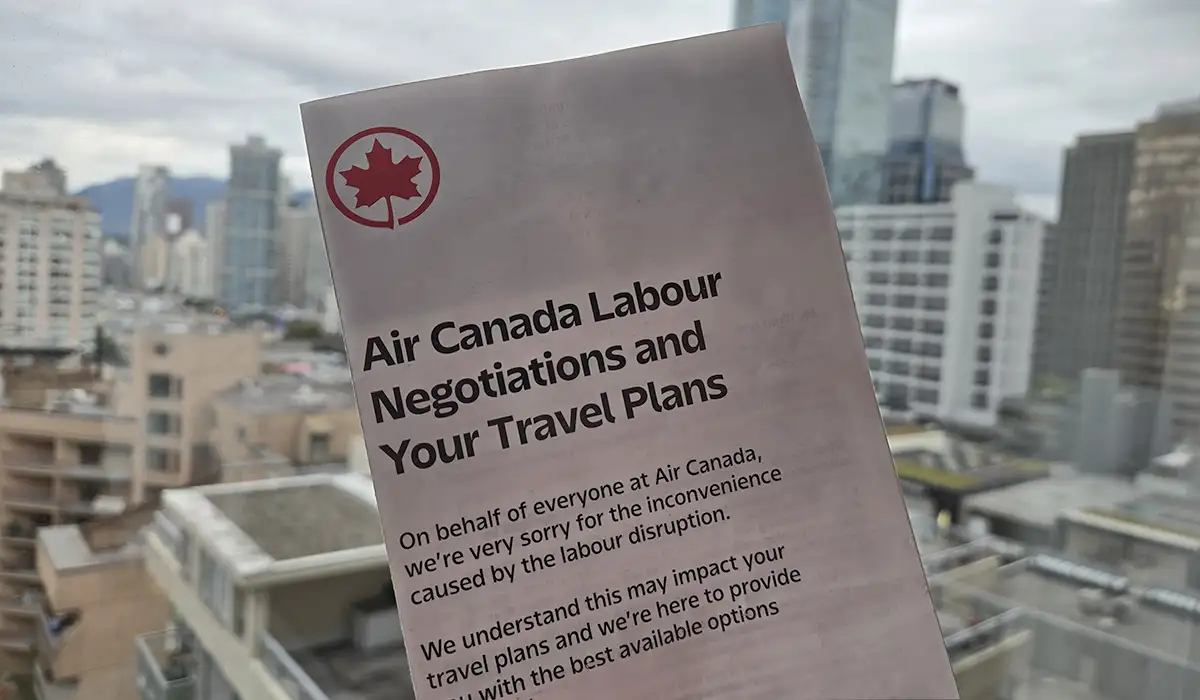
The Liberal government’s handling of the Air Canada flight attendants’ strike is a masterclass in incompetence, conflict of interest, and tone-deaf policymaking. Minister of Jobs and Families Patty Hajdu invoked Section 107 of the Canada Labour Code to shut down the strike and force binding arbitration. But the arbitration is being overseen by Maryse Tremblay, Chair of the Canada Industrial Relations Board (CIRB)—appointed just three months ago after years as legal counsel for Air Canada.
CUPE, representing the striking workers, immediately requested Tremblay’s recusal. She refused. That refusal alone should disqualify her from ruling on a case involving her former employer. Yet Hajdu, either unaware or unwilling to acknowledge the obvious conflict, allowed the process to proceed. This isn’t just bad optics—it’s a breach of public trust. Canadians deserve a labour board that’s impartial, not one that looks like an extension of corporate management.
But the deeper issue isn’t just the mishandling of a strike. It’s the stranglehold that Canada’s airline monopoly has on passengers. Air Canada continues to dominate domestic routes, charging outrageous fares while underpaying frontline staff. The CEO walked away with $12 million last year in salary and bonuses—rubber-stamped by the board—while flight attendants fight for fair wages and basic respect. No integrity. No leadership. Just greed.
The solution? Open Canada’s domestic air routes to foreign competition. According to the Competition Bureau, introducing a new competitor on a route can lower fares by an average of 9 percent. That’s real relief for Canadians who rely on air travel for work, family, and life across this vast country.
And it’s not just about competition. The Montreal Economic Institute (MEI) points out that Ottawa itself is a major driver of high airfares. Taxes and government-imposed fees can account for up to 43 percent of the cost of a flight. On a $190 round-trip between Montreal and Toronto, $68 goes straight to the government. That includes the Air Travelers Security Charge, which is more than double what Americans pay for similar security fees.
In 2024 alone, airport authorities paid $494.8 million in rent to the federal government—up 68 percent from a decade ago. These costs are passed on to passengers through Airport Improvement Fees, which are supposed to fund infrastructure, not federal coffers. In Vancouver, nearly one-third of those fees go toward rent payments to Ottawa.
As MEI’s Samantha Dagres puts it:
“Reducing the cost of air travel is entirely within Ottawa’s control, because it is Ottawa that has driven prices up in the first place.”
Instead of treating airports as critical infrastructure, the government treats them like cash cows. Canadians are being taxed to death—not just on income, housing, and groceries—but even on the right to move around their own country.
It’s time for a complete overhaul of Canada’s airline policy. That means:
• Opening domestic routes to foreign carriers
• Slashing federal taxes and fees on air travel
• Treating airports as public infrastructure, not revenue streams
• Ensuring regulatory bodies like the CIRB are free from corporate entanglements
Until then, Canadians will continue to pay more, get less, and watch their government protect monopolies instead of people.
Photo: OLM Staff