• By: Dan Donovan

The Beaverbrook’s Fall From Grace: When a Great Gallery Forgets What Greatness Requires

A gallery that built its reputation on substance just traded it for a headline

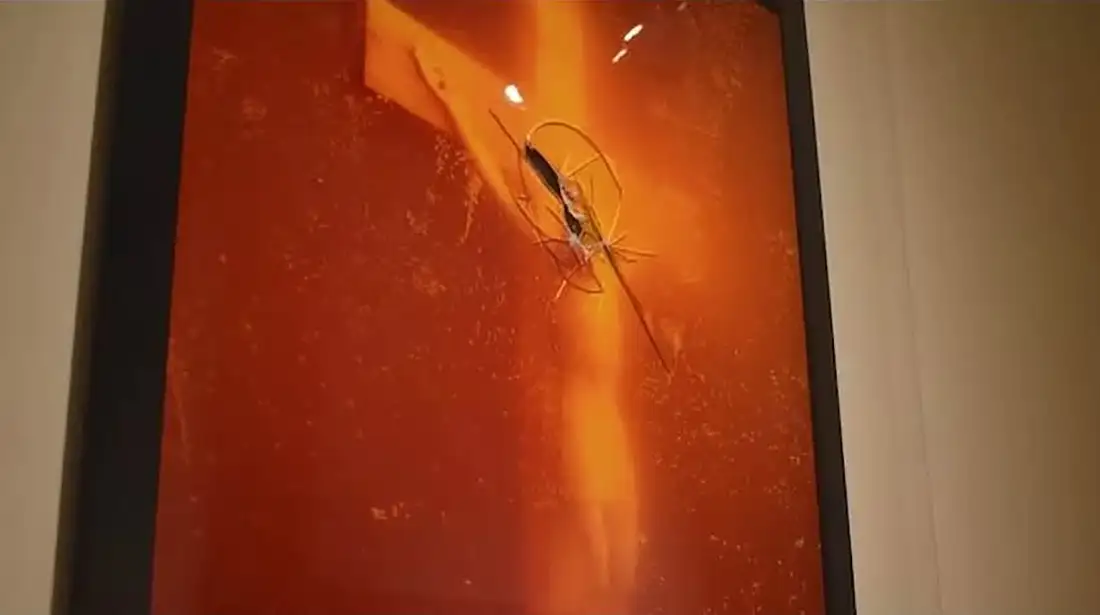
The Beaverbrook Art Gallery is one of Canada’s cultural treasures. It has earned that status through decades of thoughtful curation, community engagement, and a collection that rivals institutions ten times its size. Which is why its decision to display a photograph of a crucifix submerged in urine feels less like a bold artistic gesture and more like watching a great gallery momentarily forget that credibility is harder to build than to squander. The shock is not in the artwork. The shock is in the unmistakable sound of standards hitting the floor.

The gallery’s leadership insists that this exhibition is about sparking dialogue. Dialogue is indeed essential to the mission of any museum, but dialogue requires ideas rather than bodily fluids.

When an institution with Beaverbrook’s heritage decides to resurrect a long-expired controversy and present it as cultural daring, the issue is not the public’s capacity for interpretation. The issue is that the gallery’s leadership has wandered into reckless territory, where the obligations of stewardship have been replaced by a kind of curatorial vanity project. What should have been a moment of sober judgment has instead become an exercise in self-indulgence, the sort of decision made by people more interested in appearing provocative than in protecting the integrity of a cultural treasure.

This is not a transgression. It is the unmistakable sign of a board and management team who have confused their duty to the institution with the impulse to manufacture a controversial headline and hope no one notices the vapid thinking behind it. To be charitable, one might assume the executive team and curators were under the influence of New Brunswick’s booming cannabis industry when they approved this fiasco. Perhaps they were sampling a strain like Fundy Fog Indica, whose fictional tagline is Low Tide for Your Brain, or Beaverbrook Blazer, best enjoyed When the Art Looks Better After Two Hits. Judging by the decision to move forward with this particular affront, one suspects the curator had polished off a generous supply of Beaverbrook Blazer before pitching this wingnut idea. And there can be little doubt that the Chair of the Board, who is ultimately responsible for the museum’s direction, must be fond of NB Power Punch, a strain whose fictional tagline, High Voltage, Low Accountability, now feels overly generous. After this charade, No Accountability would be the more accurate label.

The artist, Andres Serrano, insists that his nearly 40-year-old photograph is a celebration of Christianity. The assertion has the depth of a wading pool and the creative spark of someone entering data on a spreadsheet. To describe a crucifix floating in urine as an act of devotion is not interpretation but self-parody, the kind of defence that collapses under the weight of its own pretension. It is the oldest manoeuvre in the contemporary art playbook, where a tasteless stunt is hastily married to a press release and declared profound. The intended audience is always the same. It consists of those suffering from a particularly stubborn strain of cognitive dissonance who inhabit small, self-referential circles where confidence is routinely mistaken for insight and where even the thinnest and most laughable justification can be elevated to the status of profundity. It is a world where the explanation matters less than the performance of explaining, and where the only real requirement is the hope that no one in the room is brave enough to say what everyone can see.

Ironically, the Beaverbrook, which receives significant taxpayer funding, would never contemplate displaying the Prophet Mohammed submerged in urine, nor would it dare to desecrate sacred Indigenous items such as a wampum belt or a ceremonial pipe in this manner. This is not speculation. It is an unspoken but universally understood fact. The gallery understands it. The Board understands it. The public understands it. And the reason is unmistakable. They grasp the gravity, the history, and the cultural weight of those symbols. They grasp the consequences. They grasp the respect owed. The only place where this understanding seems to falter is in the minds of those who approved this exhibition.

Yet somehow, when it comes to Christianity, that respect evaporates. Suddenly, the same institutions that tiptoe around every other faith tradition feel perfectly entitled to exhibit a work that mocks and degrades the central figure of the Christian faith. What exactly is inclusive about that? What is tolerant about that? What definition of diversity requires Christians alone to swallow humiliation in the name of dialogue?

This decision exposes itself for what it is. It is not courage, and it is not commentary. It is a targeted act of disrespect wrapped in ignorance. The issue is not fragility. The issue is integrity. The gallery’s leadership has mistaken shock for substance, disrespect for dialogue, and controversy for competence. If the Beaverbrook truly wished to explore contemporary religious art, it could have commissioned works that engage faith with depth, complexity, and reverence. It could have sought artists who challenge without desecrating, provoke without degrading, and illuminate without humiliating. Instead, it chose the artistic equivalent of a dare.

This failure is not merely aesthetic. It is a failure of stewardship. The Beaverbrook’s Board and CEO are custodians of a legacy built by people who believed art was a civilizing force rather than a cheap stunt. To call this exhibition dialogue is to confess that you are obtuse. To call it relevant is to admit one has lost the ability to distinguish between provocation and profundity. To call it art is to reveal a curatorial compass spinning wildly in search of meaning. This is not leadership. It is nostalgia for transgression, the museum world equivalent of a man buying a sports car at sixty to reassure himself he is still edgy.

The Beaverbrook has not sparked a conversation. It has sparked a yawn, interrupted only by the justified outrage of those who still believe sacred symbols deserve respect. This exhibition does not elevate the gallery. It diminishes it. It does not challenge the public. It insults them. And it does not honour art. It betrays it.

If the Beaverbrook wishes to reclaim its integrity, it must remove the piece, apologize, and explain how such a lapse in judgment ever cleared a boardroom table. The founders of the gallery built an institution grounded in seriousness, discernment, and cultural ambition. Their successors have allowed it to drift into gimmickry, self-indulgence, and the hollow theatrics of shock for the sake of attention.

The Beaverbrook is a great institution. It deserves leadership that remembers that truth and leadership that behaves accordingly.


Header image: The photograph Piss Christ from the Immersions series (1987–1990) by American artist Andres Serrano shows a crucifix submerged in the artist’s own urine. The piece carries visible marks of vandalism, including hammer damage from 1997 and axe damage from 2011.