Recommended Articles

Truck nuts.

The Age of Consent: Time for #MeToo to shift to the #IRegret movement

Charisma has failed us — and winter is coming
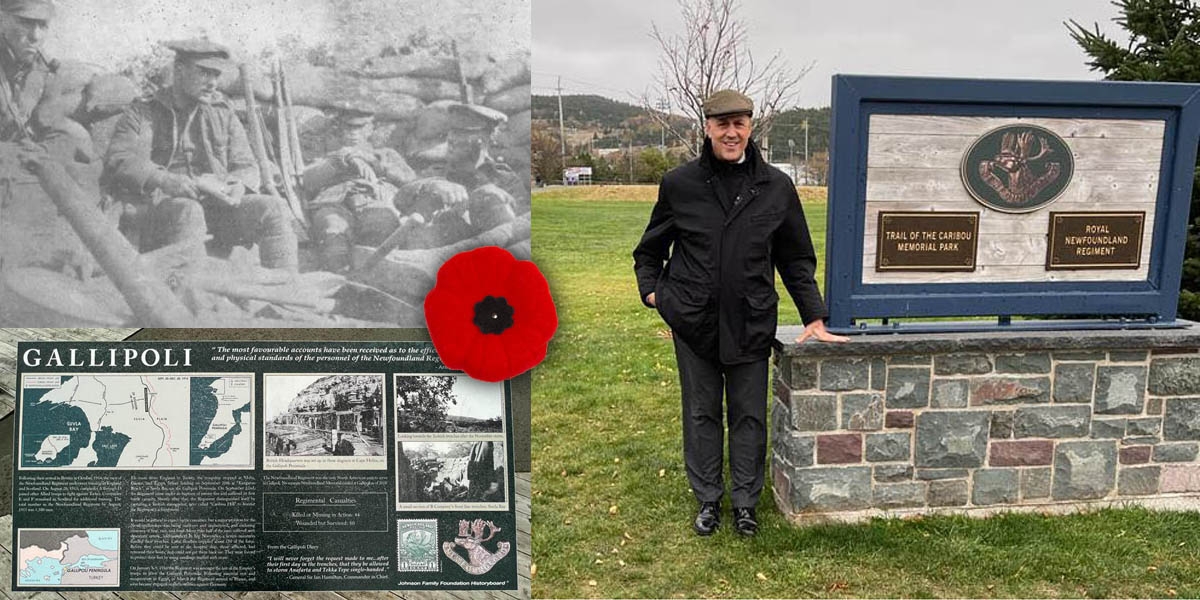


Conservative MP Jamil Jivani’s recent trip to Washington should have been exactly the kind of moment Prime Minister Mark Carney has been calling for—a demonstration that Canada’s political parties can work together to strengthen our most important bilateral relationship. Instead, it became a revealing example of how quickly the government’s stated commitment to a “Team Canada” approach evaporates when cooperation comes from the wrong side of the aisle.
Jivani is not a partisan bomb‑thrower. He is, by any reasonable measure, one of the most thoughtful and credible MPs in the House of Commons—bright, intellectually serious, and grounded in a genuine desire to strengthen Canada’s place in the world. His long‑standing friendship with U.S. Vice President JD Vance is not a political convenience. The two met as students at Yale Law School, where they were part of the same small academic community and stayed close after graduating. It’s the kind of personal connection that can matter in Washington, where trust built long before politics often carries more weight than formal introductions arranged later.
So when Jivani indicated he would travel to Washington to meet with Vance and other senior officials, he did so with a constructive purpose: to explore whether his personal connections could help reinforce the Canada–U.S. relationship at a moment when it faces real uncertainty. He reached out to the Carney government beforehand, offering to coordinate, share information, and ensure that Canada’s interests were front and centre.
This should have been welcomed. It should have been encouraged. It should have been supported.
Instead, the government reacted with defensiveness. Several senior Liberals publicly dismissed the trip as inappropriate or unhelpful. The Prime Minister remarked that “Canada’s foreign policy is conducted by the Government of Canada, not by opposition MPs,” a line that may satisfy partisan instincts but does little to advance the national interest. Other ministers suggested Jivani was “freelancing,” as though the mere act of engaging with American counterparts was somehow disloyal.
This was not only unnecessary, it was a strategic miscalculation.
Prime Minister Carney has repeatedly challenged Pierre Poilievre and the Conservatives to work with him on issues of national importance. He has invoked the “Team Canada” concept on everything from trade to security to climate cooperation. Yet when a Conservative MP offered precisely that kind of cooperation—rooted in personal relationships that no government can manufacture—the response was to push him away.
That is not a Team Canada approach. It is a missed opportunity.
The Canada–U.S. relationship is too important, too complex, and too economically consequential to be managed through partisan filters. Business leaders understand this. Diplomats understand this. And even U.S. Ambassador Pete Hoekstra has underscored this in his own public remarks. In his Senate confirmation hearing, in his introductory comments upon arriving in Ottawa, and in subsequent U.S. Embassy statements, Hoekstra has emphasized that the Canada–U.S. partnership is one of America’s most important relationships — and that it depends on steady communication, open channels, and constructive engagement regardless of political cycles in either country.
Jivani’s trip aligned perfectly with that philosophy. It was an attempt to broaden—not bypass—the channels through which Canada engages the United States. In any other G7 country, a government would welcome such an initiative, recognizing that informal networks often complement formal diplomacy. Instead, the Carney government treated it as a threat.
This reaction raises legitimate questions about judgment. If the government cannot recognize the value of a direct personal connection to the U.S. Vice President—one forged years before politics entered the picture—what does that say about its ability to manage the broader relationship? If it cannot put aside partisan reflexes long enough to support an MP acting in good faith, what does that say about its commitment to the national interest?
The business community has long warned that Canada’s influence in Washington is not something to take for granted. Trade disputes, regulatory tensions, and shifting political dynamics in the U.S. all require Canada to be nimble, creative, and united. That unity cannot be achieved if the government treats every Conservative initiative as a political provocation rather than a potential contribution.
Jamil Jivani did what responsible leaders do: he used the relationships he has to advance the interests of the country he serves. He deserved support, not suspicion. And Canadians deserved a government confident enough to recognize that diplomacy is not a partisan monopoly.
Prime Minister Carney missed an opportunity—not just to strengthen the Canada–U.S. relationship, but to demonstrate that his call for a Team Canada approach is more than a talking point. If he truly wants cooperation, he must be willing to accept it when it is offered.
The country is watching. And so is Washington.