• By: Allen Brown

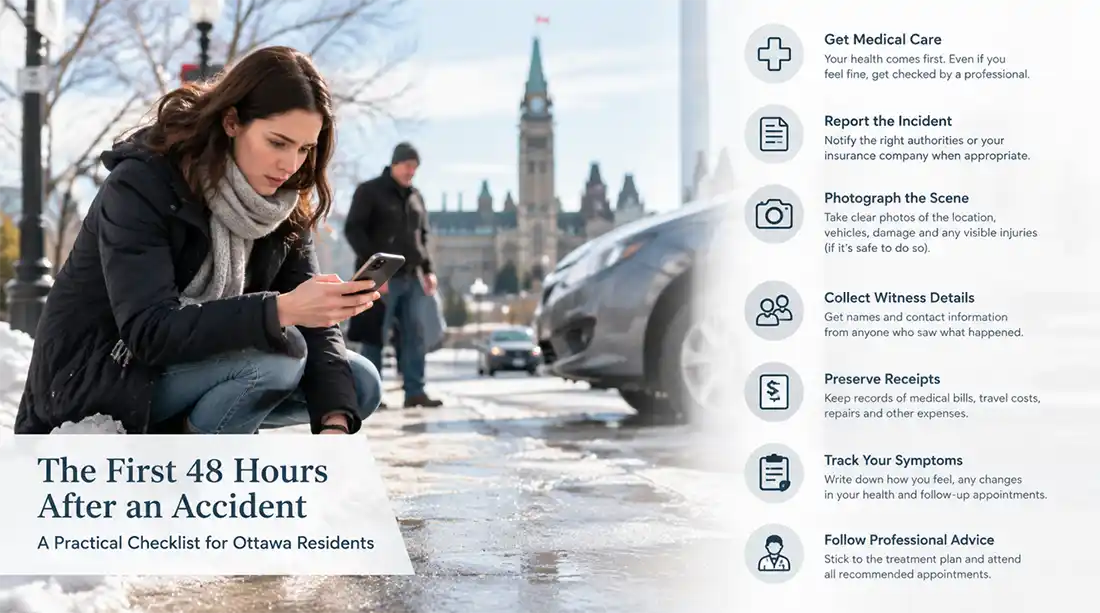
The First 48 Hours After an Accident: A Practical Checklist for Ottawa Residents

An unexpected accident can be very unsettling and overwhelming. No matter whether it was a car crash, slipping on ice while walking on an Ottawa sidewalk, or getting hurt on private property, having knowledge of the appropriate steps can help make dealing with this stressful experience less difficult.

This checklist explains what to prioritize, what information to keep and where to find reliable guidance. Every situation is different, so these steps are general information rather than a substitute for professional medical, police, insurance or legal advice.

Step 1: Prioritize Your Safety and Medical Needs

Your health and wellbeing must always be placed above all else. In the event you believe someone has been seriously injured or needs urgent medical treatment, contact emergency services by calling 911 right away.

If you were involved in a collision, don’t move anyone who has a potential serious injury unless it is absolutely necessary to avoid harm or until emergency workers direct you otherwise. Even if you don’t initially think you have been injured, get yourself checked out by a medical professional quickly as many symptoms may develop hours after the incident.

In the first few hours:

• Follow the direction given by emergency response staff and medical personnel
• Seek further medical advice if your symptoms become worse or develop over time
• Do not engage in anything which would interfere with your ability to recover
• Keep copies of your medical provider’s orders, prescription(s) and referral(s)

Step 2: Report the Accident to the Appropriate Authority

The process of reporting will rely upon both location and type of injury sustained during the Accident.

Motor Vehicle Collisions in Ottawa

The Ottawa police department indicates that all motor vehicle accidents resulting in either personal injury, combined damages exceeding $5,000 or damage to private, city, or provincial highways must be reported as quickly as possible.

To report an mva, call 911 immediately in case of an emergency or if someone is seriously hurt or possibly involved in some form of criminal conduct. In addition, the city of Ottawa maintains three designated collision reporting centers. Before arriving at one of these centers, please confirm your eligibility to file under their procedure.

Collision reporting center locations:

• 474 Elgin St., Ottawa
• 211 Huntmar Rd., Kanata
• 3343 St Joseph Blvd. Orleans

Slips, Falls and PropertyRelated Accidents

If you’ve suffered an injury while on private property, please inform the property owner/manager or other authorized agent as soon as it’s practical.

Should you identify a potential hazard on a city of Ottawa sidewalk or municipal roadway, please report this issue to 311. When reporting a hazard ask for a reference number or documentation confirming receipt of your complaint. Note that documenting a hazard does not automatically establish liability; the specific circumstances and relevant laws will dictate if there is any potential liability established.

Step 3: Document What Happened While Details Are Fresh

Once everyone is safe and immediate medical needs have been addressed, record what happened.

Take Photos When It’s Safe

Depending on the scenario, it’s a good idea to take pictures of:

• Vehicle damage, road conditions and traffic signs.
• Wet floors, uneven pavement, ice or other hazards.
• Lighting, weather conditions and the surrounding area.
• Injuries that are apparent.

Avoid entering traffic, approaching an unsafe area or interfering with emergency responders to gather evidence.

Write Down Important Details

It’s a good idea to write down the date, approximate time, location and a brief summary of what occurred.

For example, if you slipped outside a store during an Ottawa snowstorm, it’s a good idea to note the entrance to the establishment and the conditions of the floor or pavement, along with whether there were signs warning of the danger.

Stick to what you know and avoid putting yourself in a position to determine the cause or assign fault.

Step 4: Collect Witness and Contact Information

If there are witnesses, be sure to get their contact information and summary of what they saw, if they’re willing to share. If it’s a car accident, be sure to exchange driver, vehicle and insurance information. If it’s a property related incident, be sure to note who you reported the issue to.

Try to keep any conversation factual and avoid getting into a debate about who is at fault. Try to keep any incident reports and confirmations in writing.

Step 5: Keep Track of Symptoms and Medical Appointments

During the 24-48 hour period following the incident, keep track of how you’re feeling and any medical advice you receive.

• Development of symptoms and whether these change over time.
• Medical appointments, treatment and recommendations.
• Prescriptions, referrals or followup instructions.
• Impairment of work or daily function.

Remember to keep accurate notes without embellishment or assumptions of injury.

Step 6: Save Receipts and Records of Expenses

An injury could potentially create unexpected expenses, even if the initial incident seems minor. Keeping receipts for transportation to medical appointments, prescriptions, treatment and any other expenses for services or products related to the incident can be useful. If you miss work or need to make changes to your regular routine for the incident, you should keep track of these changes as well.

However, just because you save the receipts doesn’t mean everything will be covered. Insurance, eligibility and potential reimbursement will depend on the specific circumstances and regulations.

Step 7: Understand Your Insurance and Legal Options

Once your immediate needs are addressed, you may wish to consider whether you should contact an insurance provider or require further guidance.

For motor vehicle collisions, Ontario’s Insurance Act may contain notification requirements for reportable collisions or intended insurance claims which generally require that written notice be provided to the insurer within seven days of the incident subject to various exceptions.

Other incidents also contain short legal notice periods, for example, Ontario’s Municipal Act, 2001 contains a 10day written notice requirement for certain municipal road or sidewalk injury claims subject to various exceptions.

If you are unsure if you have any rights, reporting deadlines or available options, you may wish to consider speaking with a qualified professional.

For Ottawa residents seeking more information about personal injury matters, local Injury Lawyers can explain potential options and provide guidance specific to their circumstances.

Your First 48 Hours After an Accident: Quick Checklist

Use this checklist as a reminder of what to prioritize. The order and timing will depend on your circumstances.

Accident checklist

☐ Prioritize safety and call 911 for emergencies.

☐ Seek medical attention and follow professional advice.

☐ Report the accident to the appropriate authority.

☐ Document the scene and collect witness details when safe.

☐ Keep medical records, receipts and relevant correspondence.

☐ Follow up with your insurer or a qualified professional if needed.

Take Things One Step at a Time

Whatever the case may be, don’t try to do everything at once. You should think about your safety and medical needs first. From there, you can take whatever steps you feel are necessary in order to obtain the best possible results after an accident.