The Shenzhen Summit: Think of it as Apalachin 2.0, not Yalta 2.0

On November 14, 1957, in the hamlet of Apalachin, NY, a few miles west of Binghamton, a momentous meeting convened at the elaborate home of Joseph (Joe the Barber) Barbara at 625 McFall Road. The key bosses of most of the established mafia families in the United States, along with a selection of their subordinates, gathered to try to work out some boundaries and turf-sharing arrangements that would reduce friction at the boundaries of their territories and end the occasional murderous bit of warfare that would erupt between/among crime families, so that they all could get on with amassing great wealth from crime, mostly in the US, though delegates from Cuba and Italy also attended.

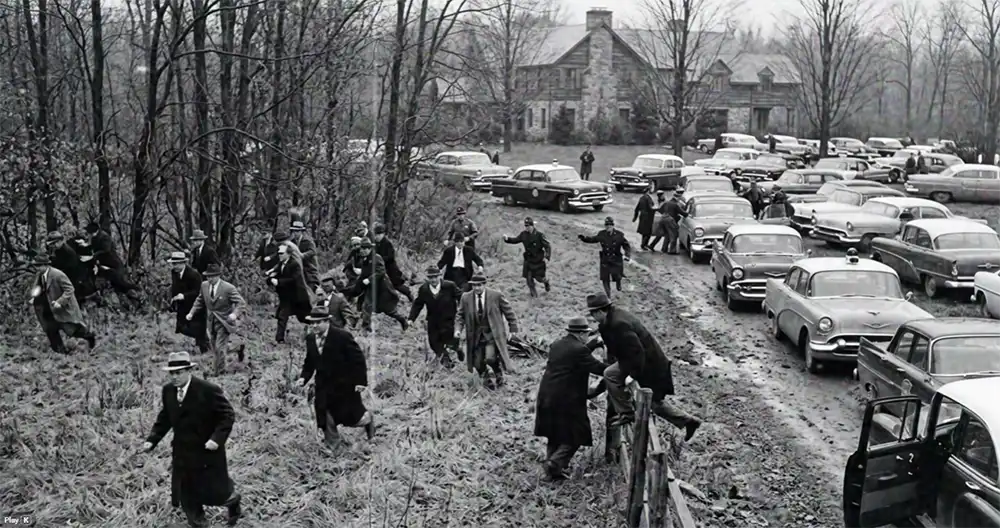
The meeting was interrupted, because a local policeman, Edgar Croswell, had become suspicious of the large number of luxury cars showing up in town, many with out-of-state licence plates. He recorded the plates, and established that a large number were registered to people with criminal records. The reinforcements of police that he called in set up a roadblock to catch as many as they could, and about half of the 100 attendees were arrested. Many were charged with “conspiring to obstruct justice” by lying about the nature of the underworld meeting, though all the convictions were later overturned on appeal. The ones who had escaped by running through the rough terrain probably suffered more loss, because of the damage to their bespoke suits and fancy shoes. But the meeting and its exposure had one significant effect: it persuaded federal law enforcement in the US that nationwide organized crime actually existed and was a serious problem. Up to that point the FBI, under J. Edgar Hoover, had held to the view that organized crime was a local issue, and that their key remit was rooting out communists. After the Apalachin Meeting, all that changed.

ABOVE: Mob bosses leave their cars behind and flee into the woods on foot to evade capture by police. (Screenshot from YouTube)


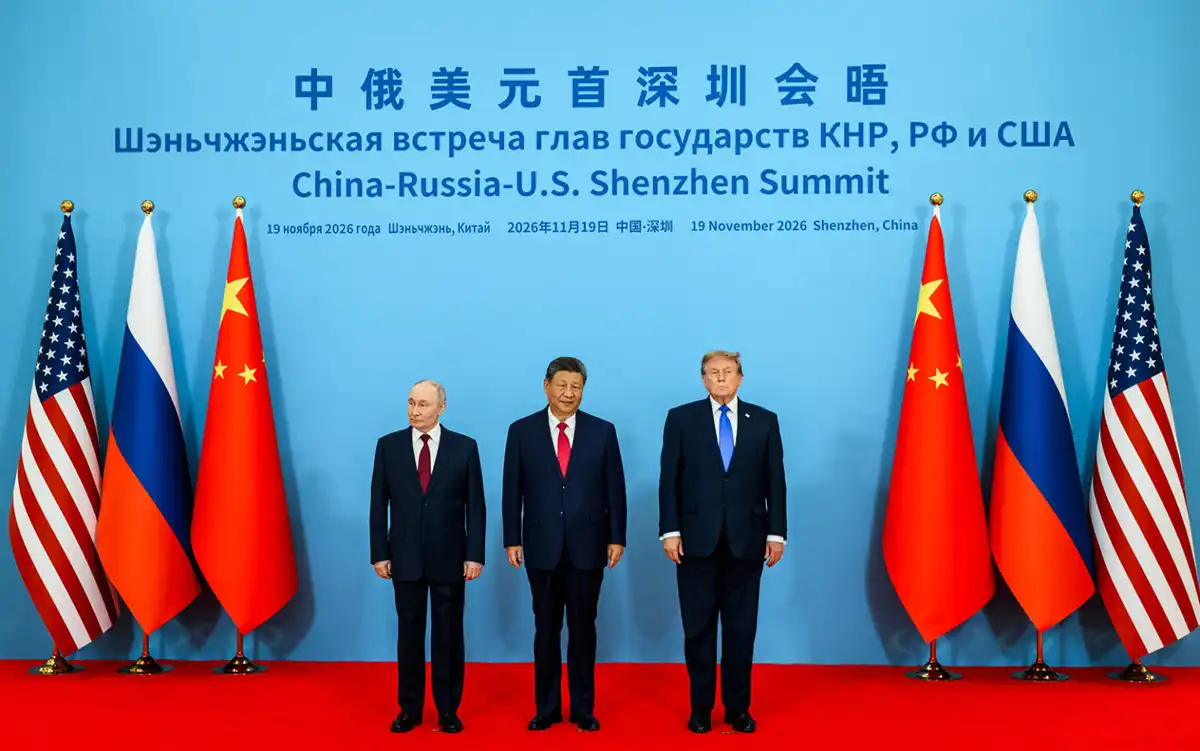
On Nov 19, 2026, 69 years and five days later, Donald Trump, Vladimir Putin, and Xi Jinping met at Kylin Villa in Shenzhen. Their extensive retinues saw to the stage-managing. President Trump characterized the meeting as “bigger than Yalta”. Many  writers and political figures have since retorted that in no way was that meeting a “Yalta 2.0”, and they are right.

The Yalta Conference was a meeting of Franklin D. Roosevelt, Winston Churchill, and Joseph Stalin in early February 1945 in the Livadia Palace in Yalta, as it became clear that Germany was nearing defeat, where they planned Germany’s postwar division, Soviet entry into the war against Japan, and the framework for the United Nations. These momentous decisions were hugely influential in shaping international relations during the more than 80 years since that event, including the dangerous early years of the atomic age.

The Shenzhen Meeting had much more in common with the Apalachin Meeting. A trio of notoriously corrupt political leaders of major nations met to see if they could resolve potential or real turf conflicts that might interfere with their impressive grifting activities or their drives to amass exaggerated personal power and wealth. Vito Genovese would have been right at home in such a discussion.

Unlike the context of Yalta, the three men who met at Shenzhen all lead nation states which have passed their apogee, and are clearly in decline. The post-WWII US empire is shrinking, and it is happening so quickly in part because Mr. Trump is wrecking the alliance system that reinforced American hegemony. Russia is an economic basket case with a declining population, and survives only because it is currently a convenient gas station; it has internal divisions that make it unlikely to remain a single country for more than a couple of decades. China is in steep population decline, and also worries a great deal about ethnic fractures. Furthermore, its economy may well have peaked.

The three leaders are all notorious for having initiated or perpetuated pointless international crises to distract their populations from noticing their failures at home and their kleptocratic proclivities. To be fair, their sins and crimes are not all equal or equivalent.

The least blameworthy of them is, logically, the stupidest of them, Donald Trump, because his actions are primarily focussed upon personal self-aggrandisement and amassing wealth for himself and his family. Some of his ill-conceived initiatives will not persist after he leaves office, though the pathologies he has created or exacerbated in the American polity may never fully diminish to the pre-Trump baseline.

The prize for immorality, however, goes to Vladimir Putin, for his war against Ukraine. He is not the first dictator to start a foreign war to cover up domestic failures, but his disinclination to take easy off-ramps when his initial assumptions led him into a catastrophic situation is surely evidence of unfitness for any kind of leadership role. His self-enrichment is also legendary in scale.

Xi Jinping is very likely the most cautious of them. Nonetheless, he presides over a regime that rigidly dictates all aspects of people’s lives, imposes exaggerated punishments for virtually any unapproved comment, perpetuates extreme economic inequality, and uses somewhat Delphic threats of invasion of a neighbour as a method for quelling any internal regional pressures for more local autonomy. He may be the most efficient mob boss of the three amigos.

The highly publicized embrace of Trump and Putin at Shenzhen is emblematic of how profound the conflation of national interest and personal interest has become in the signalling and behaviours of these caricatures of leadership.

The similarities between the Shenzhen Meeting and the Apalachin Meeting are too striking to ignore. So, who will be our Edgar Croswell to take notice of and be doubtful of the bona fides of Apalachin 2.0? The best answer would be “all of us”. And what could we do with our newfound awareness? For those of us who do not live in any of the three nations whose leaders met in Shenzhen, our tools are limited, but we should bring to bear all the pressure that we can muster to compel our politicians to take honourable stances in the conduct of our international dealings, and we should strive in our domestic political efforts to deny high office to charlatans, knaves and thieves.

Photo: Official White House Photo by Daniel Torok