Recommended Articles

Take a dip into Salaberry-de-Valleyfield

Spring Awakening in Prince Edward County

An Adirondack Olympic Experience



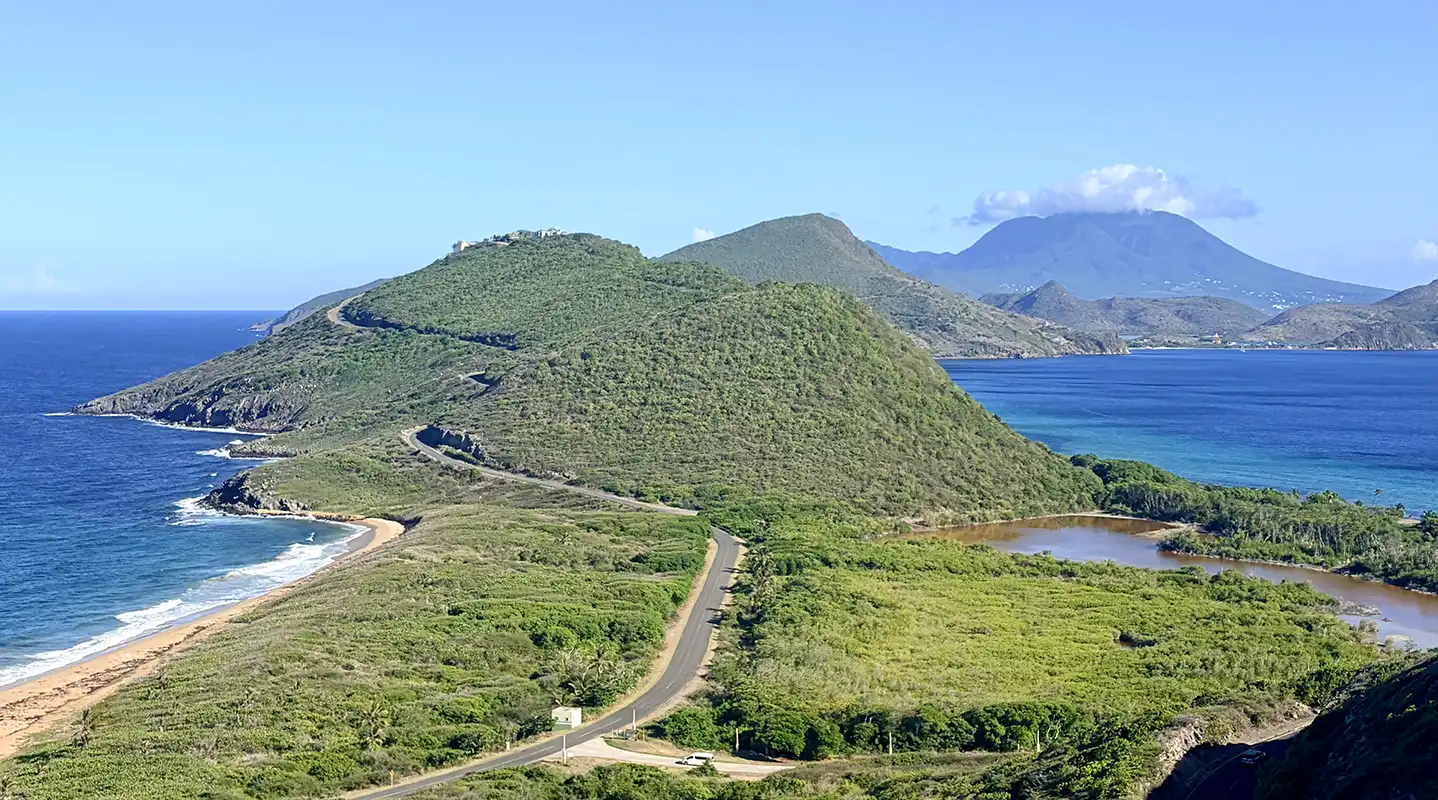
I knew St. Kitts was the smallest country in the Caribbean, yet I was surprised to see the entire island through my plane window. From monkeys to sugarcane and mangoes, many of its defining features have roots in their colonial past, yet locals reclaim them.
History has shaped St. Kitts in ways its people never chose, from the legacy of slavery and the sugar trade to the many cultures that call the island their home. Yet across its farms and restaurants, I found people transforming their history into creative endeavours and building a food culture that recognizes the past while inspiring pride.
Our first day began with a breakfast at St. Kitts Marriott Beach Resort with Shariena Mills, the Marketing Manager. I ate a breakfast of yam and sweet potatoes, commonly called “ground provisions”, with johnnycake and salt fish.
Before slavery’s abolition in 1834, ground provisions were a breakfast necessity. These root vegetables were a reliable way to start the morning when the next meal was uncertain. Even 192 years later, ground provisions remain a staple in Kittitian breakfasts. “We took necessity and made our national dishes out of it”, Shariena told us.
Afterwards, I went back for a second serving. The dishes in front of me felt anything but ordinary.
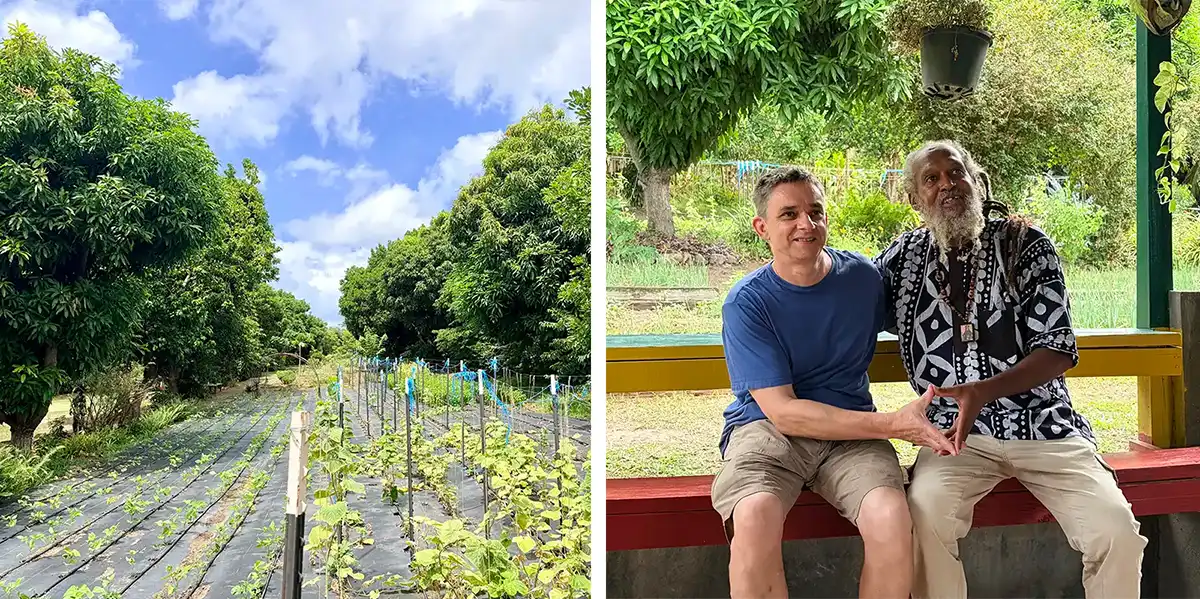
ABOVE: Marriott Chef Christophe Lepard with the President of Gideon Farms, one of his main suppliers.
We began exploring Kittitian agriculture at Gideon Force Organic Farms. This organic collective is driven by its passion for its community. “We don’t want to do it for money. We care about people’s health,” they eagerly told me.
Click here to read the full story on our sister site, Travel Trek & Tour

PHOTOS BY ANALISE SAAVEDRA