Recommended Articles

Movie review: The Protégé
Urban hauler shines in the ‘wilds’ of Algonquin Park

Book Review: The Gospel Truth



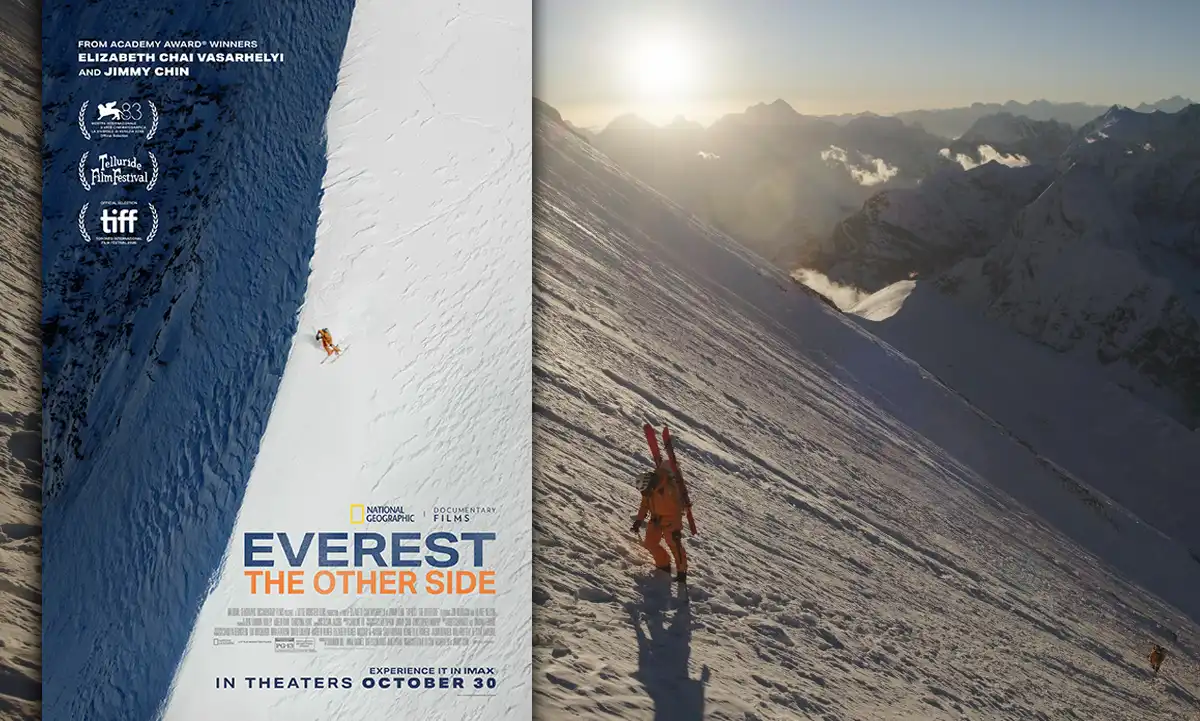
Synopsis: An intimate portrait of two people bound by love, ambition, and the pursuit of the impossible. Elite ski mountaineers Jim Morrison and Hilaree Nelson fell deeply in love while reaching the pinnacle of their sport: Everest’s north face.
Directors: Jimmy Chin, Elizabeth Chai Vasarhelyi
Academy Award-winning filmmakers Jimmy Chin and Elizabeth Chai Vasarhelyi have become synonymous with incredibly shot documentaries. They documented Alex Honnold’s free solo climb of El Capitan in Yosemite National Park. A mere 3,200-foot climb with no rope. Audiences were captivated by the accomplishment and the cinematography.
Since winning an Academy Award for Best Documentary, they haven’t slowed down. They captured the rescue of a junior football team trapped in a cave in The Rescue (2021).
They tracked photojournalist Lynsey Addario as she captured the war in Ukraine and examined her Pulitzer-winning career in Love + War (2025).
What could they possibly do for an encore?
How about Mount Everest?
We are introduced to Jim Morrison and his wife, Hilaree Nelson. They are an adventure-seeking couple, so hanging out with Jimmy and Chai seems like the perfect fit.
Jim and Hilaree are avid skiers, and they have a dream: to climb and ski down the North Face of Mount Everest. Of the thousands of people who have summited Everest, only a handful have climbed its North Face, and no one has successfully skied down the route they are attempting.
The film gives us an opportunity to get to know this couple and how they came to be. They are a blended family and share a deep passion for skiing and climbing.
Everest: The Other Side was also made during a period when Chin and Chai were going through a very public breakup. While Chin is predominantly on screen, you wonder if his participation in this project, especially the climbing aspect, was somewhat therapeutic.
Morrison, we learn, is someone who has dealt with his own grief and tragedy. He knows what it means to lose the people closest to him, and that history becomes an important part of understanding his relationship with Hilaree and his desire to push the limits of what is possible.
The backstory is important because it helps us invest in these two as they embark on something that certainly isn’t on most people’s bucket lists.
As they begin this seemingly insane feat, audiences will be captivated by the cinematography. It is absolutely breathtaking. We live in a time when the go-to soundbite is, “You need to see this on the biggest screen possible.”
Most of the time, you really don’t.
This film is a visual masterpiece and needs to be seen on an IMAX screen if available.
But Everest: The Other Side is about much more than climbing a mountain. What begins as a story about two people chasing an extraordinary dream becomes something far more heartbreaking. When tragedy strikes, the entire purpose of the documentary changes, and the question becomes whether Morrison can find a reason to continue without the person with whom he planned to accomplish this feat.
The film captures the devastating reality of what happens when the risks associated with extreme adventure become all too real. There is a moment when the breathtaking imagery gives way to something deeply uncomfortable, and the realization that these aren’t simply spectacular images captured for our entertainment hits hard.
Chin and Chai have always been exceptional at putting audiences in the middle of extraordinary situations. With Free Solo (2018), we watched Honnold attempt something that seemed almost impossible, knowing that one mistake could cost him his life. Here, the danger feels different. The consequences are no longer hypothetical, and the emotional weight of what unfolds is difficult to shake.
There is also something fascinating about watching Chin put himself back into this world. He understands these mountains and the people who are drawn to them. He is not simply an observer with a camera; he is someone who has experienced the risks firsthand. That familiarity gives the footage an intimacy that few filmmakers could replicate.
However, the film also leaves you wrestling with an uncomfortable question: When does the pursuit of a dream become a risk that is too great to take? And what about all those people risking their own lives so Morrison can achieve his goal?
Morrison’s determination is understandable, particularly given the loss he has experienced. Completing the journey he and Hilaree envisioned together becomes a way of honouring her memory. Yet, knowing what is at stake makes it difficult to watch without thinking about the family and friends waiting at home. There is a difference between celebrating someone’s courage and questioning whether the danger is worth it, and the film’s most compelling moments emerge when those feelings exist alongside one another.
That tension adds an emotional dimension to the documentary that goes well beyond the physical challenge. It is a story about love, grief, ambition and the things people do to keep moving forward when life takes an unimaginable turn.
And then there is the cinematography.
Chin and Chai have once again captured images that are almost impossible to comprehend. The scale of the mountain, the unforgiving terrain and the sheer vulnerability of the people attempting to conquer it are astonishing. There are moments when you may find yourself holding your breath, not because of a dramatic musical cue, but because the images make you feel as though you are right there with the climbers.
That is the magic of what these filmmakers do. They make the extraordinary feel immediate.
Everest: The Other Side is not an easy watch, nor should it be. It is a beautiful, heartbreaking and occasionally terrifying reminder that the things that make life meaningful can also put us in danger. You may not agree with every decision made along the way, but it is difficult not to be moved by the determination of those who pursue their passions and the people left to live with the consequences.
Chin and Chai have once again demonstrated why they are among the most accomplished documentary filmmakers working today. Their ability to capture extraordinary images is matched by their understanding of the people behind them.
If you have the opportunity to see Everest: The Other Side on an IMAX screen, take it. This is precisely the kind of film that justifies the format, and its images deserve to be experienced on the largest possible screen.
Just be prepared for a documentary that will leave you thinking about much more than the view from the top.
Grade: B+