


• By: Bruce Sach

Transported Back in Time to Another World, in Just Under Four Minutes

In about four minutes, I was transported to another world! I barely had time to fasten my seat belt and the flight ended.

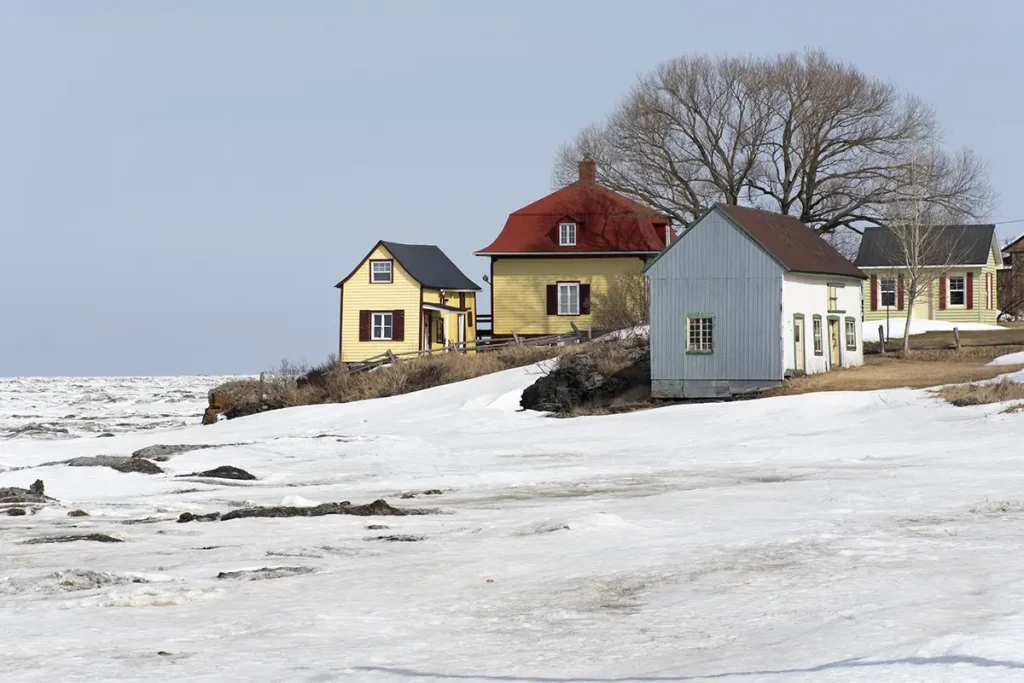
I landed on L’isle-aux-Grues, a tiny island, population 122, not far from Quebec City. However, as an island, it is isolated from the mainland for the entire winter. To get to the island, you go to the city of Montmagny, (one hour east by car). Then the fun part of getting to the island begins.

ABOVE: Homes on L’isle-aux-Grues. Photo: Carole-Jobin


Only small planes can bring visitors (no more than seven at a time) from Montmagny, on the south shore of the St. Lawrence River, during the winter months, when the river is frozen or full of ice. Flying time is clocked in at well under four minutes.

As planned, the lone taxi, M. Gaston Robin is waiting for us at the airport, and within minutes we’re in our hotel.

During our stay, which occurred the weekend before St. Patrick’s Day, I noted the infrequent Cessna seven-passenger planes. I heard the lonely whistle of the daily train across the river in nearby Montmagny, on the ‘continent’ as locals say.

Photo: Carole-Jobin

With binoculars, I could see the TransCanada Highway, yet I felt completely isolated from all that is modern. So why come to this island, whose full-time residents number fewer and fewer? And why in the dead of winter?

The Mi-Carême, my friend, the Mi-Carême.

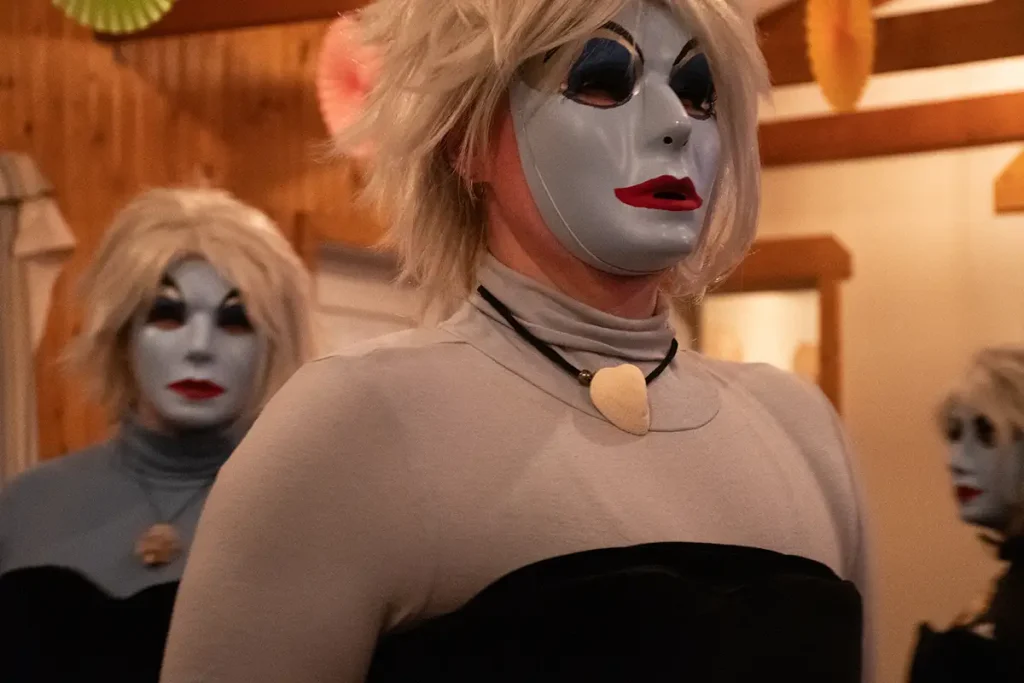
For centuries, the islanders here have been working hard every winter to combat the winter blues by creating costumes, which no one is allowed to see until the Mi-Carême. (Mid-Lent en anglais).

Originally the festivities allowed people to escape the shackles of fasting and abstinence imposed by the Catholic Church. Then, for one week in Lent parishioners paraded, masked, from house to house.

Yes, it’s mummering à la Québécoise, and as town counsellor, Michel Rousseau explained, ‘more islanders return home for the Mi-Carême than for Christmas!’

His wife, Pauline Roy explains that years ago, ‘up to 80 percent of the residents made their own costumes. Now, between 25 to 30 percent do so.’

Residents will exchange parts of costumes and even change up their digs the same night attempting to fool those trying to guess their identity. There is no competition, nor prizes to be won.

Yet, Edith Rousseau, Michel and Pauline’s daughter explains that some of the costumes end up in the island’s Mi-Carême museum.

In the old days, only men participated in the tomfoolery and costumes were made up of rags, bits of fabric, even old potato sacs, into something called a ‘galonné’. Since the 1960s, great care and time are devoted to creating costumes more aesthetically pleasing, some being real art pieces. And women led the 1960s revival.

For visitors, who are unlikely to follow the celebrants from house to house, it’s best to station oneself at the 232 Restaurant or at the Grand Héron Inn as we did.

Some ‘outsiders’ return for another Mi-Carême and bring their own costumes. One couple decided to participate only after arriving. Virtually nothing is open here in the winter, so I’m not sure how they got costumed!

Back at the Grand Héron, and soon after supper, bed sheets are nailed shut over the windows facing the St. Lawrence River, creating a cozy, yet spooky feeling. No one is allowed to see the revellers before they come in.

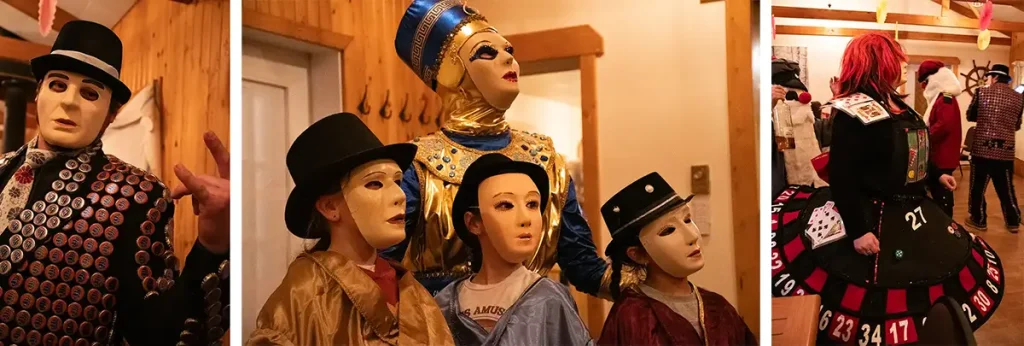
The first group in was quite outstanding, sporting shimmering costumes. They brought their own music, which inn owner Eric Gervais-Despres played on a CD player. (I stress this, since even the CD player seemed to date from another era!)

The lead personage resembled an Egyptian princess followed by her ‘pages’, ‘ princes or princesses – it wasn’t clear. The princess wore a tall ‘crown’ which reminded me somewhat of a bishop’s miter. (Bishop costumes were popular in the past).

Some groups brought their own music, attached to the costume of one of their participants and performed a short, choreographed routine. Then, the locals try to identify them. Even though we really ‘knew’ no one, it was entertaining.

A break dancing-like number especially caught my attention as the ‘stylized dance’ fit perfectly with the music.

Inn owner Eric Gervais-Despres explains that by May, bird lovers migrate to the island due to its abundant and varied birding possibilities. By then, the ferry is running again. Attracting both fresh and salt water fowl, the island is best known for its heron population.

The island is smack dab in the middle of the St. Lawrence, where salt and brackish waters meet, creating a natural paradise for bird life. There are few birds in the winter, an ironic statement, given we’re in front of the Grand Héron.

M. Gervais-Despres says that even from the ferry pier (located directly in front of his inn), rare birds such as razorbills can be spotted once the warm weather returns. (I love the French name, ‘petit penguin’, as it seems to recall being icebound on the island).

The number of birdhouses on the island is astounding, something best noted on foot or by bike. Truth be told, walking this entire island is easily done in any season, or by bike in the summer.

ABOVE: Le Bateau Ivre–the abandoned ship now a landmark on the island’s north shore. Photo: Carole-Jobin


Eric, a Quebec City native, has lived in Toronto, Medicine Hat and Los Angeles before settling with his Filipina wife on I’Isle aux Grues. How so?

“It’s magical here. We have the best of both worlds. It’s quiet and can only be reached by ferry or small plane. We have views of the south and north shores of the St. Lawrence with sunsets that famous Quebec painter Jean-Paul Riopelle, who had a home here, called the ‘finest in the world’. I can work remotely from home”.

This is important for him, as he worked for Disney and other animation companies around the world. He can still crate projects while ‘living off the grid’.

Oh, and the cheese. The island’s cheese factory, La Fromagerie is known across Quebec for its 15 varieties of cheese sourced from the island’s three dairy farmers. Can you taste the sea air in the cheese?

Sample it as served on varying dishes, such as nachos, grilled cheese, or in a fondue. Or take some home. A fab souvenir.

If you prefer visiting in the summer, you can easily take the ferry, which runs from May to November, and get a glimpse of some costumes at the Mi-Carême Museum.