Recommended Articles

Why Letting Go of Perfection Might Be the Real Gift

The Fifth Floor

A Rare Gem in Sandy Hill: Vintage Elegance Meets Modern Potential!


Alongside Terry Fox and Frederick Banting, there is another Canadian medical hero — Norman Bethune. During the Sino-Japanese War, Bethune was a surgeon who trained the Chinese army in combat medicine, saving many lives. Today, he is a household name in China, even though most Canadians have never heard of him.
Bethune’s iconicity in China and relative anonymity in Canada is a sign of the cultural separation that has resulted from decades of geopolitical opposition. UASK Education, a youth exchange institution, seeks to reconnect the two nations.
UASK Education began as a simple response to a market demand. Alex Mao, the director and founder of UASK, recalled the organization’s origins, saying “When I was working for the government around 12 years ago, one of my friends from China said that he had some students who were interested in spending a summer in Ottawa. I went to the Ottawa Carleton District School Board (OCDSB), asked them if they could facilitate a trip, and they actually said yes”.
Emboldened by this success, Alex founded UASK in 2016. Following their first trip bringing Chinese students to Canada, Alex realized that the opposite could also work. “In 2017, we had our first exchange from Ottawa to China. On our second such trip the following year, we managed to get 28 students,” Alex recounted.
Although UASK built up momentum with more exchanges in the late 2010s, the organization faced an existential threat when the Covid-19 pandemic arrived in 2020. “During the pandemic, international travel was impossible, especially to China”, said Alex. “Instead of just shutting down, we completely pivoted to virtual tutoring”.
For several years, UASK Education focused on virtual tutoring, with 150 students and 70 teachers. During this time, UASK enabled cultural exchange by making Mandarin and English language education more accessible. However, at the core of the business is human connection. “It was only in 2024 that we were able to fully restore our in person exchanges, and since then business has been booming” said Alex.
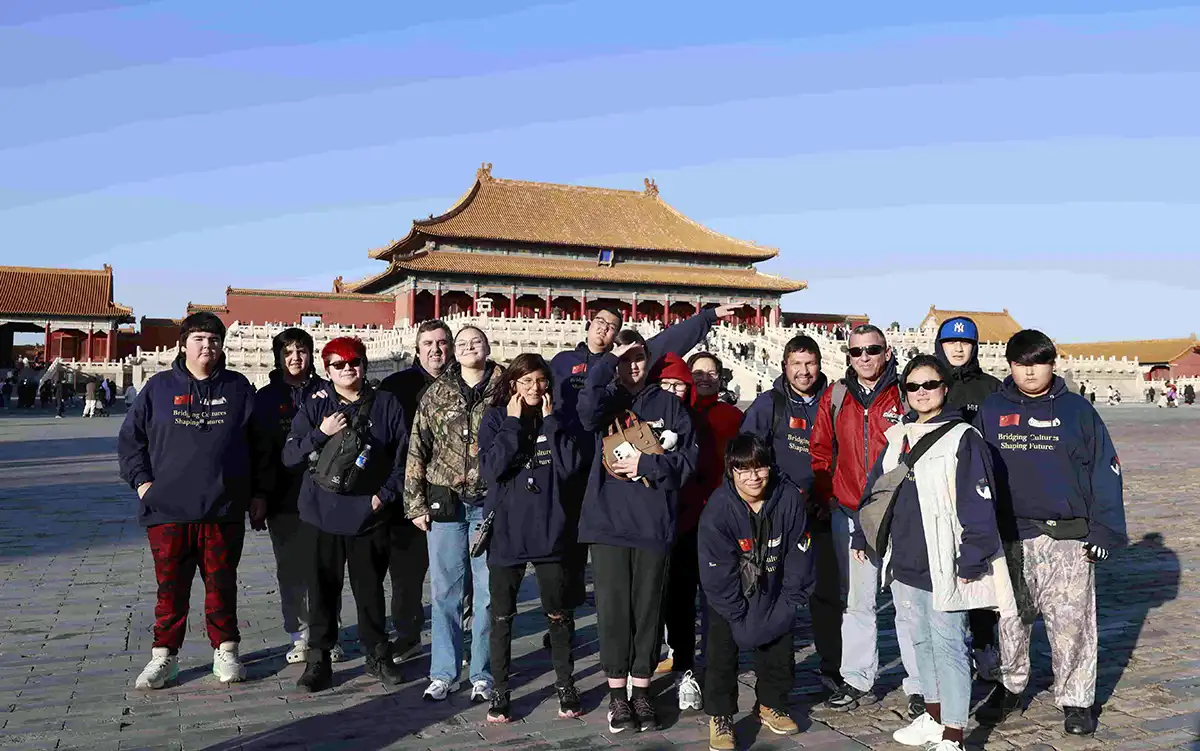
On these exchanges, UASK prioritizes immersion. “We go beyond just showing students the Great Wall and Forbidden City,” said Alex. “We give the kids an authentic look at an everyday Chinese lifestyle. They attend Chinese schools, eat Chinese food, and stay with a Chinese family for two weeks.”
Alex also noted how open-minded children are at learning new ways of life. “ I think the term ‘culture shock’ is dangerous for its negative connotation,” said Alex. “In all our years, the worst a kid has ever reacted to an aspect of Chinese life was when his Sichuan sauce was too spicy!”
Alex also explained why Canada was favoured as a destination to expose Chinese students to Western culture. “North American culture is the most dominant in the world, so it naturally captures the fascination of youth in China,” said Alex. “However, the US has always been seen as more hostile and unwelcoming than Canada, especially in recent years. That’s why we’ve succeeded as a Canadian business”.
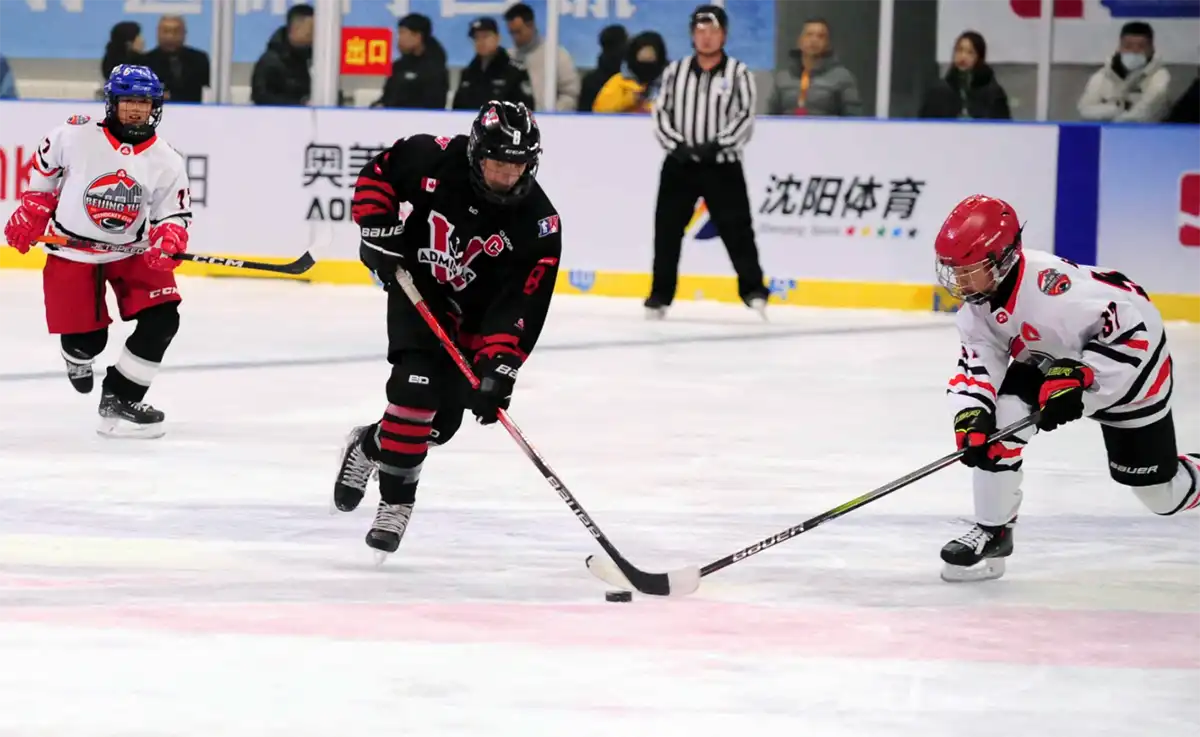
ABOVE: The Victoria Admirals Hockey team competed at the Revitalization Cup Shenyang International Youth Hockey Invitational, marking the first time a Canadian team has ever competed in the tournament.
One very Canadian moment occurred in January 2024, when a Victoria hockey team travelled to Shenyang through UASK’s exchange program to compete in a youth tournament. “Like several other sports, hockey has recently been getting very popular in China,” said Alex. “When people heard that a team from the home of hockey was playing, they showed up in droves”.
Of course, there have also been instances in which Chinese students shared their own culture with Canadians. In May, a children’s choir from Chengdu performed at MusicFest in Niagara Falls, later heading to Ottawa to hold a musical flash mob at Parliament Hill. In total, over 500 students have gone on UASK exchanges since its founding, with other trips ranging from a Toronto robotics club visiting tech company headquarters, to Chengdu students touring the forests of Vancouver island.
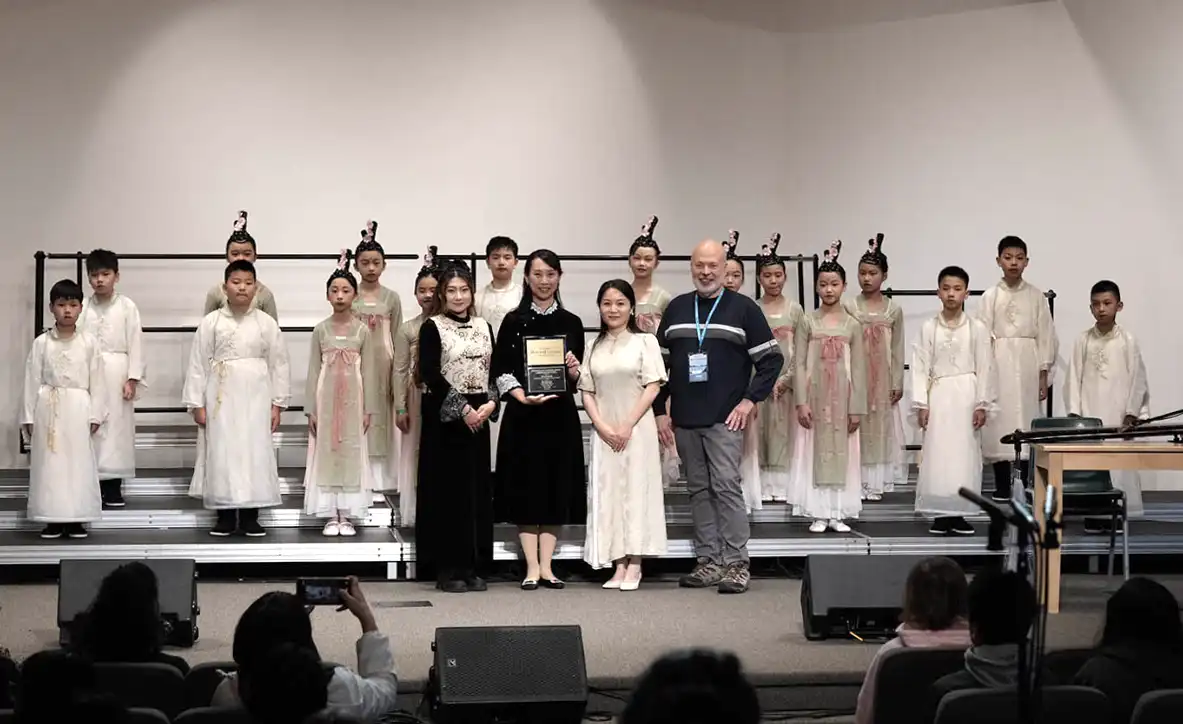
ABOVE: The Luming Choir from Chengdu Chenghua Primary School performed two pieces at MusicFest in Niagara Falls, marking the first appearance of a Chinese choir at the festival in its 54-year history.
UASK believes that cultural exchange with China is particularly important given existing geopolitical barriers. “It is unfair that the political differences between China and Canada have created a cultural alienation,” said Alex. “Young people are particularly important, since the middle and high schoolers of today will be in power 20 years from now. If they grow up viewing China as a state of pure evil, what does that mean for the future of how Canadians see Chinese culture and vice versa?”
After going on an exchange, Alex said that both Chinese and Canadian students view the other country more positively, with Canadians appreciating China’s high-speed rail and cleanliness, while Chinese students are amazed by Canada’s cultural and artistic diversity.
Over the next few years, UASK Education is seeking aggressive growth, diverting resources away from the Covid-era virtual tutoring side of the business to enable more in-person exchanges.
“We’ve cut our teachers and students by a third for virtual tutoring, but it’s an investment. By 2029, we want to have 1000 students on exchanges per year,” said Alex. While this may seem like an ambitious goal, Alex has cited recent success as a reason to be hopeful. “In May, the OCDSB had a virtual information session with a record 150 families attending. After that, 70 students applied, of which we selected 24 to go on the exchange.”
After Mark Carney’s visit to China in January and a newfound incentive for Canada to loosen barriers with the east, UASK’s dream of uniting children from two of the world’s largest countries has a bright future ahead.
Header image: In 2025, sixteen teachers and students from Canada’s Long Point First Nation, led by Chief Steeve Mathias, visited Beijing, Chongqing, and Chengdu for a cross-cultural dialogue between Indigenous traditions and Chinese civilization.
Photos: Courtesy UASK Education