
What Ontario Learned in Four Years, Alberta Inherits This July: An Ottawa-Eye View of Canada’s Second Open Provincial Market
Ottawa watches provincial reforms more closely than most cities, partly because the National Capital Region is where the departmental briefs get written and partly because federal civil servants tend to have relatives in every region of the country. When Ontario opened its consumer market in the spring of 2022, the conversations on Wellington Street and the Sparks Street side streets were noticeably ahead of the public debate. People who worked in policy shops, who advised ministers on federalism files, and who had cousins in Mississauga or London compared notes about a transition that other provinces were going to face sooner rather than later. Four years on, that prediction has aged well. Alberta is opening its own consumer market this July, and the moment looks much less like a brand new experiment and much more like a province absorbing the working notes of the one that went first.
The interesting part for an Ottawa audience is not whether Alberta will open the market on time but what kind of market it will become once the announcements settle and the early advertising wave passes. Ontario spent the first six months watching a flood of operator entries, the second year watching consumer behaviour clarify, and the third and fourth years absorbing a wave of consolidation and complaint-resolution practice that nobody had fully predicted. Alberta inherits all of that without having to repeat the cycle in the same order. Operators arrive in Calgary and Edmonton this summer with playbooks they did not have when they entered Toronto, advocacy groups arrive with positions already drafted, and consumer expectations arrive in a much more formed state than they did four years ago. The Ottawa-eye view of all this is less about anticipation and more about pattern recognition.
For Ottawa readers who want a structured reference on what is actually opening in Alberta this July rather than another round of speculation, the Legal Sports Report breakdown of the Best Alberta online casinos is a useful starting point. It catalogues which licensed brands have confirmed Alberta entry, summarises how the provincial framework compares with the Ontario approach that came before it, and flags which consumer protections and complaint pathways apply once a player crosses the provincial line. Treat it as a working reference for the conversation rather than an endorsement of any single brand, and the rest of this piece can stay focused on the bigger story an Ottawa audience should actually be tracking through the summer and into the fall.
Four Years of Ontario Practice Is the Real Source Material for Alberta This Summer
The Ontario rollout did not produce a single moment of clarity. It produced a slow accretion of practical knowledge that is now sitting in trade association memos, university research papers, and the working files of consumer-protection lawyers in Toronto and London. The first six months were dominated by operator marketing volume that the public was not prepared for. The second year produced a sharper debate about responsible-use tooling, deposit limits, and the difference between voluntary and mandatory player protections. Year three saw a quiet consolidation as smaller operators left or merged, and year four has produced a maturing complaint-resolution ecosystem that the early framework underestimated. An Alberta opening that takes effect this July will not face those questions in sequence. It will face them all at once, because the operators arriving in Calgary and Edmonton already know which arguments worked in Ontario and which arguments did not. The Ottawa reader watching this can compress four years of policy learning into a single summer if they pay attention to the right files.
How the Ontario-to-Alberta Inheritance Differs From Province to Province on Structure
It is tempting to talk about the Alberta opening as a copy of Ontario with a different postal code. The structural details say otherwise. The role of the existing provincial public operator is different in Alberta than it was in Ontario when the private market began, which changes how new entrants frame their consumer pitch. The licensing pathway is compressed because the provincial team has been studying Ontario’s onboarding bottlenecks for two years and has chosen a narrower set of conditions up front. Advertising boundaries have been written with the benefit of the Ontario debate over celebrity endorsements and game-of-the-day spend, which produced changes in 2024 and 2025 that Alberta has now folded into its starting position. Dispute resolution pathways look more centralised in Alberta from day one, where Ontario spent the first eighteen months figuring out how to triage complaints across multiple operators with inconsistent support practices. An Ottawa reader interested in federalism should treat this as a study in how a second-mover province rewrites a framework rather than reinheriting one whole cloth.
Consumer Expectations in 2026 Are Not the Expectations Ontario Faced in 2022
The consumer who opens an account in Calgary this July is not the consumer who opened one in Toronto in April 2022. They have spent four years reading coverage about Ontario, watching friends and relatives interact with regulated brands, and absorbing a quieter but more sophisticated debate about responsible-use tooling. They expect deposit limits to be visible before the first deposit screen, not buried in account settings. They expect support hours to be clearly stated and complaint pathways to be documented up front. They expect mobile applications to load quickly and identity verification to take minutes rather than days. The Ottawa reader who watched the Ontario debate move through several stages will recognise the maturity in the Alberta consumer profile immediately. The shift matters because it changes which operator behaviours are tolerated. The early Ontario consumer absorbed friction in exchange for newness. The early Alberta consumer has no newness to absorb, which means friction costs an operator more from the first interaction.
The Federal Backdrop Where Other Consumer Frameworks Are Also Being Rebuilt at the Same Time
The Alberta opening does not happen on a quiet federal stage. The same months that bring the provincial framework live are also the months Ottawa departments are working through stablecoin guidance, payment-rail oversight, and a broader conversation about how consumer financial products should be supervised at the federal level. VersaBank stablecoin coverage from Ottawa Life captures how a Canadian institution is positioning itself for the new stablecoin rules, and the read-across to consumer-market openings is genuinely useful. The provincial framework opening in Alberta this July shares a common thread with the federal financial-services conversation: consumer expectations about transparency, verification, and complaint pathways are converging across product categories. The Ottawa reader who follows the Bank of Canada files, the Department of Finance consultations, and the provincial transitions can see a single trend running through all of them. Consumers in 2026 expect digital products to be supervised in a way they were not in 2018, and the practical work of meeting that expectation is now spread across federal, provincial, and operator-level decisions that have to add up to a coherent experience.
Operator Strategy in Year One Looks Different When the Playbook Is Already Written
Operator behaviour in the first year of a new market used to be experimental. Marketing teams tested messaging in the first quarter, retention teams adjusted in the second, and finance teams revised their assumptions by the third. The Alberta opening does not give operators that runway because the Ontario data is already on every desk in Mississauga and Toronto where the Canadian teams sit. Acquisition costs are pre-modelled, retention curves are pre-tested, customer support staffing is sized to expected volumes rather than guessed, and the marketing language has been pre-cleared by compliance teams who watched the Ontario advertising arguments unfold in real time. The Ottawa reader interested in competition policy should treat this as a useful case study in how a second-mover market compresses the operator learning curve. The losers from compression are the smaller entrants who relied on the slower pace of year one in Ontario to find a foothold. The winners are the operators who arrive in Alberta with infrastructure that already works and a marketing plan that has already been calibrated to a Canadian audience.
Why the Alberta Political Mood Shapes How the Opening Lands This Summer
The provincial opening does not happen in a political vacuum. Alberta in 2026 is in the middle of a broader conversation about its relationship with Ottawa, with the energy file, and with how federal and provincial roles get drawn on consumer-facing issues. The Globe and Mail Alberta energy accord report describes how a new bilateral arrangement is meant to ease the sense of disaffection that has shaped Alberta politics for the better part of the decade, and that backdrop matters for the consumer rollout because the language operators and advocacy groups use this summer will be read through that political mood. Communications teams that ignored the Ontario context when they entered Toronto in 2022 paid for it through the first two years. Communications teams entering Alberta this July know they are arriving in a province where the relationship with the federal government is the first lens through which any new provincial framework is read. The Ottawa reader who tracks federal-provincial files will recognise that the consumer opening is not insulated from the larger Alberta-Ottawa conversation, and the operators who succeed early will be the ones who can present themselves as Alberta-first rather than national rollouts dropped onto the province from elsewhere.
Consumer Protection Inheritance and the Practical Lessons of Ontario’s First Two Years
The most useful inheritance from Ontario to Alberta sits in the consumer-protection space rather than the licensing space. Ontario spent the first eighteen months building a complaint-handling muscle that nobody fully designed before the market opened. Practices that began as ad hoc operator responses became standardised pathways by the end of year two, and the third year produced a much clearer set of expectations about response times, escalation paths, and third-party review. Alberta has the benefit of those eighteen months of practical learning. The provincial team has already published more detailed expectations about deposit limits, self-exclusion options, and operator response times than Ontario had in place at its launch. Advocacy groups who spent four years pressing Ontario operators arrive in Alberta with positions already drafted, which means the early debate will be sharper and more substantive than the early Ontario debate was. The Ottawa reader who cares about consumer-protection policy should treat the Alberta summer as the first real test of whether a second-mover province can institutionalise the practical lessons of a first-mover province without having to relearn them.
The National Picture and How Other Provinces Are Reading the Alberta Summer From the Sidelines
The Alberta opening is the second open provincial market and the first one that gets to inherit a fully matured Ontario file. The provinces watching from the sidelines are not waiting passively. British Columbia, Quebec, Saskatchewan and the Atlantic provinces all have working groups that have been studying Ontario for four years and will now study Alberta for at least two. Each of them has its own existing public operator, its own political constraints, and its own consumer-protection traditions, but the data and the practical templates flow through Ontario and Alberta first. The Ottawa reader who follows intergovernmental files should expect the next federal-provincial conversation about consumer frameworks to lean heavily on what Alberta does this summer and what Ontario does in the next twelve months to refine its mature framework. The intergovernmental shorthand has shifted. Five years ago, provinces compared themselves to no template. Today they compare themselves to Ontario, and starting in July they will compare themselves to Alberta as well.
What an Ottawa Reader Should Actually Track Through the Rest of 2026
Pulling the threads together, the practical reading list for an Ottawa audience watching the Alberta opening this summer is shorter than the noise suggests. Watch the operator entry calendar between July and September, because the spacing tells you which brands have prepared infrastructure and which are catching up. Watch the advertising volume in the first sixty days and compare it to the Ontario early-period numbers, because the slope of the curve is the single best predictor of how the provincial team will calibrate later guidance. Watch the complaint-resolution metrics that get published in the autumn, because the speed at which Alberta institutionalises Ontario’s practical lessons is the most important question of the year. Watch the consolidation activity by the end of the first calendar year, because the second-mover province compresses the consolidation curve in ways that have implications for every later opening. And keep one eye on the federal-provincial conversation, because the way Alberta and Ottawa talk about the consumer framework this summer will shape the tone of every other provincial transition that follows over the next two years.
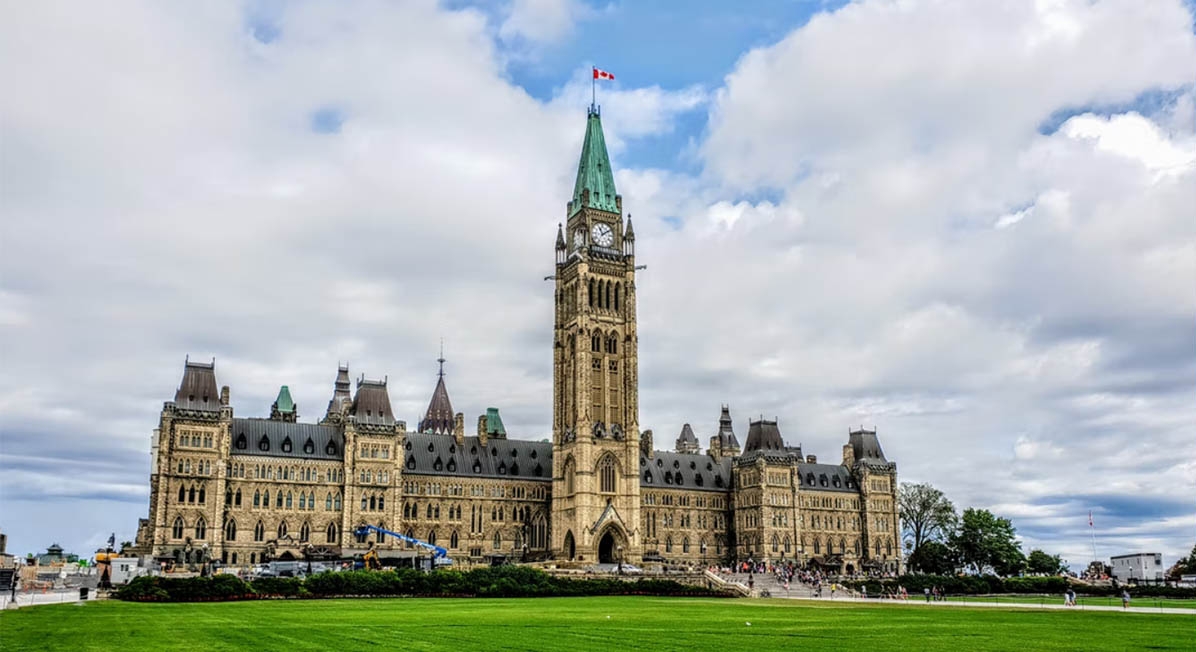
Image by Charlotte Sinclair