Recommended Articles

Legendary Performers Usher in Chamberfest’s 20th Anniversary
The Danger of Border Crossing to Play US Lotteries

Southway Hotel Plans Luxurious Transformation



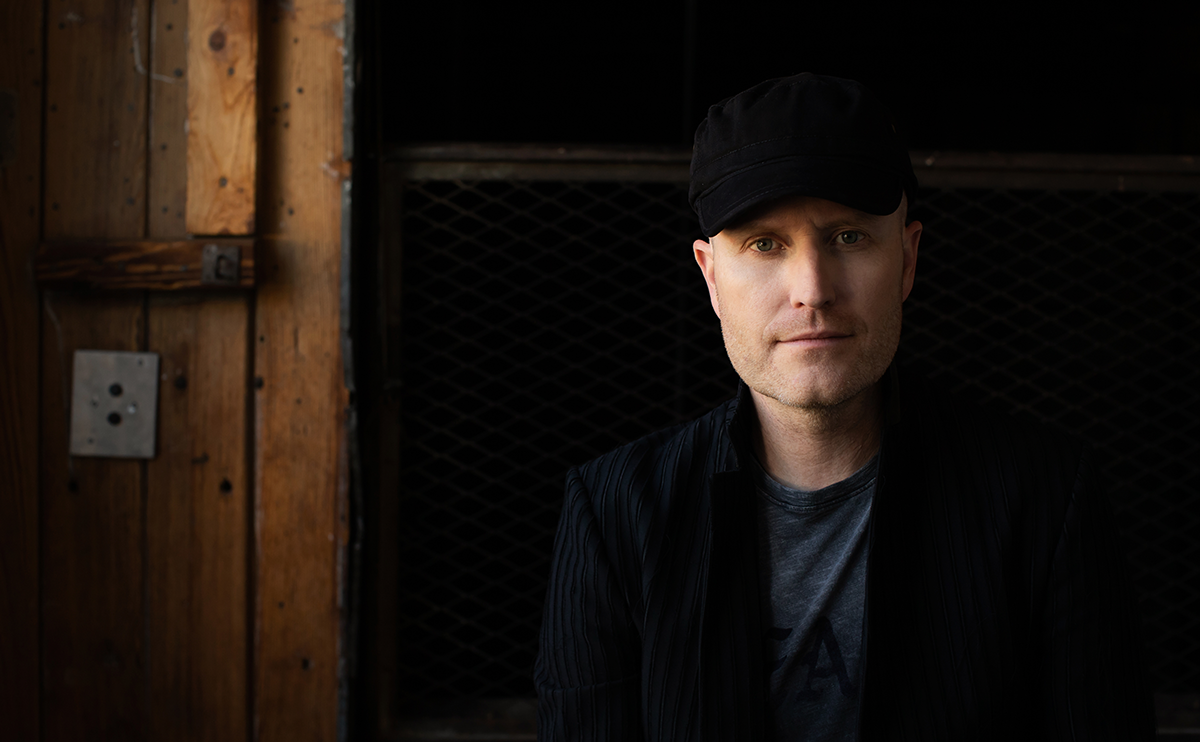
Canadian composer Andrew Lockington is synonymous with a slew of blockbuster Hollywood films and TV series, with 12 awards to boot. Unfazed by it all, Lockington humbly attributes his true joy for composing to his unbridled passion for music, as he takes us on a journey through discovery of his art.
Award-winning Canadian film and television music composer Andrew Lockington was just four years old when he was bitten by the music bug. “My musically-inclined parents, who both played the piano, once took me to a concert by French Canadian classical-pop composer André Gagnon in Toronto. Even at that young age, I recall being inspired by Gagnon’s modernistic strains, which sounded to me like a rock star playing piano. That, coupled with the fact that I was always emotionally affected by film music, such as scores from Star Wars, E.T., Jurassic Park and Indiana Jones, and greatly admired the music of the American composers and conductors, John Williams and James Horner, really led to my early inclinations towards orchestral symphonies and to this profession,” Lockington divulges.
Lockington has worked on over 54 productions to date, including films like Golden Globe-nominated Frankie and Alice, Percy Jackson: Sea of Monsters, Journey to the Center of the Earth, City of Ember, Journey to the Mysterious Island, The Space Between Us, San Andreas, Rampage and Atlas. He has also scored popular TV series such as Landman, Lioness, Mayor of Kingstown and Frontier, as well as writing and performing musical soundtracks such as “Stalking Stars” for Argo, and “Move On,” for Before We Go.
Based in Toronto, where he lives with his wife and three daughters — all of whom also play the piano — Lockington shares that his introduction to composing was almost accidental. “Growing up in Burlington, Ontario, my parents were determined that my sisters and I get a musical education. However, I was terrible at practicing so I would often improvise classical pieces by Mozart, Bach and Beethoven during my piano lessons. Eventually, I started playing by ear and composing my own songs with lyrics. When I was 15, I joined a semi-professional band to realise my high-school dream of becoming a rockstar,” laughs Lockington.
While the band lasted for a few years, Lockington went on to pursue musical studies in composition, orchestration and piano from Wilfrid Laurier University in Kitchener-Waterloo. He left one credit short of graduating to gain hands-on experience in the professional world, starting with a foray into composing advertising jingles.
Lockington says that while the experience taught him the importance of a hook or earworm in composing a theme that the audience can latch on to, he realised that music was a far less important element of advertising, given an ad’s super-short duration. So, he decided to switch over to the world of films instead, which have a greater spotlight on music.
That led to a self-initiated apprenticeship under legendary Canadian film composer Mychael Danna, who had also played in the same band as Lockington years earlier. The five-year mentorship saw Lockington progress from re-stringing guitars to learning the basics of composing and arranging orchestration for films and blending them with electronic music, exposure to non-Western classical music, as well as learning the business aspects of commercial collaboration between a film director and music composer.
Working under his other mentor, Mychael’s brother and fellow film composer, Jeff Danna, helped give Lockington a head start in composing for indie and smaller film projects in the early 2000s, until his big Hollywood break came in 2008 with the opportunity to work on the background score for Journey to the Center of the Earth. The rest, as they say, is history.
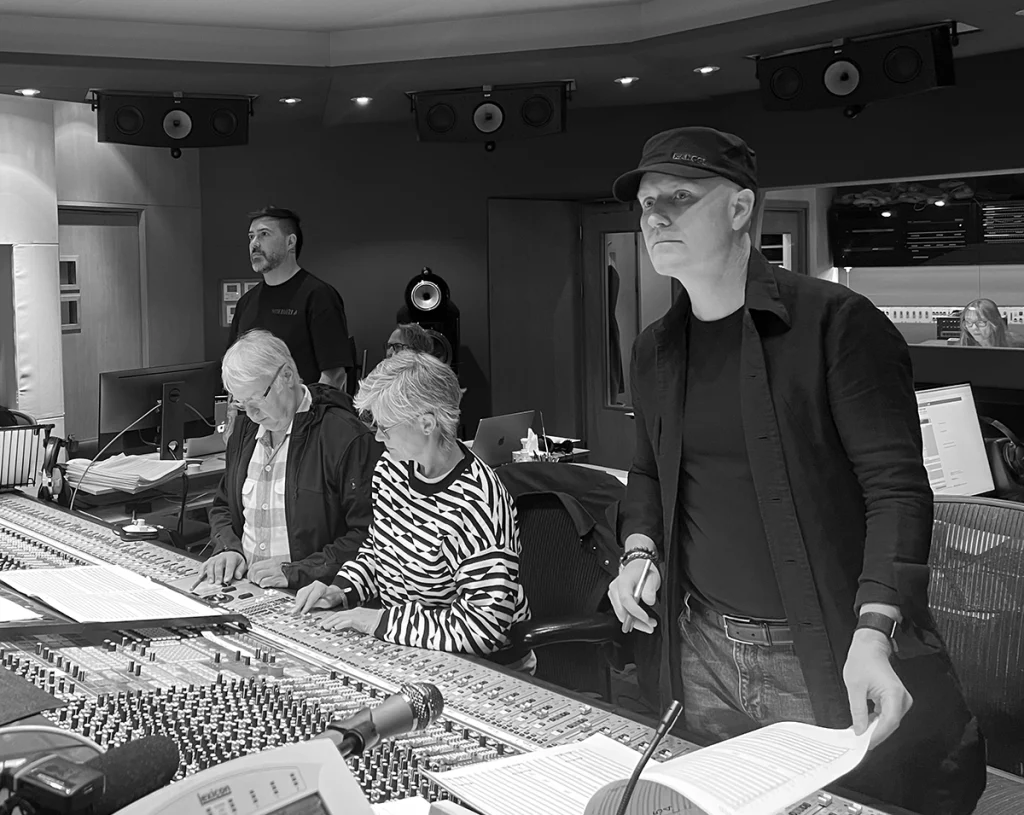
ABOVE: Andrew Lockington recording on the set of Atlas. (Photo: Brad Peyton)
For Lockington, the creative process of composing a soundtrack or background score that perfectly encapsulates a film’s storyline usually begins by poring through the script looking for insight into ideas for the theme. While he enjoys blending orchestral sounds with hybrid and synthetic elements, borrowing from different genres of world music, Lockington is also known for using unusual timbres gleaned from unconventional instruments, like crystal glassware, vintage china, broken pottery and even damaged musical instruments.
“For instance, when shooting for San Andreas, there was a scene in the film where the Golden Gate Bridge cables were snapping. And I thought, ‘Oh, that’s an interesting sound of wires snapping.’ That led me to destroy an old piano till it was hanging on by a few wires. The sound I recorded when playing that broken piano was so different, almost amplifying the terrifying scenes in the movie,” says Lockington.
Travelling to far-off locales to capture unique sounds is another source of inspiration for Lockington. For San Andreas, one of the biggest Hollywood blockbusters of 2015, which grossed approximately $475 million worldwide, Lockington combined traditional orchestral music with rock-infused percussion and real-time seismic event data collected from the U.S. Geological Survey to capture the film’s massive disaster scale. He also incorporated sounds from an African children’s choir from Uganda to transition to a feeling of hope in the film.
Rampage saw him blending large orchestra, processed brass and world percussion, time signatures from African and Polynesian rhythms and vintage computer game electronics with the sounds of wild howler monkeys, which he travelled to Costa Rica to record, while for Journey 2: The Mysterious Island, he backpacked through the jungles of Papua New Guinea to record ancient tribal drumming. For Atlas, he fused elements from recordings of Buddhist monk chants and bullet trains from Japan with orchestral symphonies and electronic sounds to create a futuristic, yet classical soundscape. Lockington has also recorded in bizarre locations, such as the abandoned Aldwych subway station in London for Atlas and in a prison for Mayor of Kingston, using its gates, walls and bars as musical elements.
Lockington decodes his experimentation. “It has to be authentic in terms of relating to an element of the story. In Mayor of Kingstown, the main character had been in prison for much of his life, so when writing the score, I wanted the music to echo that reverb of the prison environment, because I felt that symbolically, the sound of the prison was fully fused to his perception of the world, even after his release. Similarly, for Poacher, I took recordings of original elephant sounds and slowed them down, isolating little moments to turn them into musical elements for use in the score. I always aim to use elements I’ve never used before to have an original approach to the score and the story.”
Challenging himself this way also enhances his creativity, enabling him to develop something different for each production he works on, ensuring that his scoring style doesn’t become repetitive. To maintain his originality, he says that he looks inwards to his own experiences or his surroundings for inspiration, rather than listening to other composers because he doesn’t want his work to be influenced by their ideas.
Music is a language that connects people across continents, evoking emotion through on-screen characters that resonate with the audience. However, Lockington believes that film music has evolved significantly over the last two to three decades, with viewers becoming far more aware of how music can manipulate them. “From scores having to mimic emotions of sadness or happiness that the character was portraying onscreen, we have now progressed to themes that make the audience experience music in their own way, instead of composers telling them what to think or feel. There is also value in the parts of the film where there is no musical score, which allows room for the emotional impact of the music. When done well, the background score should blend perfectly into the storyline, with viewers not noticing it,” Lockington opines.
Lockington also believes that it’s more important for music to convey emotion rather than technical perfection because that is what connects us as humans. He achieves this by getting inside the character’s head to develop music that reflects their inner voice, feelings and emotions. This is also what he loves best about being a composer — getting to experience the world of an onscreen character through a musical perspective.
On the difference between scoring music for films versus TV, Lockington says that since films are usually 2-3 hours long, he can have five different variations on a theme, as compared to as many as 20 different variations on that theme when it comes to a TV show or series, which are often 10-20 hours long. “The other big difference is that you only get a few weeks to work on music for a series, while you may get a year or longer to work on a film’s score. So composing for TV is a lot faster in terms of coming up with ideas and finessing them. Plus, it’s still fairly new to me, when it comes out, compared to a film’s score, which I may have listened to a thousand times over the course of a year or so developing it,” he explains.
Having worked on several films with directors like fellow Canadian Brad Peyton (Atlas, San Andreas, Rampage) and generational American producer‑director Taylor Sheridan (Yellowstone, Landman), who is reshaping TV, Lockington says that working with the same director gives him the creative freedom and flexibility to experiment and come up with out‑of‑the‑box ideas, as well as the ability to pick up a conversation where they last left off or build on an idea from a previous project instead of starting from scratch. Easy communication and trust built over years of the relationship also makes it advantageous.
Lockington also credits both Peyton and Sheridan for being invested in the music rather than letting it be an afterthought, as happens with some directors. “Everyone can play out the footage from the script in their heads, but imagining how the music will fit behind dialogue and sequences before they are shot is hard. I have a vision for the music. A director has a vision for the entire movie, including the music. So the best way for me to understand how the music will complement everything else is to have a really strong communication with them early on, so that I can understand what they’re looking for the music to achieve,” he avers.
He continues: “The biggest challenge is when the composer’s idea is different from that of the director or producer. The only way to overcome it is to find the common things that you both want the music to achieve, and really focus on those. That often means compromises. But it also means being creative in a way you didn’t expect to be, being influenced by other elements of the project and learning from someone else’s perspective, which ultimately ends up being better than solely focusing on your own ideas.”
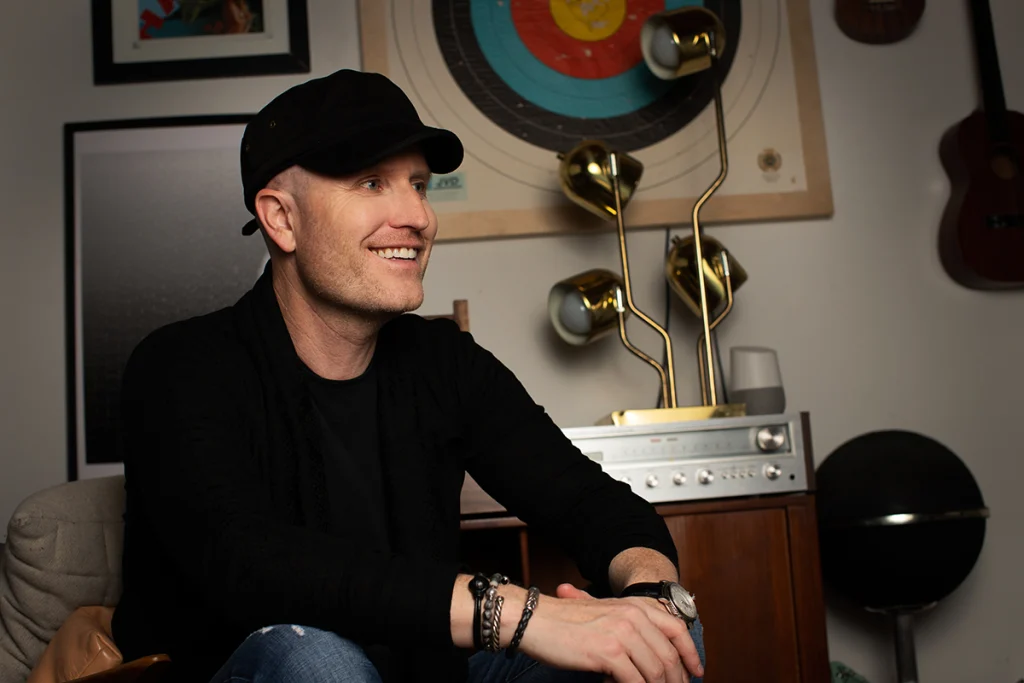
Photo: Farrah Aviva
Working with late Canadian actor Donald Sutherland was one of the defining moments of Lockington’s career. “He was the co-writer, producer and actor in Pirate’s Passage that I composed the music for. I was always a fan of his, and getting to work with him and talk about the art of composing and making movies was one of my favourite moments,” he notes.
Lockington, who oscillates between Toronto, London and Los Angeles, is currently working on Season 5 of Mayor of Kingstown, Season 3 of Lioness and Season 3 of Landman as well as a feature film called ‘The Best Is Yet To Come’, all of which are expected to be released later this year.
His composing prowess has been widely recognized through the multiple awards won over the course of his career, including Breakthrough Composer of the Year by the International Film Music Critics Association (IFMCA) in 2009, four Broadcast Music Inc. (BMI) Film Music Awards, seven Society of Composers, Authors and Music Publishers of Canada (SOCAN) awards, in addition to nominations from the Canadian Screen Music Awards, Hollywood Music in Media Awards (HMMA), Canadian Screen Awards (CA), World Soundtrack Awards and Gemini Awards.
Last year, Lockington was shortlisted for the inaugural Billboard Canada Screen Composer of the Year award. Ever humble, Lockington says that while he is grateful for these awards and nominations, he is never motivated by them, because the real joy comes from making music, and awards are just a bonus. “I get a lot of emails from people who mention a piece of music that really touched them. I feel very proud when people are moved by something I’ve written.”
When asked about his continued motivation for composing music, Lockington remarks, “I would be doing this whether or not I got paid for it. I have melodies and music running through my head 24 hours a day and I can’t make it stop. I hear music everywhere — while I’m in the shower, while I’m driving, while I’m sleeping, and I almost need an outlet to get it out, so that’s what this profession allows me to do. I just love discovering and birthing these musical ideas, then fostering and rearing them, just as you would a child into the world. Music is something I’m deeply passionate about, and though we don’t really understand why we respond to it the way we do, there are certain pieces of music that bring everyone together. I like being part of that process of making the world a better place through music.”
You can connect with Andrew Lockington on his website or on Instagram or listen to his music on YouTube, Spotify or Apple Music