Canada’s Armed Forces Are Failing to Recruit — Here’s Why the System Is Broken

Canada does not have a shortage of citizens willing to serve. It has a recruiting system that cannot turn interest into strength.

The numbers are clear. The Canadian Armed Forces is authorized for 71,500 Regular Force members and 30,000 Primary Reservists. It is thousands below that level today, with a combined shortfall of more than 12,000 personnel across both components. That is not an accounting issue. It is a readiness gap.

The pipeline is not empty. Between 2022 and 2025, roughly 192,000 Canadians applied to join the Armed Forces. Yet only about 15,000 were ultimately recruited. That is a conversion ratio of roughly one in thirteen. In any other enterprise, that would be recognized immediately as a system and leadership failure.

Even those who do apply face a process that is far too slow. The target timeline is 100 to 150 days. The reality has been closer to 245 to 271 days. In a competitive labour market, that delay alone is enough to lose large numbers of capable candidates.

We are told that the most recent year shows progress. The CAF exceeded its annual recruiting target, enrolling more than 7,000 Regular Force members. On its face, that sounds like momentum. It is not.

The underlying results tell a different story. Training failure rates increased, with a lower proportion of recruits successfully completing initial training compared to historical norms. What has been presented as a recruiting success risks being a mirage, masking weaker outcomes further down the pipeline.

This matters because the goal is not enrolment. The goal is to train effective soldiers, sailors, and aviators. If more recruits are failing to qualify, the force does not grow in any meaningful way. It simply turns faster.

At the same time, public confidence has been tested by reports that recruiting has been influenced by gender and ethnicity targets, alongside the fact that aptitude and physical standards have been lowered. The Armed Forces must be clear. Outreach can be broad. Selection must be based on merit.

A military cannot compromise on standards without consequence. Nor can it afford the perception that it has done so. Canadians expect their Armed Forces to be demanding, fair and focused on operational effectiveness. Anything less undermines both trust and performance.

The deeper problem, however, is managerial. For more than a decade, the recruiting and human resources functions have been slow, fragmented and overly bureaucratic. This is not a communications issue. It is a failure of execution.

The solution is not complicated. Canada must expand training capacity by using the force it already has. Army regiments can train soldiers. Naval units can train sailors. Air Force squadrons can train technicians. The Reserve Force, present in communities across the country, can and should be used as a national training engine.

We have done this before. In the 1950s, Canada rapidly expanded its military strength by distributing training across both Regular and Reserve units. It worked because it was focused and it was practical.

What is required now is urgency. Recruiting and training must be treated as operational priorities, with clear targets for enrolment timelines, training throughput and qualified personnel. The Minister of Defense must measure results and hold the most senior military leadership accountable.

Canada’s military challenge is not a lack of willing Canadians. It is a system that loses them before they ever reach the ranks. This is not a people problem. It is an executive leadership problem.


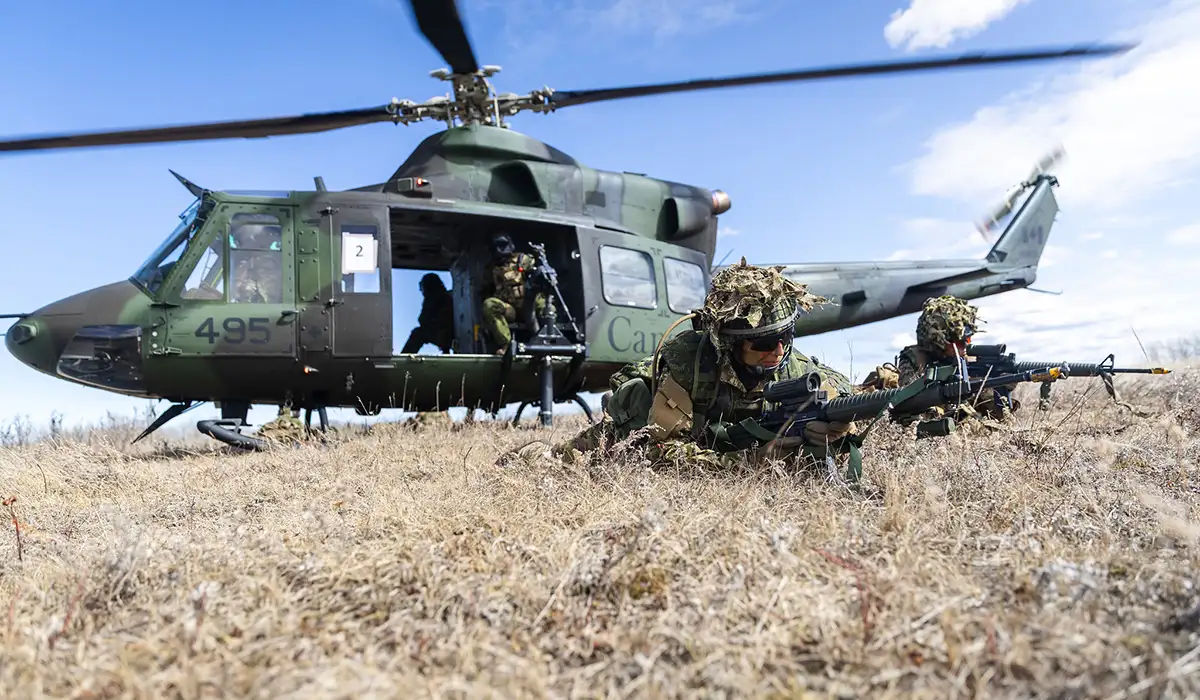
Header Image: Exercise RANGER CONTACT, Canadian Forces Base Wainwright, Alberta, April 2026. (Photo: Corporal Brandon Lin, The Royal Westminster Regiment)