How to Figure Out Her Ring Style Without Asking Directly

You want the proposal to stay a secret, so asking her what she wants is off the table. That leaves you reading the evidence she gives off every day without meaning to. Most people telegraph their taste in jewelry long before anyone asks them about it. Her current pieces, her saved images, and the friends she confides in all hold usable information. From there it is a matter of reading the right signals and discounting the misleading ones.

The Surprise Constraint

A surprise proposal sets a hard limit. You cannot run the one query that would settle the question, so every other source has to make up the difference. Direct questions tend to backfire in a second way too. People often name a style they think they should want, then feel differently once a real piece is on their hand. Observed behavior is steadier than stated preference. What she actually wears, day after day, matters more than a passing comment about a celebrity ring she saw online. Aim for a short list of safe choices and a longer list of things to avoid. Get those two lists right and the fine measurements become a detail you can hand to a professional.

Evidence in Her Everyday Jewelry

Start with the jewelry she already owns, because it records years of small choices. Note the metal first. Yellow gold appeared in about 36% of engagement rings in 2024, white gold was nearly as common, and the two rarely mix on one person by accident. If her watch and her everyday studs lean warm, a warm metal is the safe bet. Cooler tones point toward white gold or platinum, which together still make up a large part of the market.

Texture and scale tell you the rest. Some people wear delicate pieces that lie flat against the skin. Others favor bold, visible designs that draw the eye. Someone who wears jewelry only on formal nights wants something different from someone who never takes her pieces off. Watch how she treats what she owns. Pieces she wears until they wear out say more than the ones still left in a box. Earrings and a daily necklace also tell you her comfort with size, since a person who wears small studs every day rarely wants a large stone on her finger.

Clues to Shape Preference

Shape is harder to read than metal, but the clues exist. Four shapes account for most of the market, with round near 28% and oval near 25%, and the rest spread across emerald and a handful of others. If she leans toward clean lines and right angles in her clothing and her home, a geometric stone such as a princess cut diamond ring may be a better fit than a soft round.

Pay attention to what she compliments on other people. A reaction to a friend’s ring is data she handed you for free.

The Saved-Image Trail

Most people keep a visual record of what they like. A Pinterest board, a folder of screenshots, or a long row of saved posts will often hold rings she never mentioned out loud. If you share any account access, the history is already there. If you do not, a casual glance while she scrolls past her own saves can be enough.

Watch for repetition. One saved ring is a whim. The same setting saved six separate times is a preference she has not said out loud. Patterns matter more than any single image, and patterns are what you are after. A board with forty rings is less useful than a board with four that keep repeating the same lines.

Third-Party Intelligence

Other people already hold the information you lack. Her closest friend has almost certainly heard an opinion about rings. A sister or her mother may know her finger size and her history with family heirlooms. Gathering it this way is the same work couples call building love maps, the slow accumulation of small facts about another person. The method is asking without raising suspicion, which means folding the question into an unrelated conversation and never circling back to it twice in one week.

Pick your sources for discretion, not access alone. A friend who cannot keep quiet is worse than no source at all. One reliable confidant beats three talkative ones, and the quiet one will often volunteer details you would never have known to request.

Lifestyle and Daily Wear

How she lives narrows the field as much as what she likes. A nurse, a teacher, or anyone who works with her hands removes a tall setting constantly, which makes a lower profile the practical choice. Someone in the gym five days a week has the same problem. A person who treats jewelry as a centerpiece of her look will accept more height and more presence than someone who wants a piece she can forget she has on.

Her wardrobe and current pieces give the same hints. A closet built on tailored, understated clothing points one way. A taste for bold, eye-catching pieces points the other. If she already enjoys mixing gold and silver in what she wears now, a single-metal band may feel oddly strict to her. The ring should match the woman who shows up every morning and never takes it off.

Setting and Band Details

The stone gets attention, but the setting decides how the ring wears day to day. The solitaire remains a steady favorite at about 22% of rings, prized for a plain band and an unobstructed stone. Channel settings, which tuck accent stones into the band, took the largest single share in 2024 surveys at roughly 31%. Over half of 2024 rings had a center stone with side stones or accents, so a fully plain ring is now the minority choice. That figure alone marks a plain solitaire as a measurable risk, since most current rings include some accent work, and her saved images probably do too.

Band width and finish are easy to miss and easy to confirm. Measure nothing by eye that you can check against a piece she already owns. The same warm-or-cool read behind a color analysis also tells you if gold or silver looks right against her skin, a call the jeweler cannot make for you. Her existing rings give you a band width, a metal, and a sense of her taste without a word being exchanged.

Start With Metal Tone

If you track only one variable, track metal tone. It is the easiest to read, the hardest to get wrong, and the most expensive to fix after the fact. A warm-metal person handed a stark white band will notice in the first second, and no center stone will rescue the pairing. The care you put into reading her now is what separates the marriage proposals people remember for the right reasons from the ones they quietly wish they could redo. Settle the metal by watching what she wears, confirm the shape through her saved images and a quiet word with a friend, and leave the fine measurements to the jeweler. None of these steps needs a direct question, and none of them tips your hand before the day arrives. Done in that order, the secret holds and the ring still ends up on the right hand.

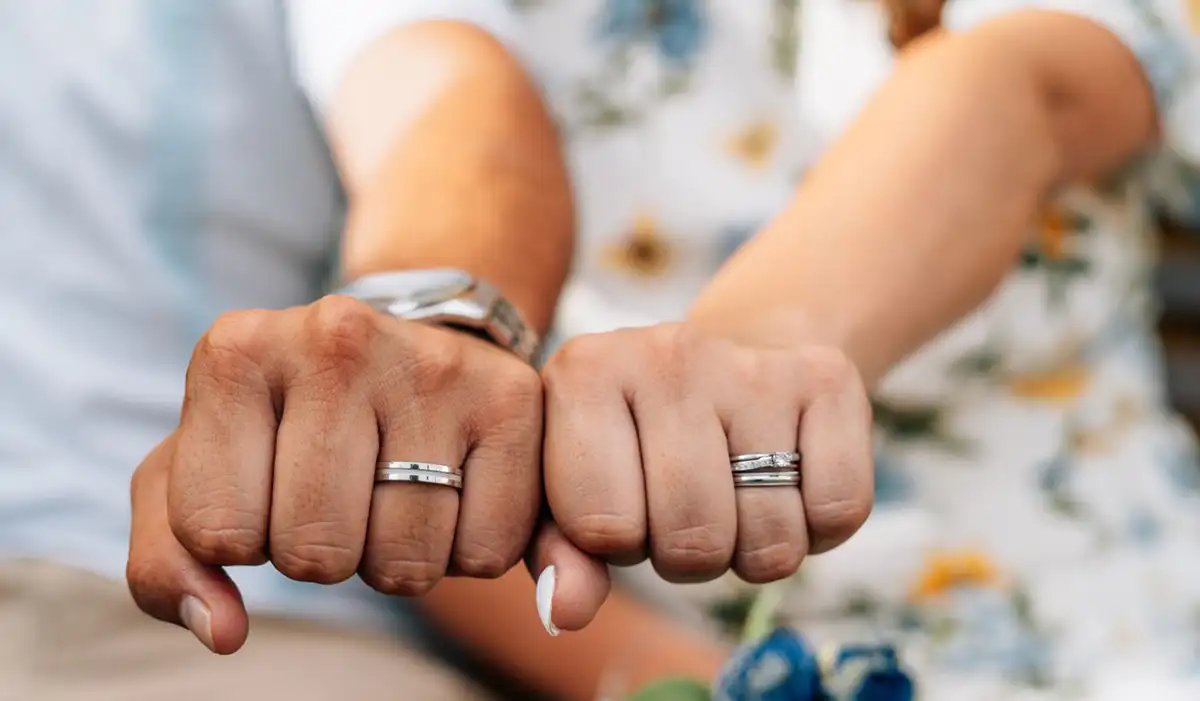
Photo: Edu Raw, Pexels