• By: Dan Donovan

The CBC Ombudsman: Accountability Theatre at Taxpayer Expense

There may be no clearer measure of CBC’s accountability problem than the existence of its Ombudsman’s office. Not because the Ombudsman fails to find problems. Rather, because after years of findings, corrections, standards violations, and public criticism, many of the same issues continue to reappear.

If mistakes keep recurring and nobody appears accountable for them, Canadians are entitled to ask whether the Ombudsman exists to enforce standards or simply to document their decline.

Over the past several years, the CBC Ombudsman has repeatedly reviewed complaints involving CBC coverage of Israel, antisemitism, Jewish community issues, and Middle East reporting. Some complaints were rejected. Others resulted in corrections, findings of factual errors, concerns regarding impartiality, criticisms of transparency, or determinations that reporting fell short of CBC’s own journalistic standards.

This is not simply the opinion of critics. It is the public record.

Beyond Individual Complaints

In September 2024, Ottawa Life Magazine reported on 128 cases of alleged CBC misreporting about the Israel-Hamas conflict, as documented by Honest Reporting Canada (HRC). By February 2025, that number had grown to 155. HRC’s catalogue covered CBC television, radio, digital reporting, podcasts, and social media, identifying what it considered recurring problems involving factual accuracy, omitted context, misleading framing, sourcing, and impartiality.

These were allegations assembled by a media-monitoring organization, not 155 independent findings by the CBC Ombudsman. Nevertheless, the scale of the catalogue raised legitimate questions about whether the problems were isolated editorial mistakes or evidence of a broader institutional failure.

The issue eventually reached the Canadian Radio-television and Telecommunications Commission (CRTC). In February 2025, Honest Reporting Canada and the Centre for Israel and Jewish Affairs (CIJA) filed a formal intervention in a CBC licensing proceeding, arguing that the broadcaster’s coverage had breached core principles of accuracy, fairness, balance, impartiality, and integrity.

This represented a significant escalation. A media watchdog and a national Jewish advocacy organization were no longer merely challenging individual stories. They were asking Canada’s broadcasting regulator to examine whether the public broadcaster was meeting the journalistic standards attached to its broadcasting licence.

The intervention did not establish that CBC had violated its licence conditions. But it did place those allegations before the regulator and bring the question of CBC’s editorial accountability into a formal regulatory proceeding.

What the Ombudsman Found

Consider just a few examples.

In May 2026, the Ombudsman reviewed an article by foreign correspondent Chris Brown concerning the deaths of Palestinians waiting for flour in Gaza City. The article incorrectly dated the incident and presented a highly contested version of events as established fact. The Ombudsman concluded that CBC’s reporting breached its accuracy standards, and the article was corrected.

In November 2026, the Ombudsman reviewed another of Brown’s articles on Palestinian statehood. After examining the complaint and CBC’s subsequent clarification, the review concluded that the wording remained problematic and could reasonably be interpreted as assigning responsibility for the failure of the peace process in a manner that fell short of CBC’s standards for accuracy and impartiality.

That same month, the Ombudsman also found that a CBC article describing violence between Israel and Lebanon contained a significant factual error because it failed to adequately identify Hezbollah’s central role in the conflict. The review further concluded that CBC had failed to properly disclose the correction, itself a breach of journalistic standards.

These are not disagreements over editorial emphasis. They are documented findings by the broadcaster’s own review office concerning accuracy, impartiality, and transparency. Separate incidents? Certainly. But after years of recurring controversies involving the same subject matter and many of the same editorial shortcomings, it becomes increasingly difficult to treat each case as an isolated mistake. At some point, repeated editorial failures stop being a journalism problem and become a management problem.

Where Accountability Breaks Down

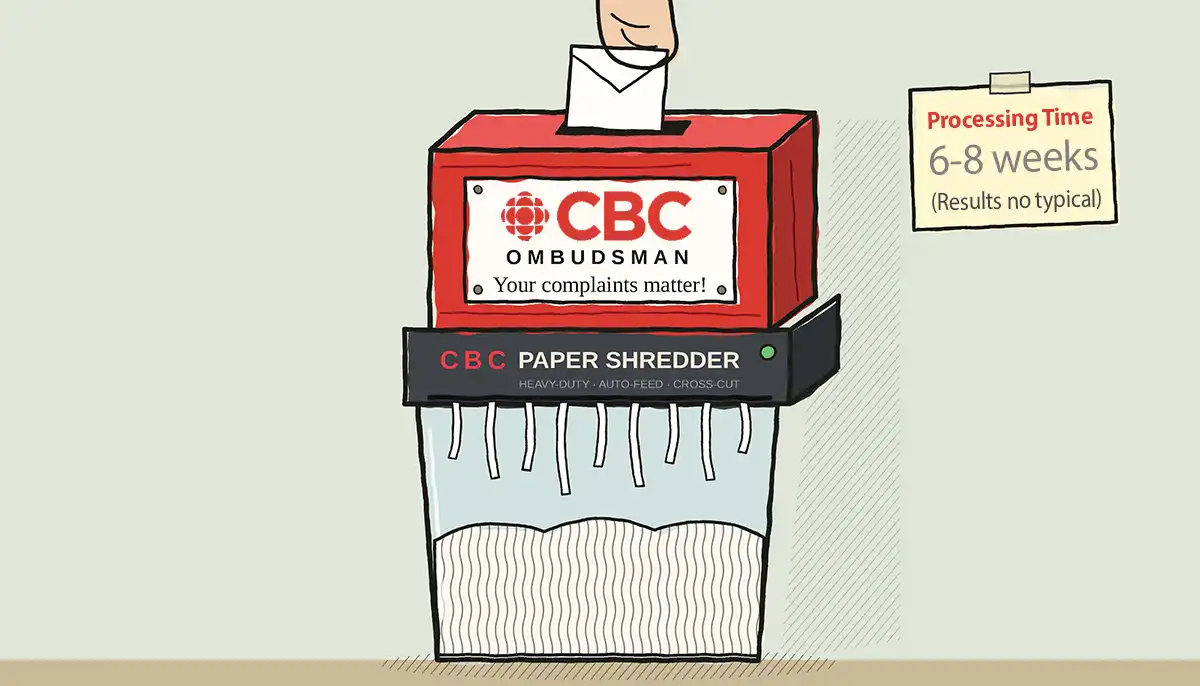
This is where CBC’s accountability model begins to unravel. The Ombudsman identifies a problem. A report is issued. Management responds. A correction may or may not be published. The controversy fades. What remains unclear is whether anything meaningful changes. Nothing publicly measurable demonstrates that the underlying problem has been addressed. Months later, another controversy emerges, and the process begins again.

Rinse and repeat.

The public can identify the journalists involved because Ombudsman reports name them. The public can identify the stories because the reports describe them. The public can identify the errors because the findings explain them. What Canadians cannot identify is what happens inside the institution afterwards. It has become quite apparent that this is because nothing happens.

Has a senior editor lost a position because recurring standards concerns kept surfacing? Has a news executive been disciplined? Have management performance assessments or bonuses been affected? Has CBC released measurable evidence demonstrating that repeated Ombudsman findings lead to institutional reform? The answer to all of these questions is NO.

The cumulative evidence can only be described as a Stage 4 crisis of antisemitism and accountability at CBC. The issue is no longer confined to disputed reports, recurring journalistic failures, or individual acts of misconduct. It reflects a deeper institutional failure, one in which CBC’s leadership appears either unable or unwilling to recognize the scope of the problem, confront its underlying causes, and demonstrate that meaningful corrective action has followed.

This is, after all, the same institution that found ambiguity where most Canadians saw none, treating Hamas in the aftermath of October 7 and al-Qaeda after September 11 as subjects for semantic debate rather than matters of common sense. For most Canadians, those questions were settled long ago. The more revealing and troubling story is that they appeared open to debate at CBC.

The question is no longer whether recurring problems exist within CBC’s news operation. The evidence is now too extensive to dismiss as a collection of isolated incidents. The real question is whether anyone in a position of authority is prepared to acknowledge their scale and demonstrate that meaningful corrective action has followed.

Instead, management continues to defend the broadcaster’s journalism as documented errors, Ombudsman findings, and recurring controversies accumulate. Every newsroom makes mistakes. The real test is what an institution learns from them. Judged by that standard, CBC’s leadership appears far more interested in defending the record than improving it.

The Real Issue Is Trust

The Ombudsman appears to be one of the few parts of CBC still willing to publicly acknowledge that problems exist. The office identifies errors, reviews complaints, highlights deficiencies, and documents shortcomings. Yet those findings often seem to disappear into a corporate black hole where accountability goes to die.

For years, Ottawa Life Magazine has argued that controversies surrounding CBC’s reporting on Israel and Jewish issues reflect a larger institutional problem rather than a series of isolated newsroom mistakes. Readers are free to agree or disagree with that conclusion. What is becoming increasingly difficult to dismiss, however, is the broader question of public confidence.

CBC’s own research has acknowledged that traditional linear television viewing in Canada has fallen by approximately 41 per cent over the past decade, from roughly 28 hours per week to 17 hours. At the same time, CBC continues to receive approximately $1.4 billion annually in parliamentary funding.

To be fair, declining audiences are not unique to CBC. Every legacy broadcaster has been challenged by streaming services, digital platforms, and changing consumer behaviour. But those realities do not explain away a growing crisis of trust.

The question is not whether Canadians consume media differently than they did a decade ago. The question is whether Canada’s public broadcaster is doing enough to maintain the credibility necessary to justify its privileged position in the country’s media landscape.

An organization can survive errors. It can survive corrections. It can survive embarrassing controversies and even public scandals. What it cannot survive indefinitely is the erosion of public trust.

Across North America, audiences increasingly believe many news organizations begin with a narrative and then fit the facts around it. Whether that perception is entirely fair misses the point. Public trust is not secured through mission statements. It is earned through credibility. And credibility, once lost, is extraordinarily difficult to regain.

Time for an Independent Review

For generations, CBC benefited from a presumption of objectivity. Many Canadians accepted that while the broadcaster was imperfect, it was fundamentally trustworthy.

That presumption has weakened. Every correction, every Ombudsman finding, every transparency failure, and every recurring controversy chips away at the foundation of trust upon which journalism ultimately depends.

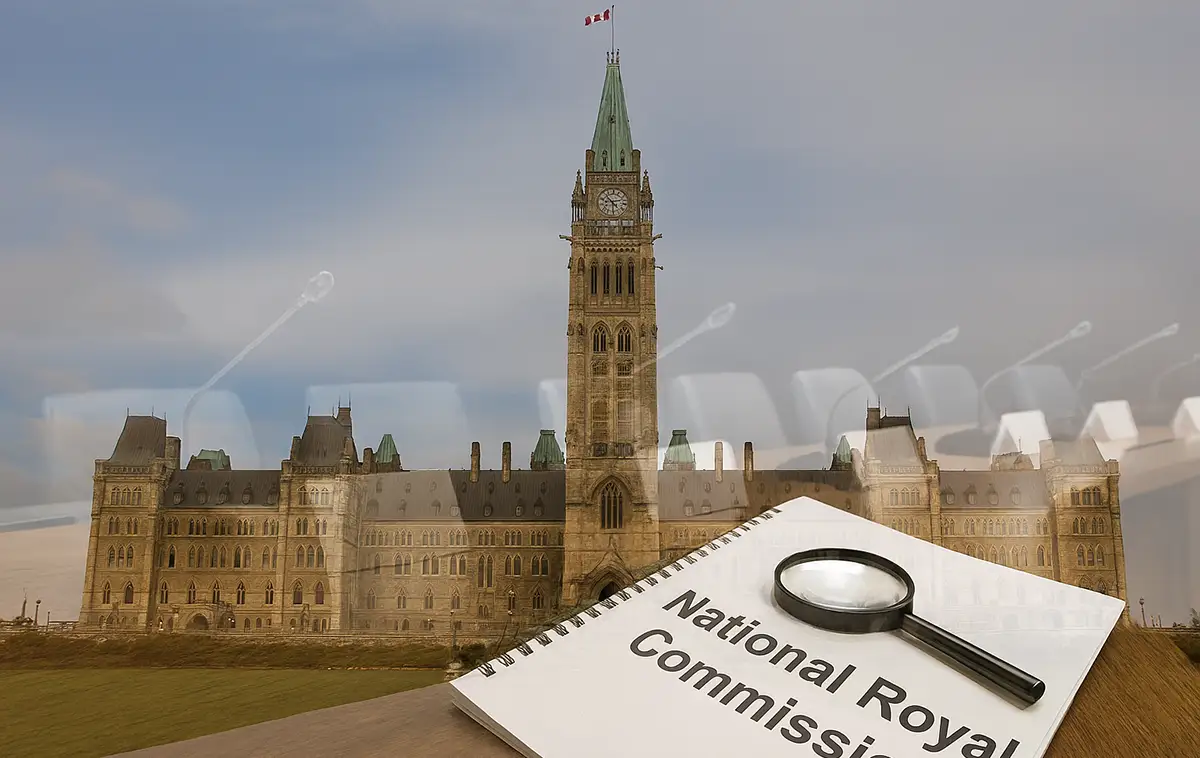
Parliament should commission an independent review of CBC’s editorial accountability systems. Such a review should examine how Ombudsman findings are implemented, what management actions follow repeated standards violations, whether recurring failures produce measurable reforms, and whether the broadcaster’s existing accountability mechanisms are adequate for an institution that receives more than a billion dollars annually in public funding. Canadians do not need another CBC Ombudsman report. They have plenty of those. They need evidence that somebody is listening, that management is acting, and that repeated failures have consequences.

The CBC is not an ordinary media company. It is a publicly funded national institution entrusted with informing Canadians, reflecting their country, and upholding the highest standards of journalism. That responsibility carries an obligation to be accountable not only for individual errors, but for recurring patterns of failure.

A public broadcaster that repeatedly investigates its own shortcomings but cannot demonstrate that it has corrected them is not exercising accountability. It is performing it.

And Canadians are paying for the performance.