Canada Cannot Lead Globally Until It Confronts Antisemitism at Home

By Andrew Faas


“I worry about antisemitism not just as a bad idea that originates from bad people, but also something that arises as a challenge to the global order.” ~ Timothy D. Snyder


Canada now finds itself at an inflection point, not only regarding antisemitism but also concerning its place in a rapidly shifting global order. Canada and the world are at a crossroads, one that Prime Minister Carney laid out in his recent Davos speech. He called for unity in confronting the realities of the current world order and building a new one.

Carney framed Canada as a potential leader, grounded in what he called “values-based realism “. But that ambition comes with a hard truth; unless we effectively deal with antisemitism, Canada will not have the credibility to be the role model of a stable liberal democracy that the other middle powers can follow.

More than any other issue, how we address antisemitism will define who we are as a nation. The Globe and Mail’s December 17, 2025  editorial titled “The fight against the growing darkness of antisemitism” captured the urgency for action by calling on authorities and the public to take steps to combat rising anti-Jewish hate in Canada. It made clear that the “fight against antisemitism is not peripheral — it is foundational”.

This was reinforced by the Prime Minister in his Holocaust Remembrance Day remarks on January 27, 2026, “Canada will thrive when Jews not only live without fear but fully participate in every aspect of Canadian Life”.

Unfortunately, the federal government’s decision to axe the antisemitism and Islamophobia special envoy offices to be folded into a new advisory council on equity and inclusion sends a conflicting message to what the Prime Minister espoused. This decision also smacks of an act of political convenience.

There is validity in B’nai Brith CEO Simon Wolle’s reaction: “My gut instinct says, when you dilute the fight against antisemitism into a broader strategy, and when you take away the name that acknowledges that antisemitism is a distinct and pervasive problem in this country, you start to erase the problem”.

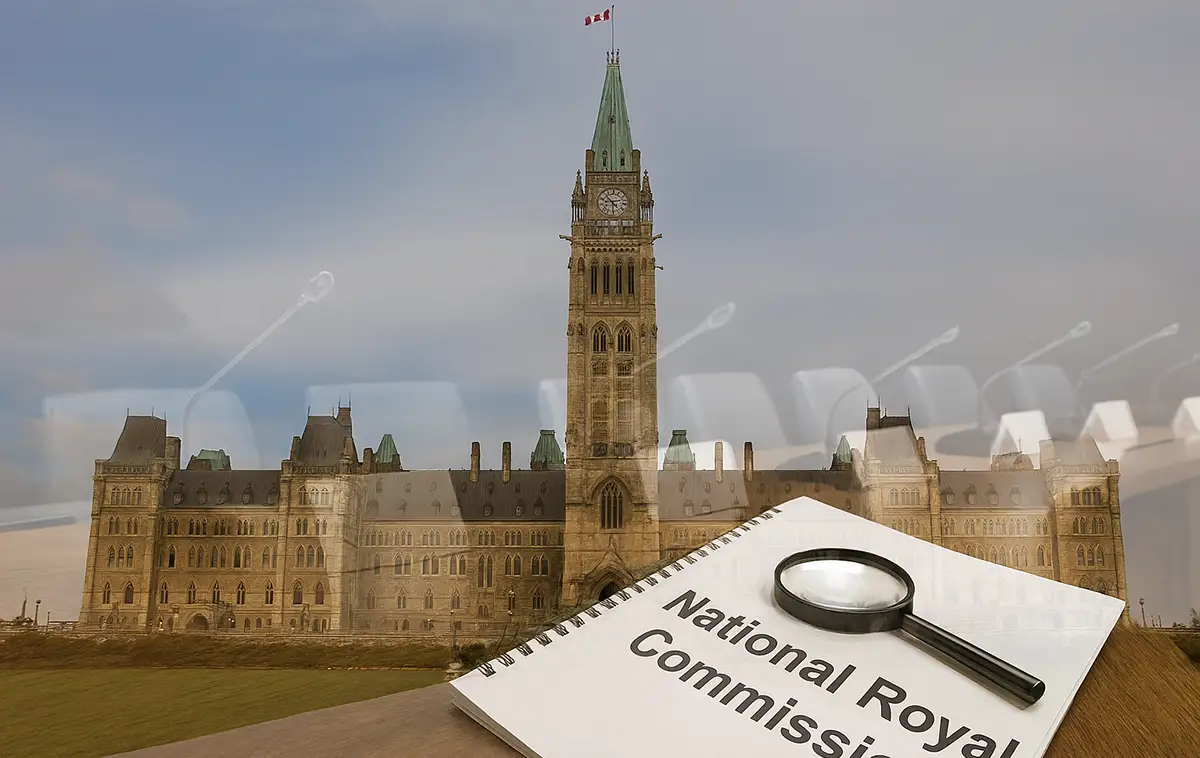
Establishing a National Royal Commission To Study Antisemitism

A way to ensure the problem is not erased, the government should be pressured to heed Wolle’s call for a national royal commission to study antisemitism in Canada. A national royal commission is the highest independent level of public inquiry to investigate complex, serious, or urgent national issues of public importance.

The public importance of antisemitism is, as the Globe and Mail observed, “not peripheral — it is foundational”. It is not merely a threat to the Jewish community, but a “toxic” indicator of a broader breakdown that threatens democratic norms, human rights and social cohesion. Often described as the “oldest hatred”, antisemitism acts as a “canary in the coal mine”, where unchecked prejudice against Jews frequently escalates to violence and wider hatred against other minority groups.

Post the Bondi Beach attack, the Australian government established the ‘Royal Commission on Antisemitism and Social Cohesion’. For Canada, it would be better to have a commission of enquiry before rather than after a terrible attack, which is what Newsweek predicted in their January 15 edition, “The next massacre of Jews is likely to occur in Canada”.

While national royal commissions have limitations, and their impacts have been mixed, they are highly effective at raising public awareness and shifting public sentiment. The advantages of having a commission on antisemitism include:

• depoliticization of what has become a polarized issue;
• giving Jews a voice on how they feel, what they fear and what they have experienced at school, at work, in their neighbourhood, and where they worship;
• uncover truths and facts to debunk the myths and the long-held conspiracy theories; and
• facilitate a national debate and dialogue, something we as non-Jews have been unwilling or unable to have.

Specifically, the commission should investigate:

• antisemitism in our educational institutions – the extent to which our educators combat or promote it, the impact it has on students, the online influence and the underreporting of incidents;
• the extent to which the harassment and discrimination of Jews is systemic in our workplaces;
• the influence of various extremist groups access the political and religious spectrum, where antisemitism serves as a core ideology;
• the challenges of enforcing the law on antisemitic incidents – particularly the rise of online hate, and balancing the right to protest and hate speech laws, and the struggle with the “cloudy areas” during intense demonstrations;
• the concern that many antisemitic incidents go underreported;
• the shunning and sidelining of Jews, which has become widespread but unreported as an expression of antisemitism; and
• our ability to attract and retain professionals due to antisemitism – building on the study conducted by the Jewish Medical Association that found nearly one third of Ontario’s Jewish medical practitioners were considering leaving Canada because of antisemitism.

Realistically, a national royal commission of this nature and scope will take time — time we may not have. So, let’s consider what we as non-Jews can do now to “fight the growing darkness of antisemitism”.

The Globe and Mail’s editorial offered, “That fight must start by saying clearly and loudly: our Jewish neighbours are not responsible for the actions of the Netanyahu government or for the death and destruction in Gaza. To say otherwise is an explicit act of antisemitism.”

It concluded with: “Do not let antisemitic statements go unchallenged. Demand the prosecution of those who incite hate. Join your fellow citizens and make the case directly to those who peddle hate in the streets. Make sure that Jewish Canadians know they are not alone. Fight against the growing darkness, while that fight can still be won.”

By winning the fight, we can be that “Northstar” in establishing a new global order.


This is the fourth in a series of articles on antisemitism by Andrew Faas, who is a non-Jew. The first, “Is Canada an Antisemitic Nation, the second, “Antisemitism and the Dark Side of Emotional Intelligence – Ottawa Life Magazine”, and the third, “Antisemitism and the Fight for Inclusive Democracy”, were all published in Ottawa Life.

Photo: Copilot