Beyond the Landmarks: The Future of Tourism in Eastern Ontario

The Thousand Islands and the Rideau Canal have never had trouble attracting attention.

Along the St. Lawrence River, more than 1,800 islands rise from the water. Granite shorelines appear between the channels. Pines hold to the rock. Cottages, docks and old summer homes face a river that has carried people through this landscape for thousands of years.

To the north, the Rideau Canal makes its 202-kilometre journey between Ottawa and Kingston through lakes, rivers and hand-operated locks. Boats still rise and fall inside stone chambers built nearly two centuries ago. Lock gates open. Water moves. The canal continues to function as both a working waterway and a UNESCO World Heritage Site.

These are two of the landmarks that put Eastern Ontario on the map. They shape its identity and give travellers an immediate reason to come.

But they are not the whole destination.

Travel inland from the St. Lawrence, or follow the canal beyond its best-known stops, and the character of the landscape begins to change. The roads narrow. They pass through pasture and woodland, beside lakes and across shelves of exposed stone. A church spire appears above the trees. Then an old mill, a row of limestone buildings or a village gathered around a crossroads. A few minutes later, the countryside closes around the road again.

Across this wider landscape are historic towns, working farms, studios, restaurants, trails and family-held properties. Their stories are tied to Indigenous history, the waterways, settlement routes and the industries that developed here. Some of the most interesting places in Eastern Ontario are not hidden at all. They are simply unexplained.

A traveller can cruise among the Thousand Islands, visit a Rideau Canal lockstation and leave genuinely impressed by what they have seen. But if the experience ends there, the destination may also feel complete. The landmark has been visited. The photograph has been taken. There appears to be no particular reason to continue.

The opportunity is not to draw visitors away from the Thousand Islands or the Rideau Canal. It is to use those landmarks as the beginning of a larger journey.

Many travellers still want to see the places that made a destination famous. But they also want to slow down, enter an independent shop, eat somewhere local and understand a little more about where they are. They want the pleasure of encountering something they did not already know to expect.

Yet a journey through the wider region is not created simply by identifying places to visit. A list of attractions can show what is available in each community, but it cannot explain why a historic manor belongs in the same day as a lockstation, what connects a working farm to a lakeside winery or why a scenic road through the Frontenac Arch should lead to Ontario’s oldest stone bridge still in use.

We cannot expect someone unfamiliar with Eastern Ontario to recognize those connections or know how to turn them into a meaningful day.

This is the role of regional tourism: not simply to promote places, but to show how they belong together and make the region easier for visitors to experience.

When those pieces are brought together, a canal village becomes more meaningful. The lockstation, landscape, historic property and local businesses begin to explain why it developed there. A drive through the countryside becomes more than a scenic route when travellers understand why farmland opens in one place, villages grew in another and roads took the routes they did.

A thoughtfully created journey allows that meaning to gather as the day unfolds. Each stop deepens what came before, drawing travellers farther in and giving them a reason to stay.

Creating journeys like this should begin by looking at how residents already move through Eastern Ontario. Where do they go on a Saturday morning? Which markets, cafés, waterways and seasonal traditions have become part of local life? Where do they take visiting friends, and which roads do they follow simply because the drive itself is part of the pleasure?

These patterns reveal where local life happens, which places naturally belong together and what gives the region its rhythm. A visitor experience can grow from that knowledge, following the landscape and the habits of those who live within it instead of forcing together a collection of attractions.

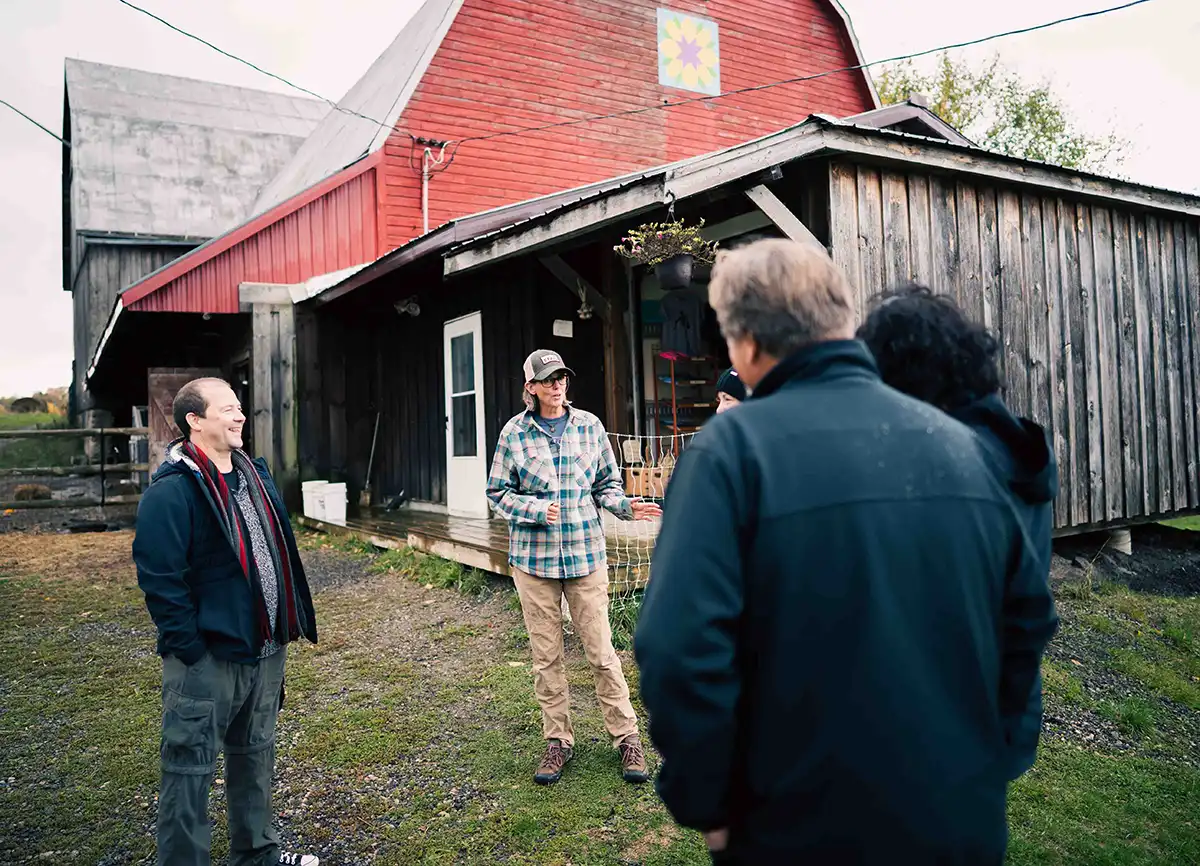
Lindsay Hadcock welcomes visitors at Goat Ridge Farm in Seeley’s Bay, Ontario. (Photo: Beattie Films)


The connections between those places rarely stop at a municipal boundary. Yet when municipalities plan and promote tourism separately, the journey between them can become no one’s responsibility. Residents move easily between communities in the course of a day, following familiar roads, relationships and traditions. Visitors should be able to experience the region with the same sense of continuity, each stop enriching the story and making the journey onward feel irresistible. Neighbouring municipalities and tourism organizations have an opportunity to work together around the routes and relationships that already connect them, making those journeys easier for visitors to follow.

A journey built around local life does more than connect places. It brings travellers into contact with the people who know those places best: business owners, farmers, historians and residents. Often, it is the person they meet who changes what the place means to them.

There is a warmth to these moments that is difficult to create in any other way. Conversation becomes easy as people trade stories, ask questions and laugh together. Sometimes numbers are exchanged. Friendships begin. I have even watched guests and the people they met make plans to travel together. What began as an introduction has become a relationship of its own.

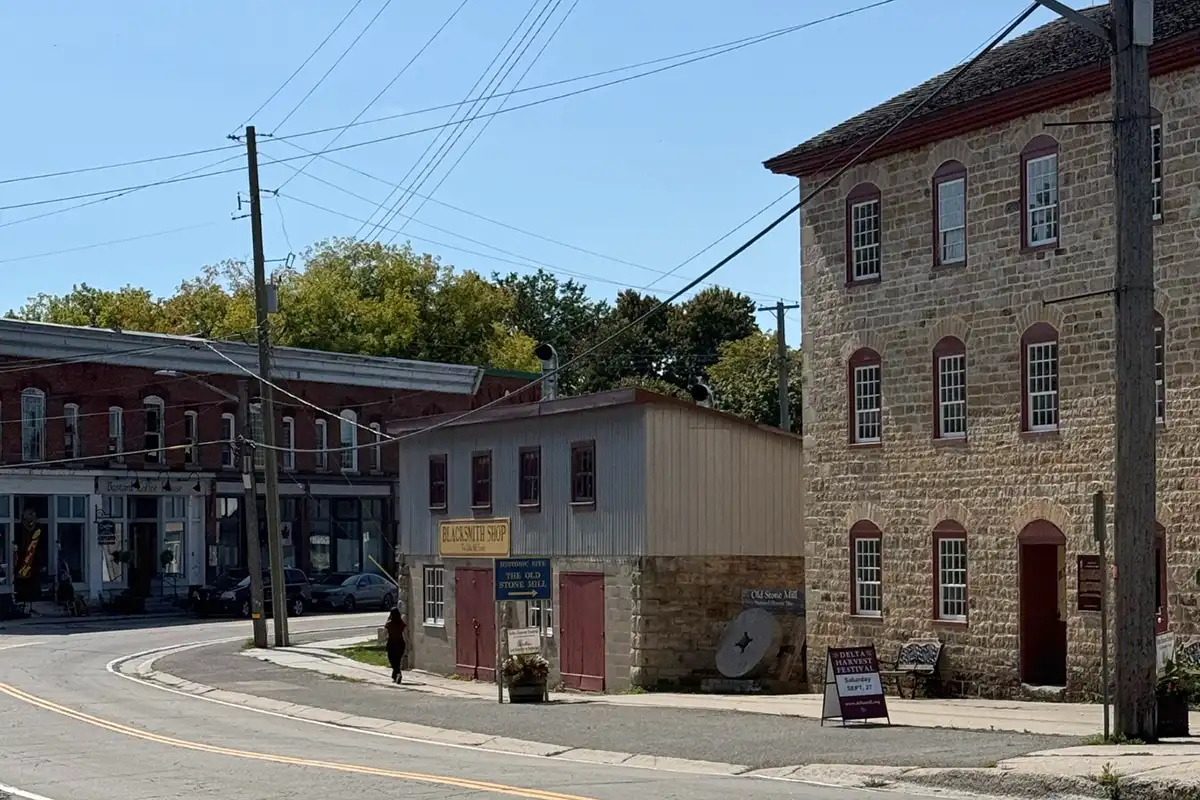
I saw the value of this while hosting a couple for the day. We had stopped for coffee in a small Eastern Ontario village. Across the road stood the Old Stone Mill, far larger and more imposing than the size of the present-day community seemed to warrant. Someone who knew its history happened to be there, and an introduction was made.

The conversation began casually. Then came the story of why such an ambitious building had been constructed in this particular place, how the community developed around it and what the mill had meant to the surrounding countryside.

When we stepped outside, the couple wanted to cross the road and see the Old Stone Mill for themselves. We walked around the building with our coffees, looking up at the stone walls and watching the water run beside the mill. Nearby stood the Jubilee Block, whose storefronts once housed a general store, hardware store, post office and other businesses serving the village. Trucks pulling boat trailers passed by while locals stopped at the café to grab a coffee and catch up before carrying on with their day. The story had opened up more than the mill. Now they were looking at the entire village differently.


The Old Stone Mill stands within the village of Delta, where its relationship to the surrounding streets and businesses helps tell the community’s larger story. (Photo: Alison Gibson)


Nothing about the mill itself had changed. What changed was their ability to see it and, through it, to feel connected to the place around them. That is the difference a person can make.

A visitor may remember the beauty of a waterway or the scale of a historic building. But the story they repeat afterward is often about a person: the business owner who welcomed them, the historian who changed how they saw an old building or the resident who shared something they could not have learned from a sign.

Visitors leave thinking about the Saturday market they missed, the restaurant someone recommended for another season or the lookout they did not have time to reach. They now have reasons to return. Suddenly, Eastern Ontario no longer feels like a destination they have completed. It has begun to open.

This is how visitors come to stay longer and return. It is also how more communities and independent businesses benefit from tourism, because travellers have been given a real reason to go.

Eastern Ontario already has the landscapes, stories and people needed to make this possible. What remains is the work of bringing them together across communities and municipal boundaries, creating journeys that reveal far more than any one attraction can.

The Thousand Islands and the Rideau Canal will continue to bring people here. The question is what we invite them to discover next.


Follow Alison Gibson on Instagram and Facebook, and visit Explore the Riverlands at exploretheriverlands.ca. To explore South Eastern Ontario through private hosted days with A 1000 Ways, visit a1000ways.com.
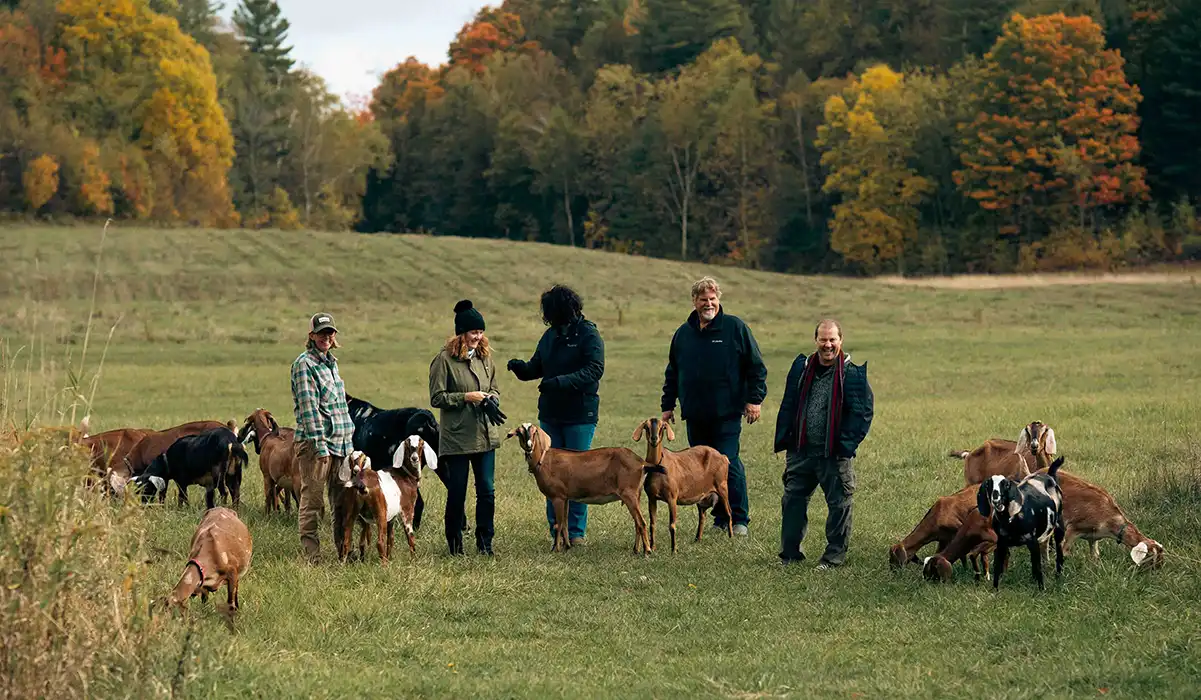
Header image: Lindsay Hadcock hosts visitors on a goat walk at Goat Ridge Farm in Seeley’s Bay, Ontario. (Photo: Beattie Films)