Canada’s Moment, If We Choose to Build

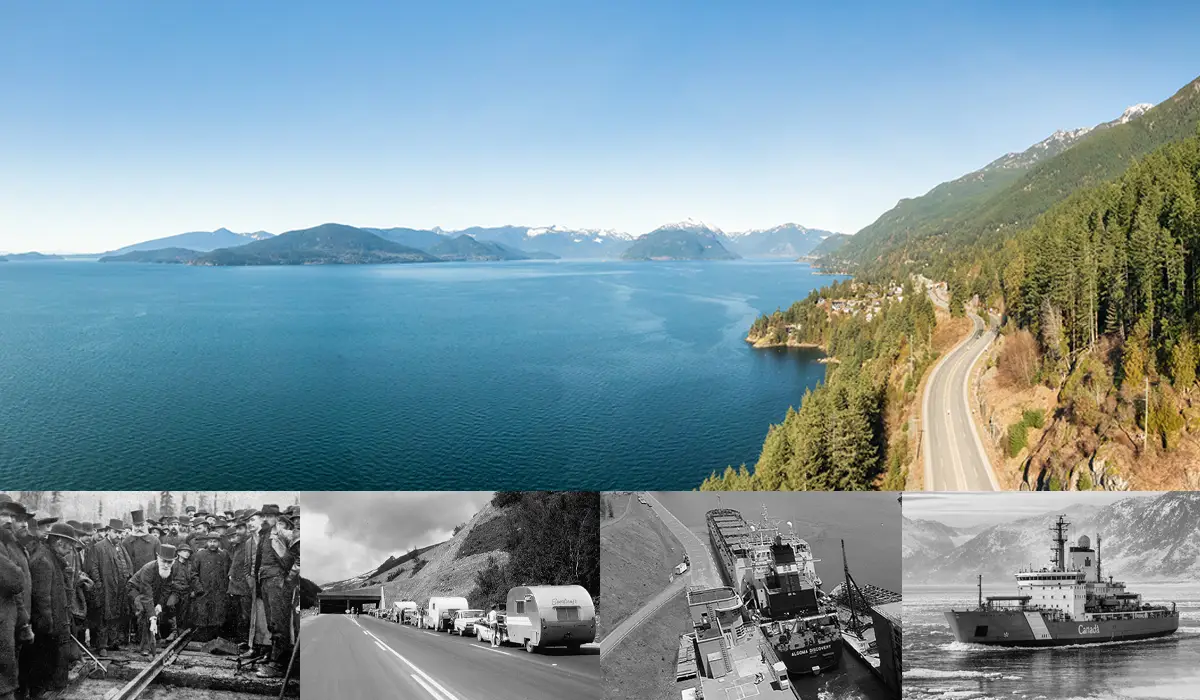
Last month, I was driving from Vancouver to Whistler. If you’ve ever made that trip, you know it’s one of the most beautiful stretches of highway anywhere in the world—ocean on one side, mountains rising sharply on the other, forests, harbours, small towns, and the occasional industrial port tucked into the landscape.

As I drove north, something struck me: Canada is an extraordinarily beautiful country. But it is also an extraordinarily capable one.

Along that single stretch of road, you can see almost the entire story of the country: fisheries and ports, forestry and natural resources, tourism, technology companies in Vancouver, small towns, big cities, and the vast mountain ranges that remind you just how large this country really is.

It also reminded me of something important. Canada has never been a country that succeeded by accident.

We succeeded because earlier generations built the infrastructure that allowed a vast and difficult geography to function as a nation. The Canadian Pacific Railway. The St. Lawrence Seaway. The Trans‑Canada Highway. National energy systems. These were not simply engineering projects—they were strategic decisions to expand the country’s capacity.

Today, Canada may be facing another moment that requires that kind of thinking.

Seeing Canada from the Ground

One of the unusual privileges I have right now is the ability to see Canada from two vantage points.

As host of a national radio program, I regularly speak with economists, investors, policy experts, and leaders from across the country, and often from around the world.

But in my day job as Chief Operating Officer of a real estate development company, I also travel extensively across Canada.

In recent weeks, I’ve been in Windsor, Niagara, London, and Toronto. Earlier this year, I spent time in Vancouver, Nanaimo, Victoria, and Whistler. Next week, I’ll be in Calgary, Edmonton, and North Battleford, Saskatchewan. Next month, Montreal.

When you move across the country that way—meeting business leaders, workers, entrepreneurs, and young families trying to buy homes—you begin to hear something consistent.

Canada remains an extraordinarily strong country, but there is also a growing sense that something needs to change.

People feel the economy slowing. Housing affordability has become a central concern. Geopolitical tensions are rising globally, and there is a sense that Canada must start building again—not just housing, but national capacity.

A World That Is Becoming Harder

Recent conversations with several guests on my program reinforced that point.

Founder of Mavericks Private Equity, John Ruff0lo warned that economic power in the digital age increasingly belongs to countries that control technological infrastructure. Artificial intelligence, cloud computing, data systems, and digital platforms are dominated largely by the United States and China.

Canada participates in that ecosystem, but largely as a customer.

If Canada wants genuine sovereignty in the digital era, Ruffolo argues, we will need to rebuild technological capacity: Canadian data infrastructure, Canadian AI capabilities, and deeper domestic capital pools. Some have even suggested a national sovereign wealth fund—similar to Norway’s—that could invest strategically in the country’s long‑term future.

Theo Argitis of the Business Council of Canada raised a related concern: the slow erosion of Canada’s economic fundamentals. Business investment has lagged, productivity growth has weakened, and the global economy is increasingly shaped by industrial strategy.

Countries everywhere, from the United States to Europe to China, are investing deliberately in manufacturing, defence industries, advanced technologies, and energy systems.

Not as ideology. As strategy.

Argitis’ point was that Canada must adapt to this more competitive environment while maintaining the openness that historically made our economy successful. But doing so requires something governments often struggle to maintain: state capacity—the ability to execute large, complex national projects.

Policy is easy. Building things is hard. And yet that is exactly what moments like this require.

A Shifting Global System

Meanwhile, geopolitical dynamics themselves are shifting.

Some analysts suggest that Europe may move toward greater strategic independence from the United States. Others argue that the global order is becoming more multipolar, with regional powers playing a larger role.

Regardless of the timeline, one thing is clear: the global environment is becoming more competitive and more strategic.

Middle powers like Canada must think carefully about how they position themselves in that world.

Edward Greenspon, a longtime observer of Canada’s international role, has noted that Canada once played an outsized part in shaping global institutions—from the creation of the GATT trade system to leadership in multilateral diplomacy.

Over time, that influence faded as Canada’s economic growth slowed and domestic debates grew more polarized.

But Greenspon also emphasizes that Canada still possesses enormous advantages: energy resources, critical minerals, agricultural strength, political stability, and highly educated talent.

Those advantages, however, matter only if they are activated.

What Building Again Might Look Like

If Canada is serious about rebuilding national capacity, the question becomes practical: What would we actually build?

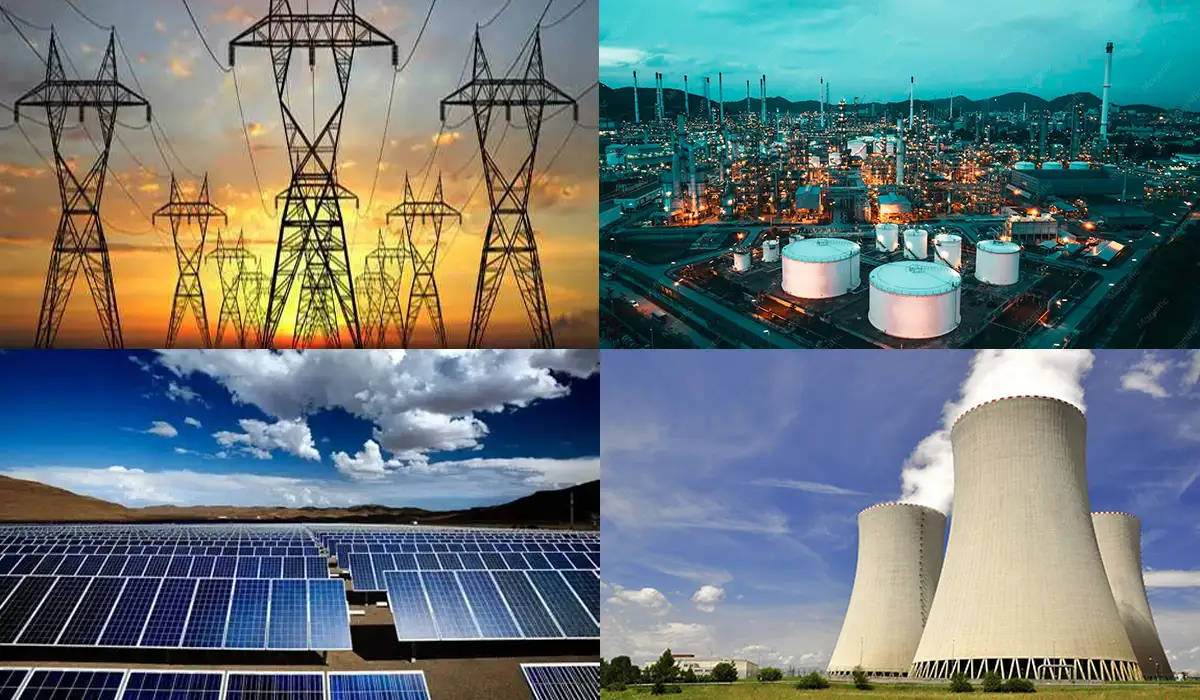
A high‑speed rail corridor linking Quebec City to Windsor could connect the economic heart of the country and modernize transportation across its most densely populated region.

Energy infrastructure that allows Canadian oil and gas to reach both Pacific and Atlantic markets could strengthen Canada’s strategic autonomy in a world once again focused on energy security.

Completing the four‑laning of the Trans‑Canada Highway would create a modern transportation spine across the country.

Major investments in critical minerals—from the Ring of Fire in northern Ontario to northern Quebec and western Canada—could position Canada as a global supplier for batteries, electronics, and clean‑energy technologies.

Arctic infrastructure—from ports to airfields to military installations—could secure Canada’s presence in a region that is becoming increasingly strategic.

Housing affordability could be tackled through a combination of tax reform and infrastructure investment that allows supply to expand dramatically.

And above all, these projects would require renewed attention to something that underpins all national progress: unity.

Western alienation. Quebec nationalism. Regional division. These tensions weaken Canada precisely when strategic focus is required.

Countries that cannot act together internally struggle to act effectively in the world.

The Power of Capacity

All of these ideas share a common theme.

They expand capacity.

Economic capacity. Energy capacity. Transportation capacity. Strategic capacity.

Canada does not need to become a great power, but we do need to become a more capable middle power again.

Because in the world that is emerging, capacity matters.

The countries that build it will help shape the system. Those that do not will simply live within systems designed by others.

Canada now faces a choice: coast or build.

History suggests we know how to do the latter.